
Going Modern: British Art, 1900-1960
Yale Center for British Art
New Haven
Through Aug. 9
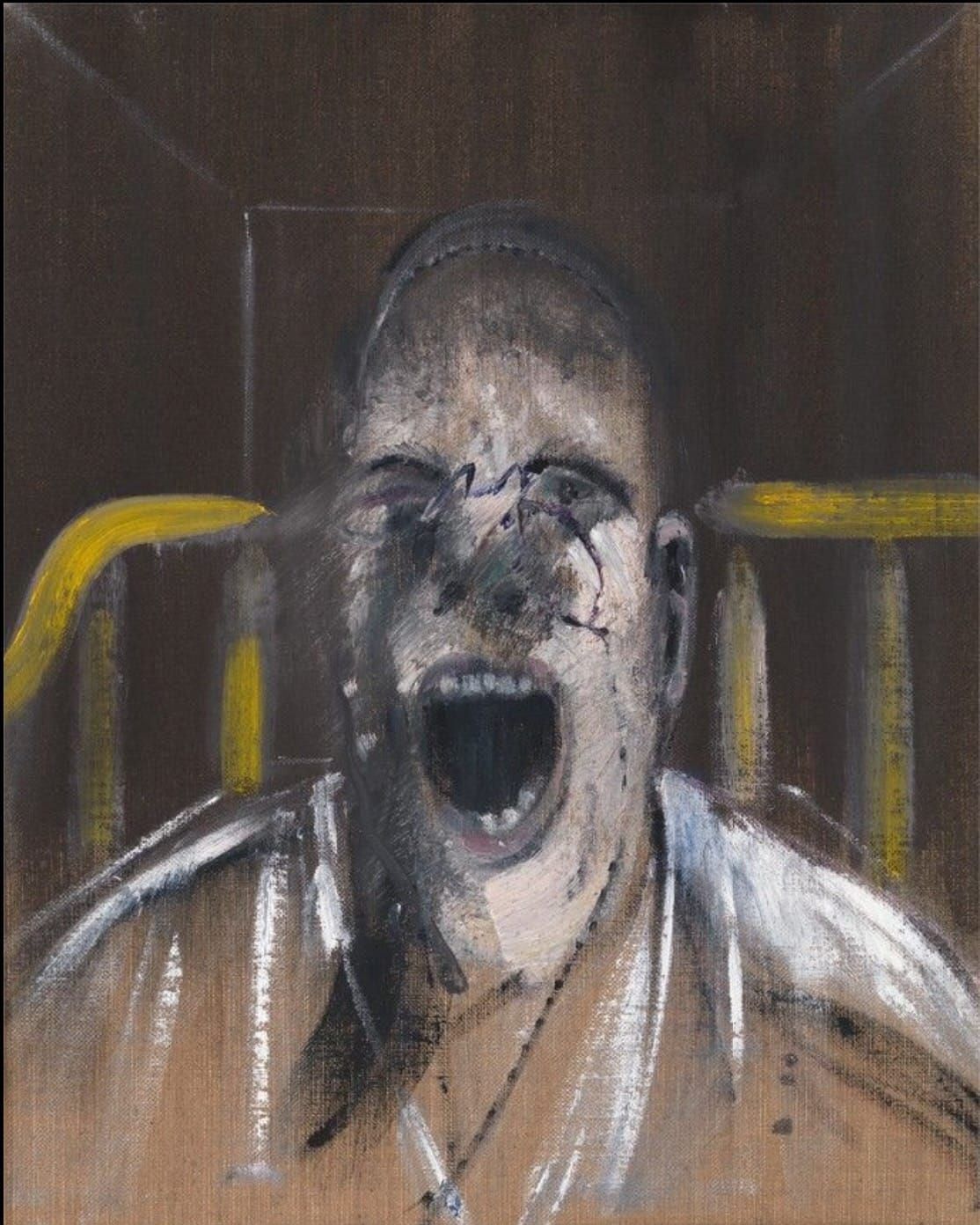
The face in Francis Bacon's Study of a Head is full of emotions without belonging to any one in particular, and that's the source of its power. The accompanying note suggests that this "ghostly figure" is "screaming into the void" — a possibility, but neither the face nor the title suggests any sound at all. What if it's a portrait of a yawn? Or, perhaps even more unsettling than a scream, what if the mouth is just hanging open? What if it has been that way for years? The "figure's white clothing and the railing behind it suggest the setting of a psychiatric institution," but even if it isn't, "the faint perspective lines ... enclose the scene within a tight, oppressive space." We learn that "Bacon drew on a wide range of sources for this composition, including seventeenth-century portraits, film stills, and medical imagery." The results, even a half-century later, have the shock of the new.
Francis Bacon is a towering figure of British, and for that matter, global, modern art. The Yale Center for British Art's latest exhibition, Going Modern: British Art, 1900-1960 — running now through Aug. 9 on the museum's second floor — shows that Bacon isn't alone among British artists in his ability to use art to grapple with modernism. It's a standard idea to understand modern art as more than a way painters contended with the rise of photography. (Why commission a portrait when you can just take a picture?) It's understood that painters and sculptors turned to abstraction to deal with the dissolution of an old order, the tumult of the creation of new ones, and the horrific scale of violence and chaos the 20th century witnessed.
Through that lens, Britain had a unique perspective. While it wasn't the site of mass atrocities in the way other parts of the world suffered, the country saw sweeping change. At the beginning of the 20th century, it held sway over an empire that spanned the globe and had prevailed for hundreds of years. Fifty years and two world wars later, a bankrupt Britain faced anticolonial movements across the globe that led, over the next few decades, to the loss of nearly all of the land it once held outside the British isles. All this change happened "in a single lifetime," the accompanying notes state. Britain also saw "profound social change — especially in the lives of women — and rapid technological advances that transformed everyday life. In this dynamic context, artists explored shifting ideas of British identity and how it was shaped by class, gender, and sexuality."
Simultaneously, "Britain became a haven for émigré artists and intellectuals fleeing authoritarian regimes. They brought their own traditions and perspectives, informed by exile and displacement. Amid this diversity, certain themes recur: an awareness of class, a deep engagement with landscape and natural forms, and a sustained focus on the human figure."
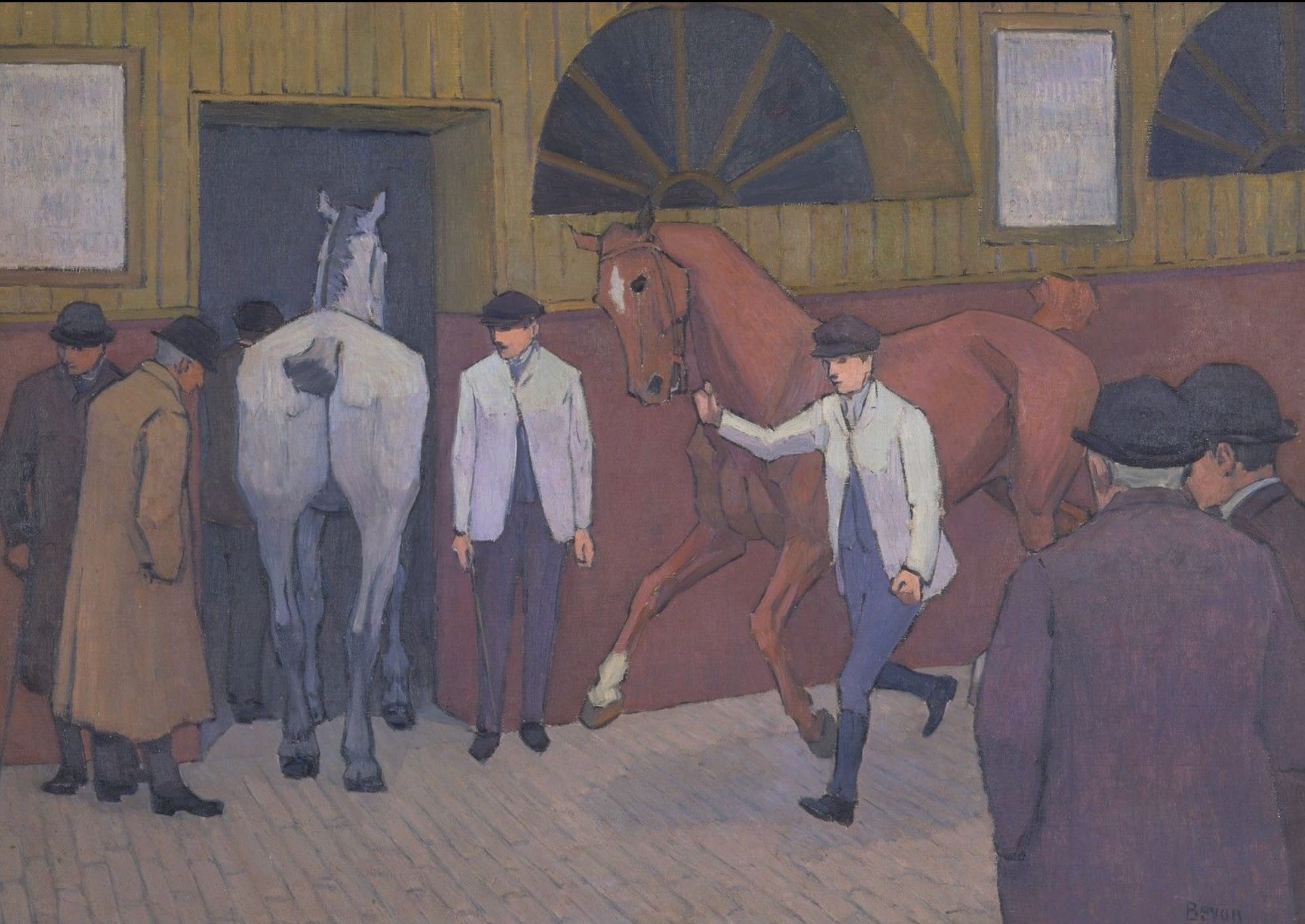
The layout of the show suggests, without stating it outright, that Britain's artists were perhaps a little late to the modern party. By 1917, Picasso was already making fully abstract paintings. In contrast, Robert Polhill Bevan's The Horse Mart remains relatively staid in style, even if its concerns for class were keen. "Horses were a central part of daily life in Britain in the late nineteenth and early twentieth centuries. Bean depicted scenes of horse auctions and working horses to show how different social classes interacted," an accompanying note states. "He included visual symbols, such as different hats and clothing, to suggest social identity, from city professionals to working-class grooms. Bevan's paintings capture a world on the brink of change as cars began to replace animals."
"Across mainland Europe, abstraction was often tied to radical politics, as artists sought to imagine a new society free from the weight of tradition," the notes continue. "In Britain, abstraction developed differently. Artists looked to nature, believing that industry and empire had weakened humanity's bond with the natural world. During the 1920s and '3os, Barbara Hepworth, Henry Moore, and Ben Nicholson used organic shapes and natural materials to suggest a universal order, abstracting landscapes and figures into elemental forms."
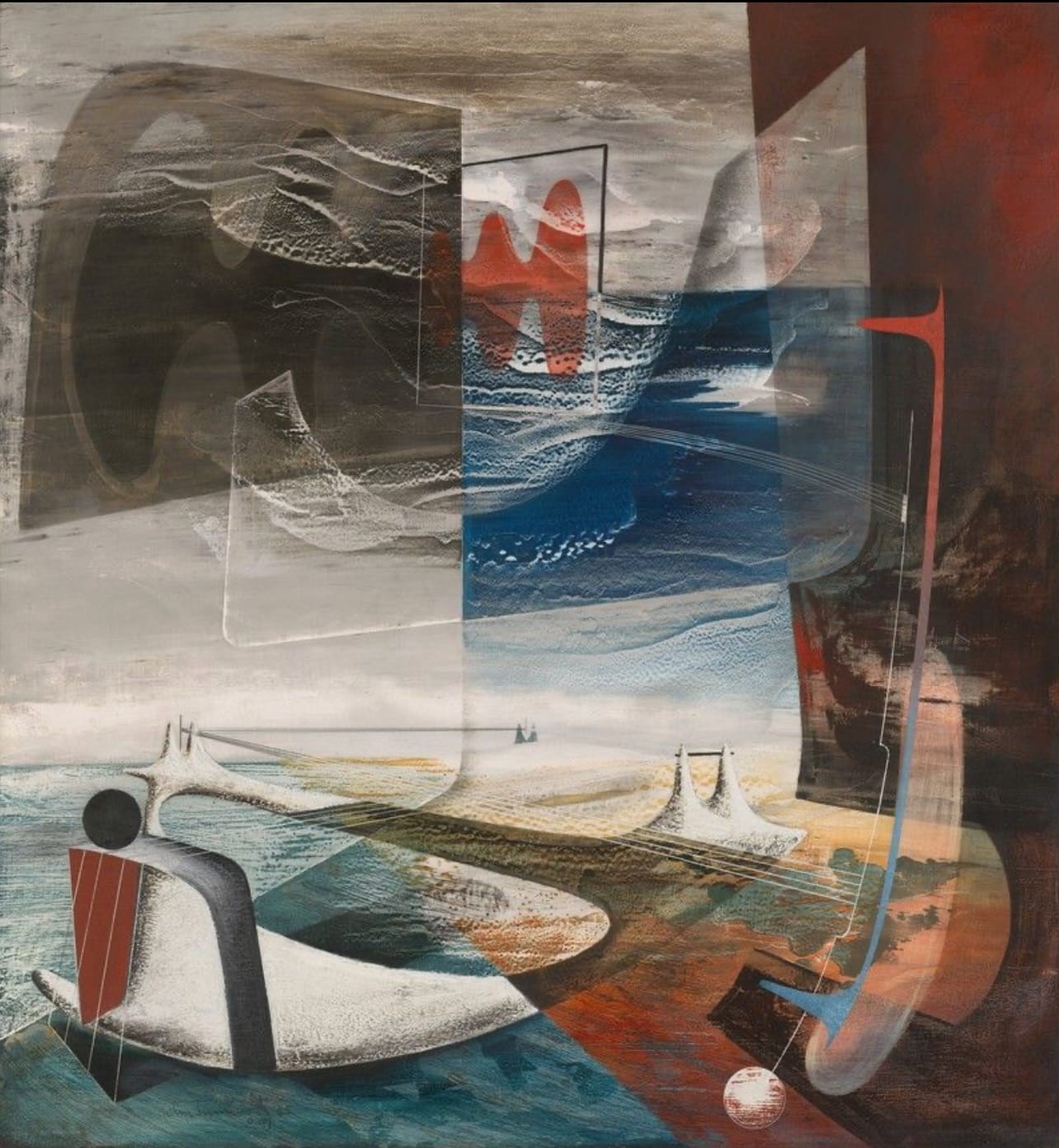
For John Tunnard, they were also a way to react to politics and violence. Forecast, painted near the end of World War II, arose from Tunnard's stance as a conscientious objector. As a result, "he spent the war as a coast guard in Cornwall. Fascinated by natural science, Tunnard collected insect specimens for the Natural History Museum in London.This close observation of nature led him to develop a distinctive visual language that merged the organic and the mechanical, bridging the gap between nature and technology. This collage-like composition combines elements of the Cornish coastline with references to barometric instruments used to measure the weather, and abstract shapes inspired by nature." In the context of its creation, it can perhaps also be understood as a balm against the atrocities of the war on the other side of the English Channel. There had to be a way to recover.
If the post-World War II paintings in the show are to be believed, Britain entered a long period of malaise from which, arguably, it has not recovered. For some, it was a chance to break free of old strictures. Some art focusing on the human body "offered a way to explore forbidden desires. Male homosexuality was illegal in Britain until 1967, yet artists such as Grant, Minton, and Keith Vaughan depicted same-sex attraction, often veiled by the conventions of portraiture or classical references." Focusing on the body was also a way to contend with the numbing scope and scale of violence done to so many. "After the horrors of the Second World War, the body became a visceral symbol of human suffering, trauma, endurance, and survival. Artists including Frank Auerbach, Francis Bacon, Lucian Freud, and Leon Kossoff—emigrés of Jewish or Irish descent—combined figurative traditions with expressive and materially assertive painting. Known collectively as the School of London, they created powerful portraits that probed not what it meant to be British, but the essence of human nature."
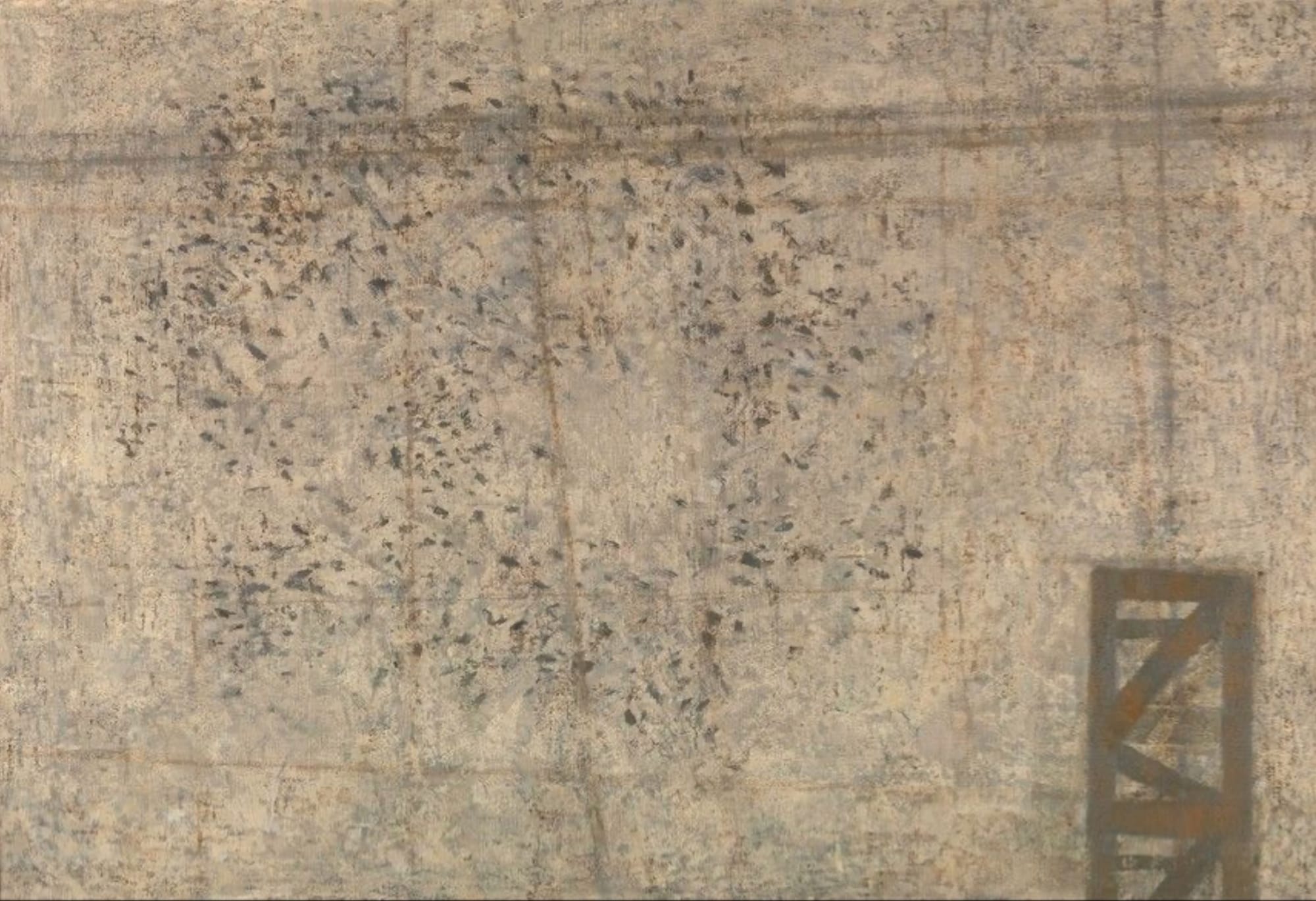
One of the most haunting images in the show doesn't involve people or cities at all. Prunella Clough "painted the industrial landscapes of post-World War II Britain, exploring power stations, bomb sites, and scrapyards," an accompanying note explains. "Having worked as a cartographer during the Second World War, she brought disciplined observation and structure to her art. In the 1950s, she turned to abstraction to evoke the muted colors, rough textures, and polluted air of these sites." The note offers that in 1958's Machine and Birds, "Clough captures the tension between the mechanical and the natural, a fragile encounter between life and the remnants of human industry." She also captures a worn-out haze that has a disorienting effect. There is no context, no background to put us in a specific place, no horizon line we can use to orient ourselves. We don't know where we are, and we don't know where we're headed. Perhaps, seven decades later, we're still figuring it out.


