Joy and Peace Concert
Wooster Square Park
New Haven
June 14, 2026
“Beethoven” and “banger”: Two words most people don’t put together – unless you’re cellist and music teacher Ravenna Michalsen.
The banger in discussion was Beethoven’s “Ode to Joy (Symphony No. 9),” a classic Michalsen just knew she had to include in a “Joy and Peace” concert she organized Sunday in Wooster Square Park.
Michaelsen said she decided to organize the event because she felt disheartened by the state of the world. A cellist for 30 years and music teacher for nearly 20 years, she came up with the only remedy she could.
“I’m not a lawyer. I’m not a politician. There’s not a ton I can affect, but music can really affect our emotional state. I realized, ‘You’re a musician. The way that you can affect change is by bringing people together to play music about joy and peace. I’ve long been interested in protest music; that art is incredibly important. I thought, ‘How can we co-regulate through music?’”
So, Michalsen decided to invite up to 100 musicians to come together to do just that.
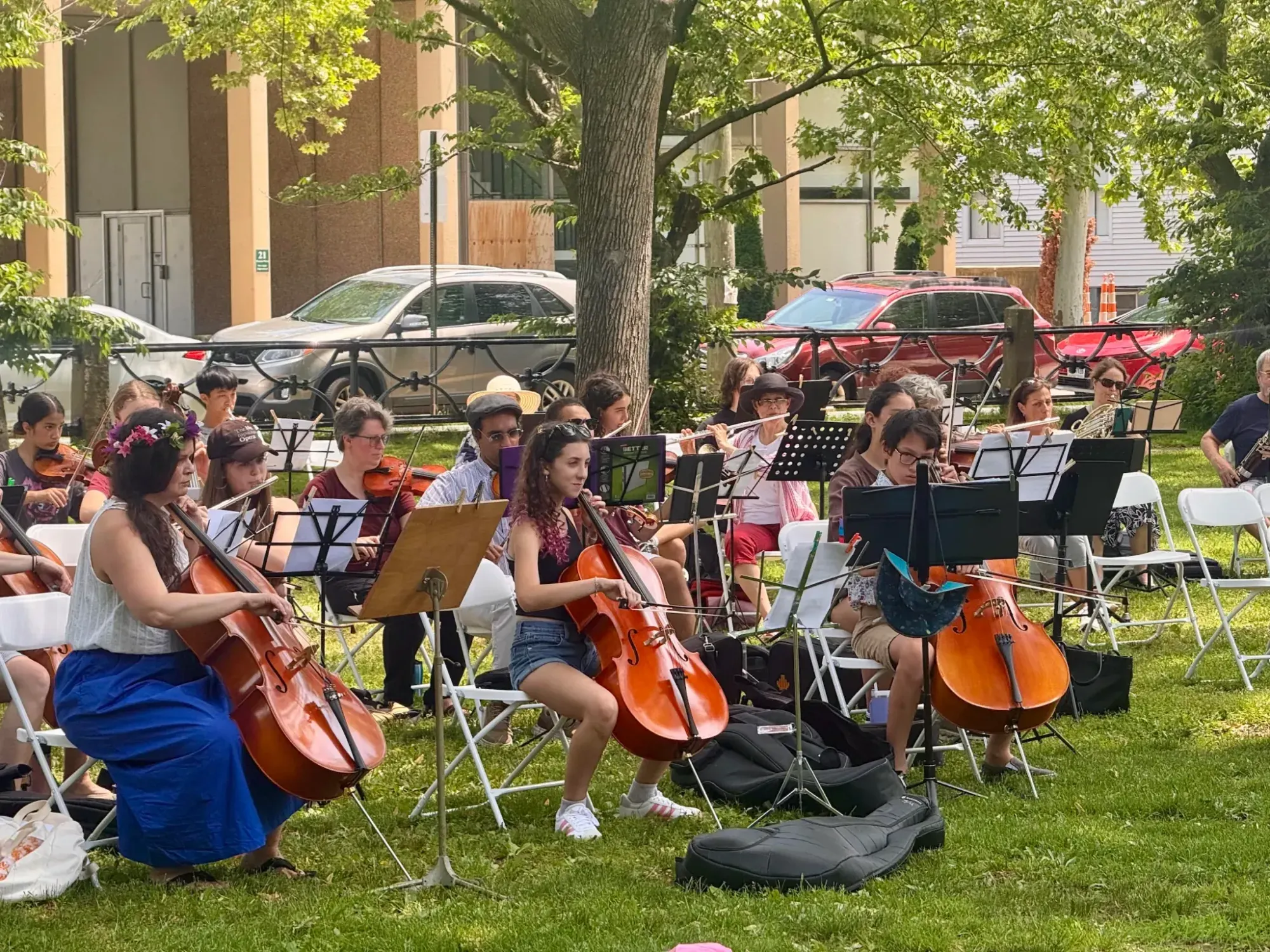
About 60 instrumentalists of all ages and abilities answered the call and gathered in Wooster Square Park on Sunday.
Michalsen stood at the head of the group, waving her bow emphatically as she guided them.
The musicians performed five classical standards arranged for the event by cellist Patti Smith, who played alongside her two children. Somehow, despite practicing together for the first time as a group, the musicians were in sync. The practice runs were nearly indistinguishable from the full concert run.
“The sound coming together just feels otherworldly – really, really powerful,” said Andrew Yang, Michalsen’s student of nine years.
From the very first note, “Ode to Joy” felt like the herald of a new season. The group’s sound was fulsome and warm. Each musical phrase breathed to its fullest extent. It seemed like Sunday’s perfect spring day was made for the song. Listening to the group was as serene an experience as laying underneath a canopy of green leaves, perfectly warmed by the rays of the sun.
“Dona Nobis Pachem” was a sweeping tune, blending string, brass and woodwind instruments into one expressive voice. Sections of instrumentalists entered the song at staggered times, making “Dona” grow into a grander and grander wave of sound. The song’s rich texture didn’t get lost outside. The cadences flowed and were unhurried; subtle swells and diminuendos added to the feeling of tranquility.
The absence of a stage made the music that much more accessible. Without that barrier between the audience and the musicians, the magic felt that much more communal.
Throughout the show, a little girl stayed glued to her grandmother’s side, watching intently as grandma deftly played the violin. Somehow, grandma was able to both pay her granddaughter attention and not miss a note.
“Who here is under the age of 18?” asked Michalsen. Many hands were raised.
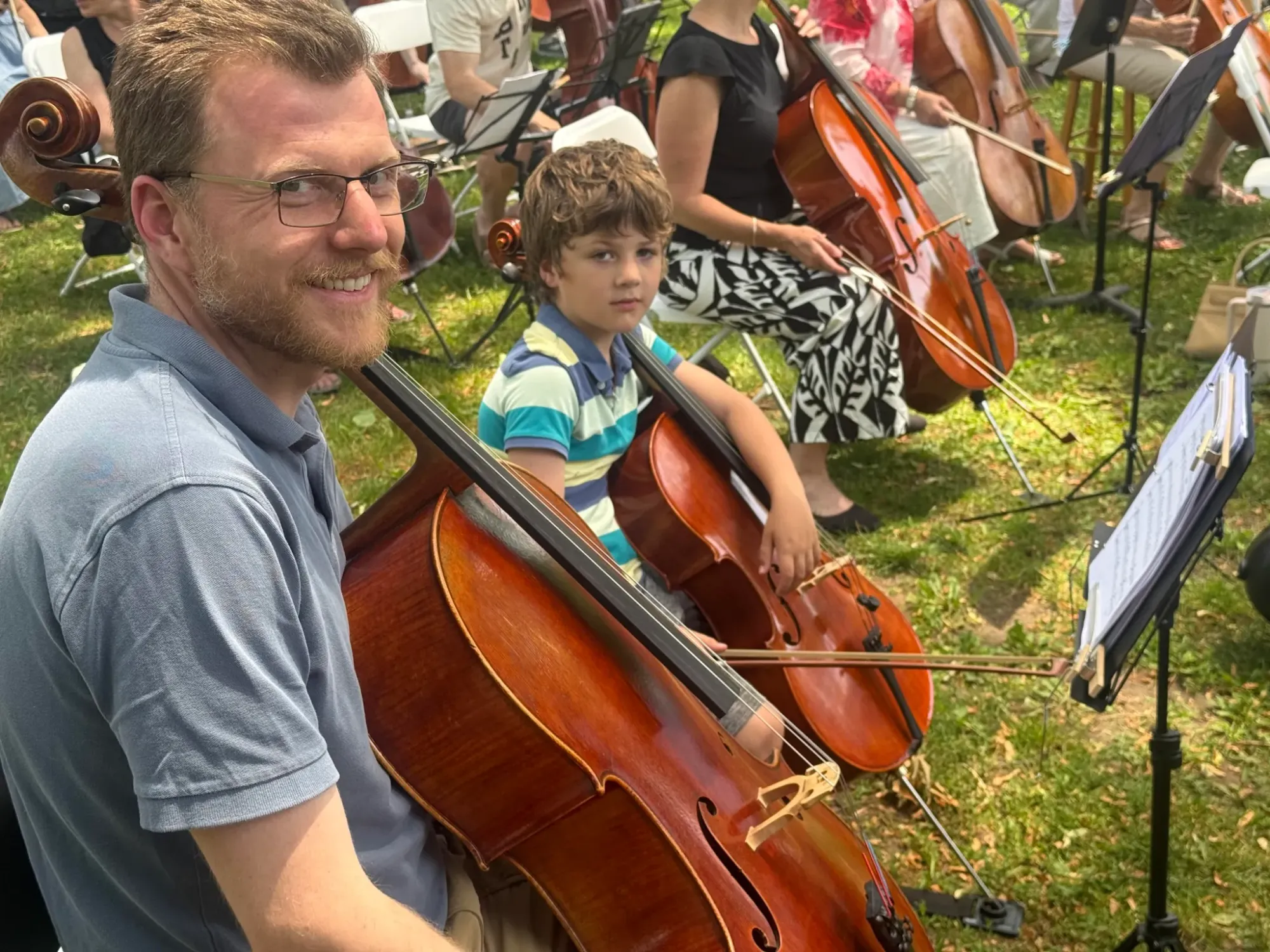
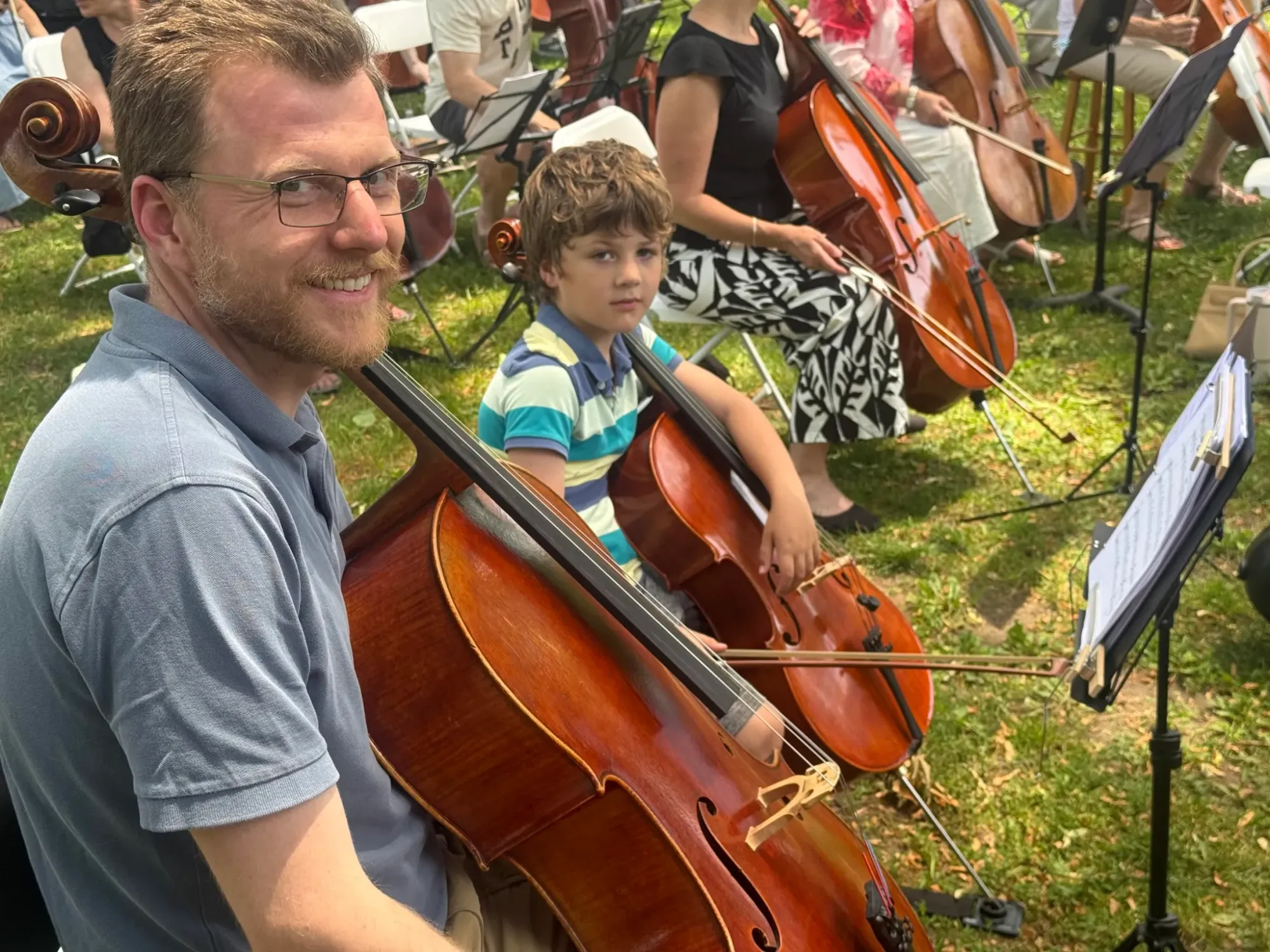
Timothy Rescsanszky, 6, might have been the youngest musician there. He sat next to his dad Matthew as they played matching cellos, his in miniature. Timothy has been studying cello under his dad for the past two years. They were a precious sight, father and son playing side by side as Timothy carefully kept pace.
“Ravenna and I play with a lot of Connecticut orchestras together, so [when] she mentioned this idea, [I thought] it was just a perfect match for my son. He just loves playing [but] there’s not many opportunities for young kids outside of school or private programs to get together and play. I was just super glad it motivated my son. It’s a nice way that we could make some music together,” said Matthew.
For Michalsen, the next was all about a dignified joy. “Jupiter” came as a forceful rumbling of notes that settled into an easeful consonance. The song’s sonority provided a sense of groundedness. You could almost sink into the groundswell of resonant notes.
“Jesu, Joy of Man’s Desiring” was a familiar melody that soared past the treetops in the park. Its beauty lay in the harmonic tension between the rich bass lines and the bright upper notes. The legato style of playing gave the feeling of being warmly wrapped in velvet.
As the concert neared its close, the spry notes of “Symphony No. 6 (Pastorale)” enlivened the park. Competing rhythms and melodies gave a sense of anticipation and momentum. If the other compositions told us to relax, this one was a call to action; to get up and move. To get up and do something.
But, first, it was time to bring back a banger. The group reprised “Ode to Joy,” this time at a faster pace that injected us all with a breathless energy.
An ordinary afternoon in the park was transformed by the Joy and Peace collective. Michalsen set out to answer despair with music, and she succeeded in creating something even more impactful. Community came together. Our joyous Sunday felt like less of an escape and more like resistance.