
Shooting Fast and Slow
Photos By William Frucht
City Gallery
New Haven
Through March 29
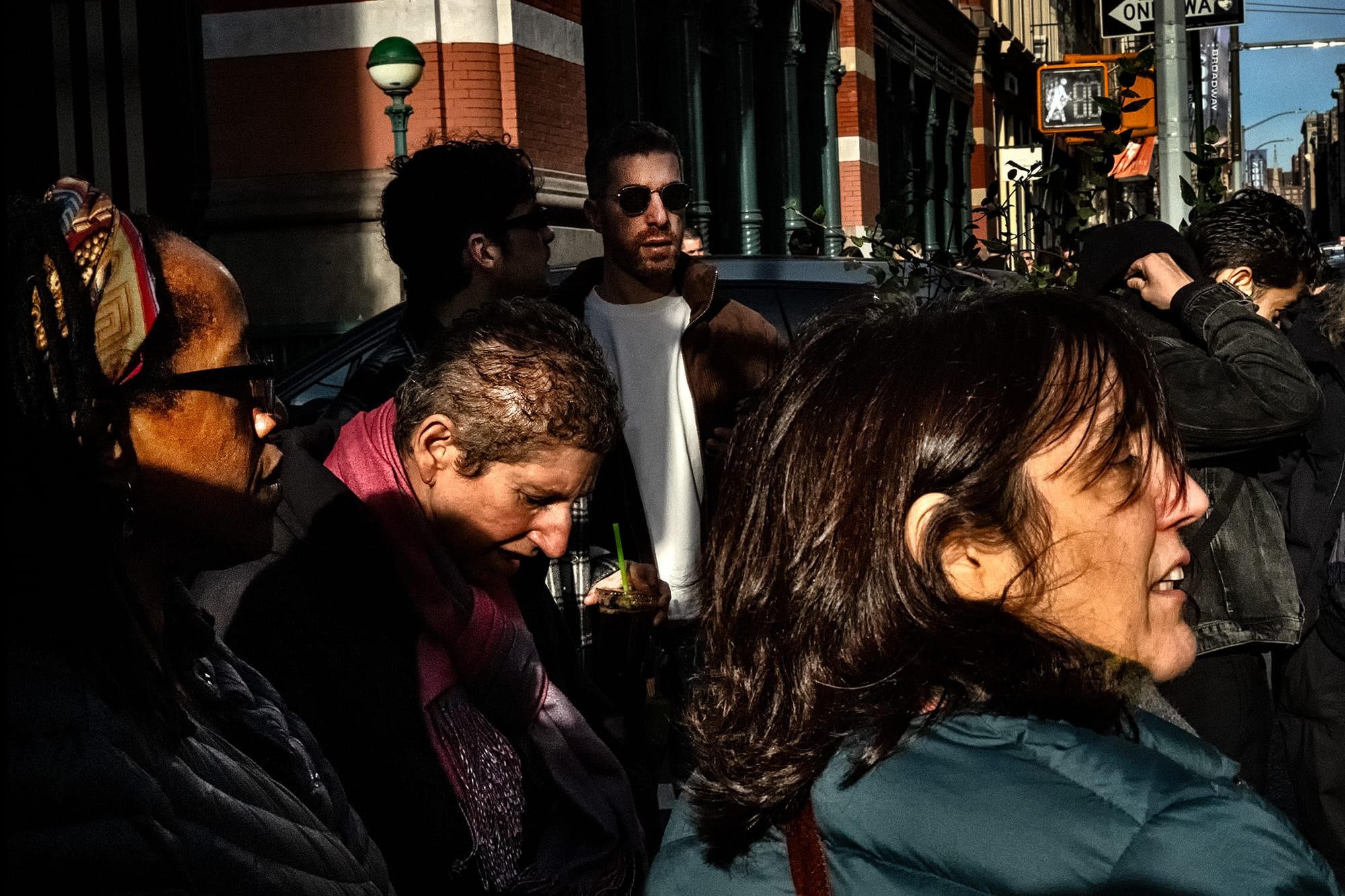
It's a jumble of faces on a street corner in what could be lower Manhattan. The first points of interest lie in the people's faces, the dynamism and multiplicity of their expressions, senses of weariness and alertness. They're the looks of people on the go. But the camera's lens captures something else, too, an interesting shadow that obscures some to all of some of the faces, setting off those in full sun in greater contrast. It's not just the people and their feelings that this picture has caught in its butterfly net of a shot; it's the quality of the air, which perhaps lasted no more than a second, and was gone.
The image is part of Shooting Fast and Slow, a show by photographer William Frucht on view now at City Gallery through March 29. It turns out the approach in that street corner image is only a third of the story. "My photography follows two distinct paths: fast and slow," Frucht writes in an accompanying statement. "One path — the slow path — is photographing abandoned or distressed places with a big medium-format film camera and a tripod. This calls for careful, contemplative work, taking several minutes to choose the camera placement, to meter and focus, and occasionally to wait for the right light. The images that emerge are meditations on the slow evolution of the world: I am in dialogue with the past, photographing events that unfold not over seconds and minutes but over years and decades. Yet even when working in this deliberate, unhurried way, I feel a sense of spontaneity: when the moment is just right I am ready to seize it."
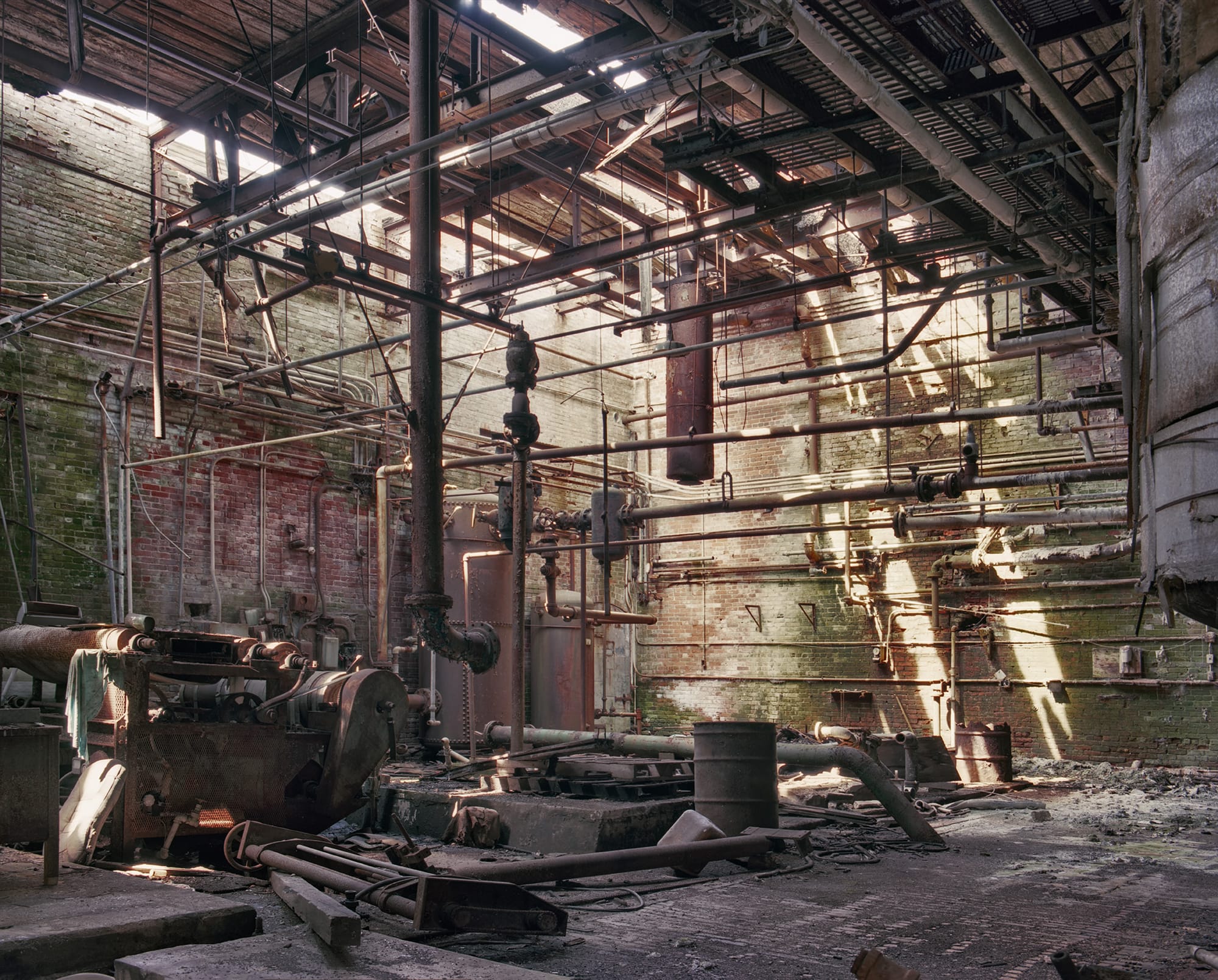
All that Frucht describes comes into acute focus in Connecticut Yankee Mill 24, in which the shadows the metalworks create on the wall behind them are as important to the composition as the metalworks themselves. The eerie light beaming in through the broken roof only adds to the allure. There are people around here who know what they're looking at when they see a room full of machinery like this, but most of us don't. Frucht's sense of slow time works in both directions: we're looking at an artifact of an industrial past, but for all we know, we could be looking at the innards of a crashed alien spacecraft, 10,000 years from now.
Meanwhile, Frucht explains, "the second path is street photography using a small digital camera. I decide my settings beforehand and let the camera make its own adjustments. I immerse myself in the moment, trying not to think but simply flow, reacting to fleeting gestures, expressions, and chance arrangements of light and shadow that flicker into existence like virtual particles and then as quickly vanish. Yet even when the world is an infinite mad dance I try to work slowly, as if slowing time itself, to wait for the moment when forms, colors, expressions fall into place just so."
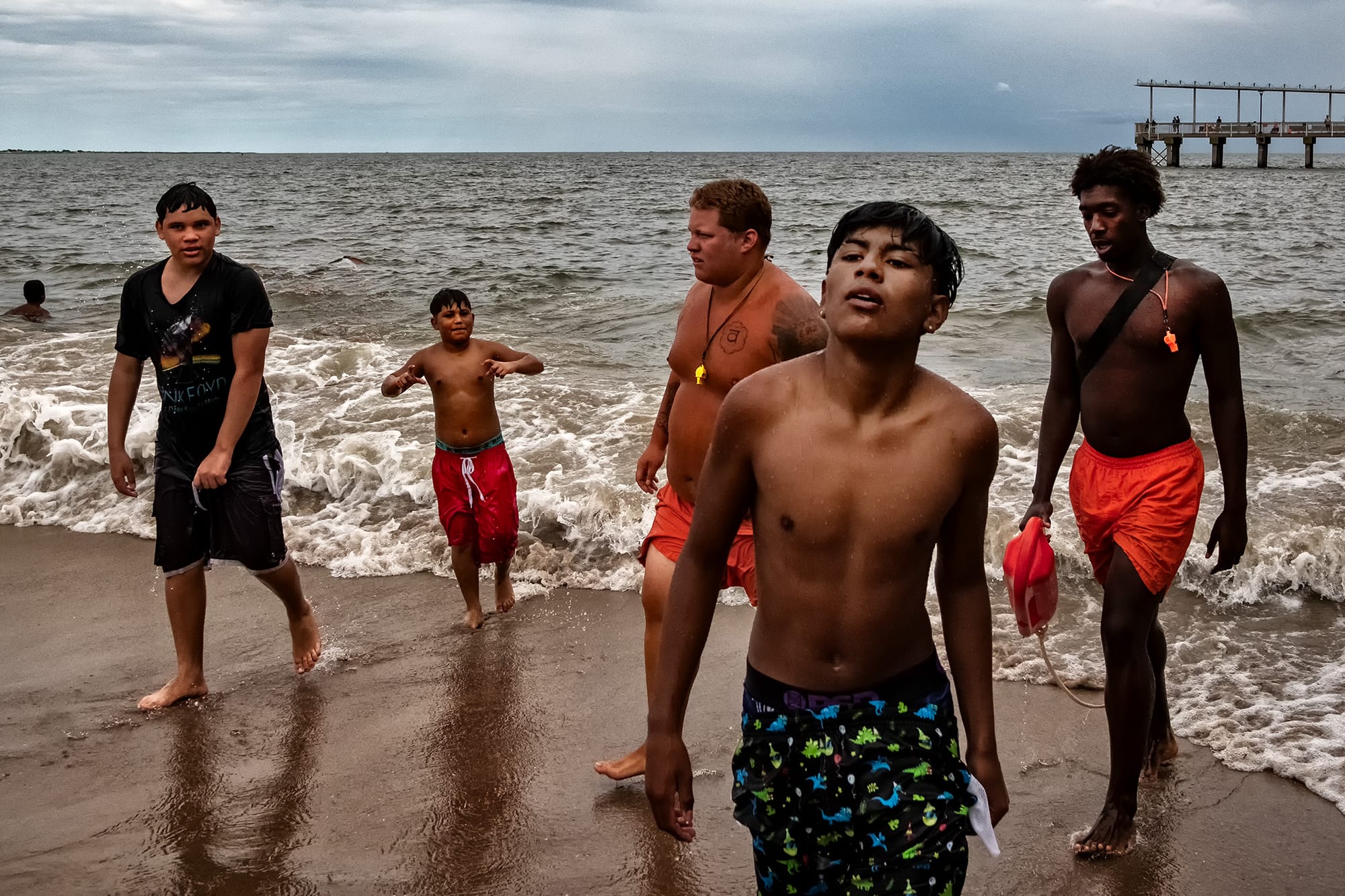
The photographs from the beach perhaps best show the spark Frucht is after. In Untitled, July 2025, we might look first at the faces, of people in transition, from water to air and land, coolness to heat. Are they talking to one another? Are they in their own worlds? The image doesn't let us decide. But it takes in more than the people, too. The wave behind them, for example, is frozen into a complex, compelling shape, all curls and textures, wafts of water and streaks of foam. We almost never get to see it this way. Frucht's snapshot gives us the chance.
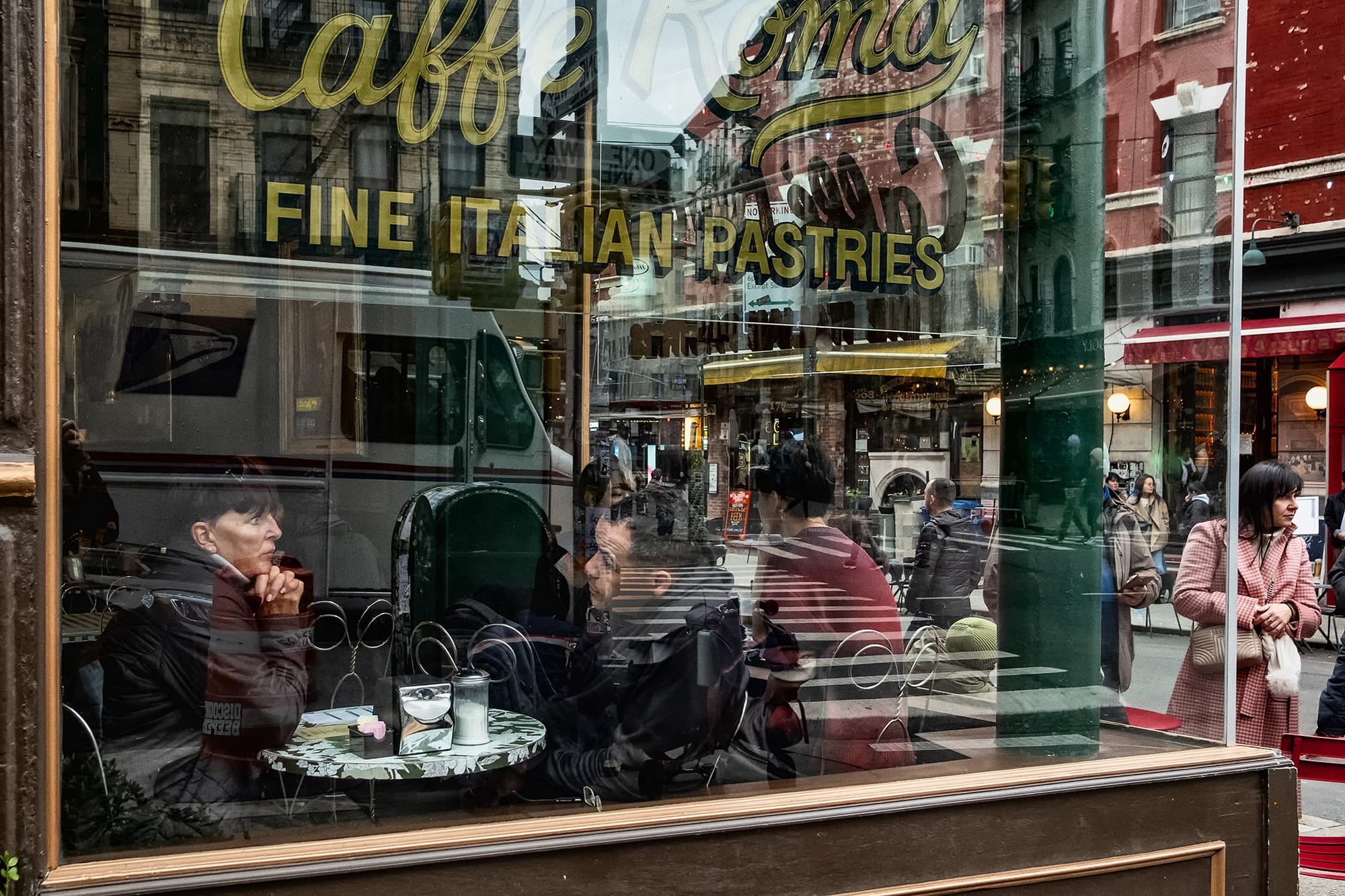
Finally, Frucht states that "recently a third path has emerged, in which I try to capture fast moments with slow processes, like an excursion into an imaginary universe that crosses reality sat an angle." The window shot of Caffe Roma (in which your correspondent has dawdled away many, many hours with a cappuccino and a cannoli) gives a sense of what Frucht means. The people in the picture — both the folks passing by in the street and the customers idling at their tables in the window — will never be there again in that combination. But the window itself has been there for a long time, reflecting the crosswalk and the buildings. The sun has cast the shadows of the painted letters into the cafe for years. Each moment on that corner may be unique, but the picture reminds us that there is something almost eternal about it, too. Until the cafe closes, people will mill in front of it while others sit in the window, and the coffee and pastry will be just as warm and sweet.


