
Weaving Nature: Louisiana’s Native American Basketry
West Baton Rouge Museum
Port Allen, Louisiana
Thorugh Dec 28
Basket weaving is likely the oldest sustained art form in Louisiana, but there are few skilled artisans left, an informational panel at the entrance of the West Baton Rouge’s Whitehead Gallery proclaims.
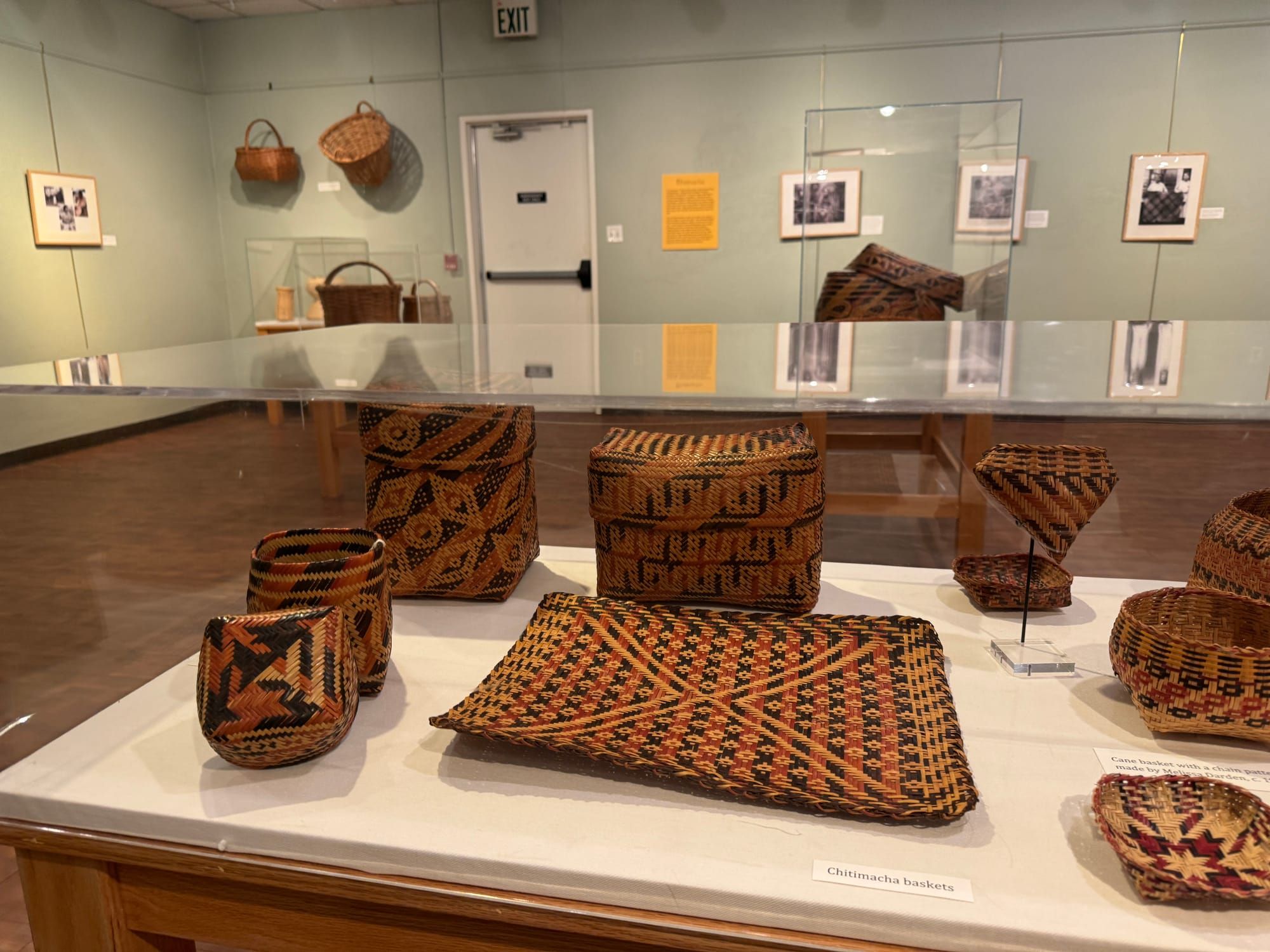
In “Weaving Nature: Louisiana’s Native American Basketry,” the West Baton Rouge showcases both historic and modern examples of Chitimacha, Houma, Coushatta, Choctaw, and Tunica-Biloxi tribe style basket weaving. Many of the modern examples were created by those revitalizing the practice as part of the healing process after the trauma their ancestors endured. Some materials have had to change because of deforestation or other environmental changes throughout the years, but the techniques remain.
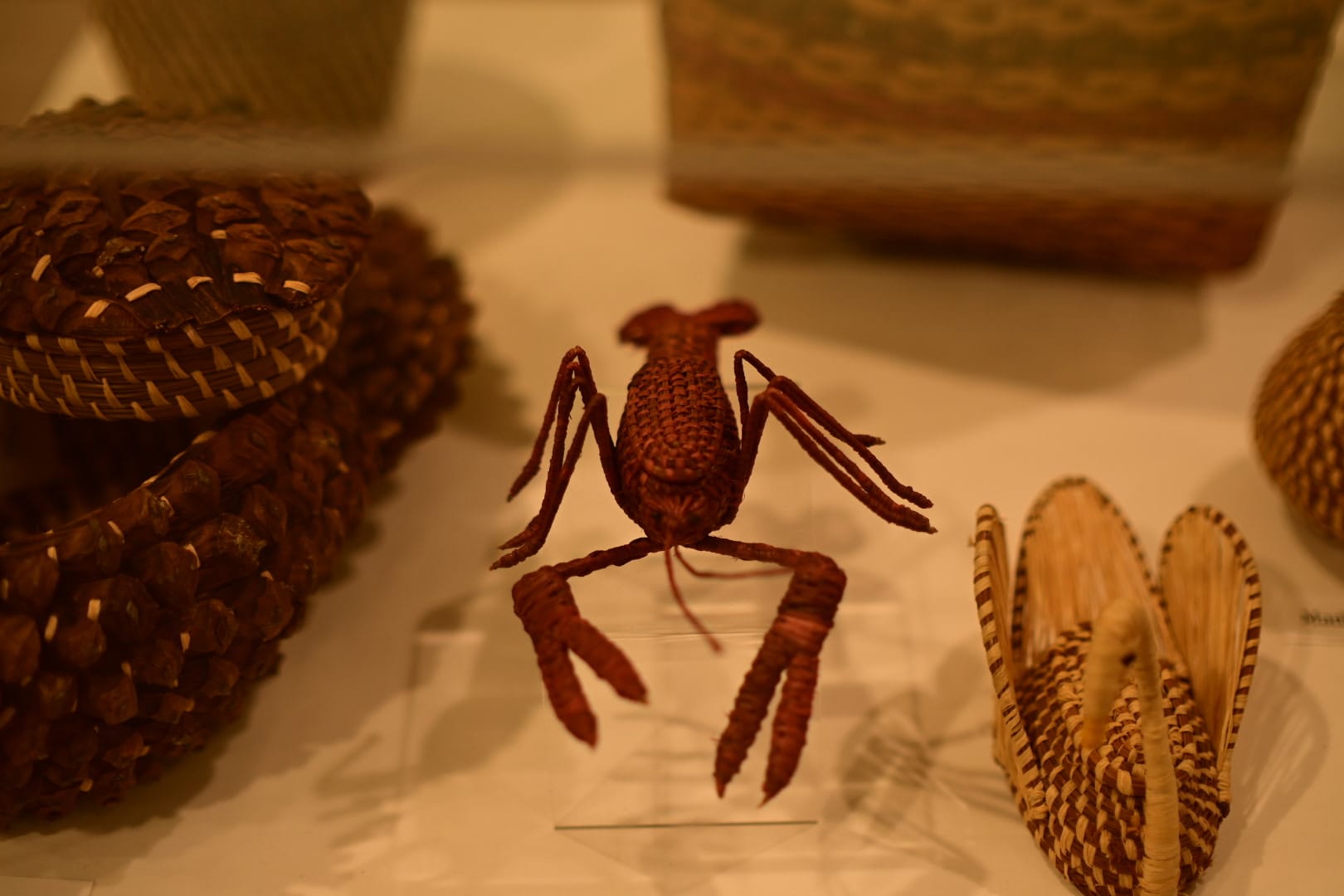
The exhibit is composed of different tables featuring collections of baskets made from different tribes as well as a little information about where they came from and the techniques behind them. The baskets are beautiful and surprisingly varied. Some Coushatta baskets, made by Lorena Langley, are shaped like animals: a duck, a crawfish, a swan. Others are more practical, large enough to be used to transport things like the cypress splint baskets made by Cyril Billiot of the Houma Tribe. Rather than the traditional palmetto, he used cypress for a stronger and functional basket to sell. Every basket represents countless hours of work and generations of craftsmanship and tradition.
Many of the baskets are on loan from various institutions or individual collections: The Louisiana Art and Science Museum, The Historic New Orleans Collection, Louisiana State Museum, LSU Museum of Natural Science and Anna Wilkinson are thanked by name. It’s rare that one can see such a diversity of woven work displayed together.
Sometimes people act as though functionality excludes art from being art, as if art exists in a plane separate from daily life. That’s not the case. These baskets are art, not just because of the time it takes to create them, but because of the beauty and intentionality of the designs.
In the background of the small gallery space, you can hear a video of a woman teaching us how to make baskets. She’s wearing an Apple watch and holding her weaving close to the camera. Native authors and advocates often bemoan the fact that people think of Indigenous people as a thing of the past. It’s a continuation of the myth of the vanishing Indian that has long been perpetuated in American history.
Broadcasting a Youtube-style basket making tutorial narrated in an Indigenous language and captioned in English is a simple yet effective way to push against that. Indigenous people are not vanishing. They’re here. They’re revitalizing their traditions and languages and working to adapt their practices to contemporary circumstances.
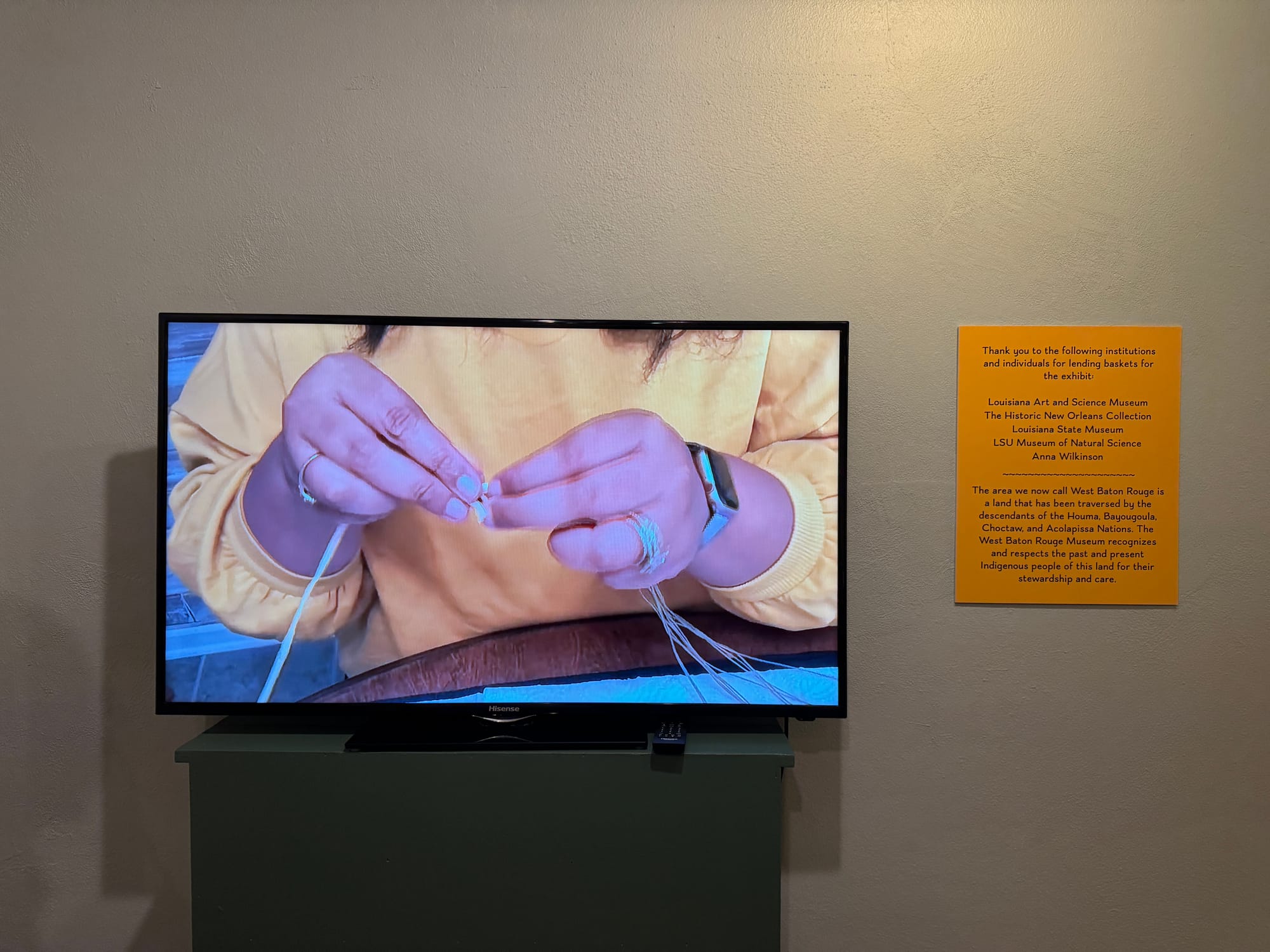
But this begs the question the exhibit doesn’t quite answer: Who are they? Who is the woman in the video? What language is she speaking? Maybe she says at some point, but it’s a long video on loop so the casual passerby in the museum is not guaranteed to hear it. The exhibit’s curators go out of their way to detail how to harvest canebrake but the same amount of specificity is not given to the people behind these baskets. The tribes are described in high level detail with some practices and materials, but the people behind the baskets are largely relegated to their names and, maybe, a photo. But these baskets are personal. It feels so strange not to know anything about Lorena Langley or any of the people who created the baskets I saw.
Regardless, I hope the West Baton Rouge Museum keeps showcasing Native art, and maybe next time, we can learn about those who made them too.


