
Guided Tour
Wadsworth Atheneum
Hartford
Jan. 09, 2026
I’ve been to the Wadsworth many times over the last few years, but those trips involved either attending an event or wandering aimlessly through the hundreds of artworks. I haven’t been on a guided tour through the museum since I was a kid, so I was happy that I caught the guided tour just as it was leaving.
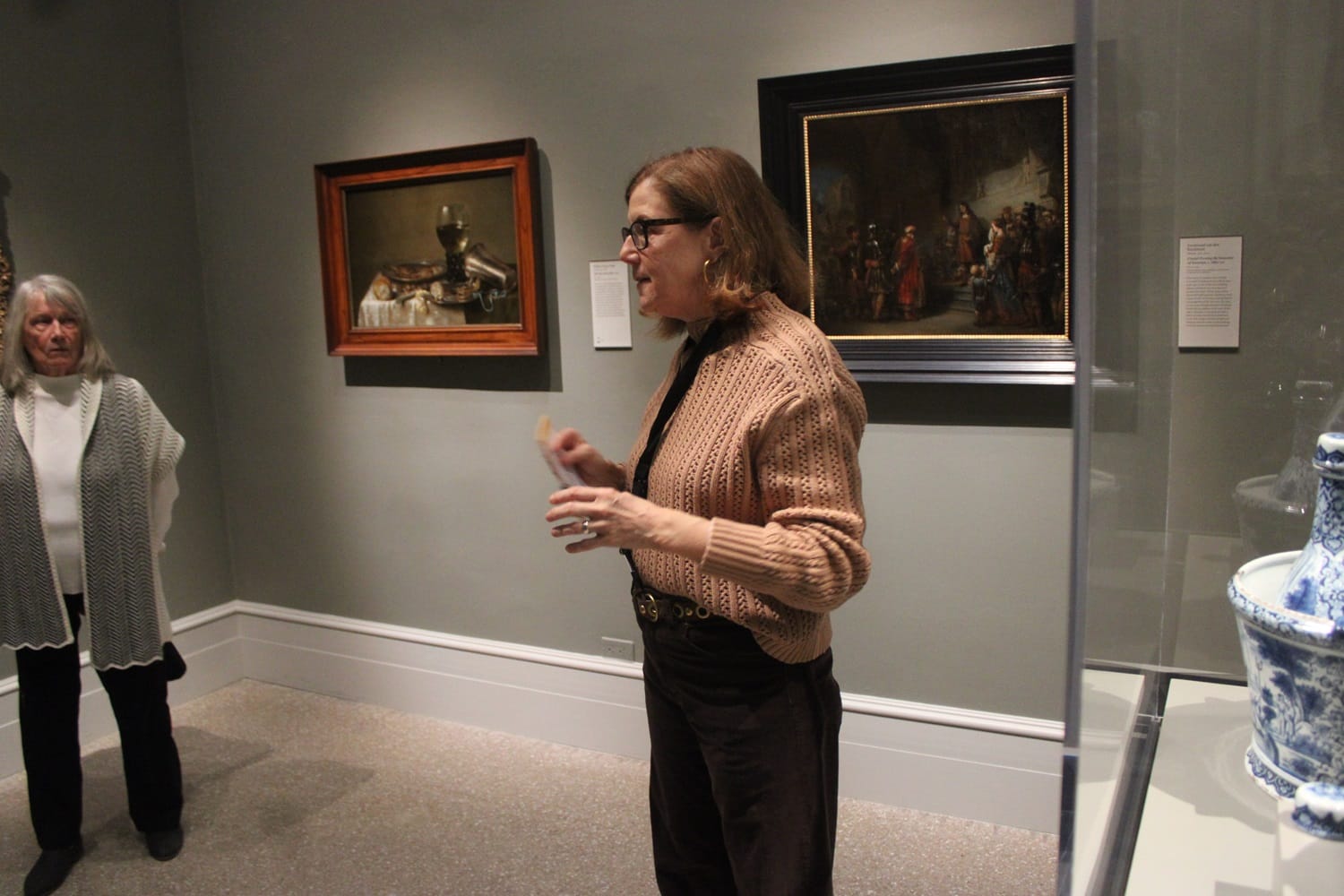
Our guide for the one-hour tour was Nancy, a docent-in-training, along with her mentor Christi. Nancy began her work as a docent last fall after completing nine months of in-classroom training. Afterwards, docents-in-training are mentored by an experienced docent for three to six months – Christi, in this case, who has been a docent since 2018. Finally, trainees must complete an evaluation before they earn the title of docent.
I had no idea that docents went through such rigorous training, comparable to the amount of time it takes to get many professional certificates. As the tour progressed, the breadth of Nancy's and Christi’s knowledge became clear.
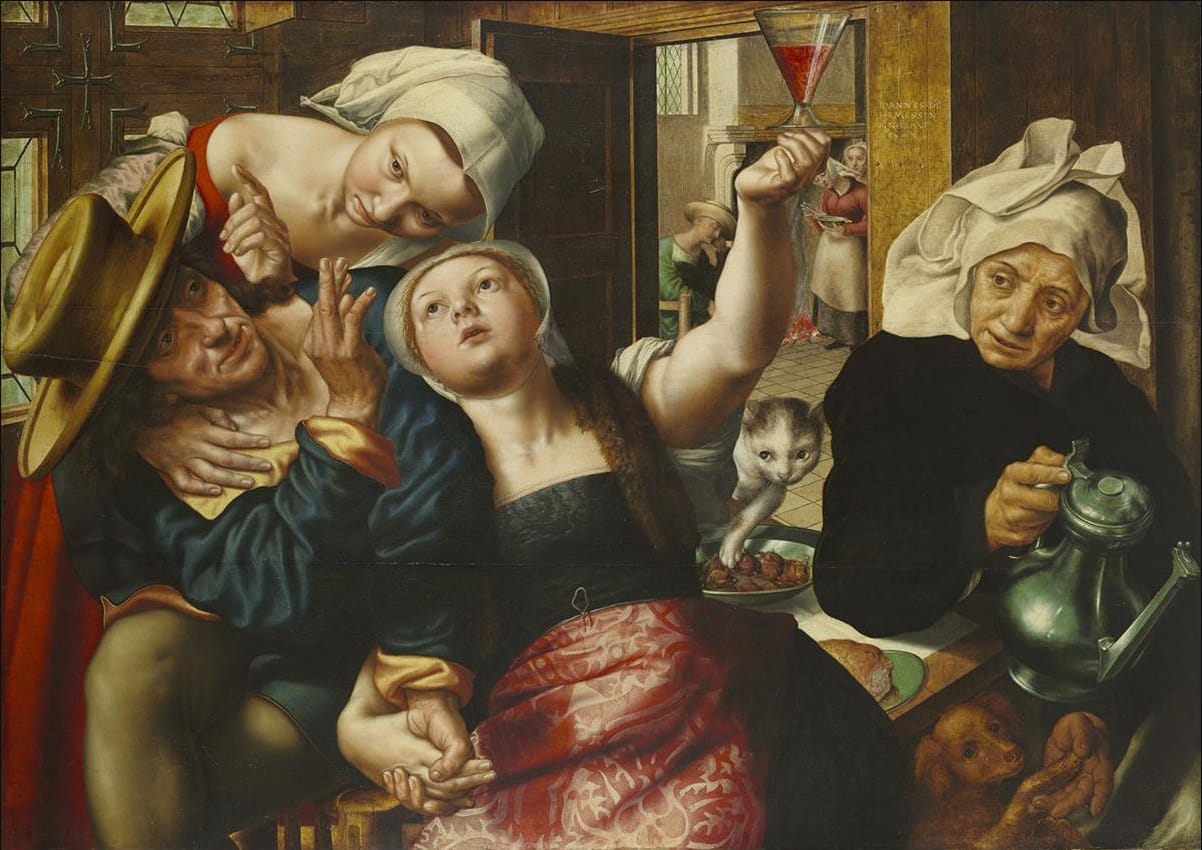
Take their understanding of Jan Sanders van Hemessen’s work, Loose Company. Nancy was able to give us the context of the era in which the painting was completed, and tell us about the painter himself. Most interesting was what she knew about the background of the painting itself, as in what was happening behind the main image.
The description of the painting describes it as a “scene of debauchery,” focusing on the suggestive pose of the woman in the foreground.
Nancy told us to look beyond that, into the background. She said that the painting is an example of mannerist inversion, where the images in the foreground often obscure traditionalist or religious imagery in the background. Looking closely at the background, she said, we could see a goose having its feathers being plucked. This could be a reference to a well-known morality story of the time, the parable of the feathers, where gossip once spread cannot be taken back, like reattaching the feathers to a goose. The moralizing of the picture is not in the condemnation of a woman who may simply be having a good time, but in the assumptions made about the woman, and the slander that spreads and cannot be taken back.
I wouldn’t have come to that conclusion looking at the painting, both because my eyes were fixed on the foreground, and because I’d never heard the parable of the feathers. Having a perspective other than the official description of the painting deepened my understanding of the work. It showed me the importance of considering the entirety of a painting, not just what I thought was important.
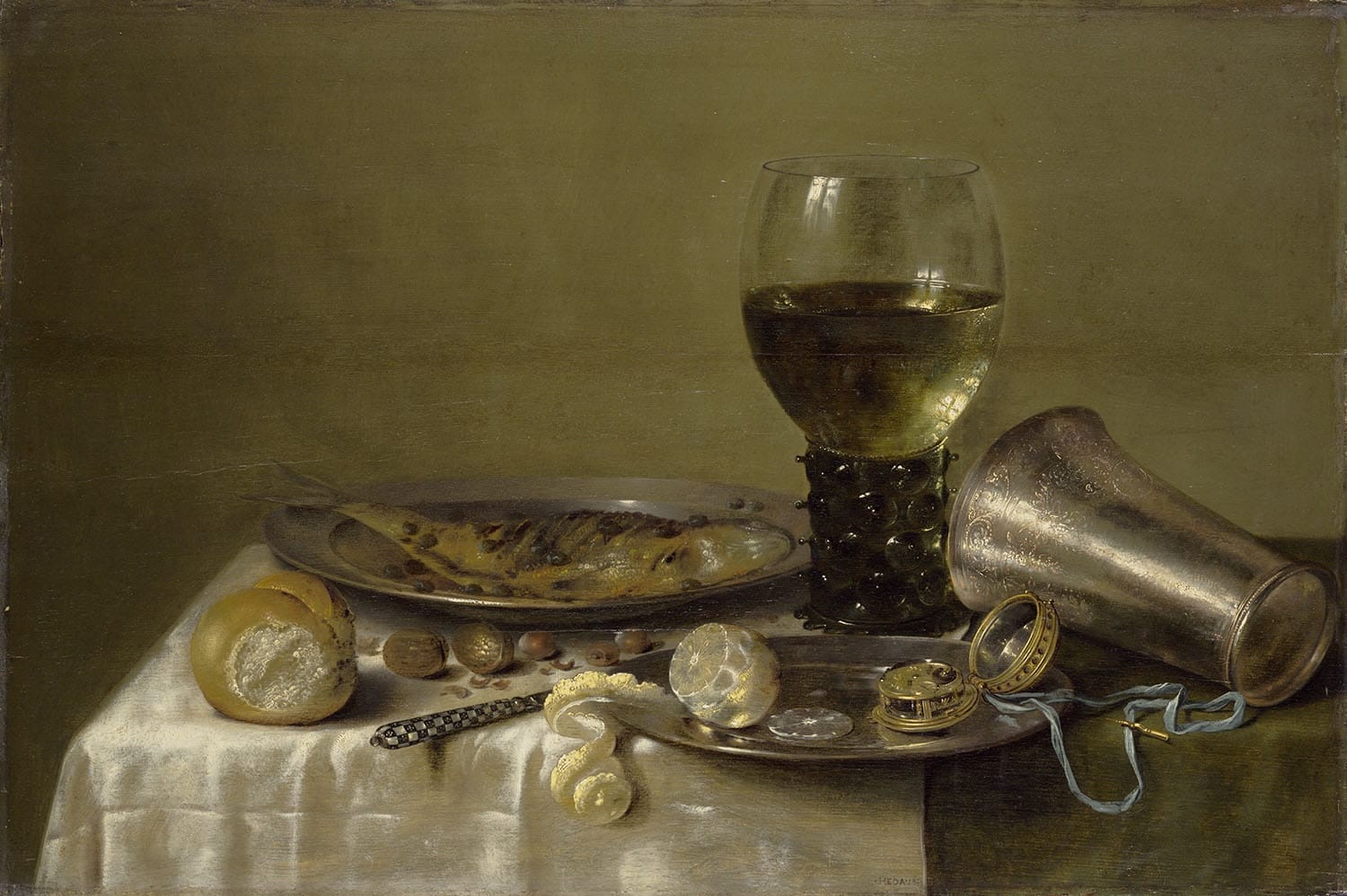
Nancy was similarly able to shift my understanding of another work on the tour, Willem Claesz Heda’s Still Life with Goblet. Where I thought that I was seeing a simple painting of the aftermath of a delectable meal, she was able to explain what the still life movement was about. An ironic form, the capturing of a single moment was actually a representation of the fleeting nature of life. The tipped-over glass, half-peeled lemon and leftover food are symbols of how temporary our existence is. Even the half-full goblet stands for the passage of time, as it will eventually be emptied, just as our lives are.
Art often speaks in a language that is tied to the moment when it was created. It’s great to have such skilled and knowledgeable individuals as the docents at the Wadsworth to help philistines like myself make sense of what I’m seeing. They work hard to make the art accessible for everyone, so thank a docent when you see one.
NEXT
The Winter Blues music series returns to the State House Square Food Court, and Jamil will be there.


