
Tulsa Opera: The Pirates of Penzance
Lorton Performance Center
February 1, 2026
Gilbert & Sullivan’s The Pirates of Penzance was as much a part of my growing up as Depeche Mode, Donna Summer, and The Gaither Vocal Band. If that sounds like a culturally chaotic childhood, it absolutely was, and I honestly recommend it. There was something about this goofy 1879 operetta’s combination of absurdist comedy, twisty wordplay, and jaw-dropping vocal compositions that sparked some key neural connections in my little kid brain, though the satire of it all—lampooning British aristocracy, Victorian-era pirate mania, cops, opera conventions, unearned authority of all kinds—didn’t hit till later. And while I can’t say for certain whether Kevin Kline and Linda Ronstadt (the stars of the 1983 film version, which set off my obsession) were my first crushes, they were at the leading edge.
It wasn’t just me who was obsessed. Riding the wave of Joseph Papp’s Tony Award-winning 1981 production of Pirates in New York (adapted for posterity in that film), Gilbert & Sullivan mania was a whole thing in those years. A group called The Gilbert & Sullivan Society of Tulsa (later known as Light Opera Oklahoma) took shape and offered regular live performances of these kinds of operettas and musicals right here at home, some directed by a Brit named John Reed, one of the world’s authorities on Gilbert & Sullivan. Tulsa Opera joined the throng, too, presenting The Pirates of Penzance at the Tulsa Performing Arts Center in 1984.
But like the spirits of Pirates’ Frederic and Mabel when they realize they can’t get married (because Frederic, an orphan, is contractually bound to remain a pirate until his 21st birthday but it’s been revealed he was born on a leap year so they’ll have to wait a while; long story), the Gilbert & Sullivan craze eventually flagged. Tastes change, times change; things that once seemed droll can come to seem out of touch. Light Opera Oklahoma last performed Pirates in 2008 and closed its doors for good in 2015. And it took Tulsa Opera 42 years to reach for Pirates again—until this past weekend, when it brought this perfect jewel of ridiculousness back to Tulsa in a production that had the loafer-wearing millennials, the pirate-costumed Gen Z kids, and pretty much everyone else around me in the packed-out Lorton Performance Center cackling with unexpected joy.
It was worth the wait. The plot of this show is insane and frankly too much to get into; suffice it to say there are multiple plans and mix-ups involving Frederic and his nurse Ruth, a band of pirates, a Major-General and his many, many virgin daughters, and a nerveless police force, all of which librettist W.S. Gilbert knots together and splendidly unravels over two rollicking acts. Just when you think all’s well, another spanner goes into the works, so you get a satisfying zig-zag through mayhem and resolution that bounces along on some of the most delightful music ever written.
There’s a lot going on every second of this show, not even counting the thousand-words-a-minute songs, and it would be easy for it all to get muddy. But director Eve Summer brought crystal clarity to Tulsa Opera’s production, helped by a terrific set, flawless stage management with a ton of props, a game-for-anything cast, and an orchestra directed by Cathy Venable that skillfully handled a wild range of dynamic requirements.
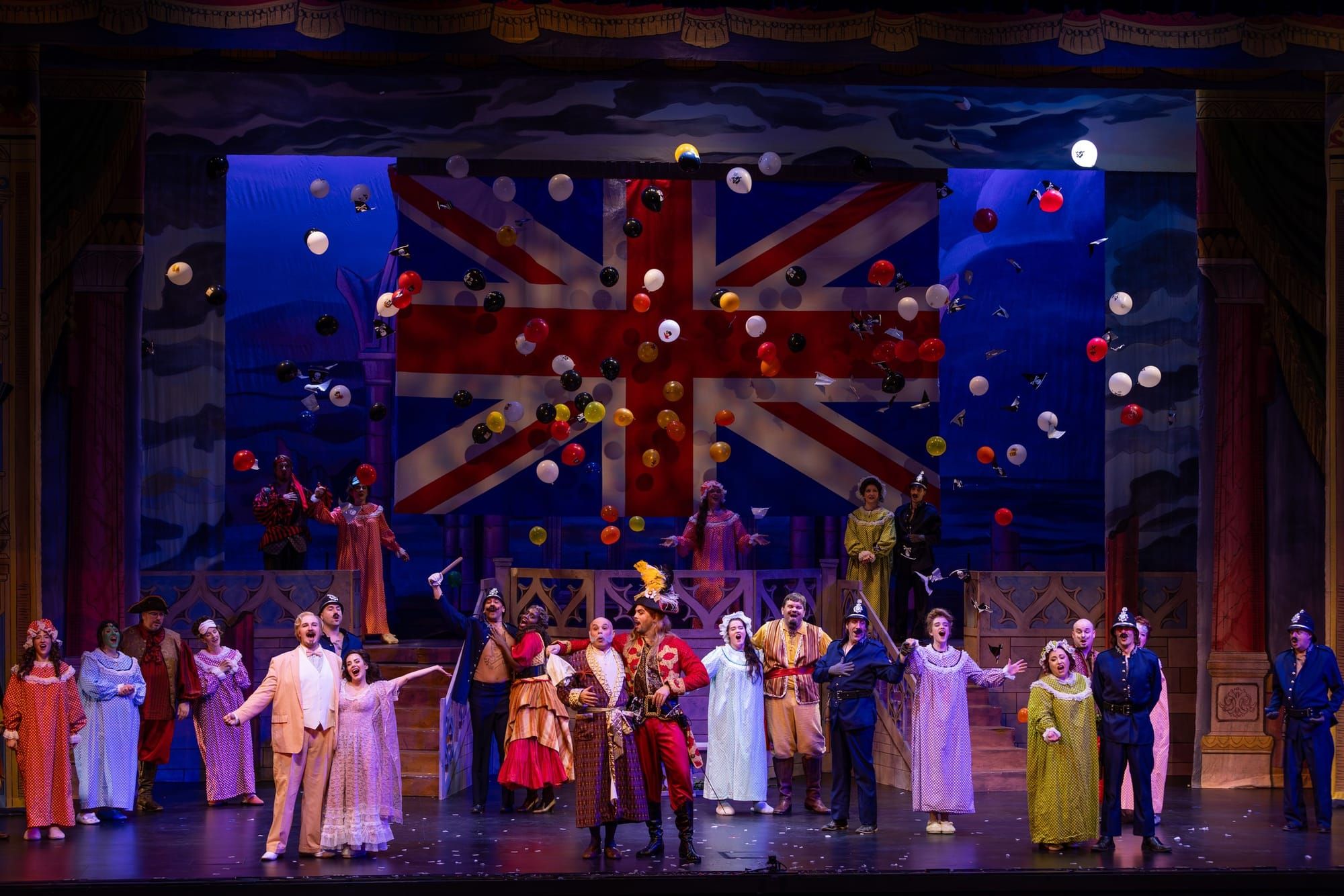
This Pirates was a master class in theatrical integration, popping with detail while sustaining a wide-scale world—starting with a hilarious pre-show announcement that promised, in deep 19th-century tones, “romance, absurdity, and men who take their jobs way too seriously." (Also that we “would be judged … severely … by the people sitting next to us” if our phones rang during the show.) Summer’s directing created a nonstop mix of “what is even happening” surprises and big, grand storytelling that delivered a fully operatic experience with a ton of fun built in.
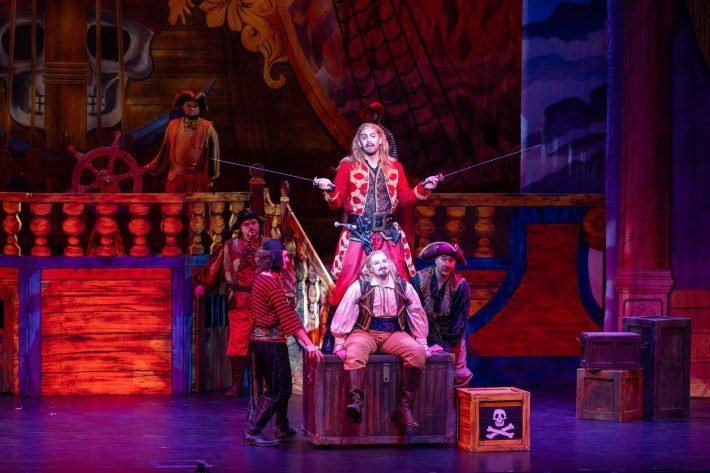
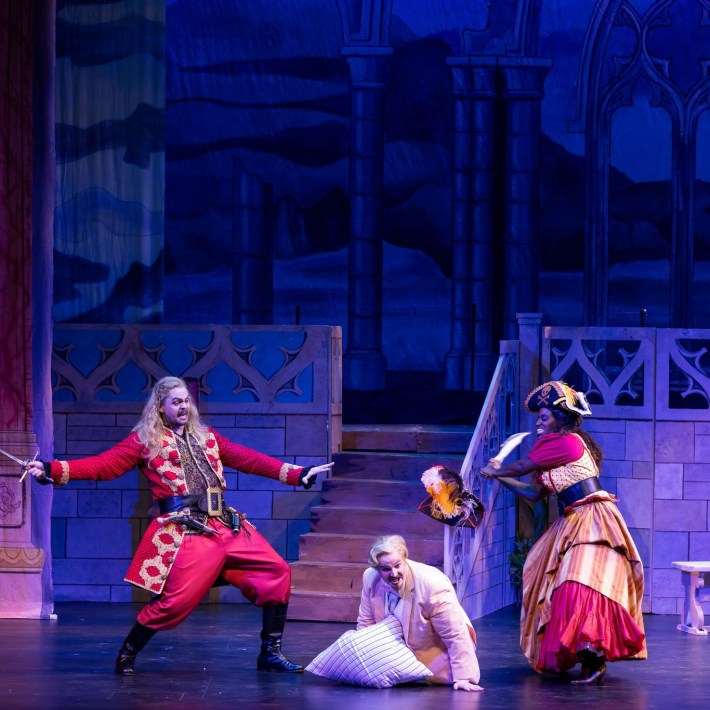
I loved the totally unnecessary moments—an extreme light shift during an extra-dramatic recitative, a random pop-up tent brought in by one of the daughters on an outdoor jaunt, a leaf blower that made the Pirate King’s hair waft in the breeze and returned later to waft some greenery around, avocado face masks during a nighttime scene with the young ladies in pajamas—that brought fresh and truly absurd energy to the period setting, without feeling tossed off. And Summer kept the performers moving—climbing on top of pirate chests and garden benches, bustling up and down steps, mass-twirling parasols, shifting back and forth across the stage—with creative blocking that played well with the perpetual motion of the music and the plot.
Her choices made space for the whole cast (which included locals and nationally-recognized opera talents) to come fully forward in their parts, from the lowliest sniveling cop to the stars of the show, with an immaculate blend of seriousness and spoof. Jason Zacher somehow evoked Karl Urban, Axl Rose, and Tim Curry all at once as the Pirate King, his easy bass-baritone stretching through the space like a sinuous cat. Meghan Picerno, as Mabel, nailed the comedy payoff with the firepower of her flawless coloratura. Tesia Kwarteng’s rich tone brought depth and heart to the nurse Ruth, and Sergio Martinez’s colossal bass made his quavering, deadpan Sergeant of Police funnier than it had any right to be. The incredible rolled Rs of Robert Mellon’s Major-General Stanley were only one of the ultra-fine details that made his performance so vivid. And as the ardent, confused hero Frederic, tenor Chris Mosz—a Tulsa Youth Opera alum and rising star in the global opera world—sang with a warbling authority that was as touching as it was hilarious.
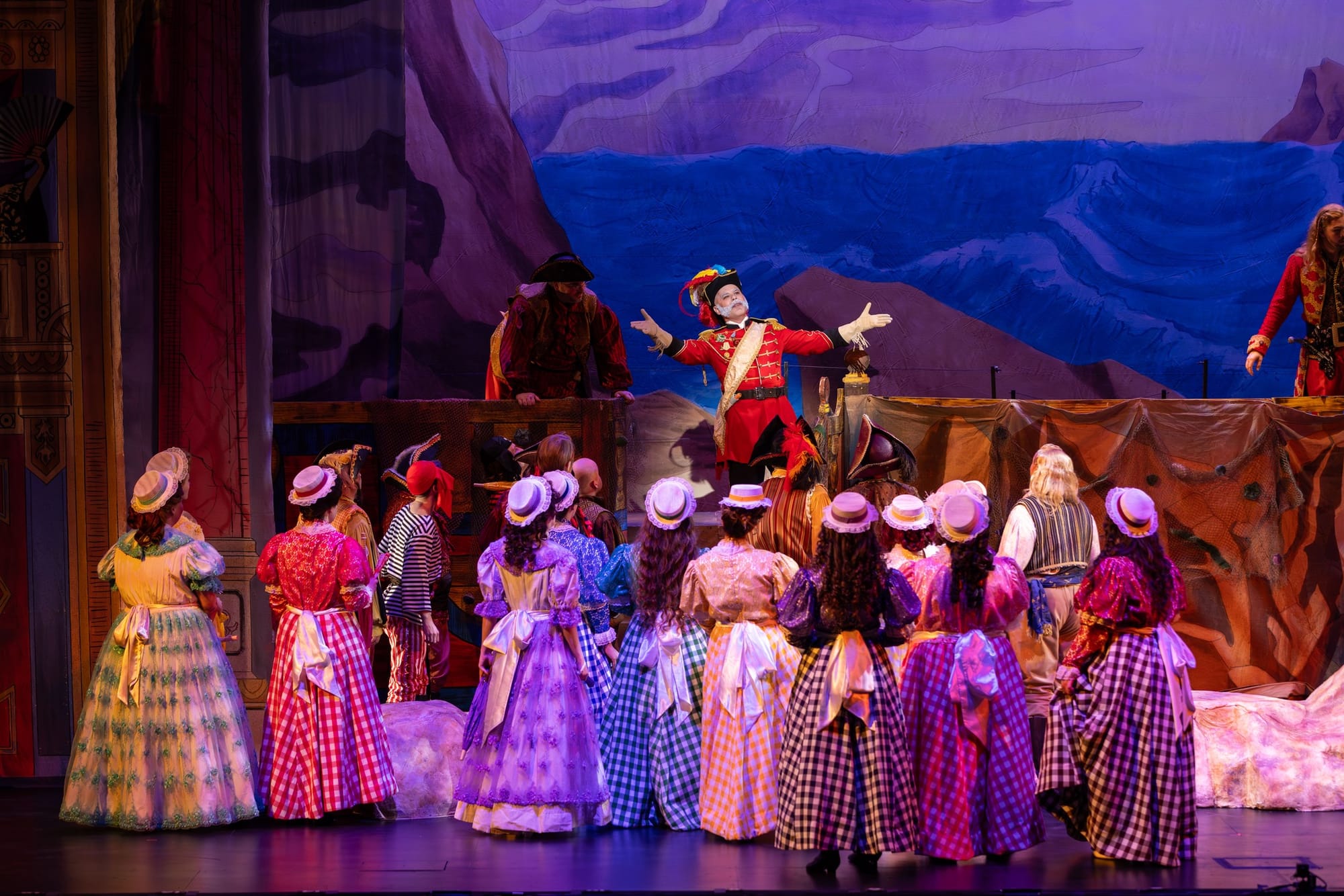
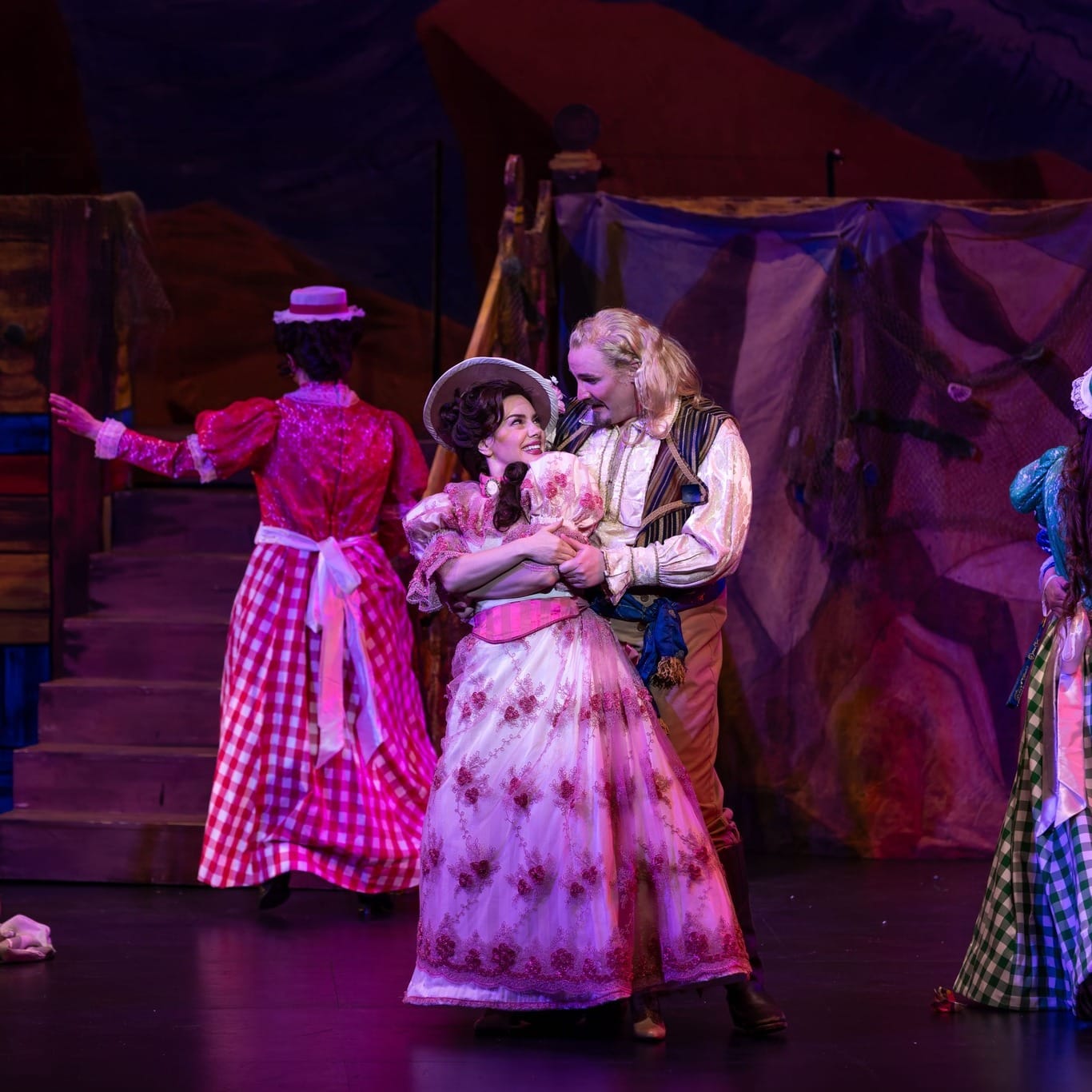
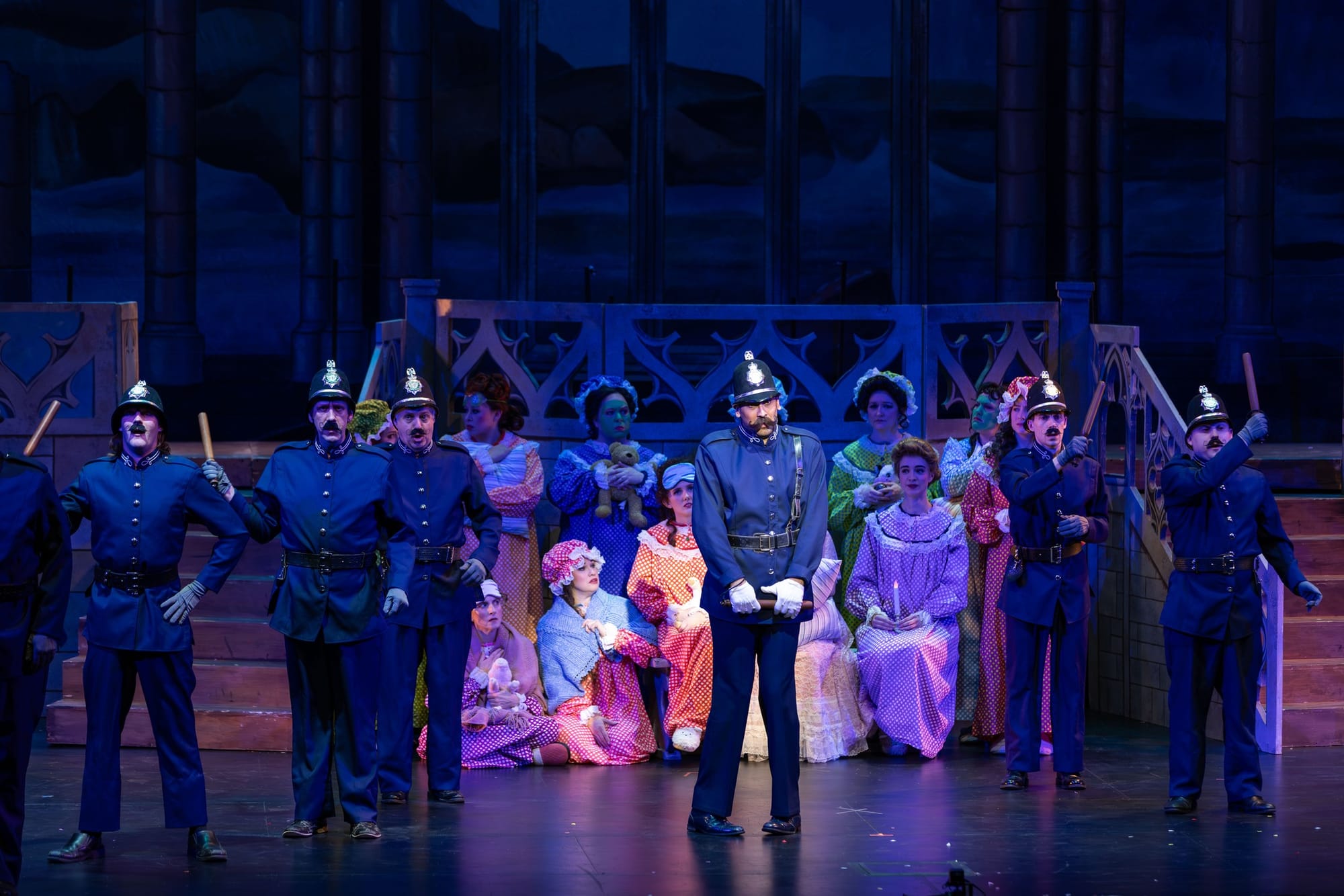
Robert Mellon (L), Meghan Picerno and Chris Mosz (C), Sergio Martinez (R) with the Tulsa Opera Chorus | photos: Eric Joannes
All of these elements—the score, the stagecraft, the performances—made for a production that let Pirates expand into its full emotional range, from the ridiculous to the sublime. I was as moved by the young woman in a nightmare of gingham chasing down a pirate on roller blades as by a duet for Frederic and Mabel, maybe the operetta’s most "serious" moment, in which the insanity around them paused and their voices rose through the fog in simple, heartfelt harmony.
At the end of the show—backed by a gigantic Union Jack and with the police force displaying tattoos of Queen Victoria on their chests—all transgressions are forgiven because it turns out that the pirates are just “noblemen who had gone wrong.” (Like the powerful Americans whose depravity is coming fully into the light of day right now, British peers have been, according to the divine order of things, excusable in every way.) It might be “light opera,” but The Pirates of Penzance is a genuine satire in the lineage that brought us Jonathan Swift, Punch, and Oscar Wilde. Tulsa Opera’s production was a triumph of intelligence and panache—a dose of bright wit and big heart, and a reminder that puncturing privilege is not only a duty but a pleasure.


