
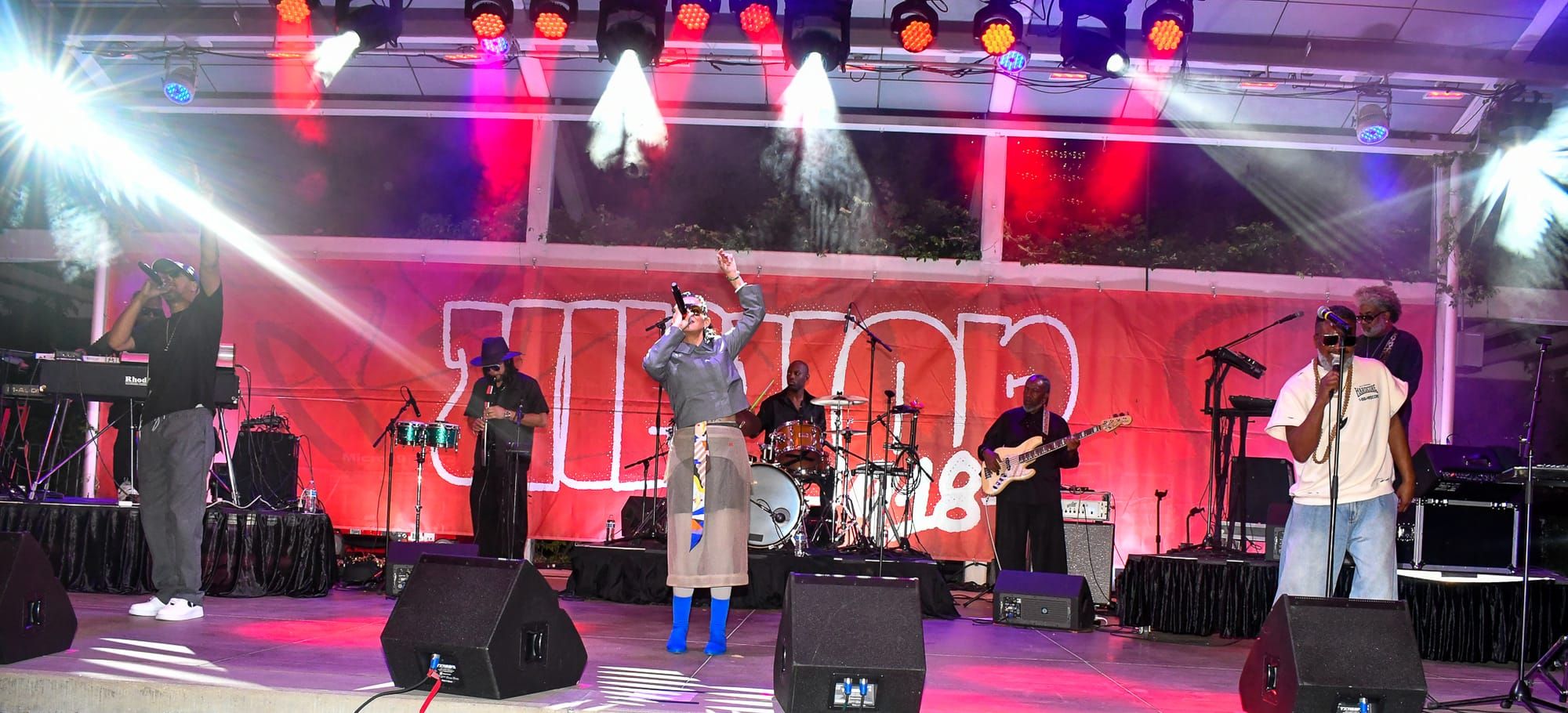
Hip Hop 918
Guthrie Green
September 25, 2026
At 53 years old, hip-hop as a genre is starting to show its age. The music that many thought would be a passing fad is now the soundtrack to countless lives. With age comes history, and this year’s edition of the free Hip Hop 918 Festival at Guthrie Green made sure that history won’t be forgotten in Tulsa. Just like in DJ Kool Herc’s famous house party in the Bronx, all four elements of hip-hop—DJing, MCing, breaking, and graffiti—were on display at this year’s festival, honoring hip-hop’s origins not in a million dollar studio but as an expression from marginalized people and communities.
The night started off on graffiti, with Trueson Daugherty, this year’s Hip Hop 918 host, noting that graffiti helped people be seen at a time when they didn’t have a cultural home or a platform; graffiti helped them be visible, and it was a way for them to be remembered. You might recall that when graffiti artists started tagging his fence this summer, Trueson’s response was to do reviews of the graffiti on his social media pages. He’s gained 70,000 followers and counting, all because he chose to honor the art instead of criminalizing it.
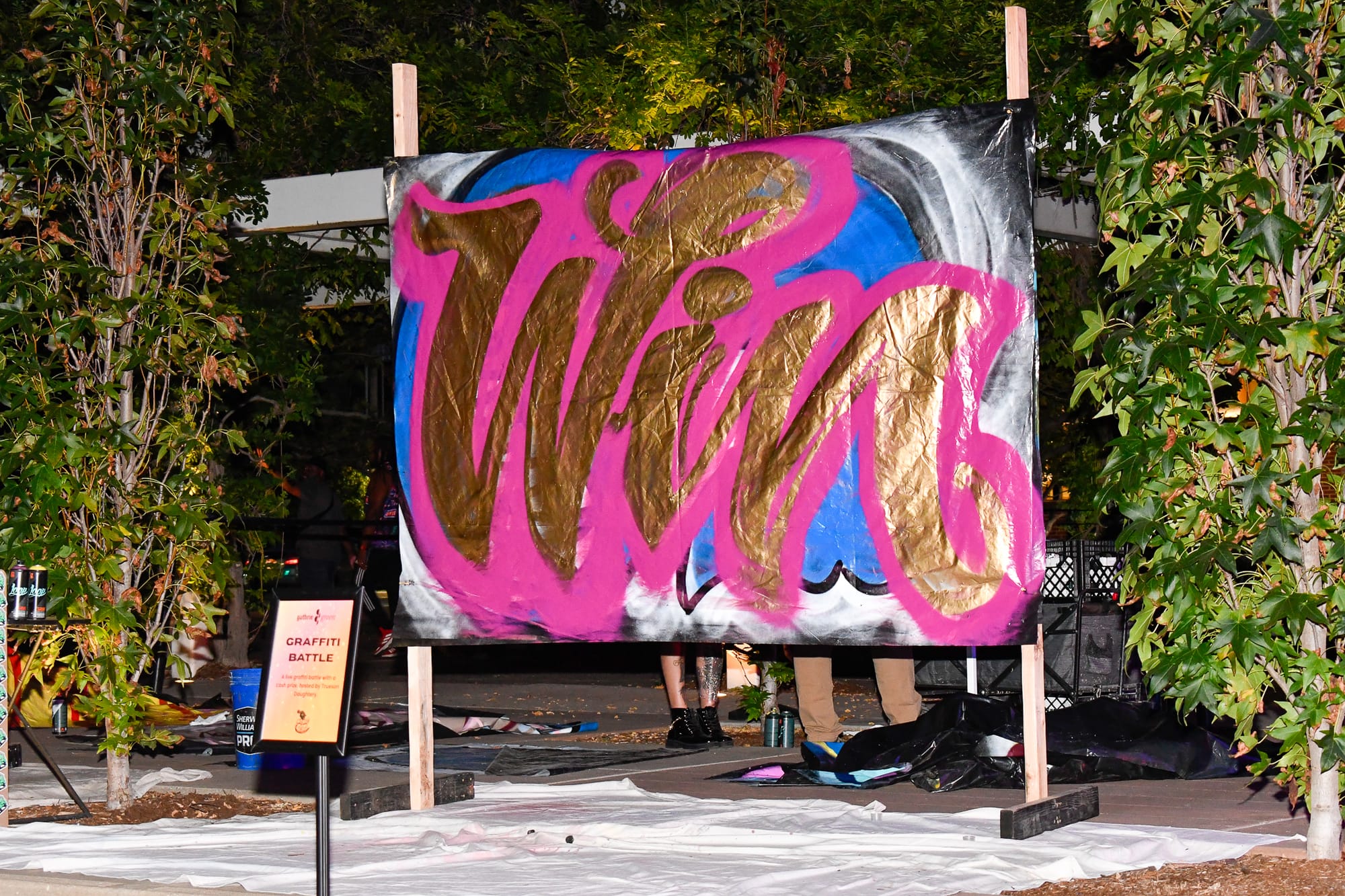
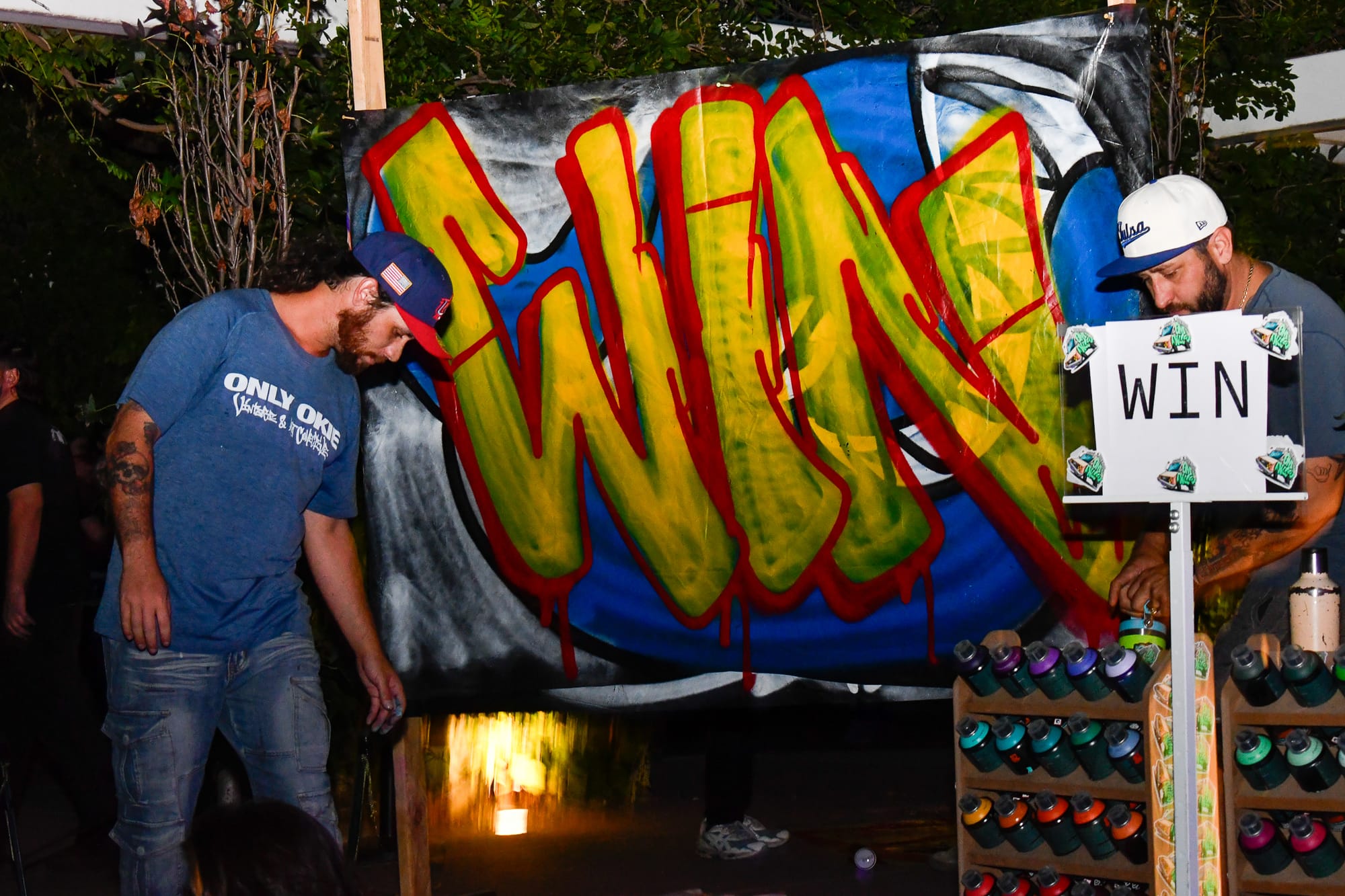
On the Guthrie Green lawn, artists Jake Beeson and AWHIZ from Clean Hands Army led an interactive graffiti station where kids were able to spray paint two large wooden canvases—a fun addition to this year’s festival and just one of the night’s activations that helped connect children to hip-hop. One girl wrote the words “Wu-Tang is for the kids,” which her mother proudly encouraged, mentioning that she’d been slowly teaching her kids about hip-hop by introducing groups like A Tribe Called Quest and Wu-Tang.
Another kid learned a different lesson after accidentally turning the nozzle toward himself and spraying a red line across his shirt. He then asked, “Does this wash out?” to which AWHIZ replied, "Nope, but we can create some designs on it.” These hands-on graffiti installations are the kinds of things that spark curiosity and, who knows, maybe the next Clean Hands member.
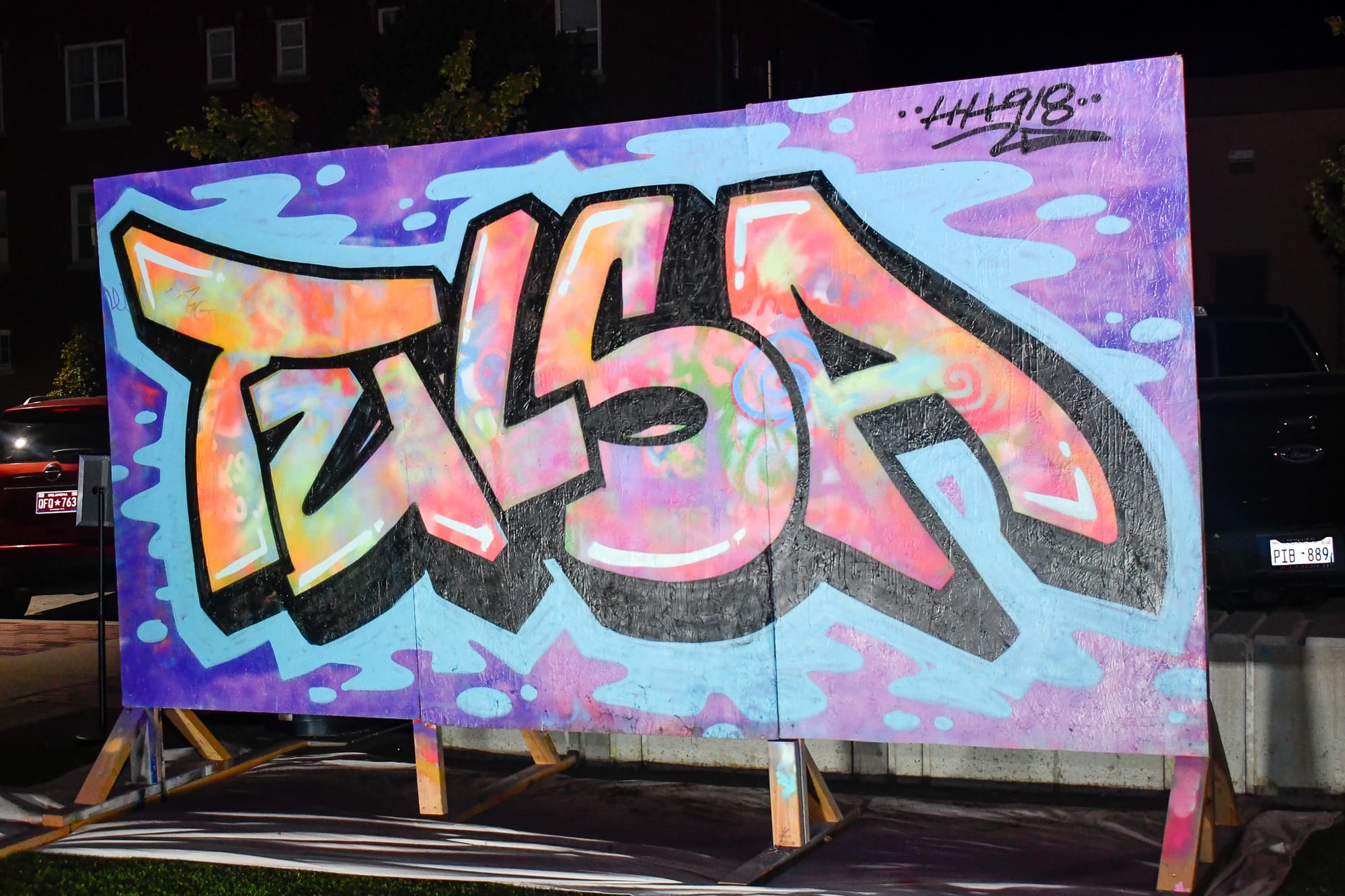
photos by Khadijat A. Oluwatoyin
The live graffiti competition nearby was like seeing heroes of the night come out from behind the shadows and show off their superpowers. Trueson shined as he described each artist’s techniques like a play-by-play analyst on ESPN 4. In one competition he made sure the crowd noticed that the artist LoverGirl’s line work was created by using her whole body, comparing it to tai chi by the way she was bending her legs and adjusting her posture while she sprayed. You could hear the love for the art form in how he described the strokes and the sharpness of the lines from each artist. Crowd favorite Mango—whose iconic tag many Tulsans have passed on their commute and who got memorably nabbed in the act last fall—showed up as one of the competitors. This had to be a surreal moment not just for him but for many of these artists, tagging in the light of day with police casually strolling nearby.
From lessons in graffiti, the night moved into Lessons in Fresh, which celebrated the art of DJing. DJ Somar, DJ Al Compton, DJ A Dre, DiscFunktion Djz, and DJ Kut Lee have been keeping the art of DJing alive in Tulsa, while also showing off their turntable labs that no doubt have seen thousands of hours of practice. From scratching to transitions to EQing, the DJs led a tutorial on these passed-down skills, allowing people to come and DJ for themselves, giving the next generation lessons in how to position their hands and see the break part of a record while also giving them the freedom to make mistakes. Lessons like this are probably the way they fell in love with this art form themselves, and also probably how they justify to their partners the price tag of it all.
The first musical performers of the night were from TMC Records, a creative hub for McClain High School students to record music and learn the business behind being an artist. Three TMC Records artists—Royce1k, J.U.V., and vocalist Alphonse—took on the big stage and capitalized on this launchpad moment for their young careers. Alphonse’s powerful voice echoed through the speakers; he often continued his vocal runs after the beat had stopped. Royce1k attacked the stage, fearlessly rapping and bringing lots of energy, while J.U.V. was the cool one who balanced out the two, knowing the right time to shine and when to let the others catch the light. The most exciting part of this performance was that these are only three of the artists from TMC Records; the program is now expanding to different schools, making sure the message of hip-hop continues to be passed down here at home.

A Cypher for five artists—1st Verse, QCThaDon, DOLO LOCO, Jiondé, and Damion Shade—continued the night’s journey through the elements and history of hip-hop. In the first round, each artist was able to rap to a track of their choice, but in the second round, each artist had to rap to one picked by DJ Doc Free. 1st Verse is an MC’s MC. He is like an athlete who, at a moment’s notice, is ready to perform at peak pro level and drop crazy bars while doing it. QCThaDon represented for the women as she took the stage, making an immediate impact on the crowd as they cheered on her confident lyrics and admired how she stood tall amongst some great MCs.
DOLO LOCO stole the show, showing his skill as he chose to freestyle both turns, and he had the crowd hooked on every word. I myself prematurely thought for sure he was going to curse, but instead each time he would substitute an even cleverer word, which really solidified how great of an artist he is. Jiondé showed that Oklahoma City has some really good artists as well; you could tell he’s still early in his artist journey but has good footing for how to get better.
Seeing Damion Shade—whose powerful voice is like an out-of-body experience—dig deep to give you everything is one reason why his music is best when it’s live. I thought Shade was the last MC of the night until Earl Hazard took the stage. Doc Free chose to challenge him with an MF Doom beat to rap over, and Hazard accepted the challenge. He started off his verse by paying homage to Yasiin Bey, rapping the first part of his song “Priority,” then eventually going into his own fury of lyrical display. These are all great MCs, but selfishly I thought to myself that it would’ve been cool to see Doc Free also perform.
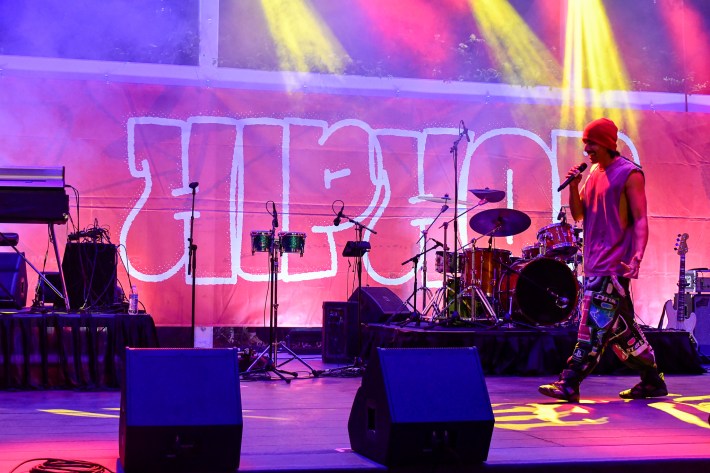
The progression of the night from up-and-coming artists to full-blown legends was most notable when MURS took the stage. His Groundwaves movement, now two years removed from Tulsa, still bears fruit; some of the artists who participated in it could be seen in the crowd. On this night MURS used a corded mic instead of the wireless ones the previous performers had been using, which caused a minor hiccup as it wrapped around an on-stage speaker monitor, but MURS reminded us why a rapper is called an MC (master of ceremonies) as he worked the stage.
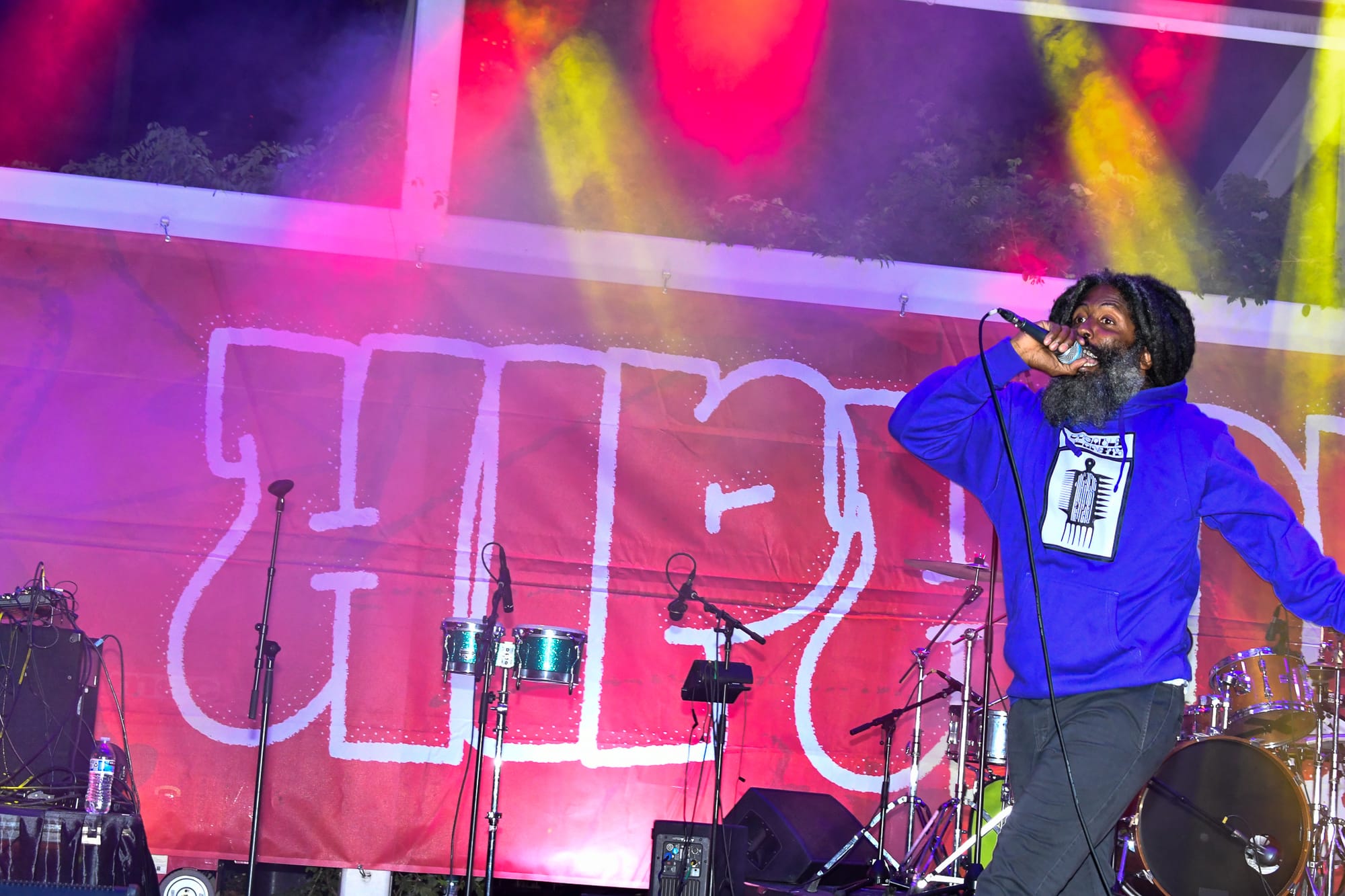
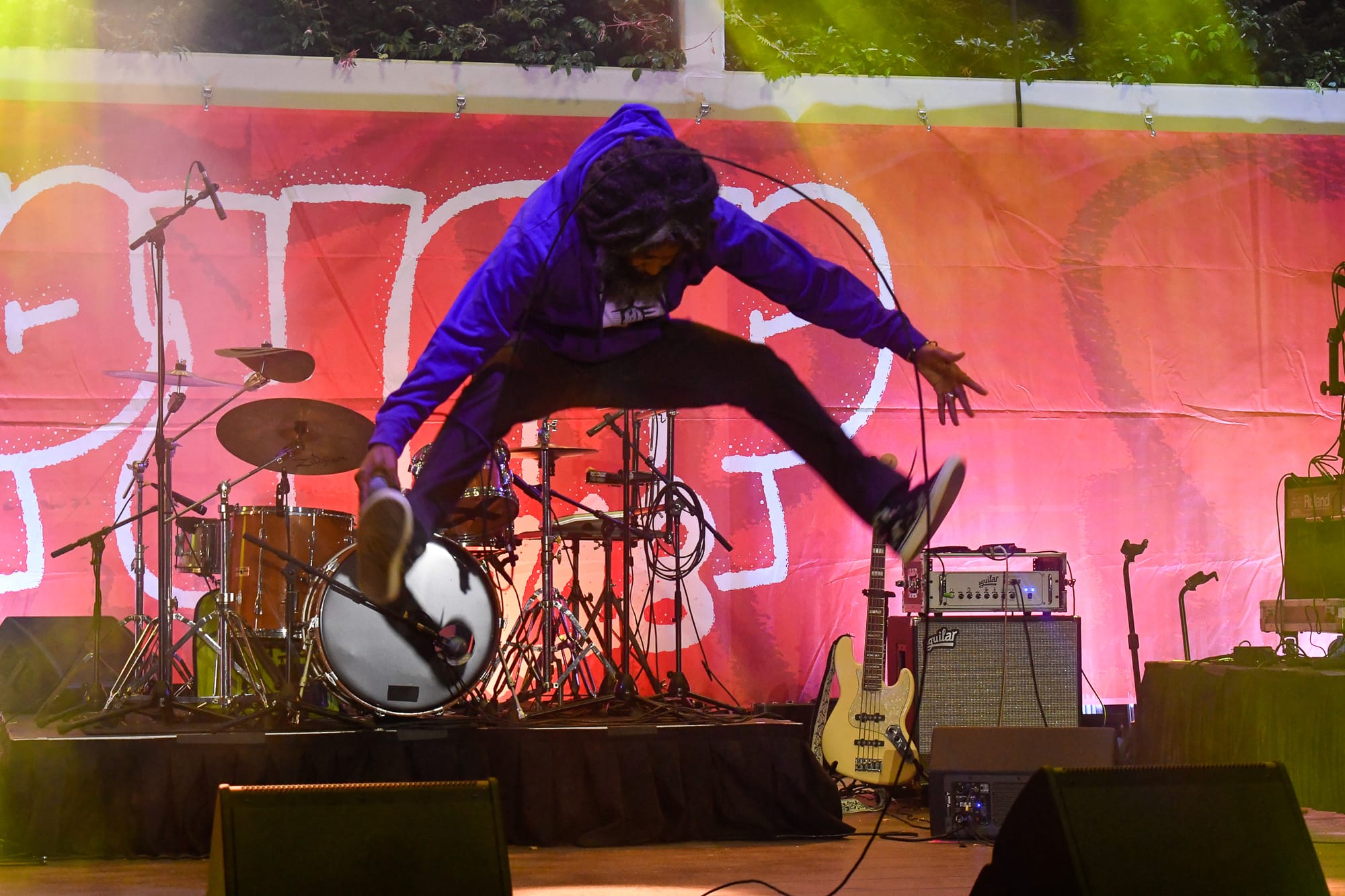
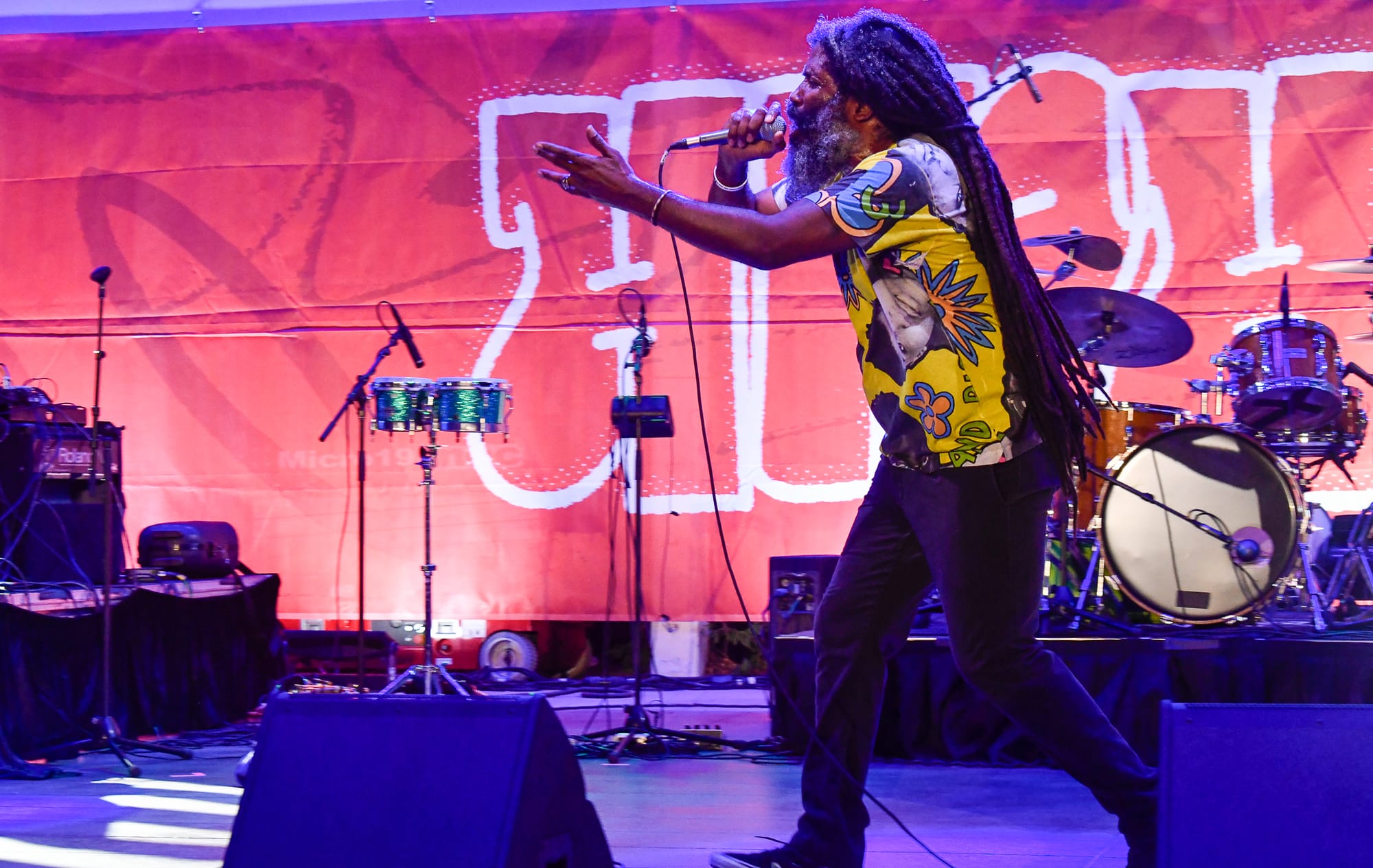
MURS | photos by Khadijat A. Oluwatoyin
He turned the performance into a rap aerobics class as he jumped and ran, making sure to get the crowd involved during this lyrical workout. Storytelling is another element of being an MC, one that MURS demonstrated in a story about his friend Okey Dog, who liked to fight. He’d antagonize gang members by saying he was from Okey Dog Crip when questioned where he was, which would often result in a melée, which sometimes meant MURS would be dragged into the fights. Stories like these help listeners connect with the music more than any Instagram Ad ever could.
An MC has a song for every emotion because they’ve been through enough life experiences to be able to express them. When it comes to sadness, “Melancholy” is the song Murs is able to call on to express a difficult time in his life. During his performance, MURS said “I love you” to a young kid who spoke up saying he was feeling sad, then talked about his personal cure for sadness: doing “the running man.” As he did the move in place, he said it makes it impossible to be sad because it’s the law of physics.
The fourth element of hip-hop arrived as anticipation kept building for the headliner, starting with an exhibition of local B-Boys who had already performed on the dock across the lawn from the main stage. When the Temple of Dance performers took the main stage, they took things to a different level. These weren’t just cool hip-hop dances; they were live storytelling that told the story of hip-hop through synchronized movements that brought back memories of dances I had even forgotten about. This was beauty and grace and expression. This is hip-hop.
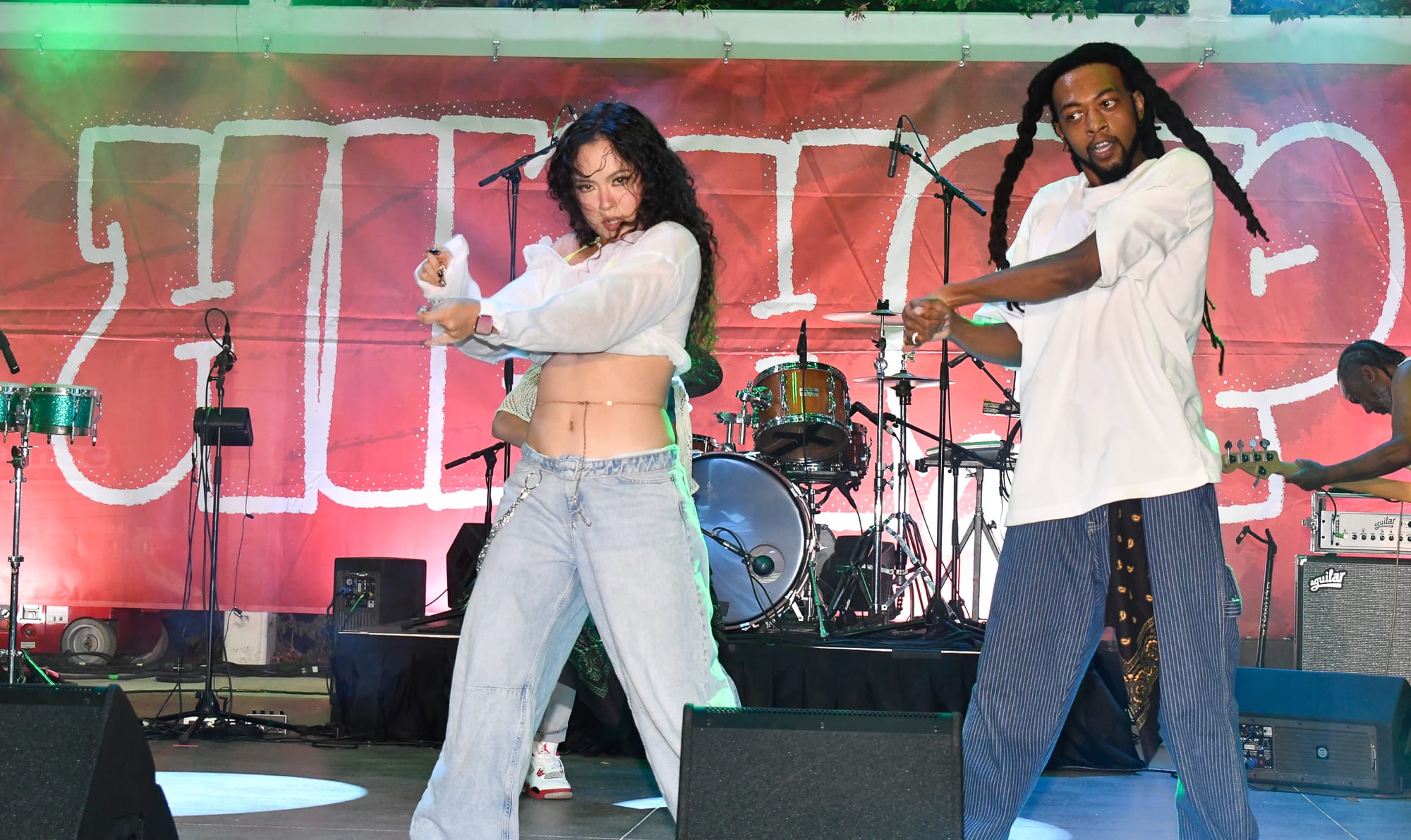
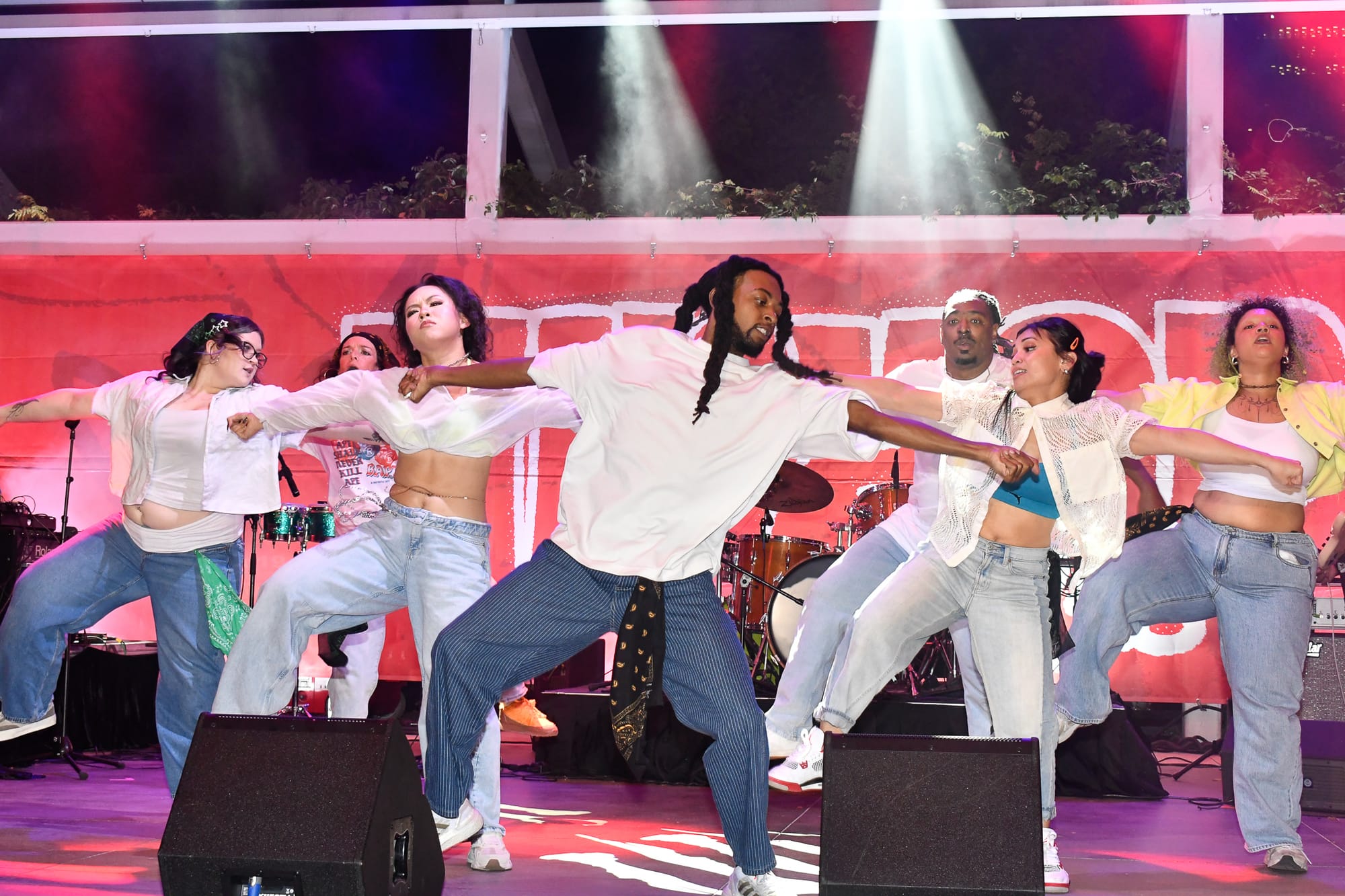
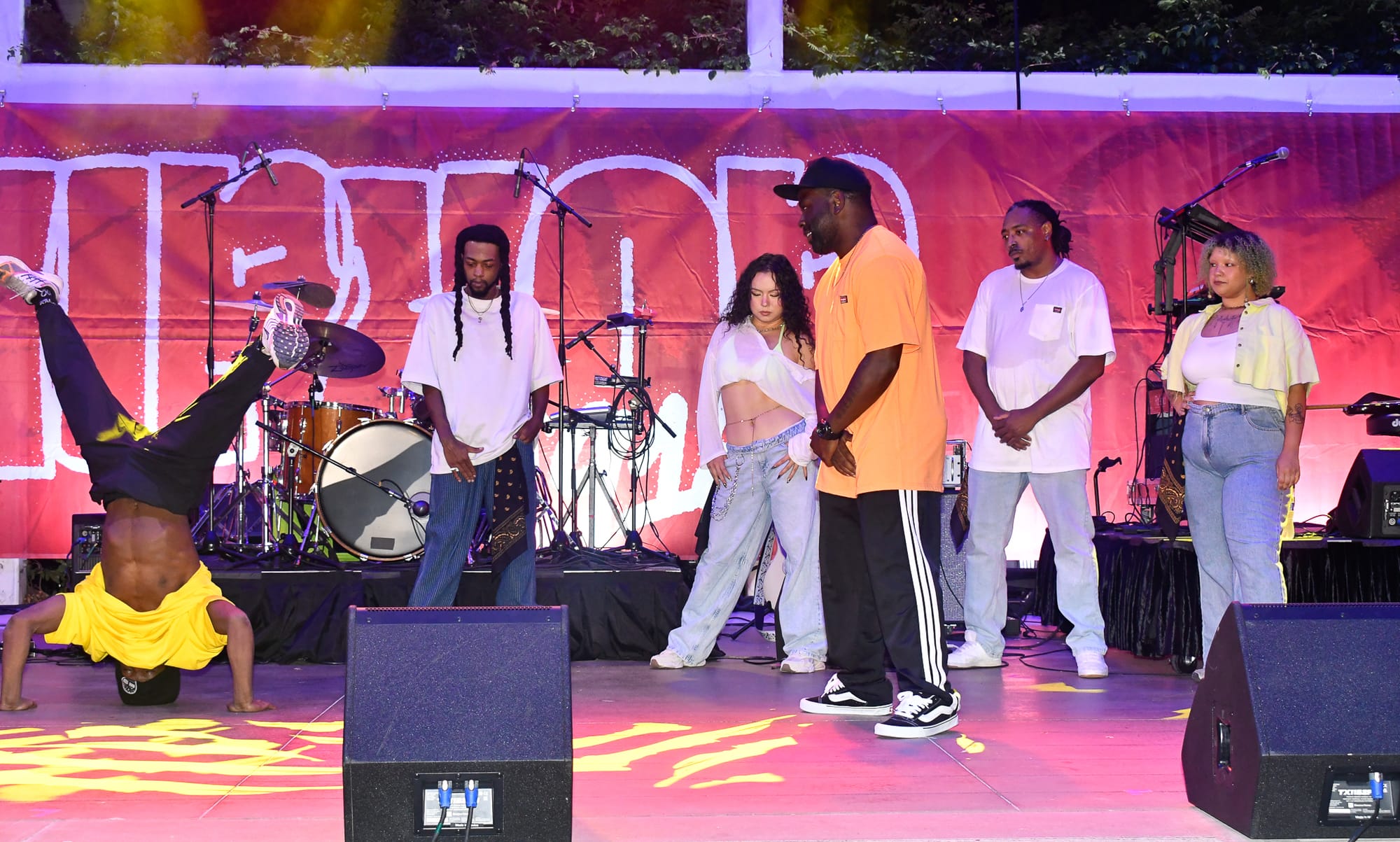
Temple of Dance | photos by Khadijat A. Oluwatoyin
“We be to rap what key be to lock”—everyone was waiting to hear these iconic words from the legendary hip-hop trio Digable Planets, the group that epitomized what it meant to be cool. I remembered hearing the track in my youth and immediately being enamored by their flow and their use of jazz production, which would influence later artists like Kendrick Lamar.
Digable Planets was a breath of fresh air that showed that it was OK to be you, and that impact could be seen right here in this Tulsa park. As I looked around, I was amazed at just how many people had shown. A day that started out moderately attended by concert-goers casually sitting on blankets and lawn chairs had now become packed with standing music lovers surrounding the front of the barricaded stage.
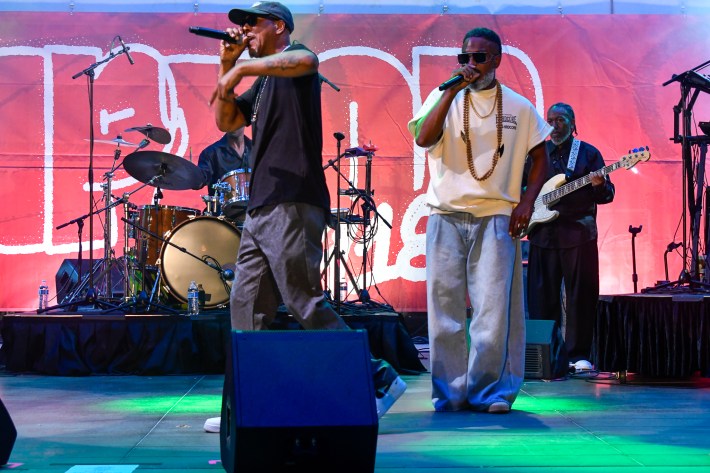
Even though Digable Plants are now considered elders, they are still paying homage to the founders, at one point mixing the lyrics from their song “Where I’m From” into "The Message" by Grandmaster Flash & The Furious 5. When you listen to them it’s like listening to the highest level of hip-hop an artist can reach. Even MURS mentioned during his set that he had waited 15 years to see them. And they mentioned him too, thanking MURS during their performance for all he’s done. MCs always celebrate MCs because they know the struggle and the amount of time and effort you have to put into your craft.
Side note: One noticeable difference between Digable Planets' performance as seasoned MCs and the TMC Records artists is that the former didn’t rap over their lyrics. This is very important to an MC. I remember seeing a clip of a Jay-Z performance where the DJ had mistakenly played the vocal track to his song “Paris,” which made him stop the music and say that if people wanted to hear the vocal track, they could’ve just shown his picture and played the song. That’s because real MCs don’t rap over vocals—the same practice that MURS and Digable Planets live by.
Many would agree that hip-hop is in a weird place in 2026. It used to be seen as a young man’s sport, but this year in particular proved that older artists can put out music and tour. At 56, Jay-Z recently finished a historic three-night residency at Yankee Stadium and is expected to drop an album this year. Rakim, the smooth rapping legend, recently dropped his new album titled Re-Up and continues to tour.
Digable Planets have been a major influence on hip-hop's celebration of longevity. Thirty years after Blowout Comb, they’re touring and letting artists know that there’s life in a music career past the award shows and Billboard charts. At this stage in an artist’s creative life, they’re still connecting with true fans, traveling to places they might have never performed at, and selling merch. I was lucky enough to get a vinyl from MURS, who came prepared and ready to sell. No one had to be sold on what Digable Planets means to rap.
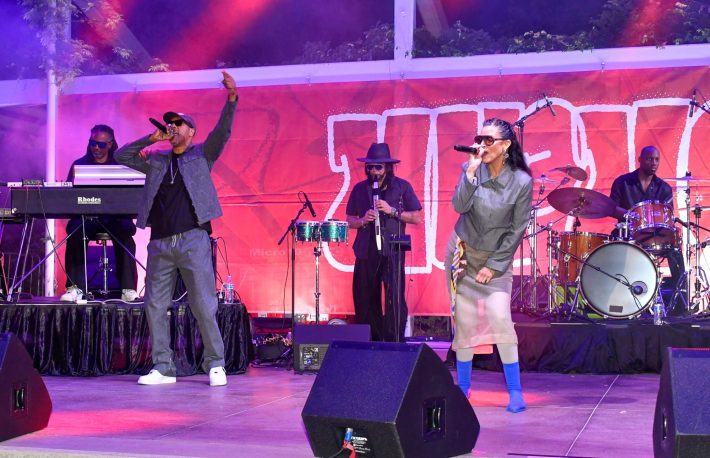
Tulsa is spoiled. That’s the feeling I left with after Hip Hop 918. I was proud to say that on this day Tulsa wasn’t too cool. Tulsans clapped. They shouted. They moved their hands from side to side. This was a day of hip-hop that immersed the city in the culture and let them experience the four elements that have made this genre last over 50 years. As the host Trueson Daugherty mentioned, a lot of major cities don’t get free programming like this, so it's something we have to appreciate. Like hip-hop itself, you never know how long this will last. But while it’s here, you best believe that I am going to be front row enjoying Hearing Every Rhyme.


