
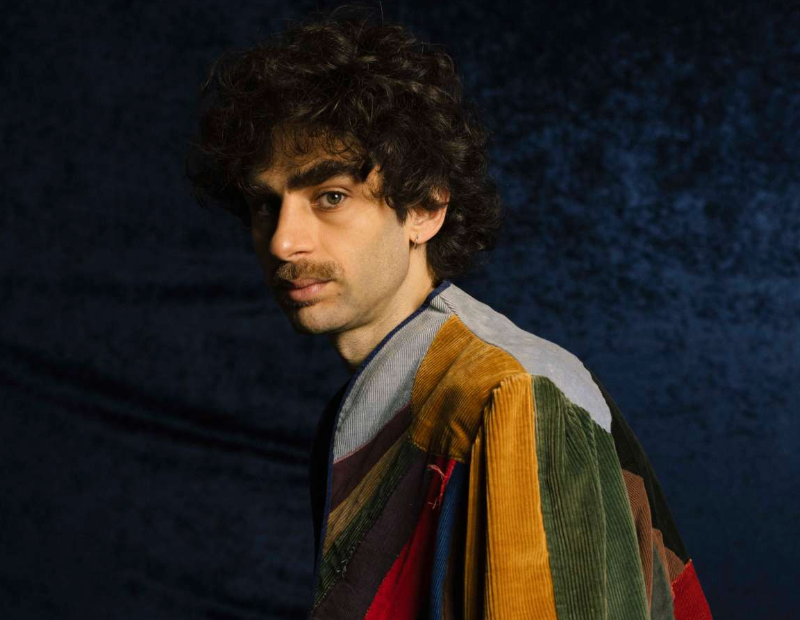
Sessa and Kolumbo
Johnny Brenda's
1201 Frankford Ave.
Philadelphia
May 8, 2026
By the late 1960s, the reverberations of the psychedelic rock explosion were being felt in nearly every corner of the world. Garage bands in the U.S., Europe, and Asia, as well as South and Central America who’d spent the earlier part of the decade playing variations of blues, and R&B were experimenting with a new palette of colors and textures in rock n’ roll. One of the most profound developments of this global psychedelization was the emergence of the Tropicália movement in Brazil. Born under a repressive military dictatorship, Tropicália used rock and psychedelia as weapons to express the political and cultural ambitions of Brazil’s youth. The unique and colorful music that came out of that movement — Os Mutantes, Tom Zé, Caetano Veloso and more — continues to echo in the work of many contemporary artists.
São Paulo-born guitarist and singer Sessa continues in the tradition of Tropicália as one of Brazil’s most soulful exports; he brought that sound to Philly during a show at Johnny Brenda's Friday night. The pre-show house music set the tone with some gorgeous Brazilian pop and soul music playing alongside the dramatic yodeling of enigmatic jazz vocalist Leon Thomas and pop avant-gardist Arthur Russell. Brooklyn-based trio Kolumbo opened with a set of cosmic instrumentals that incorporated jazz, bossa nova and 50s-style lounge/exotica. As Kolumbo composer Frank LoCrasto coaxed ethereal melodies from his electric piano and Juno 60, it felt like watching a Martin Deny record come to life.
By the time Sessa took to the stage, the room in Johnny Brenda’s had filled up nicely at the stage level and in the balcony. Accompanied by a trio of musicians playing keys, drums and bass, Sessa opened with a slow and dreamy tune that bridged the gap between soft psychedelia and soul. The next song pushed the tempo with some b-boy funk and baseball park-style organs. Like some of the best Brazilian music, every tune in the set had a warm luminous timbre that filled the room beautifully. The mostly English-speaking crowd understood the tenderness and depth of feeling expressed in Sessa’s Portuguese songs and returned that energy with enthusiastic cheers. Currently touring through the U.S., music lovers of all walks of life should make it a point to catch this outstanding young musician keeping a rich and old tradition alive.


