
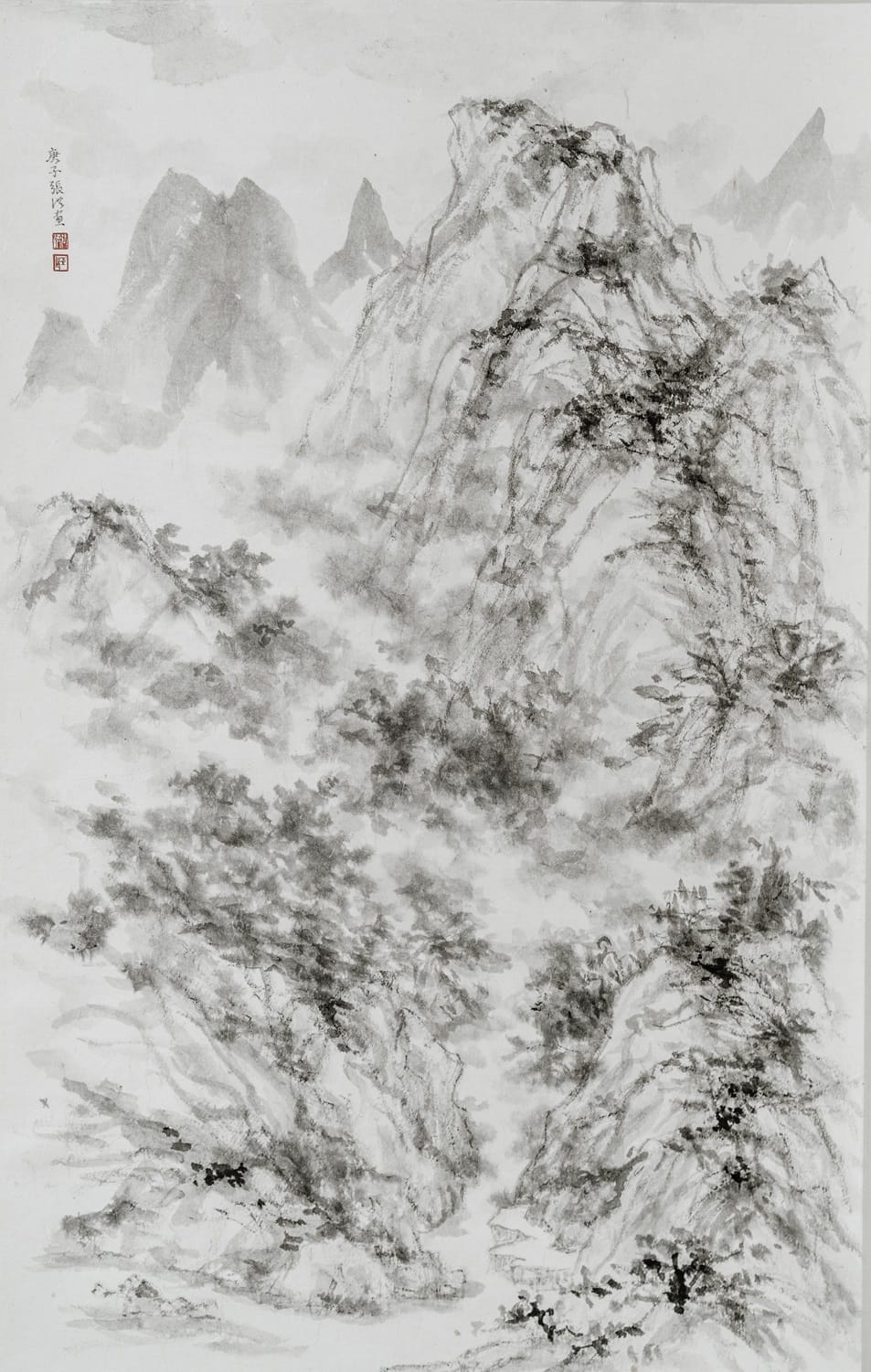
Reshaping Tradition: Contemporary Explorations in East Asian Art
Widener Gallery
Austin Arts Center
Trinity College
Hartford
Jan. 29, 2026
As I stood before the scroll Landscape After Fang Congyi by Arnold Chang, I was reminded that art is a matter of perspective. The dreamy quality of Chang’s work, his use of ink that turns white space into its own color in his toolbox, even the presentation of the work as a hanging scroll, all speak to culture, training and heritage that inform the perspective of his artwork.
One aspect of identity that informs the perspective of both artists and curators that I often neglect to consider is age. Youth gives a person their own vision of the world, and that perspective is on full display in the Reshaping Tradition exhibit in the Widener Gallery at Trinity College, the first exhibition in the gallery’s history to be fully curated by students.
The students are enrolled in Art History 205: East Asian Art, Now to 1850, which lends the exhibit its East Asian theme. The students traveled to New York to learn more about the artwork, and interviewed the artists to learn about their influences and techniques. The total immersion of the students in understanding both the artists and artwork results in a collection that captures multiple viewpoints, while cohesively encapsulating those viewpoints for visitors of the gallery to experience.
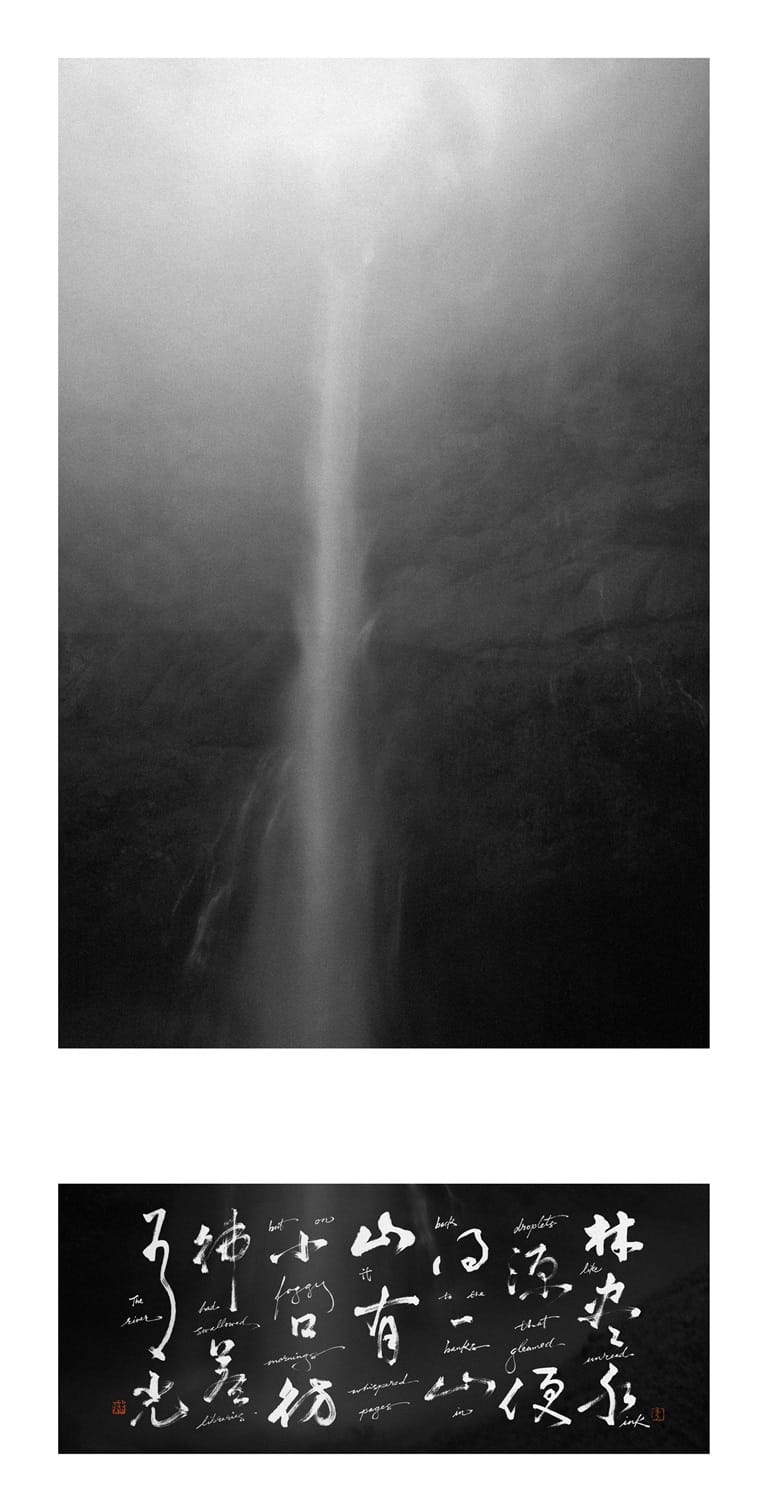
The exhibit features Western perspectives on East Asian art as well, such as Michael Cheney’s piece 陶-Childs, which incorporates his photography of nature in China with calligraphy in both English and Chinese. Cheney explained in his interview that he came to his art by combining work that his father and grandfather did, which were both artistic and commercial in nature. The melding of different worlds is a key theme in Cheney’s work, and his mixture of calligraphy and photography embodies the “three perfections” philosophy of Chinese artwork.
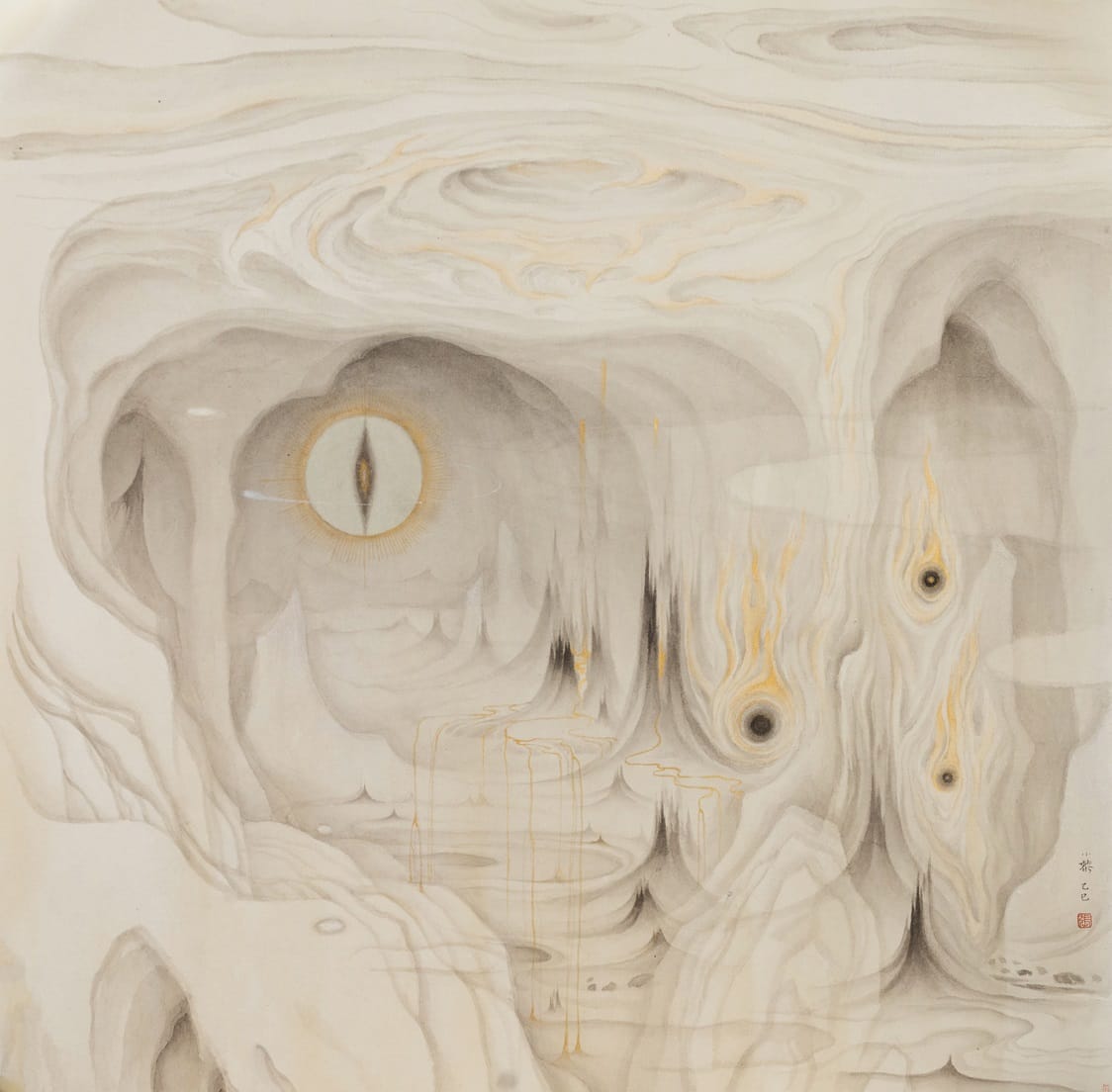
Perhaps no piece in the exhibit represents the idea of reshaping tradition as boldly as Zhang Xialoi’s work Mysterious Springs in Hidden Ravines. In addition to ink, she uses gold and silver powder to elevate the beauty of the work. Zhang explained that she was trained in fine-line painting as an undergraduate, but that she chose not to use many lines in this work, instead going with what she called a “boneless” painting method.
Zhang’s work has a supernatural feel, with the golden rings dispersed throughout the work taking on the appearance of halos. Of course, that’s a western interpretation, filtered through a Judeo-Christian framework. What this exhibit made me realize is that I have no framework at all for understanding Chinese art on its own terms. That’s kind of unbelievable, and a major failing on my own part considering China’s status as one of the oldest civilizations in the world, and its current status as a global superpower.
So it’s heartening that there are at least 19 young people in Art History 205 who have helped introduce me to art and culture that I should know more about. The kids are all right, and hopefully they can help get us older adults on the right track too.
NEXT
Reshaping Tradition: Contemporary Explorations in East Asian Art continues at the Widener Gallery through April 3.
Jamil goes to Windsor to hear some acoustic R&B.


