
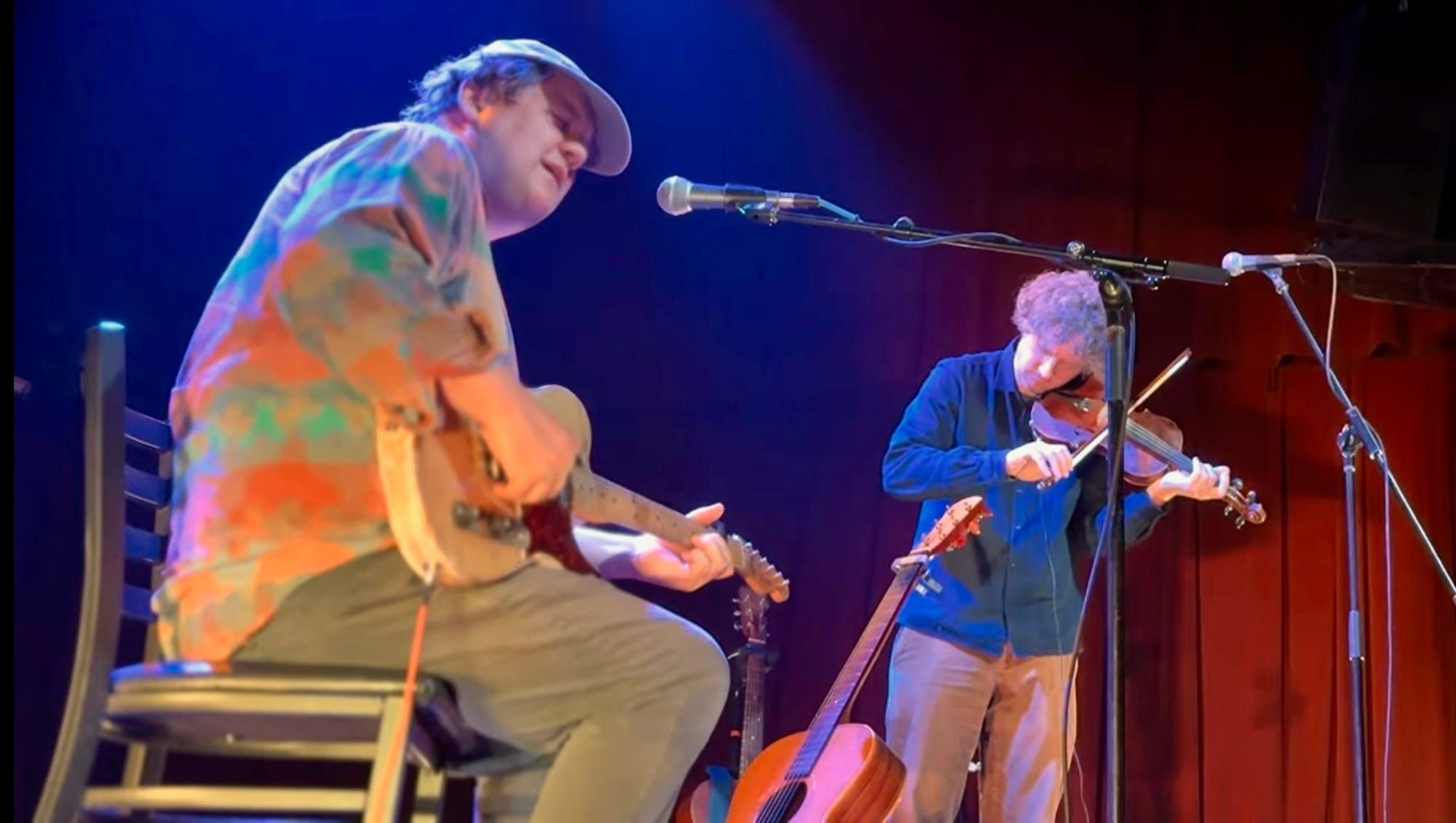
Jake Xerxes Fussell, Sam Amidon, Jana Horn
Ardmore Music Hall
23 E Lancaster Ave.
Philadelphia
April 9, 2026
I have a vague memory of an Alex Ross interview (author of great books The Rest is Noise and Listen To This, essential music-lover reading imo) where he said something to the effect that he loves music that makes you forget all other music exists, if only for a little bit; it’s a magical, two-feet-off-the-ground feeling that I’m happy I still have regular access to as a listener. Thursday’s concert at Ardmore Music Hall got me deeply into that state, and had me feeling light on my feet, in no small part due to the immensely deep rhythmic feel of the guitarist-singer Jake Xerxes Fussell and the guitar-banjo-fiddle-singer Sam Amidon, two of our absolute best and most vital living singers of traditional folksongs. While wildly different musicians on a deeper level, they are both linked by their repurposing of oral-tradition American songs and field recordings; and both, as solo performers, are incredibly captivating just on musical terms.
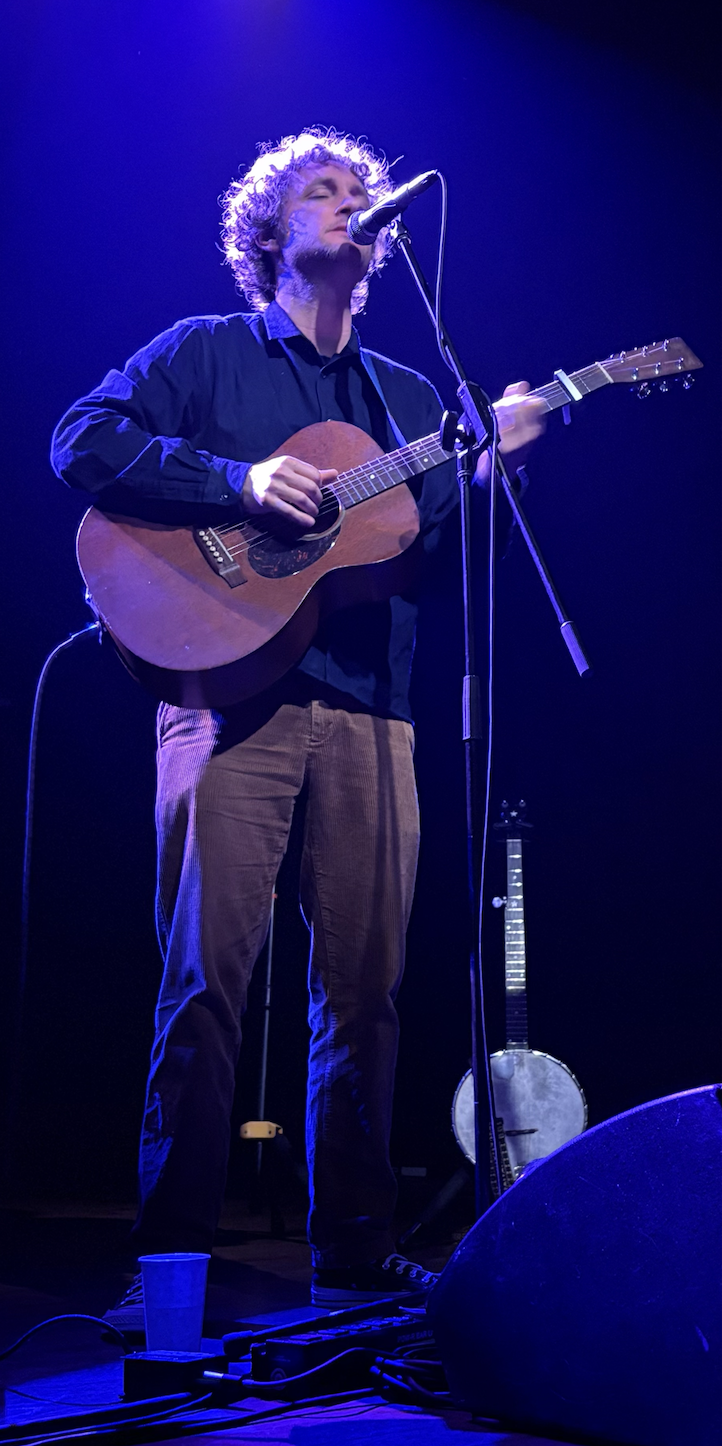
Part of what makes these two musicians so special and simpatico (and practically destined to tour together) is their treatment of folk music: both are adventurous re-interpreters, subtly or radically transforming the rhythmic and harmonic language of the source material. Amidon is the more subversive of the two, often putting his selections into odd meters and modal harmony, or outright pulling from the avant-garde and jazz traditions; Fussell has a gentle, heart-of-gold presence, leaning into the inherent humor and whimsy of the songs he’s picked from the historical dustbin. (No matter how many times I hear his take on “Have You Ever Seen Peaches Growing On A Sweet Potato Vine?” I can’t help but smile like an imbecile when he sings, “Wake up, woman, take your big leg off of mine.”) Both have incredible taste as players, arrangers and song-pickers.
What sets Amidon apart, in particular, is that he effortlessly shifts gears between a stoic, unaffected delivery and an incredibly exaggerated, unpredictable, hilarious and dynamic tone. (His version of the Sacred Harp song “Cusseta” featured a “one-note guitar solo,” followed by another solo that eventually became side-splittingly dissonant and weird and shrieky.) Each artist joined the other in a supporting role during their respective sets, and the way the roles shifted was fascinating. When Fussell played Amidon’s music, Amidon was improvising freely and wildly, in keeping with the character of his work in general: he played a little Kentucky-style fiddle, but snuck in bits of Ornette Coleman, every bit the precocious troublemaker he’s always been. (Full disclosure: I’ve been going to see Amidon perform since maybe 2008, and I often refer to him as “my Phish." Up there with my favorite artists ever.) When Amidon joined Fussell as an accompanist, that energy was downshifted, and the pair went almost fully into a lyrical, beautiful, grooving mode; the aforementioned “Have You Ever Seen Peaches” was stretched out with absolutely mesmerizing fiddle solos from Amidon, with Fussell’s finger-picked telecaster rolling a train-like rhythm with perfect precision. The friends I attended with and I had nothing to say to one another when it was over besides, “Yup, music’s great.” And for a little while, there was nowhere in the world we’d rather be.


