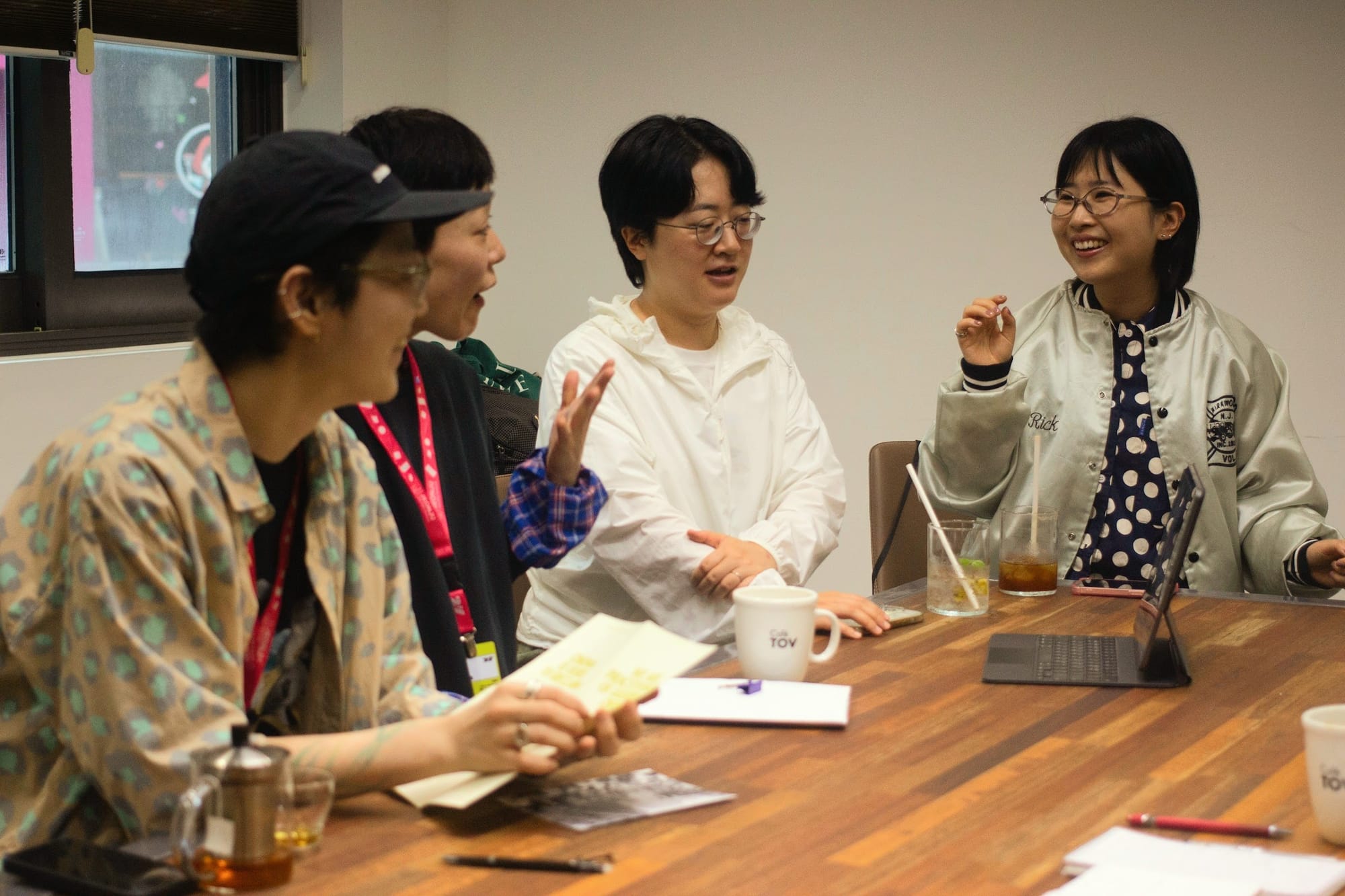
Ooh Yuni, Cho Youngsue, Seong Jeongeun, and O Saenal of Feminist Designer Social Club.
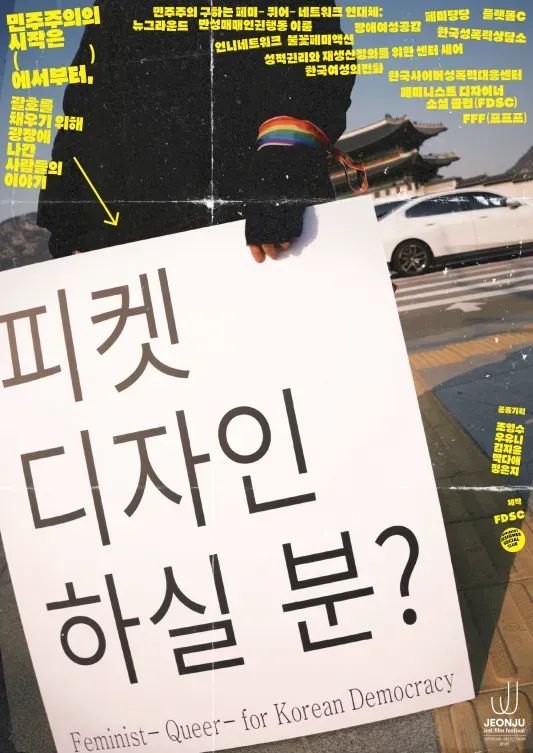
Who Wants to Design a Picket Sign?
Feminist- Queer- for Korean Democracy
Dir. Cho Youngsue
Jeonju Film Festival
Jeonju, South Korea
Apr. 29—May 8, 2026
(Jisu Sheen recently moved from New Haven to Gwangju, South Korea, where she’s covering local arts and culture for the New Haven Independent and Midbrow.)
10:30 p.m. December 3rd, 2024. Korean President Yoon Suk-Yeol has just declared martial law—the latest move in a long history of suppression and control.
Enough is enough. This time, young queer women aren’t just coming for Yoon. They’re coming for the whole system.
Audiences at this year's annual Jeonju International Film Festival, which will continue through Friday, have been able to revisit the 2024 declaration and fallout of martial law through a queer feminist lens, thanks to short film Who Wants to Design a Picket Sign? Feminist- Queer- for Korean Democracy, part of the festival's competition for Korean shorts.
I met up with the film's director, Cho Youngsue, and music director and motion graphics designer Ooh Yuni in the back room of a cafe by the Jeonju theaters. Rebecca Hyesung Ji provided translation.
In 2024, feminist and queer activists mobilized rapidly in the backlash to martial law, hitting the square with clear messages and demands. Cho likened the phenomenon to a spring under pressure: The more it’s pushed down, the higher it will leap when it’s set loose.
Cho, Ooh, and the other designers behind the scenes and in the film are part of a collective in Korea called Feminist Designer Social Club (FDSC), which works to change sexist practices in the graphic design world. The collective is part of a broader network that has sprung up across Korea, called Feminist- Queer- for Korean Democracy.
The film tells more of their story.
At first, we're placed in that uncertain December moment, full of injustice and possibilities.
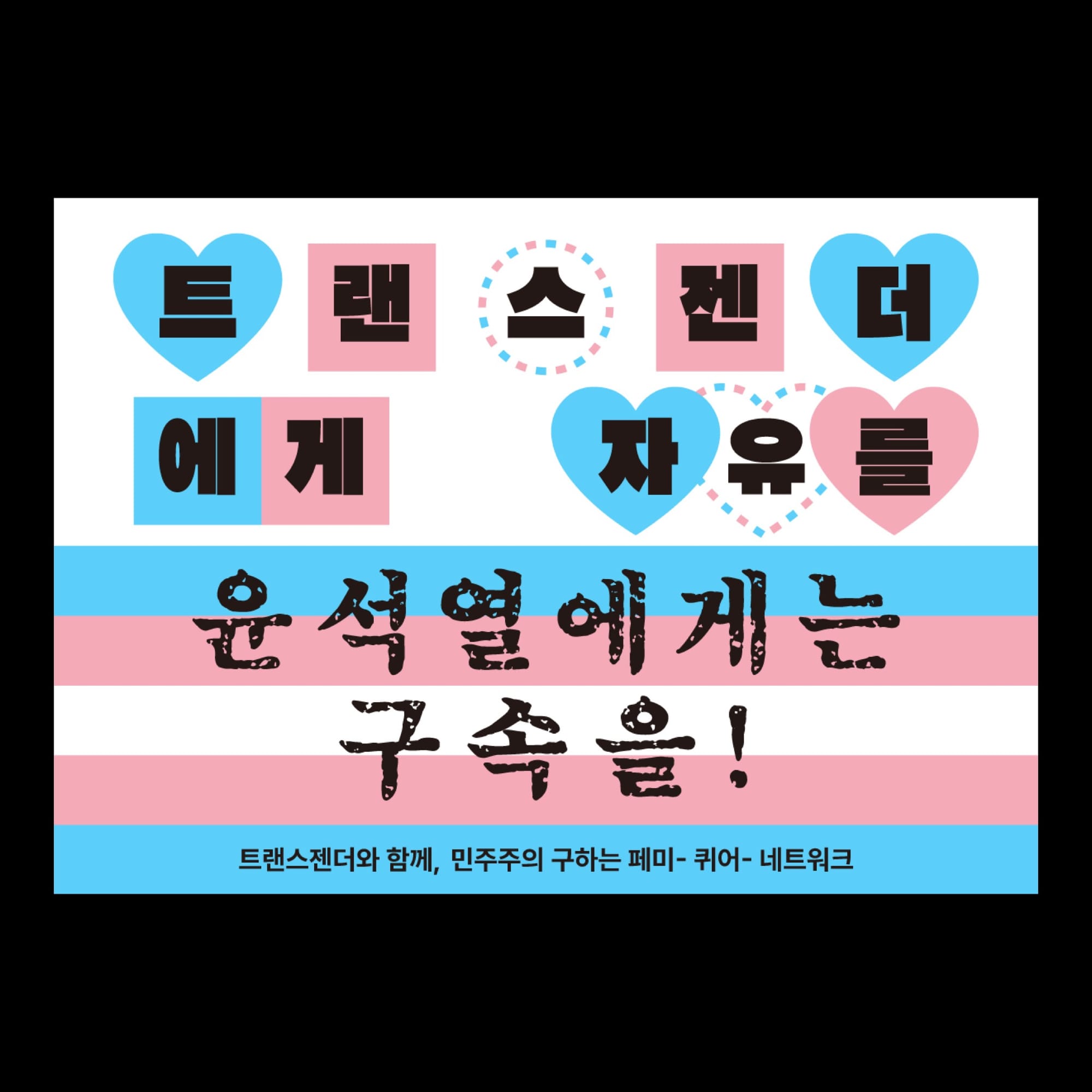
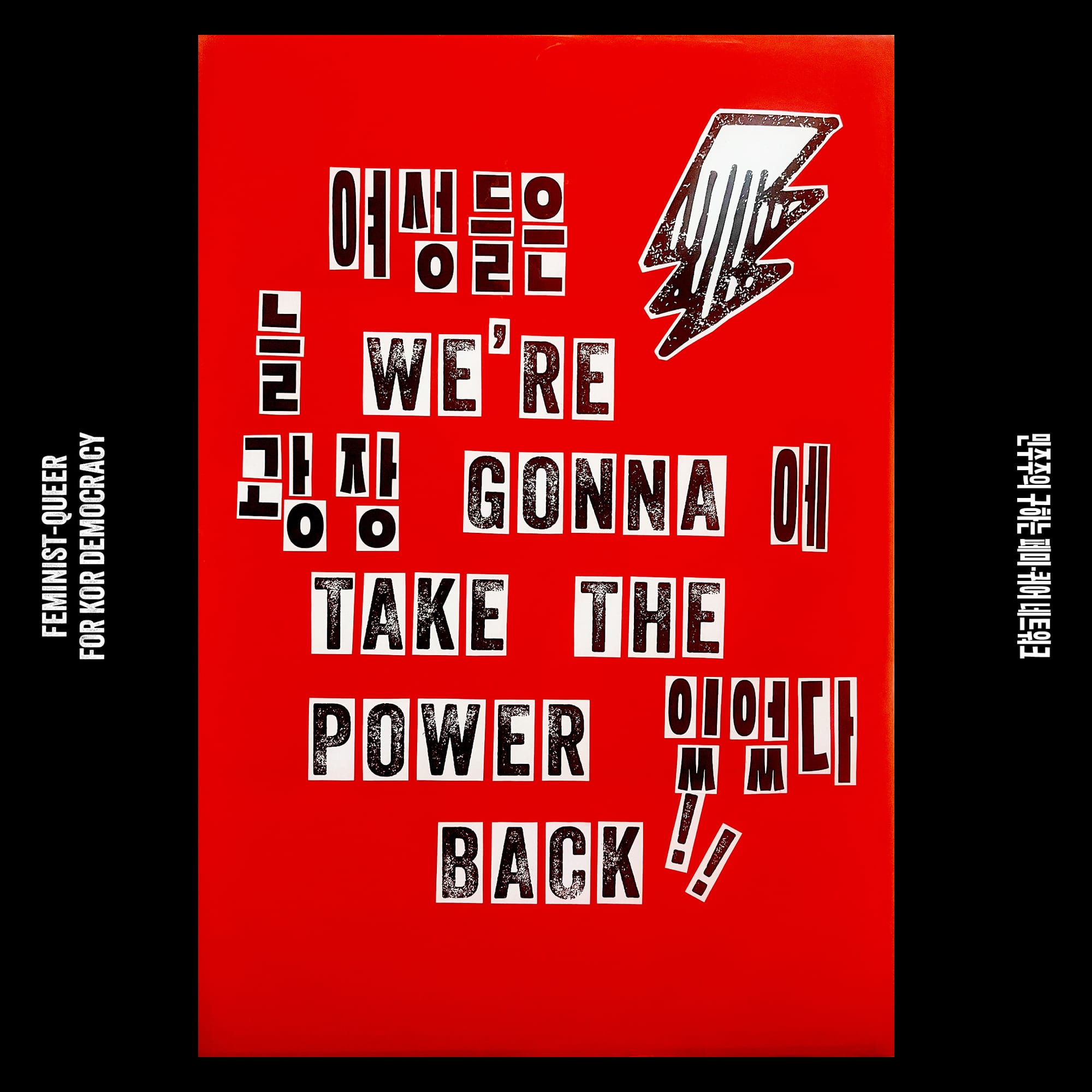
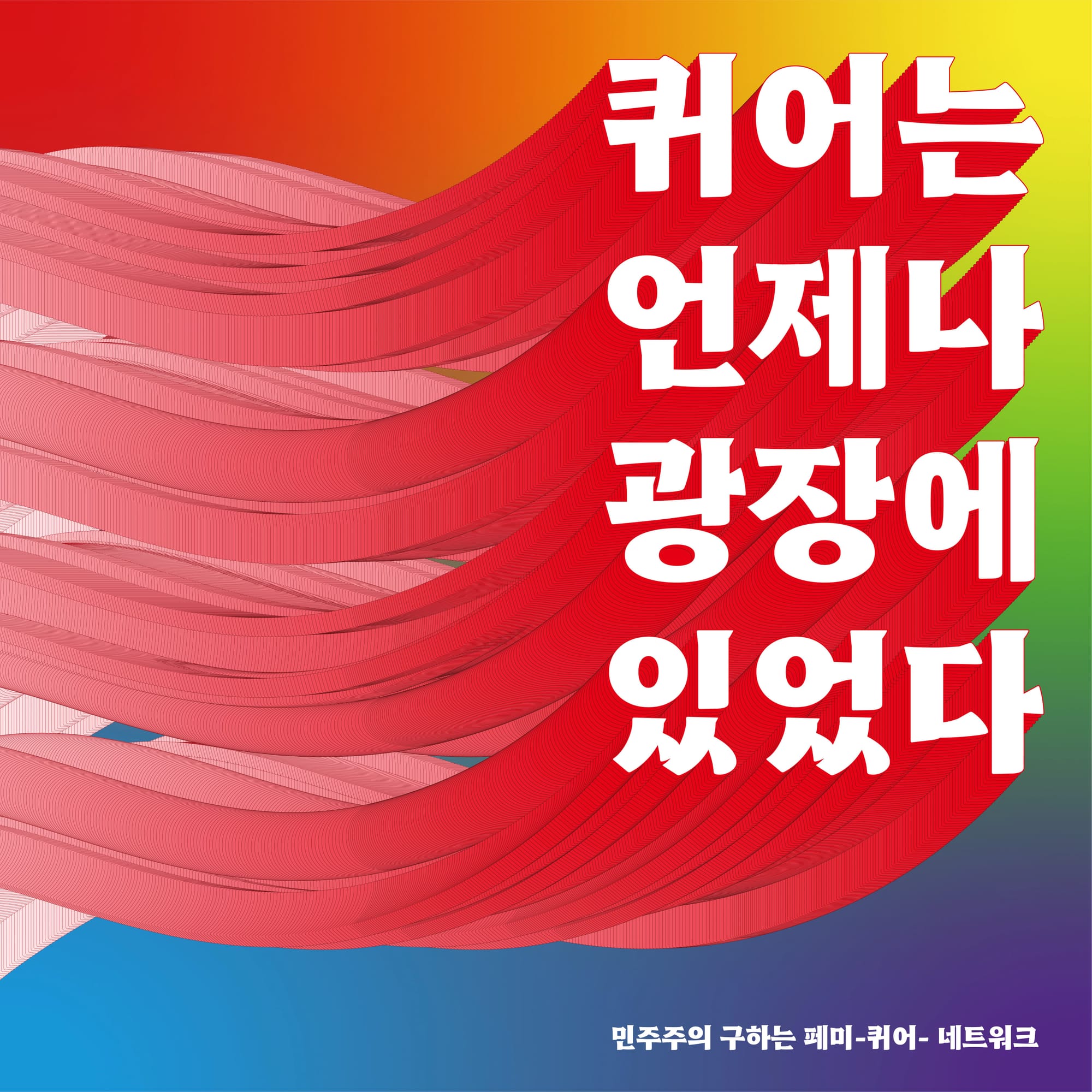
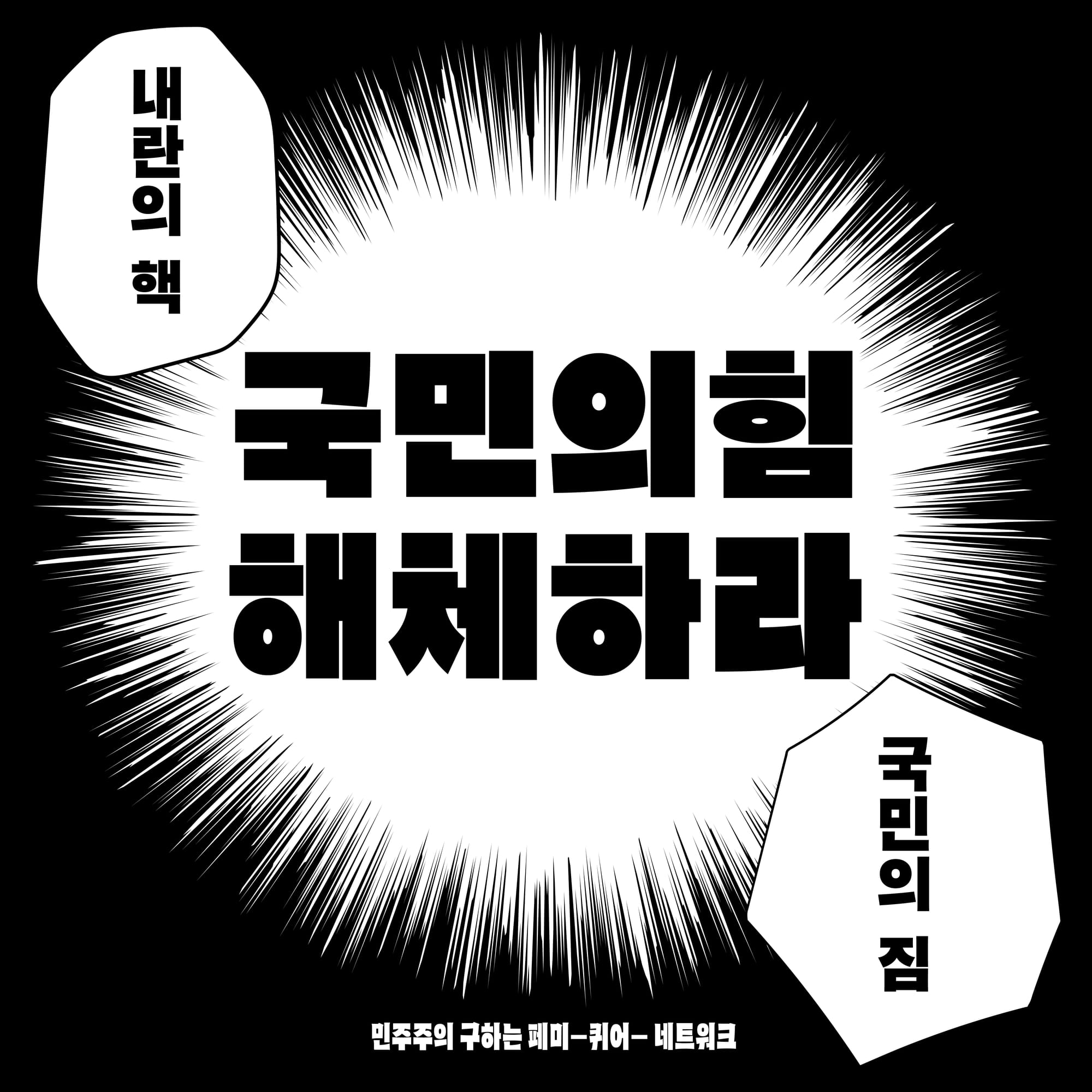
In short order, FDSC holds an emergency meeting to ensure Yoon's downfall. They need banners, and they need them today.
The new Feminist- Queer- for Korean Democracy network quickly forms three teams: operations, production, and action.
Activists inform the group what kinds of messages and demands to rally around, and the coalition turns these into slogans. Then it's time for votes; members work on a shared document, posting their approval with emojis like a rainbow, fire, or a tiger.
In the meantime, a hundred designers have been waiting. Once the coalition has the wording settled, the designers are unleashed.
"I will give you guys three more minutes," one teammate says on a virtual call with a shared Figma design project on screen. The group coalesces around a graphic variation depicting Yoon's name in pixelated black letters.
In the coming days, the designers watch as their plans go from mockup to 3D protest material. They help take down Yoon. They bond over their team efforts. An interviewee in the film talks about later seeing a design from the coalition at a protest for Palestine and feeling a flood of familiarity—knowing who was under that flag.
In our conversation, Cho and Ooh were quick to say they are not professional filmmakers (I beg to differ); to them, this was just a new way of documenting their activities. Instead of a short film, Cho said, this could have been a book or a website.
I'm happy they went for cinema. The short film format allows the story to reach an audience ready for awe and analysis. The crowds here have been watching all the credits. The events of December 2024 are on people's minds; the festival's closing film documents a night of solidarity between farmers and feminist/queer groups on the winter solstice.
Plus, movies are fun.
Music is part of Cho's and Ooh's picture in more ways than one. In putting together the film, they aligned the flow of pickets on screen with the rhythm of the people's footsteps. Those footsteps in turn marched to the sound of high-energy protest songs.
Ooh walked me through the considerations behind the film's score. She followed the feeling of collective noise and commotion, nudging people to feel like they, too, can join right in.
This fight didn’t start on December. 3, 2024, and it didn’t end when Yoon was impeached. As one interviewee in the documentary mentioned, the fact that Yoon was forced to take back the martial law order six hours after announcing itdoesn't diminish the gravity of the situation. The question remains: How could this have happened?
It's a culmination of issues that have been pushed aside for too long, Ooh explained. She cited the discrimination women and queer people encounter from patriarchal society, capitalism, and politics. Cho agreed, saying this should be the "starting point for a bigger transformation."
"A lot of FDSC designers feel that they are different people now, and that they can never go back," Cho said.
Making designs for collective action is not about trying to be the star designer. It's about adding your footsteps to the rumble of the crowd. Likewise, the events of December 2024 were not just about Yoon. One of the demands in the protests and pickets is the disbanding of his entire political party—and, in a broader sense, the disbanding of the patriarchal society that allowed the rise of a figure like Yoon.
Feminist- Queer- for Korean Democracy's final picket designs can now be found on a public folder online, where people everywhere can download, send, and print them. (This means you too, just saying...the designs are cool.)
I asked what elements of human nature stand out in queer activism, and Ooh talked about the importance of questions. Don’t take the current situation for granted, she said. Always ask why.
“And why not,” Cho added.
Sign up here to get Gwangju Midbrow email updates delivered straight to your inbox.


