Poetry reading
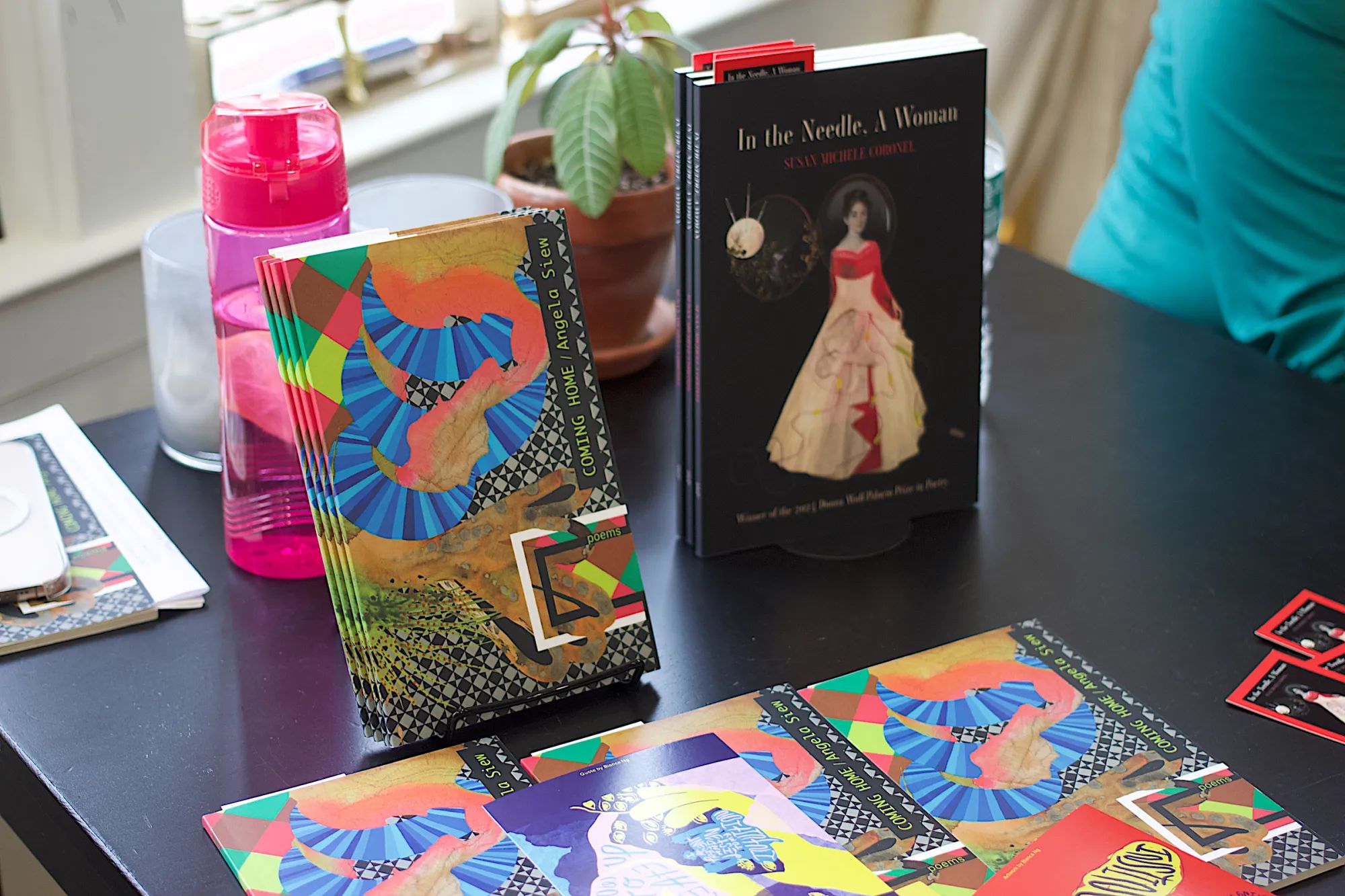
Coming Home by Angela Siew (CutBank, 2024)
In the Needle, A Woman by Susan Michele Coronel (Finishing Line Press, 2025)
Possible Futures
Jan. 11, 2026
Connecticut poet Angela Siew got a Whatsapp voice message a few days ago.
The sender was asking if they had the right email for Siew; she was in a writing group for the month of January and hadn’t shared any writing yet.
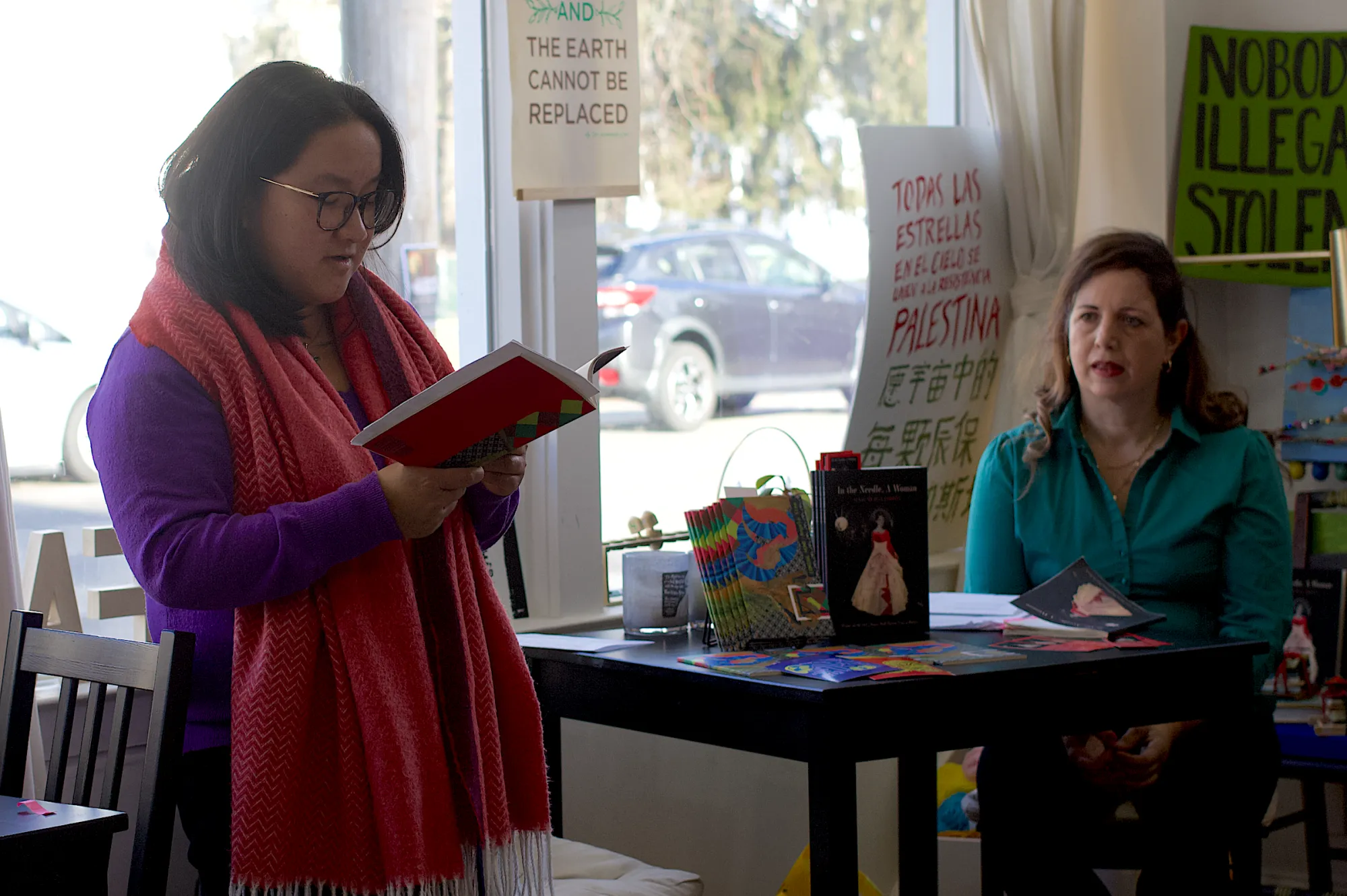
When she told this story to fellow poet Susan Michele Coronel and a crowd of literary fans at Edgewood bookspace Possible Futures Sunday afternoon, attendees laughed in recognition. This is a big reason writing groups like Siew’s form in the first place: to nudge each other to get the pen flowing, even when the page seems daunting.
Coronel, who participates in a yearly poem-a-day challenge with an online writing community, can relate. One person in her group said to “think of it like doing your taxes”: When pressure and perfectionism are at bay, ideas can wriggle their way out.
The method works, it seems. Siew and Coronel were at the bookstore to read from each of their published books of poetry: Coming Home by Siew, published in 2024, and In the Needle, A Woman by Coronel, published last year.
Both poets weaved throughlines across generations past, present, and future. They talked about their parents’ dreams, mythologies from their cultures, and clues they could gather from budding youth.
In “Longevity Noodles,” Siew spoke of her mother as a girl. Then she told stories of her father: his guitar, his illness, his open-heart surgery. When she introduced her next poem with, “This one’s about my mom!” the audience giggled. The larger set of themes was already understood.
Coronel’s poems were about, as she put it, complicated relationships between mother and daughter. Like Siew’s, her poems were deeply autobiographical. They told stories, illuminating a journey from childhood to independence.
The lines that spoke to me most profoundly in Siew’s reading were ones where she is quoting someone else—specifically, where she retells a simple statement.
From “A Letter to My Father After Open Heart Surgery”:
When I asked if it hurt,
you said they took something
you didn’t need.
From “The Gift,” about Siew’s nephew:
Box! B-O-X! When my father asks him
what a box is, he explains,
It’s something you use
to carry something else inside it.
The matter-of-fact nature of each family member’s quote redirects focus outward, toward the other people in the room. Each of these simple statements is an answer, only appearing because someone asked a question: Did it hurt? and What is a box?
Siew’s choice to capture and frame each particular moment of response reveals a measure of care, like a scribbly drawing hung up on someone’s fridge. She doesn’t need to explain what the remarks mean or tell us why they are important; she just turns her attention toward them, which turns our attention too.
To me, they are funny quotes. In the first, Siew’s father is responding to a baby Angela, less than 5 years old. And he is not actually answering her question.
In the second quote, Siew’s young nephew is coming up with a pretty good definition for an object adults rarely have the curiosity to ask about.
What’s funny to me is that both of these responses rise to impossible challenges with the quick, hugely imperfect candor of one generation speaking to another. How can you tell a little child you’ve been hurt? And how can you really define something as broadly categorized as a box? It’s interesting that the questions were even asked in the first place.
These are, maybe, the kind of questions you only get from someone who can’t hope to understand all of you.
Both of these sets of lines act as endings. In “A Letter to my Father After Open Heart Surgery,” the quote from Siew’s father closes the first section. In “The Gift,” the definition from Siew’s nephew ends the poem as a whole. Narratively, the quotes are in a place of conclusion.
It feels like an exercise in trust across ages. In her poems, Siew follows the contours of brooding trains of thought to open up concrete scenes (a surgical scar, a board game gift), carefully drawing out their essence into larger reflections on life. So it’s both satisfying and unexpected for her to, right at the end, let someone else land the plane.
Now, Siew has finally sent work to her January writing group. And she’s getting started crafting another community, as one of two new regional co-chairs for Kundiman, a national organization supporting Asian American literature. She will be helping plan virtual and in-person readings, workshops, and salons for her region, which spans the area from Maine to D.C.
Before opening up the post-reading Q&A to the larger audience, Siew and Coronel sat across from each other and traded questions of their own. When Siew asked Coronel what she aimed for in her writing, she answered:
“Helping readers feel less alone.”
Readers interested in signing up for Siew’s Kundiman Northeast regional group can do so here. To join a Connecticut-wide Asian writers group, email angela.lf.siew@gmail.com.