
New Haven's Unfinished Revolutions
New Haven Museum
114 Whitney Ave.
New Haven
Opened July 1
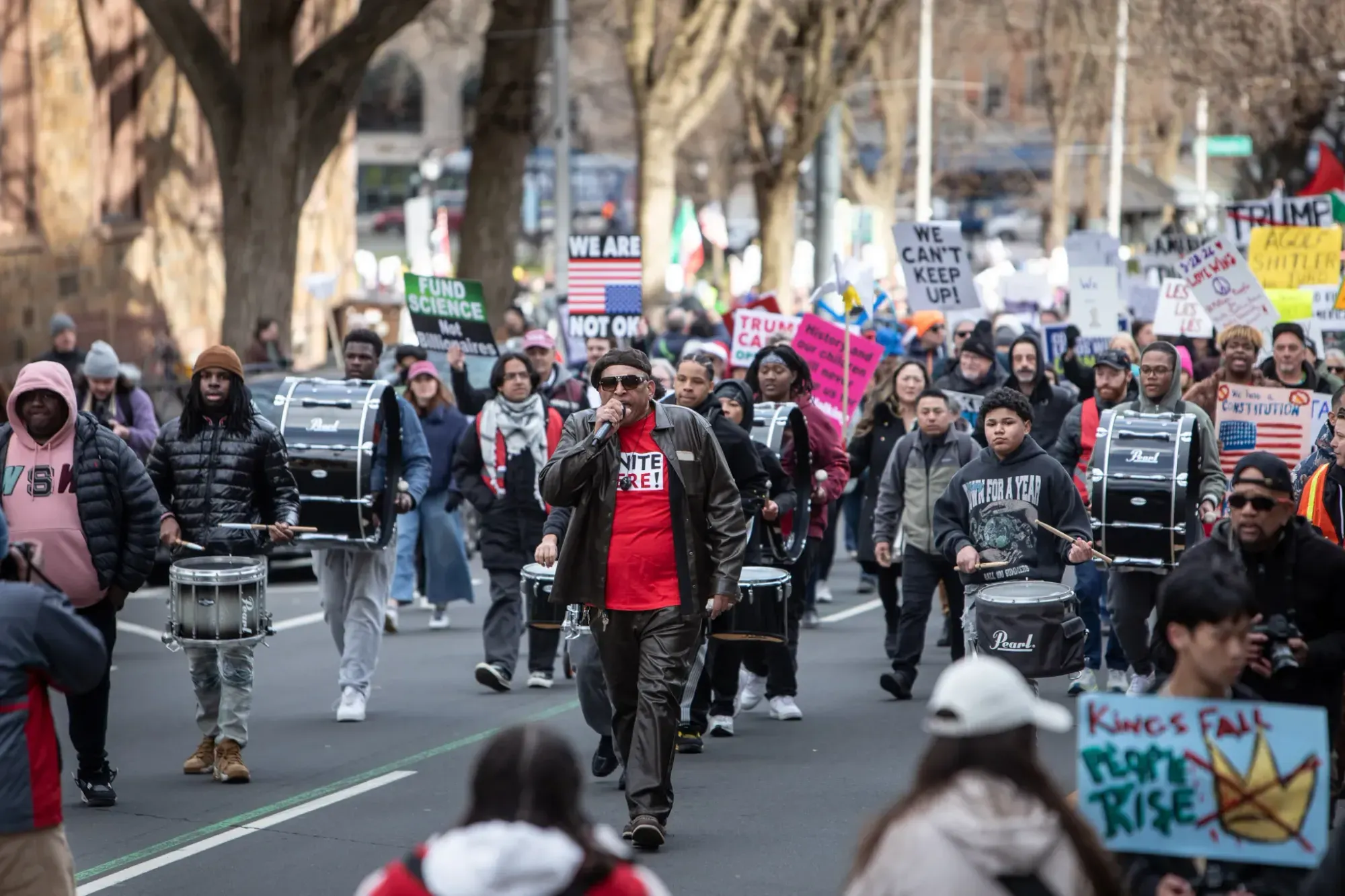
New Haveners use their city's public places to gather, but it doesn't take much to notice how many of those gatherings are protests, sometimes big ones. No King rallies in the past year have drawn healthy numbers. In June 2020, the city of New Haven removed a statue of Christopher Columbus from Wooster Square in June 2020, amid "a screaming match" that "turned into a brief racial fight." Some 65 protesters showed up that day. Hundreds gathered to march in Black Lives Matter protests that same year. For some, the outcry of 2020 had echoes of the 1970 May Day rally over the federal trials of Black Panther leadership, which filled the Green and drew enough attention from the authorities that the National Guard was standing by to intervene.
In some places, these events—separated by years if not decades—may seem like outliers, disruptions in a city's otherwise orderly life. New Haven's Unfinished Revolutions, an exhibition just opened at the New Haven Museum, understands those large protests as part of the city's culture, threads of dissent woven into New Haven's fabric from the beginning.
"New Haven has been a microcosm for national debates about freedom, especially during periods when rights have been expanded or restricted," an accompanying note states. "The Declaration of Independence of 1776, signed by Roger Sherman, who became New Haven's first mayor, marked a turning point in which the natural rights to 'life, liberty, and the pursuit of happiness' were articulated to challenge tyranny and lay the seeds for a democratic government 'deriving its power from the governed.' Many social movements have since referred to this declaration of rights when the founding principles of our democracy have not been fully realized, underscoring that the process of creating and maintaining a democracy is unfinished, and requires public discourse, vigilance, and the full participation of all." New Haven grew from a religious colony into "an urban center where diverse groups expressed a range of political, religious, and cultural ideas," while "across the region, Native peoples continue to advocate for the recognition of their tribal sovereignty." Along the way, the exhibition shows, it has been a place where those conversations are had out loud, where the struggle is out in the open.
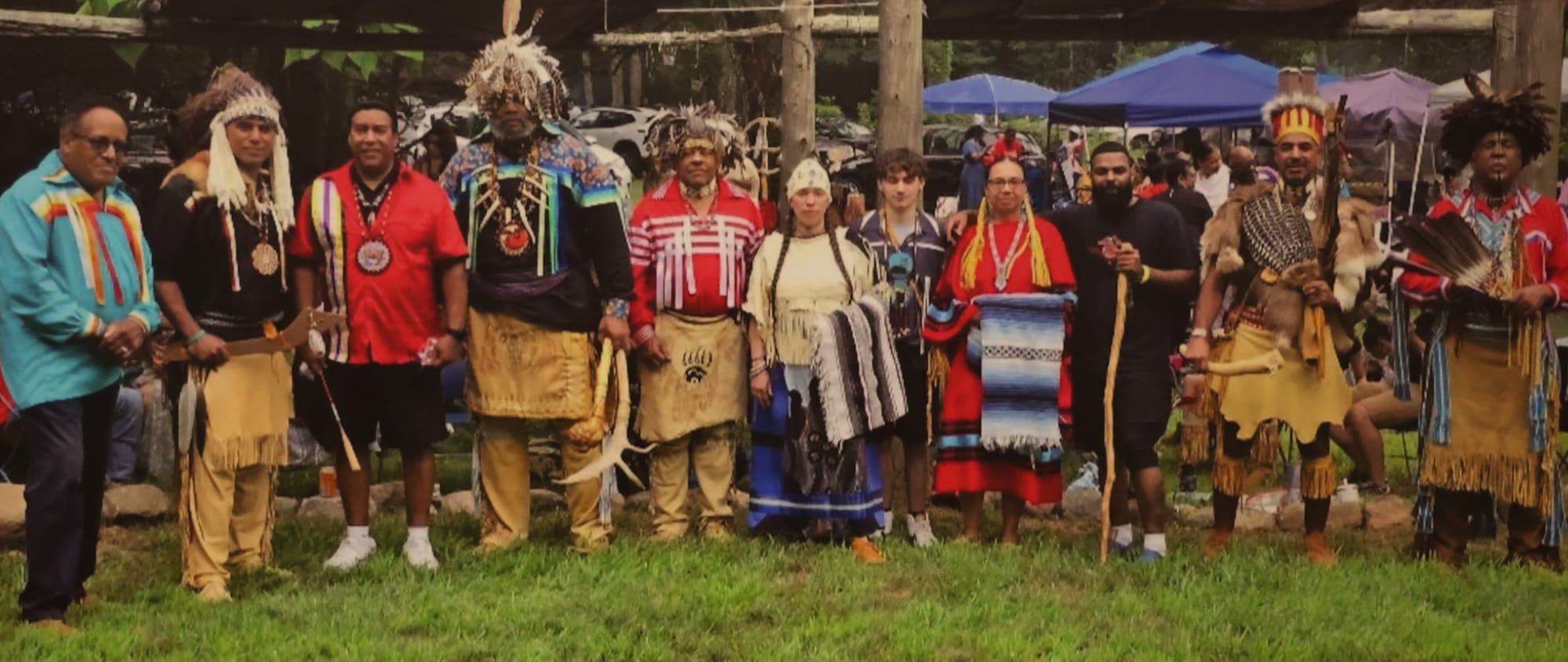
The exhibition is calm in its language, but makes the foment easy to see. "Native American sovereignty and self-governance predate the formation of the United States," the first stop in the show states. "Native communities have lived in Quinnetukut, the Algonquian term for 'land on and beside the long tidal river,' for approximately 11,000 years before the colonies." New Haven's original human inhabitants were the Quinnipiac, whom European colonists forced onto the colonies' first reservation in 1638. That was part of a larger story. "By the mid-1600s, Native communities in Connecticut were impacted by European colonization through the spread of disease, warfare, enslavement, and land dispossession that disrupted tribal nations politically, economically, and culturally," the show's accompanying notes state, while adding that the story isn't over. "The resilience of Native communities who survived colonization in New England, and their advocacy for federal and state recognition of their sovereignty, land rights, and cultural identity, is a centuries-long, ongoing struggle for freedom and integral to the history of the United States."
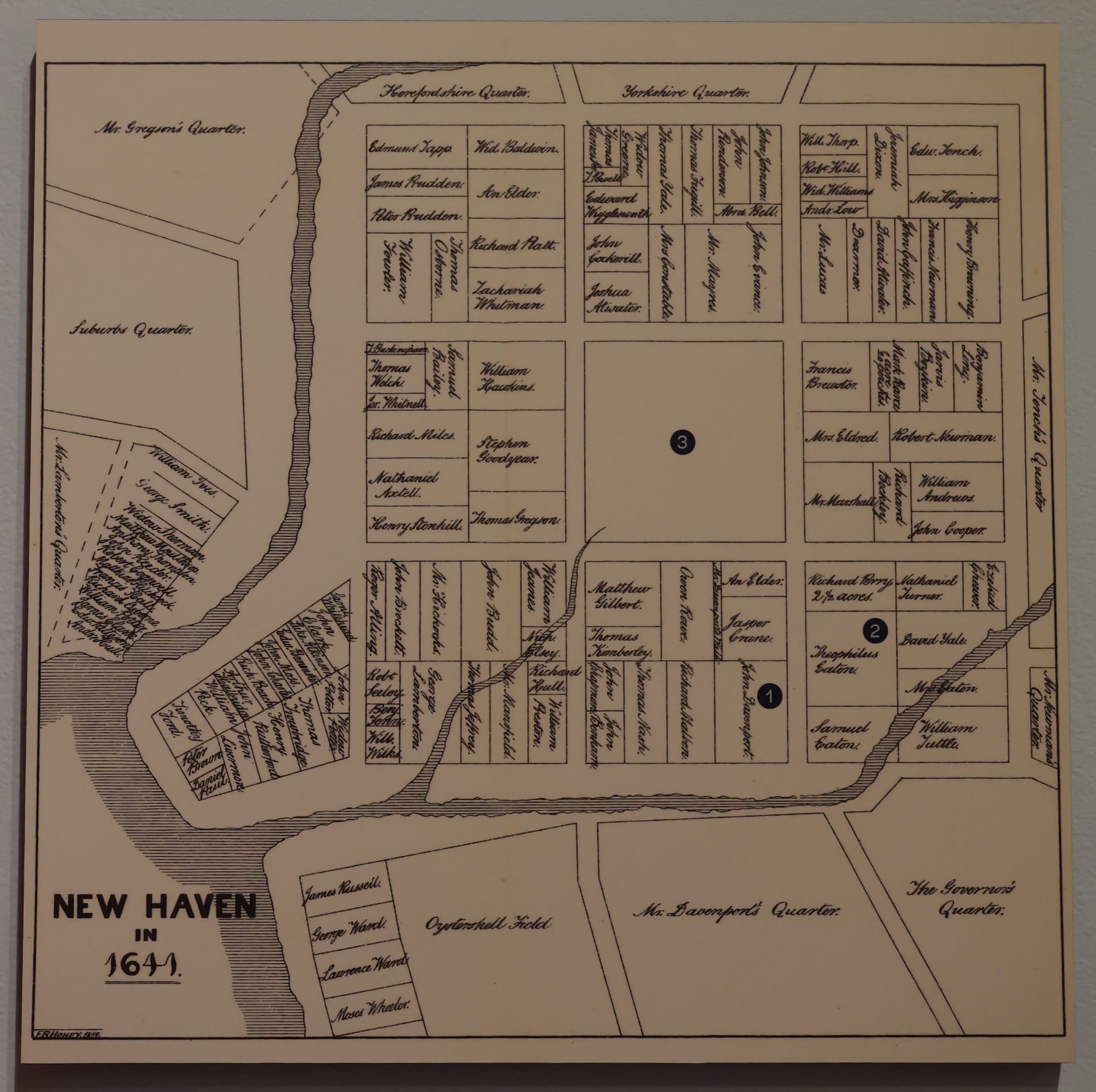
The exhibition points out that the Colonists were engaged in a struggle of their own, for religious freedom, and removes the Band-Aid on what that meant for them. Too often in popular discourse we equate the Puritans' desire for freedom with the progressive sense of what that means, an expansion of personal liberties. But that is not what the Puritans had in mind. "Although Puritans came to New England seeking religious freedom, they demanded conformity to their beliefs and practices," the accompanying note states. "They used their religious beliefs and economic interests to dispossess Native People of their land and justify the enslavement of African people. For the next two centuries, trade with the British colonies in the West Indies was central to the growth of New Haven."
The term are thus set for a story about a place of opposing forces, with many of those forces containing their own internal strifes and contradictions. Just before the American Revolution, "New Haven became a key site of resistance to the Stamp Act, in which the British Parliament taxed legal and commercial documents following the French and Indian War." We learn that perhaps still the United States's most famous traitor has a strong local connection: Benedict Arnold, a merchant who ran a successful apothecary shop on George Street, was involved in smuggling in defiance of the Stamp Act. In 1766, he was arrested for disturbance of the peace after assaulting an employee who had threatened to turn him in." During the Revolution, 2,600 soldiers raided New Haven, spreading violence and disease.
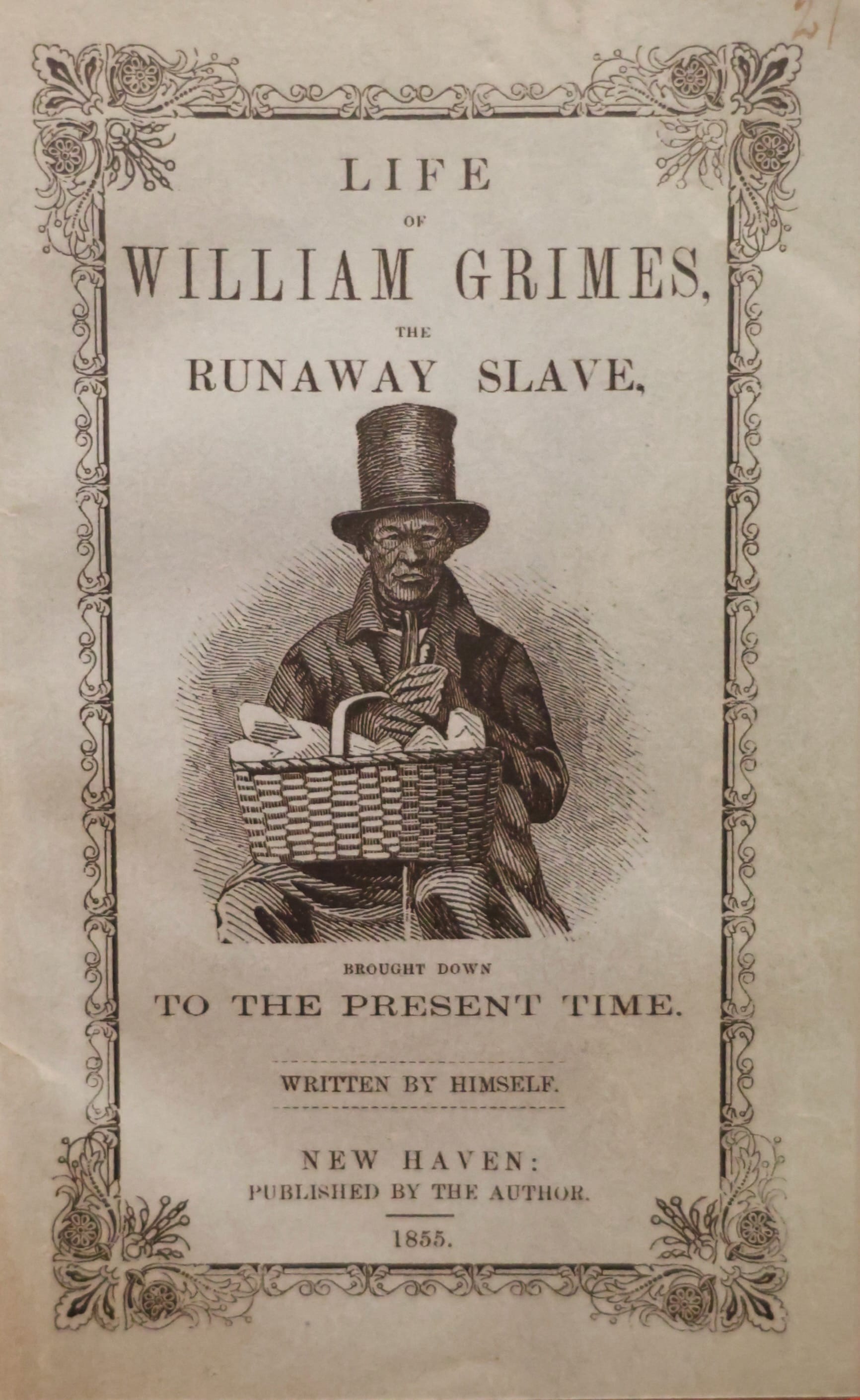
After the war ended, the show points out, New Haven became a center for the abolitionist movement. "New Haven has a significant legacy of Black abolitionists and community leaders who were instrumental in the movement to end slavery and secure equal citizenship," an accompanying note states. "Black communities in New Haven founded their own churches and were active in local, national, and international issues. New Haven's Spireworth neighborhood (now Trowbridge Square in the Hill) was part of an abolitionist vision to remove housing discrimination and develop an integrated working-class neighborhood. By 1831, an interracial group of abolitionists proposed the first Black College in the nation. Eight years later, abolitionists advocated for the people who led the Amistad Revolt, originally trafficked from Sierra Leone and imprisoned and brought to trial in New Haven."
But abolitionists had an uphill battle. Slavery wasn't abolished in Connecticut until 1848, and "specific industries in New Haven remained tied to southern markets and profits," the show states. "There was also increasing hostility toward Black leaders like William Lanson, who ran successful business establishments and opposed legislation in Connecticut restricting Black Americans from voting." The Black college, which would have been the United States's first HBCU, wasn't built.
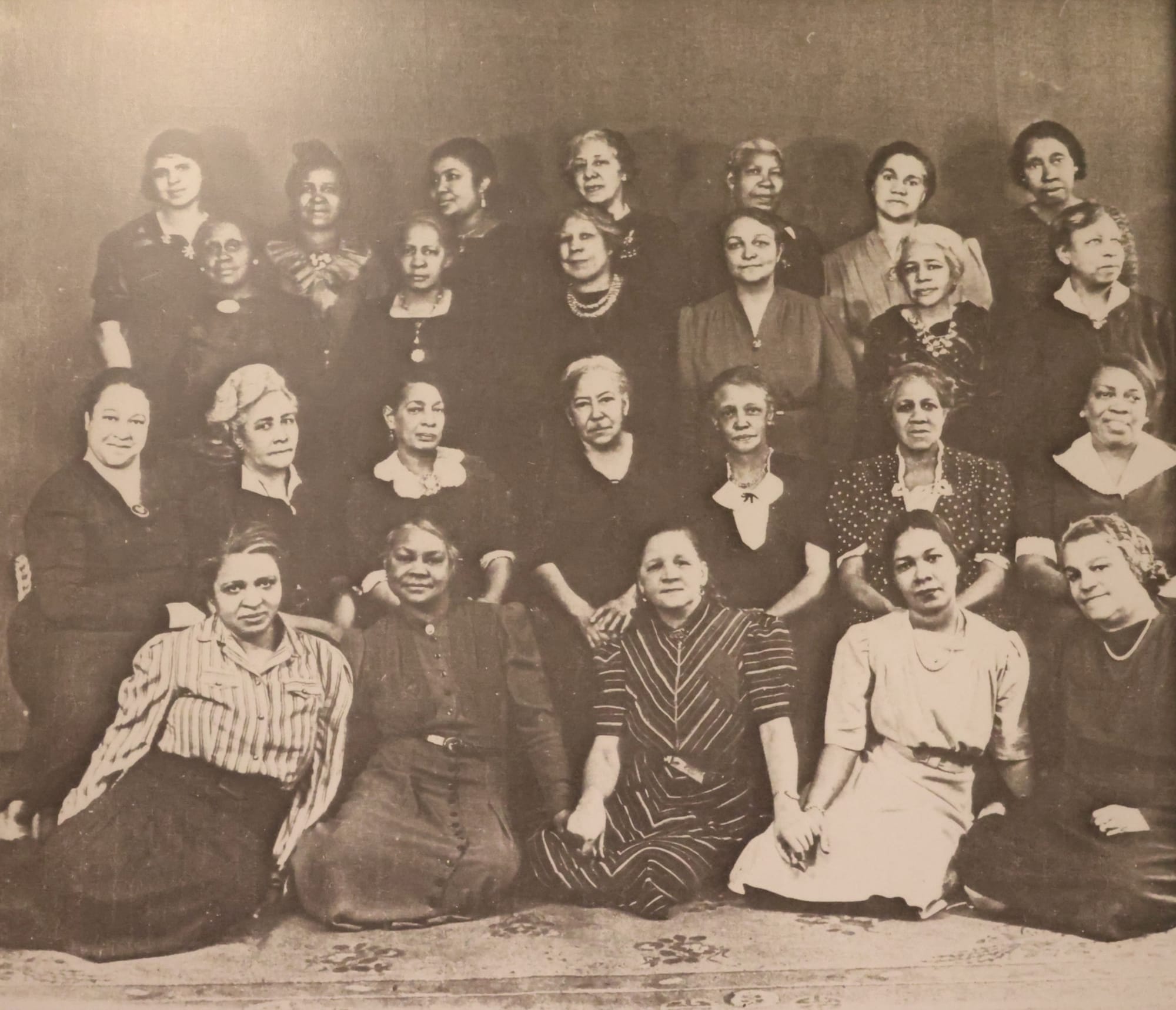
The women's suffragist movement of the early 20th century likewise had a strong presence in New Haven, but the show points out that New Haven was a place that exposed the racial divisions within it, even as women worked toward a common goal. "In the 1890s, African American women began to form their own local and national clubs that connected voting rights to racial equality to combat Jim Crow laws and violence as well as exclusion by the national women's suffrage organizations," an accompanying note states. "New Haven became a center for political activity among Black suffragists, many of whom saw voting and representation in politics as a path for expanding access to education and jobs, and community building as essential. In 1903, the 20th Century Women's Club hosted the Northeastern Federation of Colored Women Convention."
As the show works through the 20th century, the struggles continue. Labor organizers throw parties and declare strikes. Mid-century urban renewal under New Haven mayor Richard C. Lee met resistance, with neighborhood organizers calling the Redevelopment Agency an "invading army." That army won, and the exhibition tallies the casualties. The Oak Street Connector alone displaced "900 households and 250 businesses from the Oak Street/Legion Avenue neighborhood, comprised of Italian and Jewish immigrants, and Black families who represented 40 percent of the people displaced." In all, "between 1954 and 1968, it is estimated that 22,000 people were relocated because of urban renewal projects, specifically impacting the Wooster Square, Dixwell, Hill, Oak and Church Street neighborhoods."
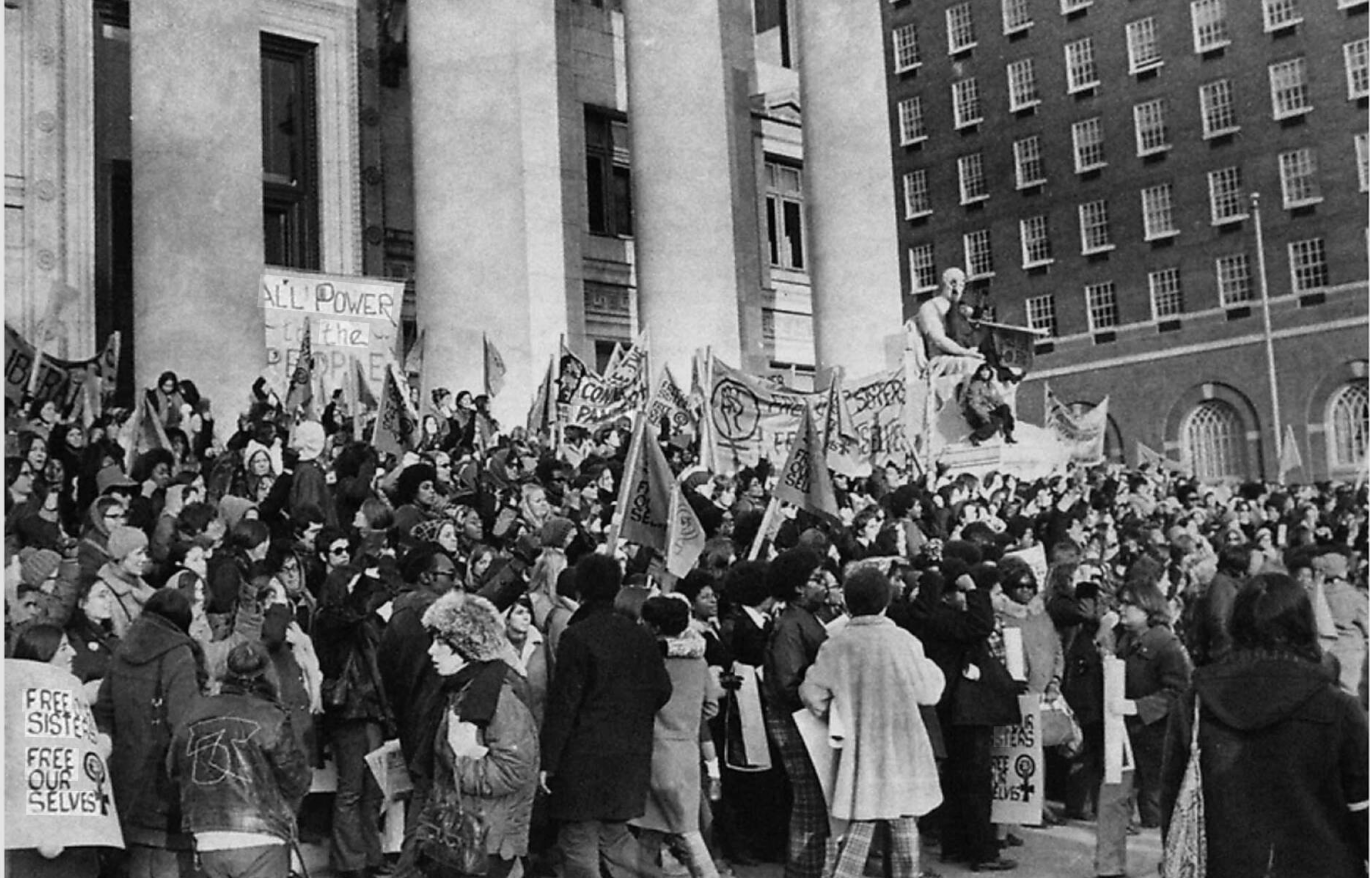
In the 1960s, the show documents how multiple liberation movements, "including the Black Freedom Movement, the Anti-Vietnam War Movement, the Women's Movement, Gay Liberation, and the American Indian Movement," found fertile ground in New Haven and converged to find common cause in the 1970 May Day protests.
As the show moves closer to the present day, a deeper point emerges: that New Haven's long history of revolutionary activity isn't just about a string of tentpole events through the centuries, nor is it just about some unrest at the margins. At this point, it's baked into the way the city runs and maybe even how it understands itself. At the government level, you can see it in the way it dove headfirst into urban renewal two generations ago, and how it is unmaking some of those radical changes now. You can see it in the vitality of its nonprofits, advocating for a huge range of causes. And if you're paying attention, you can see it in people's day-to-day lives, the way they show up and support local causes. They're there not just for the big rallies, but for the long-term incremental projects, working to improve schools and community centers and access to natural places. They know sometimes revolution is a jolting, overnight turn, and sometimes it's a slow roll.


