Mahjong Haven
Possible Futures
318 Edgewood Ave.
New Haven
March 22, 2026
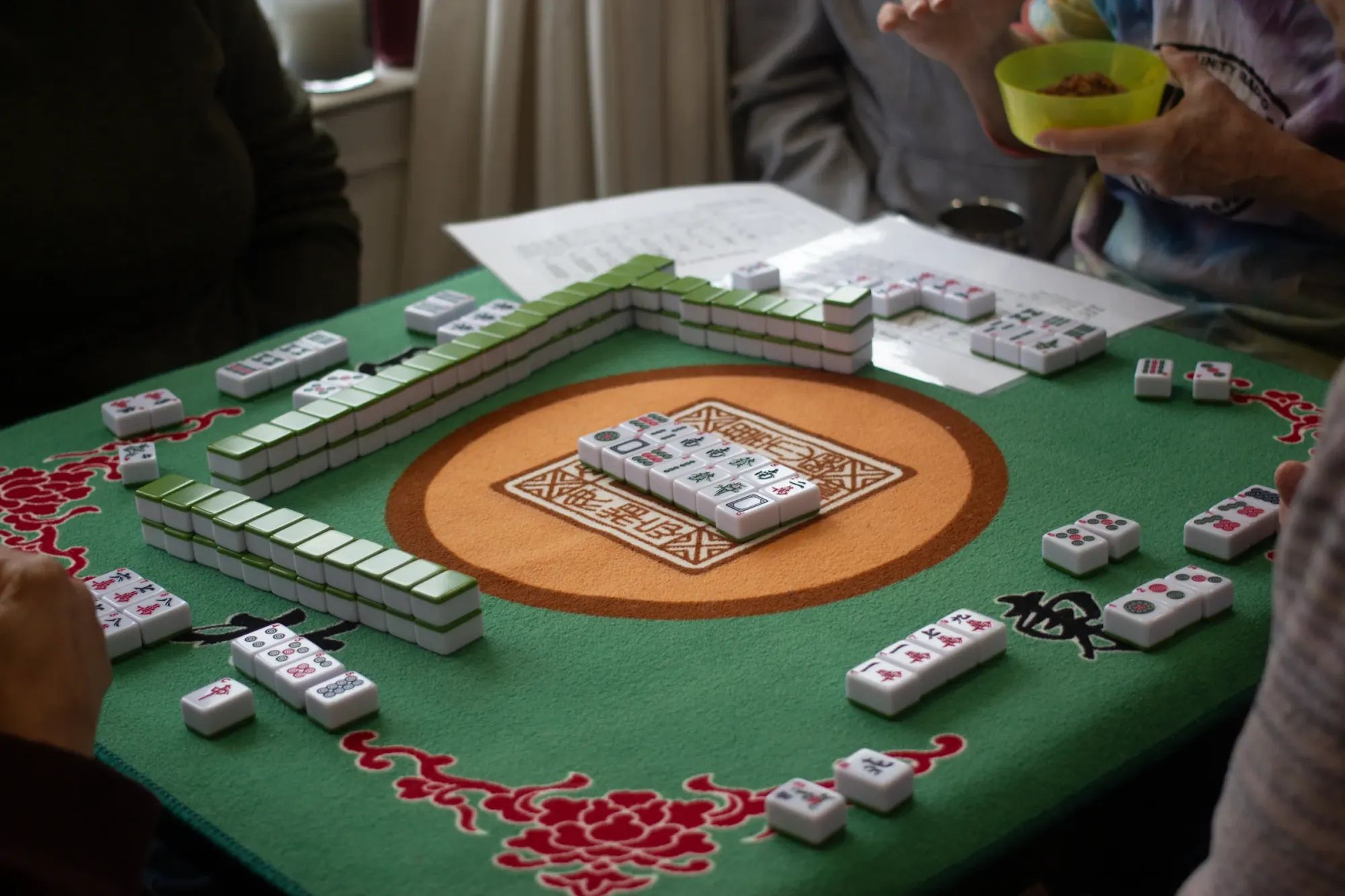
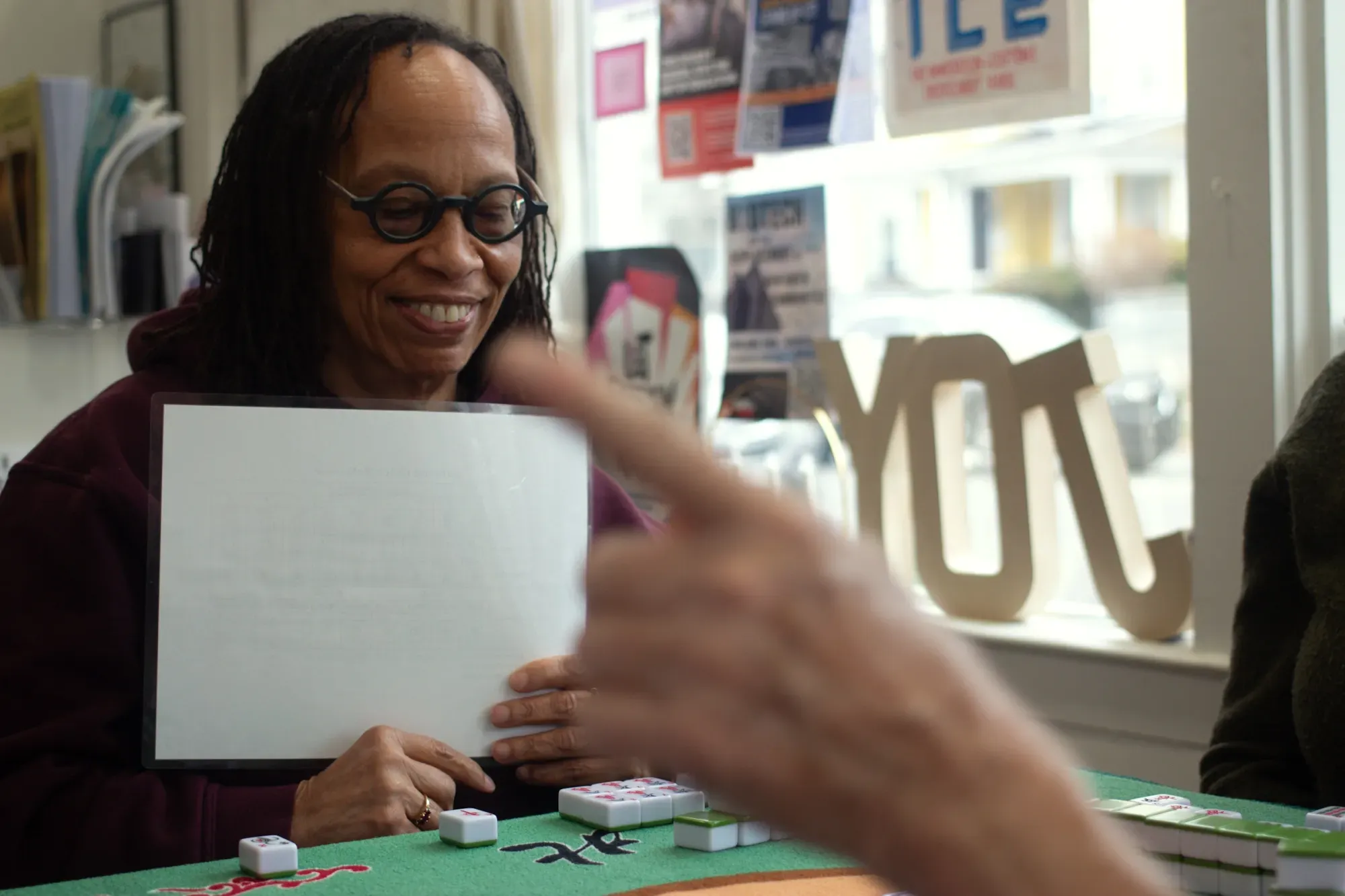
Tiles clattered before furrowed brows as mahjong players counted up sets of bamboo, dragons, and winds in cardinal directions. Were we at a Chinatown park? A Hong Kong game parlor?
Nope — we were at Edgewood bookstore Possible Futures, a favorite haunt of a steadily growing game community, Mahjong Haven.
The group started in July 2025, when New Havener Esther Chiang received a Neighborhood Cultural Vitality Grant from the city to share culture through the bonding power of games. Mahjong, a poker-like tile game originating in China in the 1800s, is now a family and community staple in places like Hong Kong, Japan, Malaysia, and Taiwan. The pieces feature Chinese characters. Gameplay involves saying Chinese phrases like pung (“touch”).
By the time I caught up with Mahjong Haven Sunday afternoon, they’d already held events not just in the Elm City, but as far away as Hartford, Manchester, Providence, and Philadelphia.
I took a seat at one of the tables as Chiang walked new players through the rules. One of the suits was called dots, or circles, she said. She calls them cookies, which she said is more accurate to their translation from Taiwanese. (Chiang is Taiwanese.)
She explained triple sets. For example, you could have four, four, and …
… she stopped and switched to a different example, laughing. A triple “four” (or really, too many “fours” in general) is an unlucky utterance in many East Asian cultures due to its similarity in pronunciation with “death” in Chinese.
Chiang asked the player across from me, Joey, if she had played Mahjong before.
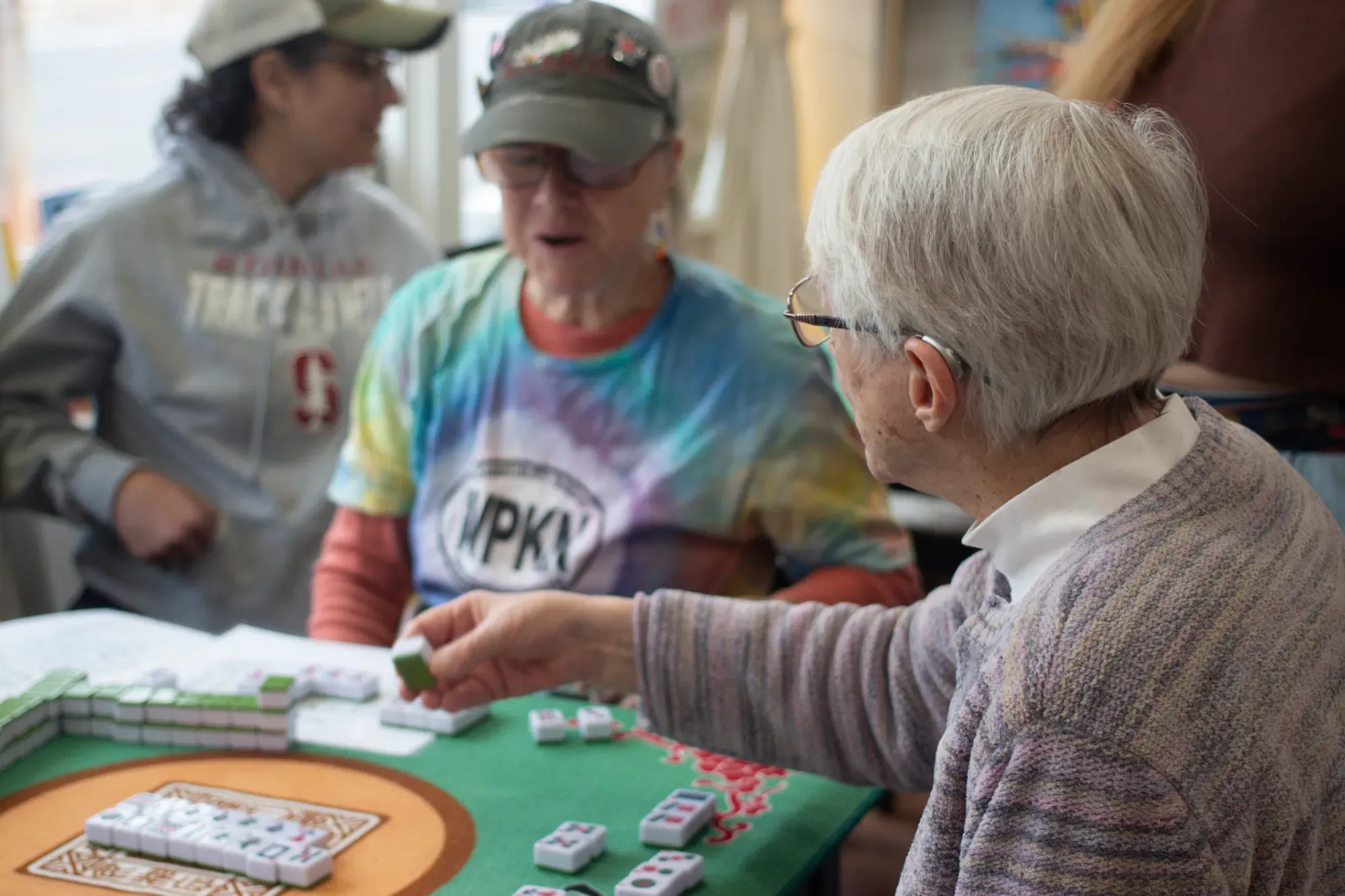
“A long, long, long time ago,” Joey responded. She heard about the group from her daughter, Jocelyn, and the two came through the bookstore’s door together. They are both from Hong Kong, which was serendipitous as we were playing Hong Kong-style that day. Mahjong Havener William Tan told me the group offers different versions of the game, including Japanese and American mahjong.
Tan first encountered the group at New Haven Pride this past summer, where Mahjong Haven had set up gaming tables at Possible Futures’ outdoor booth. Also Taiwanese, Tan grew up around mahjong, but his aunts and uncles wouldn’t let him play. They didn’t want him to get corrupted by all the gambling.
At Mahjong Haven, that’s not something to worry about. There are no bets or wagers, just the love of the game.
Now, Tan is a regular face at Mahjong Haven’s events, helping set up the tables and coach players. I asked if he’s gotten good at the game after all this practice.
“I’m OK,” he said. “I’m not the uncle who can feel a tile.”
Some seasoned players, he explained, can sense if they want to keep or discard a piece without even looking at it.
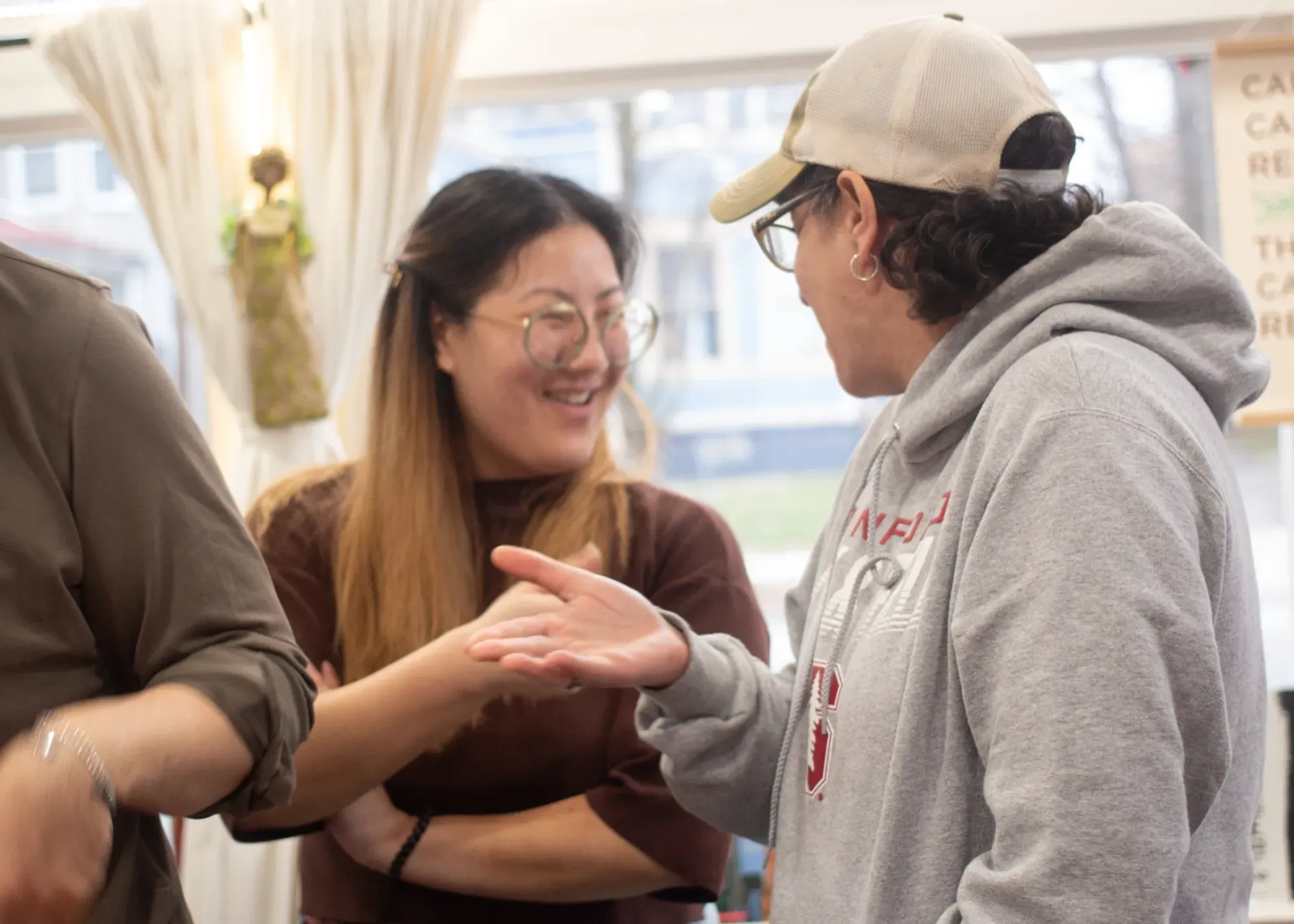
I saw the phenomenon for myself soon after, mid-game, as Joey reached one hand toward the center of a fancy automatic-shuffling game board. Two other hands, Chiang’s and Tan’s, joined in the action, gesturing toward the face-down tile as the three conversed in a quick back-and-forth in Cantonese.
Seconds before, both of Joey’s hands were over her face as she mulled over her next move. When her coaching session was over, she took the tile and felt it. This was the one.
Mahjong! Joey had won the round.
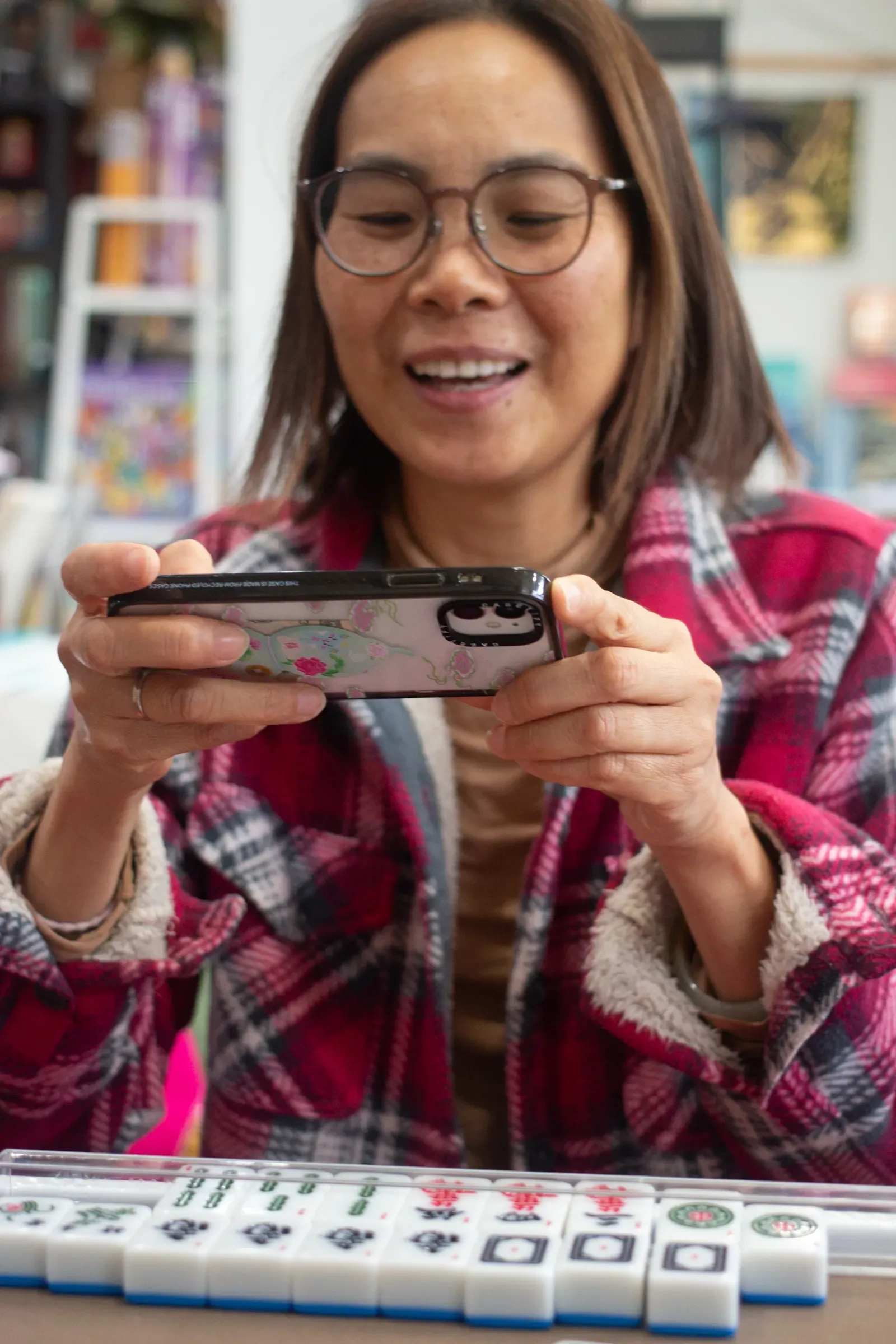
“Thank you!” she told me as we both took pictures of her winning hand. It was my discarded tile, the “seven bamboo” tile, that helped her win.
A few rounds later, everyone at the table had won at least once, except me. I collected a full set of green dragon tiles that I thought was sure to bring me prosperity; the “fā” character on these tiles represents fortune, I learned. But even all the fortune in the world wasn’t enough. I still came up short. I set my reporter’s notebook down on the table. It was time to get serious.
With time for just one more game before Mahjong Haven packed up their tables and tiles, I had my eyes on the (metaphorical) prize. I had a strong start — a couple of flower tiles, to decorate my side of the table and give me an extra point.
Turns out I had nothing to worry about. Joey held the piece I needed to win, the “20,000” character tile. She discarded it at just the right moment.
“Pung!” I said, announcing my intent to take Joey’s tile for my set. And then, more tentatively, “Mahjong?”
I tilted my tile holder to let the pieces fall face-up on the table. The other players looked and nodded. I’d done it. I thanked Joey for gifting me the winning tile.
As we all packed up, I could see a gaggle of players exchanging phone numbers so they could play Mahjong on their own time. Tan told me Mahjong Haven was about getting people to “come together around the tiles.”
He’d seen the magic as a child, and now he was part of making it happen for others. There might be zero money involved, but the players win something even more valuable: human connection.