Grundle Gallery
Spring Exhibition
5960 Lincoln Street
Detroit
May 9, 2026
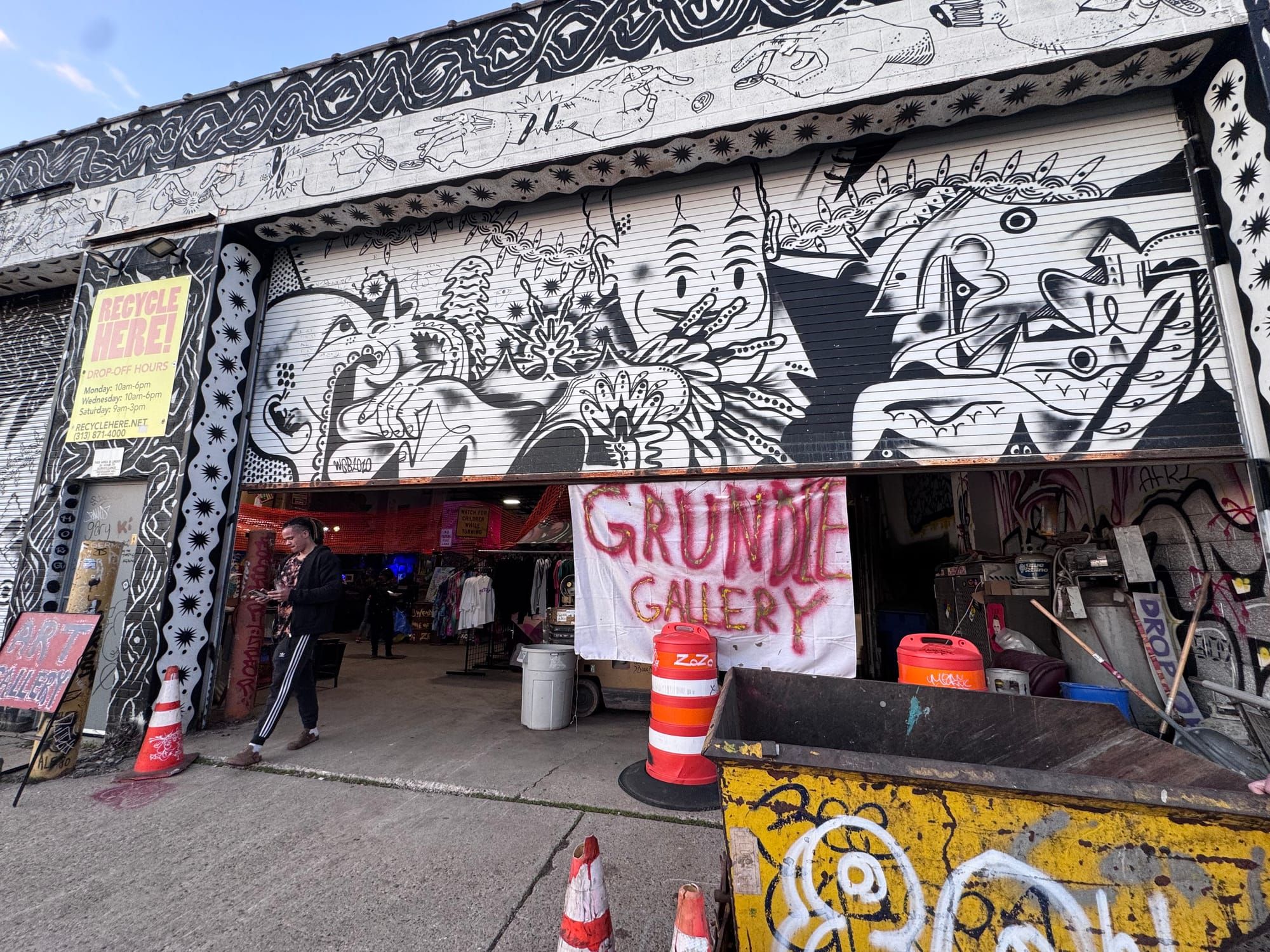
One of the best art shows in Detroit happens seasonally inside of a recycling center affectionately called the “trash hole” by those that work there.
The Grundle Gallery is a pop-up exhibit now showing at that "trash hole," located nearby Detroit’s Fisher Building. They're currently hosting their spring edition. It’s far from traditional gallery fare. This is open source. Got some art? Bring it by. That’s what the usual recycling center clients do, but instead of soup cans, newspapers and other recyclables, a handful of artists come through with their latest works.
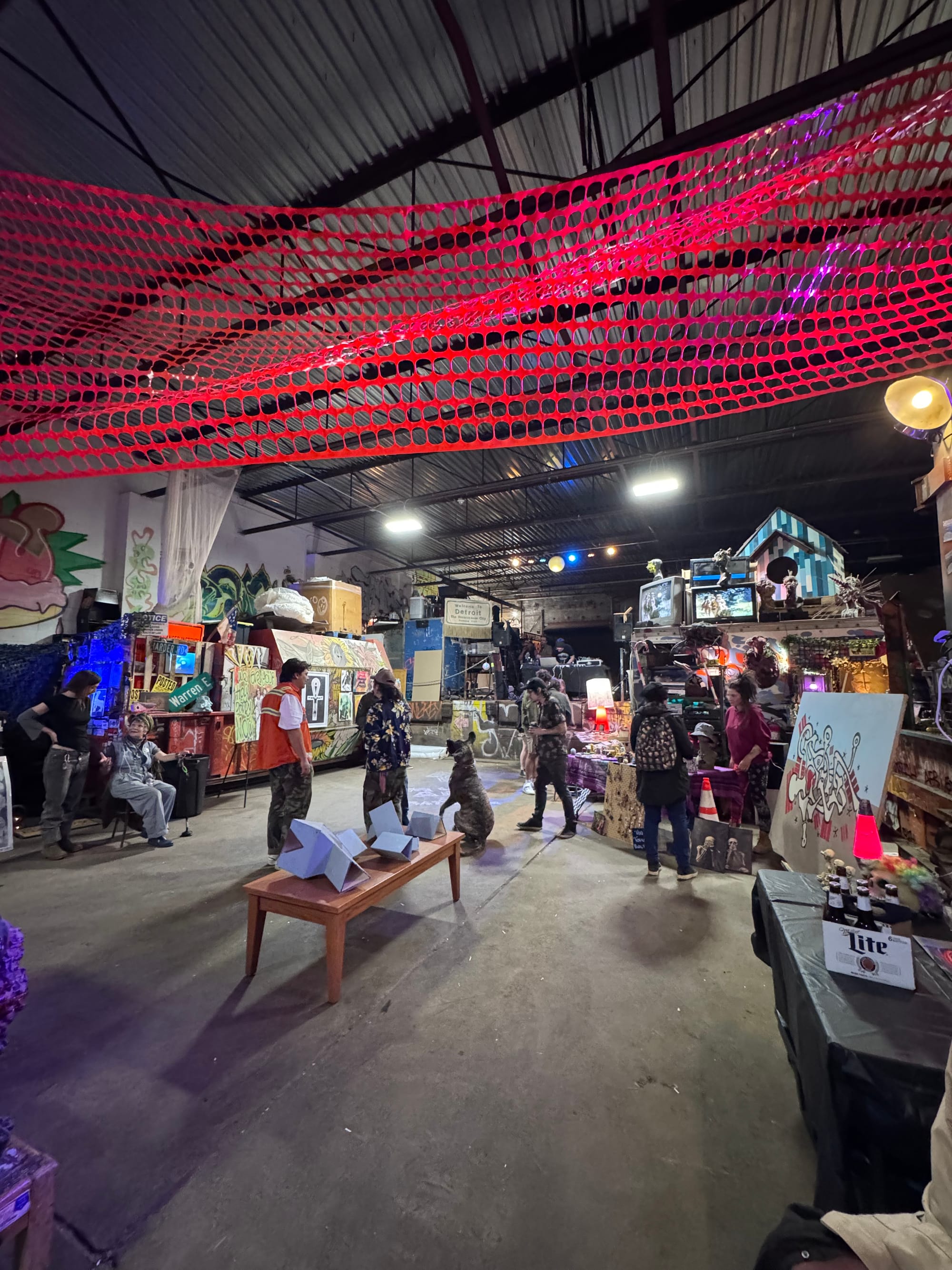
It’s DIY in that way – and it's a uniquely accurate representation of what the local art scene looks like because it’s not being gatekept by a curator. It’s more of an all-are-welcome vibe thanks to curator Zech (just goes by his first name), who has worked for years at the recycling center (aka the “trash hole”).
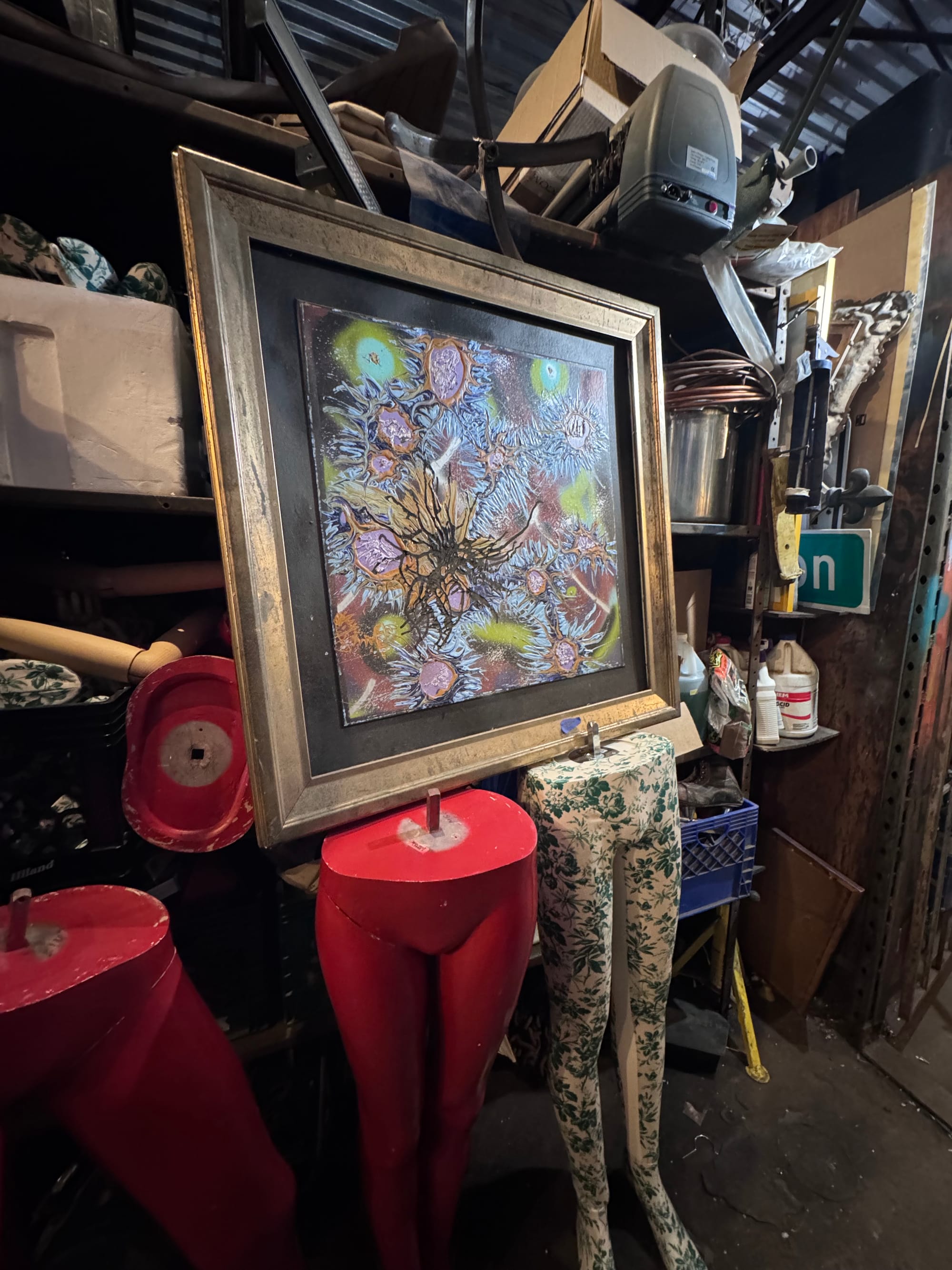
In that sense, a lot of the “trash” that comes through are artistic starting points; take, for example, Zech's manipulation of old mannequins into original pieces (or those same mannequins serving as frames or displays for other art works).
This run at the Grundle Gallery features work from Naye Taye Visuals, Walter Bailey, Jo Beltran, Miranda Violet, Youngest Waffle and a handful of others, but when I visited most recently, as well as over the years, it was David Morrison’s work that stuck out the most to me.
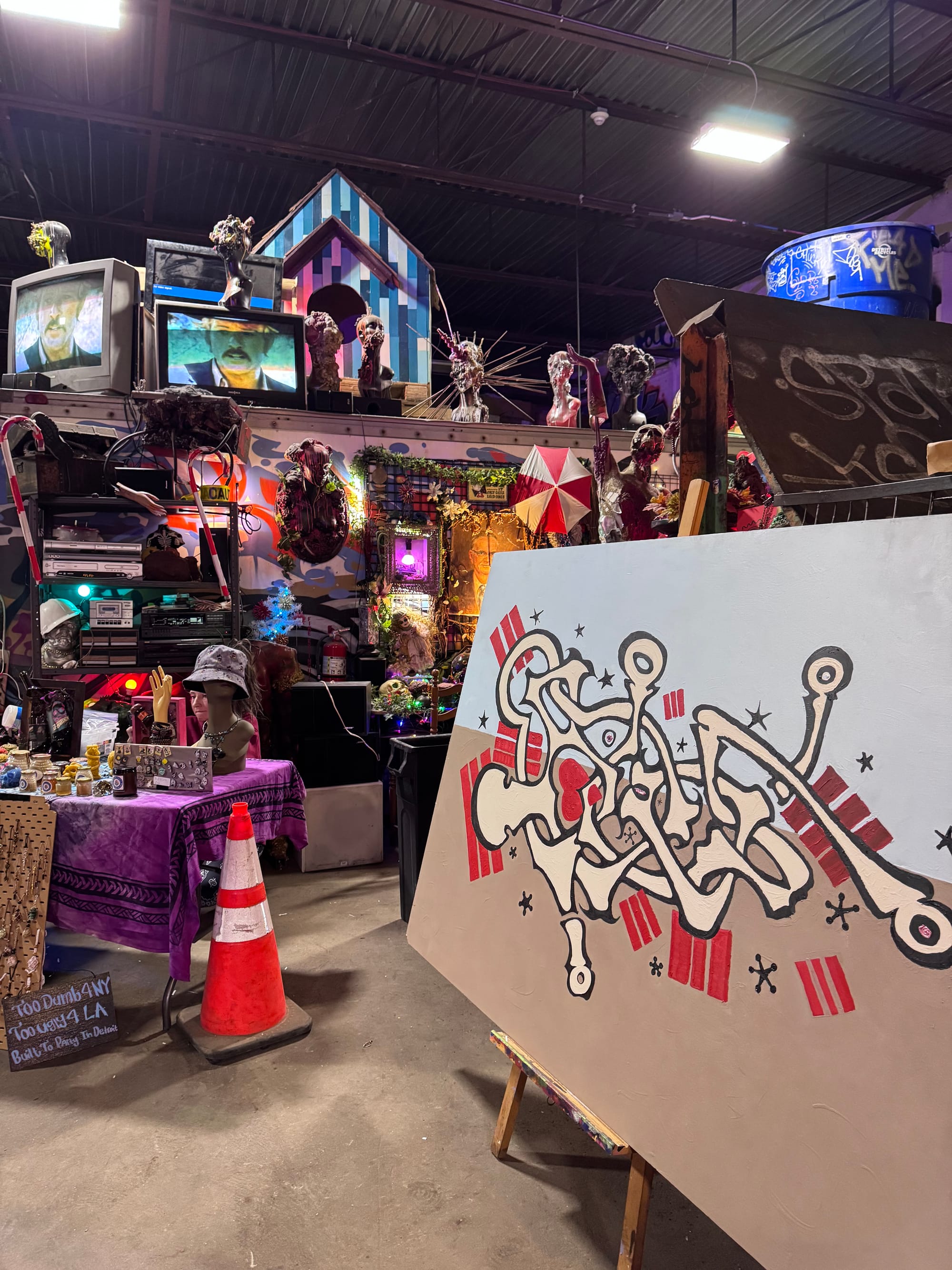
He has on display a style of abstract painting that should honestly feel too chaotic in a space that’s already absolutely cluttered with waste and creation, but there’s a warmth and color theory behind it that makes it stand out without shouting.
The event is completely free and unpredictable. If you’re an artist in the city, it’s a valuable place to exhibit. The patrons and artists themselves are members of a sort of underground art scene that are often the true tastemakers or early adopters of trends that the mainstream gallery system won’t see for years – or ever. It can be hit-or-miss. That’s the other side of the coin of not having a curator. It’s an absolute scene either way, and worth a visit.