
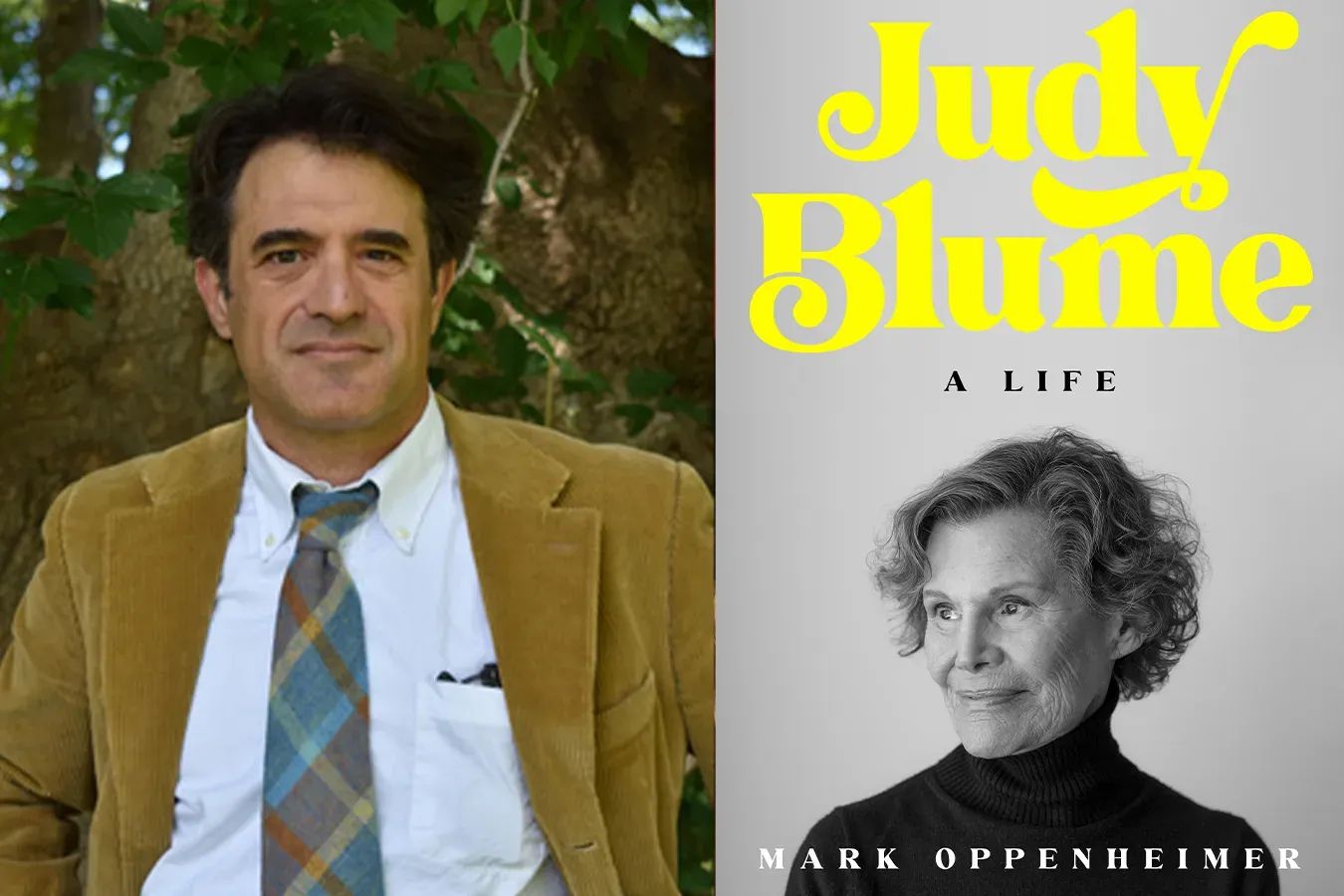
Judy Blume: A Life
By Mark Oppenheimer
Putnam, an imprint of Penguin Random House
Published March 10, 2026
You heard it here first: Southern Connecticut State University’s microfilm collection tops Yale’s.
So observes New Haven author Mark Oppenheimer, who writes in the acknowledgments of his new book that, at least for his research purposes, Southern’s microfilm room was “better than Yale’s—a reminder to treasure our public universities.”
He was researching a topic near and dear to many readers’ hearts: fellow author Judy Blume, of Are You There God? It’s Me, Margaret and Superfudge fame. One month ago, Oppenheimer published the fruits of his labor, a biography titled Judy Blume: A Life.
I’ll spare you the fuzzy nostalgia. You have over a dozen books for that.
This book made me feel like I met Blume, which is the most I can ask for from a biographer.
Judy Blume: A Life also gave me insider secrets about what is it like to be a famous author — and along with that, the negotiations one might have to make with the industry when there’s an exploding exchange rate set on perceived intimacy.
When Oppenheimer lauds Blume for telling another writer that “books that are written to order are just not good,” I’m listening. This is a book I’m glad I read. I don’t agree with the author that Blume could be confused for a saint, or that she seems that way in his account. (He makes sure to stress in the epilogue that “Judy’s not a saint or a Zen master.”) But I don’t need to. I found clues in this book about life and career; whether those lessons were intentional is beside the point.
The writer Blume is responding to in the “written to order” comment is dismayed Blume’s protagonists do not seek to change the conditions of their world.
For example, in Blubber, Blume’s fat-shaming narrator eventually stops her taunts as the tides of middle school change but doesn’t come to terms with the bullying she had participated in. Blume seems unbothered by this. It’s real life. As Oppenheimer writes, the narrator “is cruel because, well, children can be cruel.”
Later in the book, Blume writes to a friend about the author of a children’s book guide who had criticized Blume’s books: “She’s old news. Some Canadian bitchy type, I’ve heard—who blames me for her young daughter’s unhappiness over Blubber (they’re both overweight, my friend in Toronto tells me).”
Oppenheimer wonders what about this Canadian author “undid her.” I’m wondering the opposite. What patterns built up over time to the extent that Blume would be so comfortable fat-shaming a kid and striking at the free expression of a fellow writer, all at once?
Oppenheimer all but apologizes for making Blume out to be too positive. To me, that’s unnecessary.
The moment my heart goes out most to her is when Tayari Jones says Blume saved her career. (I loved Kin).
Then I thought more about how exactly Blume did so. She put Jones’ hand in the hand of a publisher who had already rejected her work. It seems the encounter convinced the publisher to give Jones a second chance. Am I wrong to see this as messed up, that some perception of friendship with Blume was what “saved” Tayari Jones’ career? The writing was already gold, and it almost stayed in the bin. What kind of wacko industry is this?
An industry that has a biographer of an author taking jabs at a reviewer, in effect reviewing a review. According to Oppenheimer, New York Times book critic Michiko Kakutani fails to recognize Blume’s therapy-conscious tendencies in her book Smart Women as a sign of a new generation. It’s a sharp note, one that tells a story of Blume’s progression as a writer through the moving parts of the writing world.
The book is at its most fun when we are a bit ignored: For instance when Oppenheimer incorporates tidbits from Jewish culture, like the Yiddish sitzfleisch, without translating them. It gives the sense that we’re reading someone’s diary — which isn’t far from what’s happening. Oppenheimer’s reading Blume’s archived papers and giving us the annotated scoop.
It’s illuminating to see the sources of fulfillment in Blume’s life once she has access to just about anything. TV and Hollywood are exhausting and underwhelming. Replying to fan mail messes with her mind. Oppenheimer writes that she goes so far as to hire a therapist to help her establish boundaries with her penpals. He includes an excerpt from one of Judy’s letters to a penpal he describes as a “gay boy suffering from severe depression,” part of which (after seven-eight years of correspondence, at which point I can only hope he is an adult) reads, “You don’t love him. You can’t love someone who lies and cheats and infuriates you as he does.”
It’s not clear to me if Oppenheimer reads this as inappopriate. I do, so I’m glad she sought help. (Eek, I’m calling a Banned Books author inappropriate! But the books, the books are fine. Put it all there, not in personal letters!)
The biography contains family threads that feel strong even as they arrive with dots unconnected. Blume cheats on her husband because, as she put it, she “wanted to be bad.” Then her daughter Randy goes through six months of secret drinking because, in Judy’s words paraphrasing her daughter, she wants to “find out what it was like to be bad.”
My goal here is not to hyper-analyze Blume for the hell of it. I want to know how to live a life.
I’m a writer too. So is Oppenheimer. I’m interested in what people are still trapped by when they seem to have it all. I’m interested in how it comes through the art, or doesn’t. In describing Judy Blume’s life, her correspondence with writer friends, and her back-and-forths with editors and studio execs, Oppenheimer gives us more than the glowing account he seems to think he gave.
Reading this biography has been a meta experience, especially now that I’ve peeked into the drama unfolding in the other reviews. (Are Blume and Oppenheimer ex-friends now? Why was this book written by a man? And other questions I’m just not curious about, unfortunately.)
It’s not just about one woman’s rise to success as an author, or the sweet family moments along the way. It’s also about the psychological quirks of an obsessive field.


