
Imprint: A Creative Exploration of Tattoo Culture
InterCommunity Gallery
East Hartford
Feb. 13, 2026
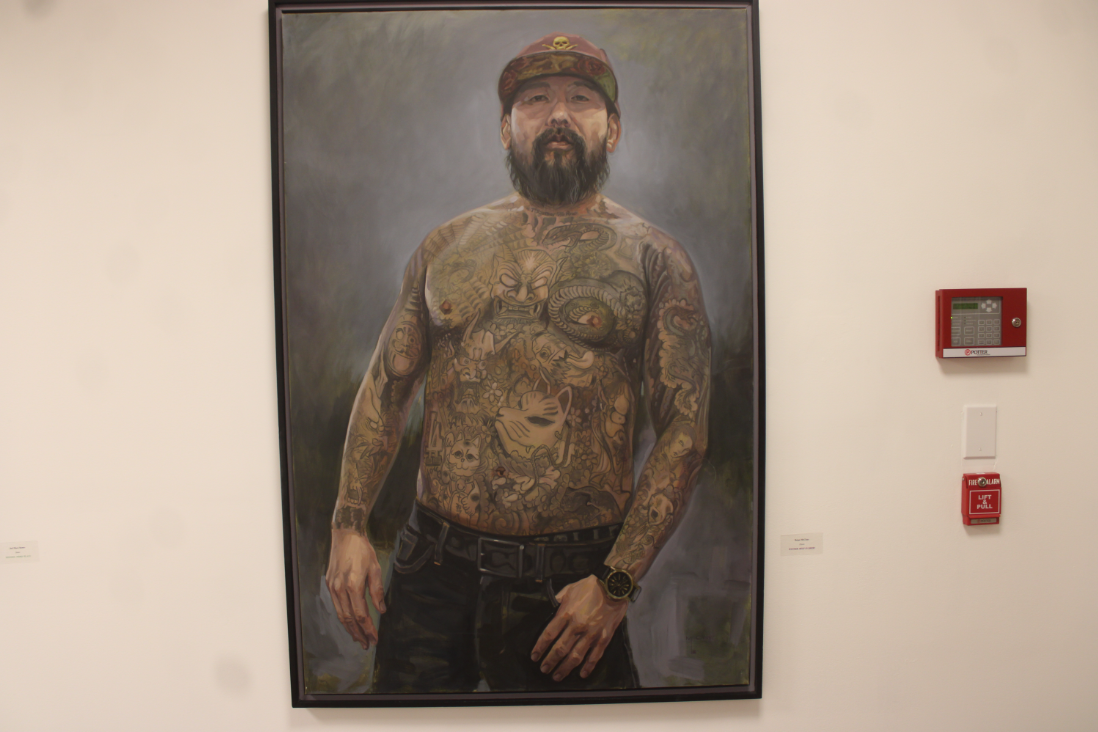
As I walked in to InterCommunity Gallery, I was greeted by a massive image of a shirtless man, showcasing a tableau of tattoo artistry that covered nearly every inch of his exposed skin.
That first impression told me that this was a different kind of gallery, with a different kind of purpose. InterCommunity is a health center that focuses on primary care, behavioral health care and addiction recovery services. It operates in an unassuming building sandwiched between a Wendy’s and a highway on ramp. It also hosts a gallery that is home to the Imprint: A Creative Exploration of Tattoo Culture exhibit. It’s no coincidence that a place of healing boasts some of the most impressive artwork I’ve ever seen.
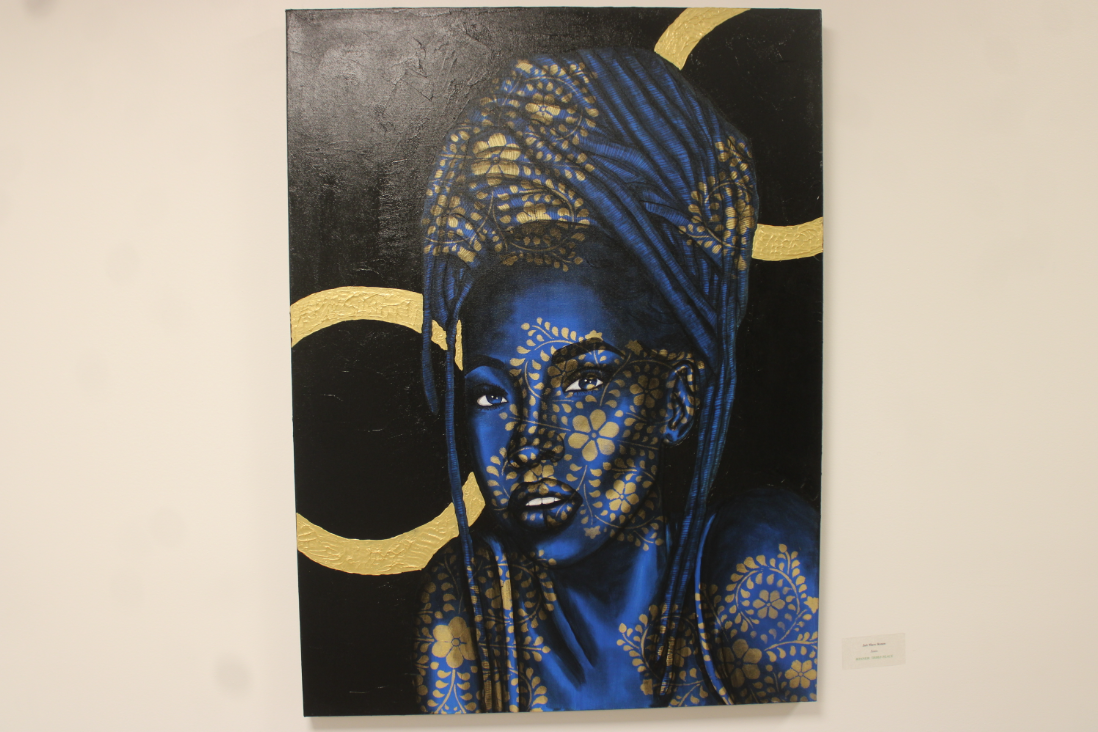
Scale is an important aspect of art, one that I’ve often overlooked in my writing. The scale of the work on display at InterCommunity overwhelms at first. Then it becomes apparent why the artists have created such large works. How else could artist Jaii Marc Renee capture the delicacies of lips and eyes in their piece Sonic? The henna-like flower designs that adorn the cerulean skin of the woman in the painting highlight her humanity, as if we can see through her to what lies beneath.
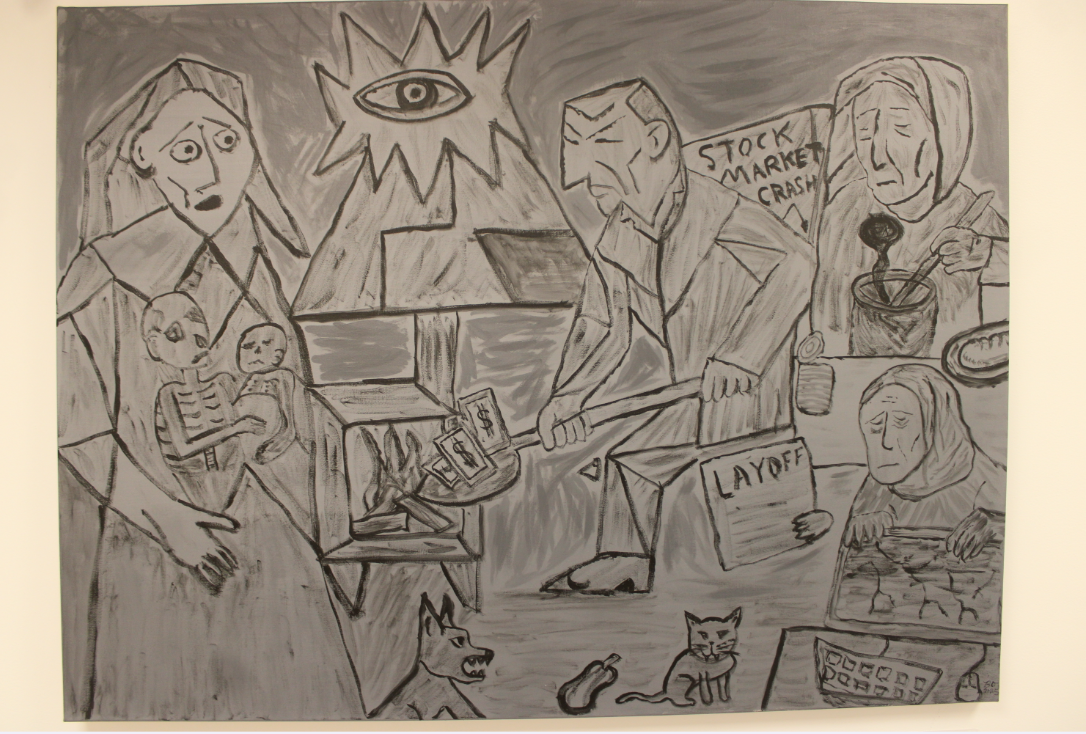
Brian Ouellette uses the size of his artwork to focus the viewer on stark, jagged lines and gaunt figures in Squashed Poverty. The Eye of Sauron looks on, unblinking, a fantasy metaphor for the hellish panopticon we’ve willingly built with Ring cameras in our own neighborhoods. The only other eyes in the painting not represented by slits are open in horror at the manmade suffering the subjects endure.
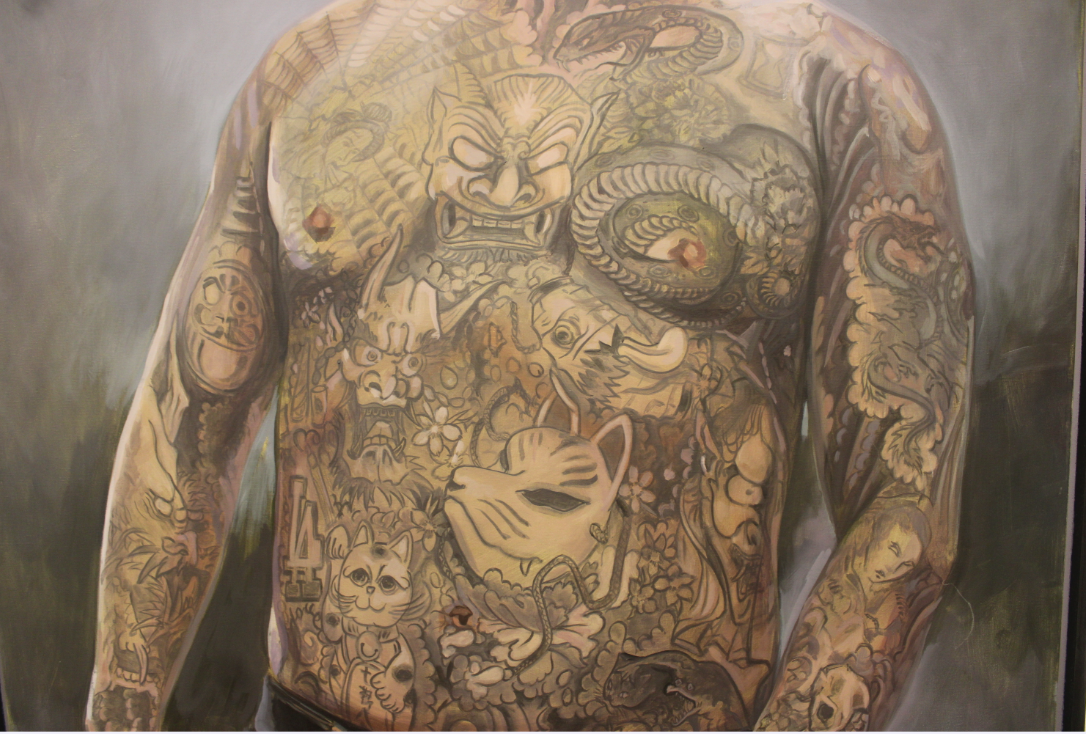
Even in this gallery of purposeful bigness, Hoon by Brian McClear looms over the rest. The body of the man tells a story that encompasses centuries of Asian culture and mythology, with painstaking care to render each image as legible as all the rest. It’s a physical embodiment of the connection to culture, the connection to history.
It’s difficult to fund freestanding art galleries; as a matter of survival they are typically attached to larger institutions. In my experience, these institutions are either educational or medical. Both recognize the importance of the arts for very different reasons.
Educational institutions seek to protect and preserve art for the education of people now and in the future. For places of healing, art is an active participant in the recovery of the people who view it. It’s not that viewing images of beauty is therapeutic, because sometimes art presents harsh realities, such as Squashed Poverty. Art does something more basic: It encourages us to connect mind, body and soul in an attempt to see the world through the eyes of another person. That in and of itself is not enough when facing illness. But it unifies our being, connects us to a shared human experience and prepares us to do more: more than we thought we ever could when we stare down sickness and confront addiction.
The larger-than-life size of the paintings, the intricate details that flesh out the images, remind us that human beings can accomplish truly heroic feats with time, support and courage. What’s more heroic than getting well?
NEXT
Jamil is taking the weekend off. See you next week!


