
E.L.I.T.E.
InterCommunity Gallery
East Hartford
Sept. 24, 2026
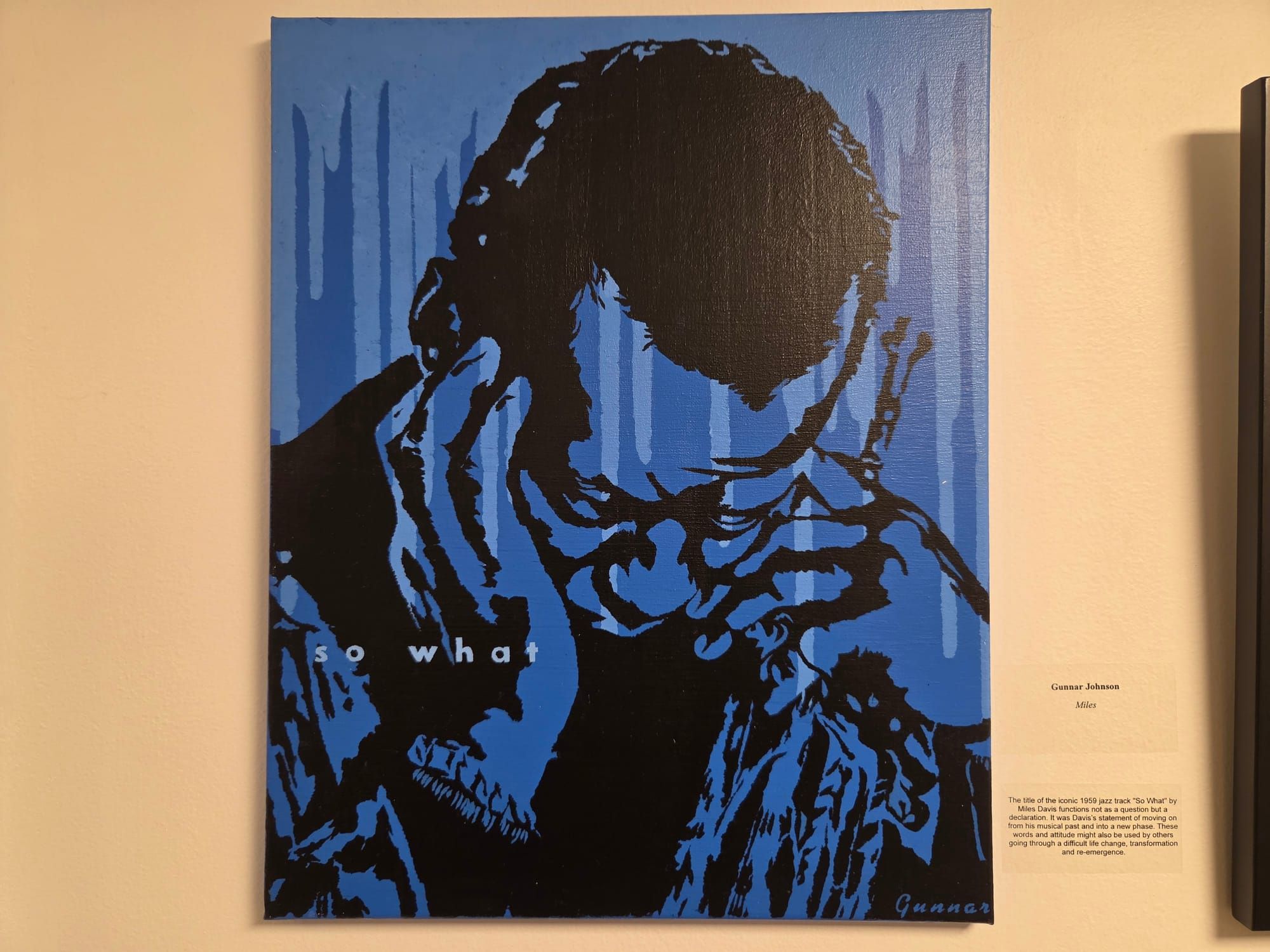
The last time I visited InterCommunity in East Hartford, I was surprised to find a full art gallery inside of a health center. Thursday evening I returned for the opening of their latest exhibition, E.L.I.T.E. (Endurance. Loss. Identity. Transformation. Emergence.).
The juried exhibition, judged by Hartford artist Miguel Jose Matos, features nearly 30 artists and their work dealing with mental health.
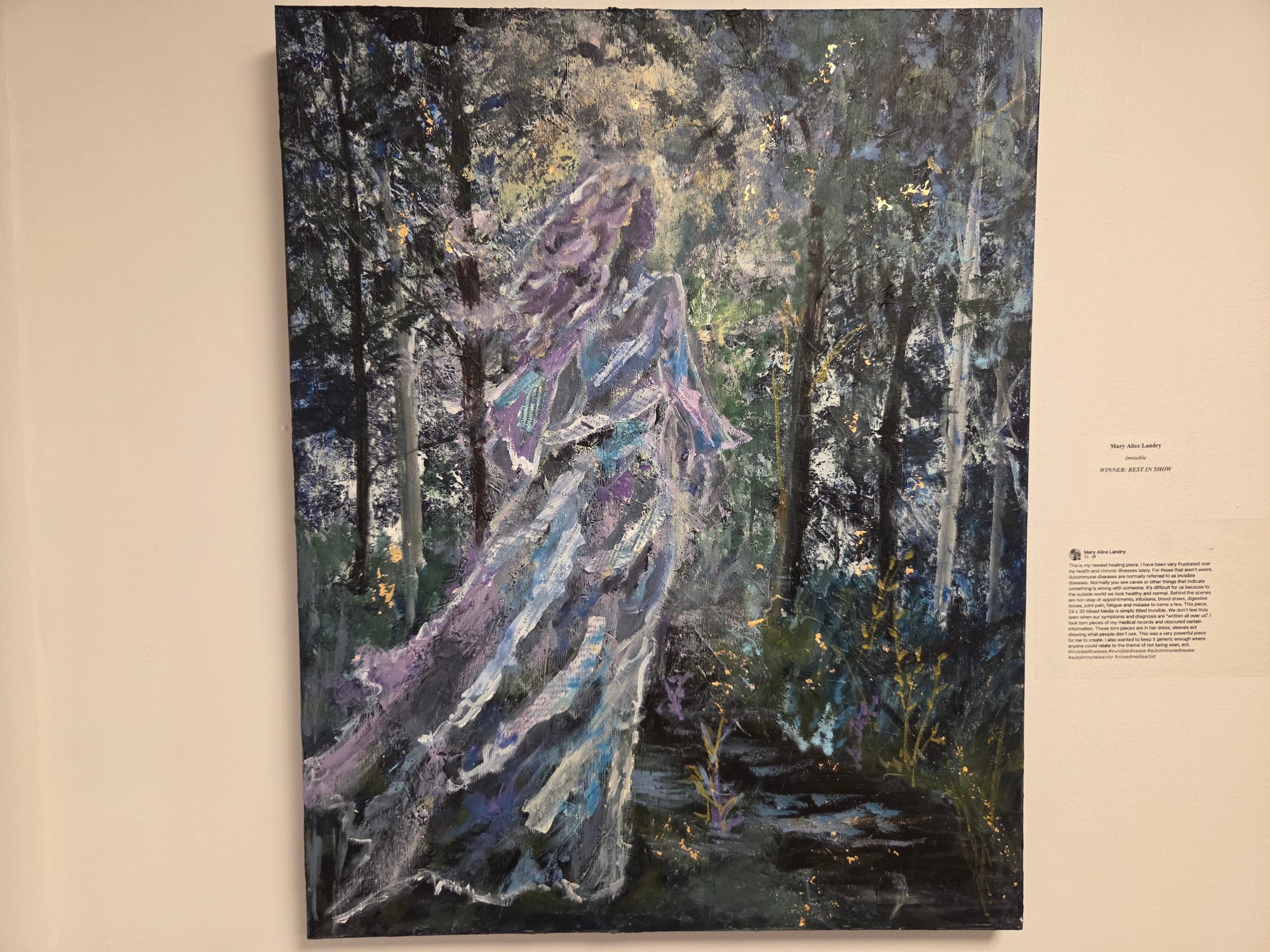
President and CEO of InterCommunity Tyler Booth said during his opening remarks that having an art gallery in their center is part of what builds the connections that make InterCommunity work. And work it did: The gallery space was packed when I arrived shortly after the start, and people continued to stream in to view the artwork throughout the evening.
While the greater acceptance of mental health challenges in society has been an unequivocal good, ironically one of the unintended consequences has been a softening, for lack of better terms, of the understanding just how difficult these conditions really are to live with. Hop onto any social media platform and you’ll see people equating their interests with autism, or their boredom with ADHD.
Add to that the historical reality of people romanticizing the “tortured artist” as an archetype, and well-meaning people begin to assume that mental illness “unlocks” some kind of deep creative impulse, or that suffering is the key to great art.
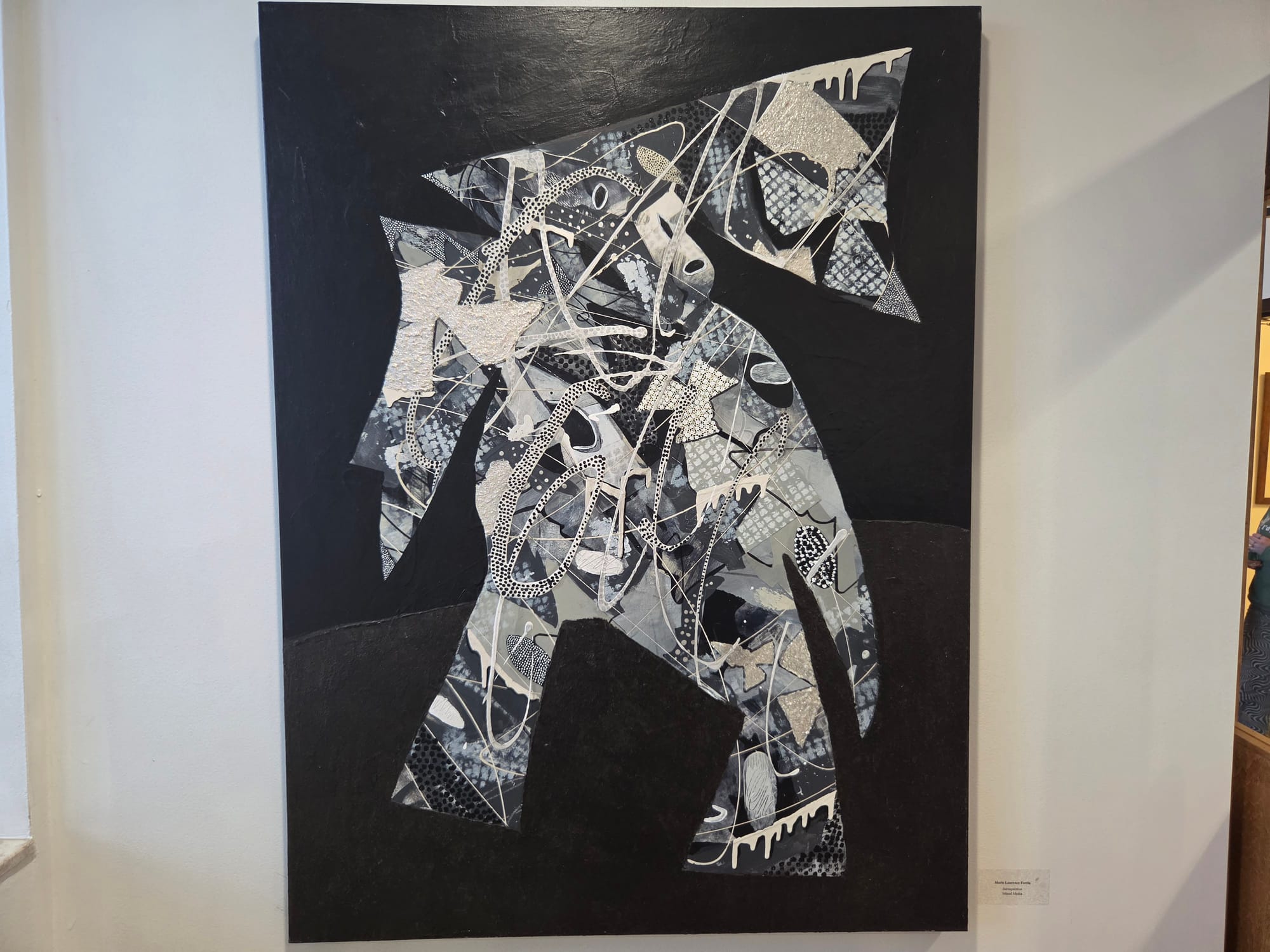
But suffering for one’s art is exactly that– the taxing process of creating art, not simply existing. Bipolar disorder, major depression and other illnesses aren’t cheat codes for expression. They’re chronic conditions that impact every part of a person’s life.
As the artists spoke one by one about what their works meant to them, the process of creating them, and the importance of sharing their work with others who face the same challenges, the courage of everyone in that gallery space, including the family and supporters of the artists, became clear.
There is pain in those portraits, not as a matter of representation, but literally, as artists shared how they worked through hard moments to complete their amazing artwork. Tears were shed. Abilities were questioned. In the end, each of the artists completed something memorable.
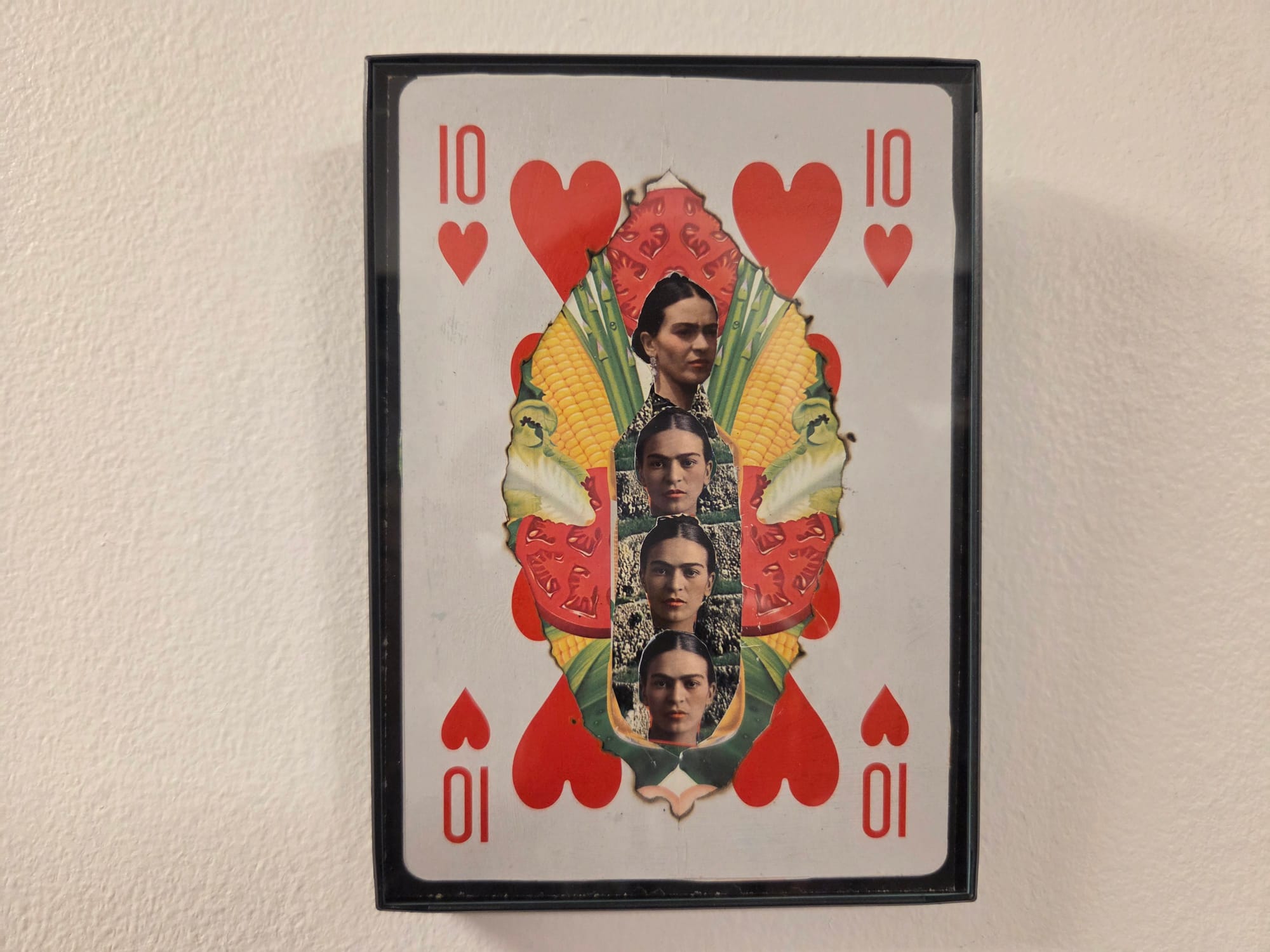
One such artist is Zoraida Jobran, whose piece Veggie Frida is her first time exhibiting publicly. Jobran is bipolar, and she explained that the collages she creates help to manage her manic episodes. (Note: We used to be married.) There’s no specific message behind the images in the collage itself, aside from her fondness of Frida Kahlo, as she creates based on whatever inspires her at the moment. Her reason for finally joining a juried exhibition has significance though.
“I think because it's connected to mental illness, it means a lot to me that that's out there, that people are aware and informed,” she said of her art. “And now is the time when I'm working more through my condition and dealing with it, and it has become very difficult. So now I feel like it's the time to put it out there and share the experience.”
Sharing and connection were the impetus behind one of the most creative and exciting art spaces in Greater Hartford. It’s a privilege to see such wonderful talent on display, even through all the hardship.
NEXT
E.L.I.T.E. continues at InterCommunity Gallery through Jan. 1.
Jamil goes to Playhouse on Park to meet The Happiest Man on Earth


