
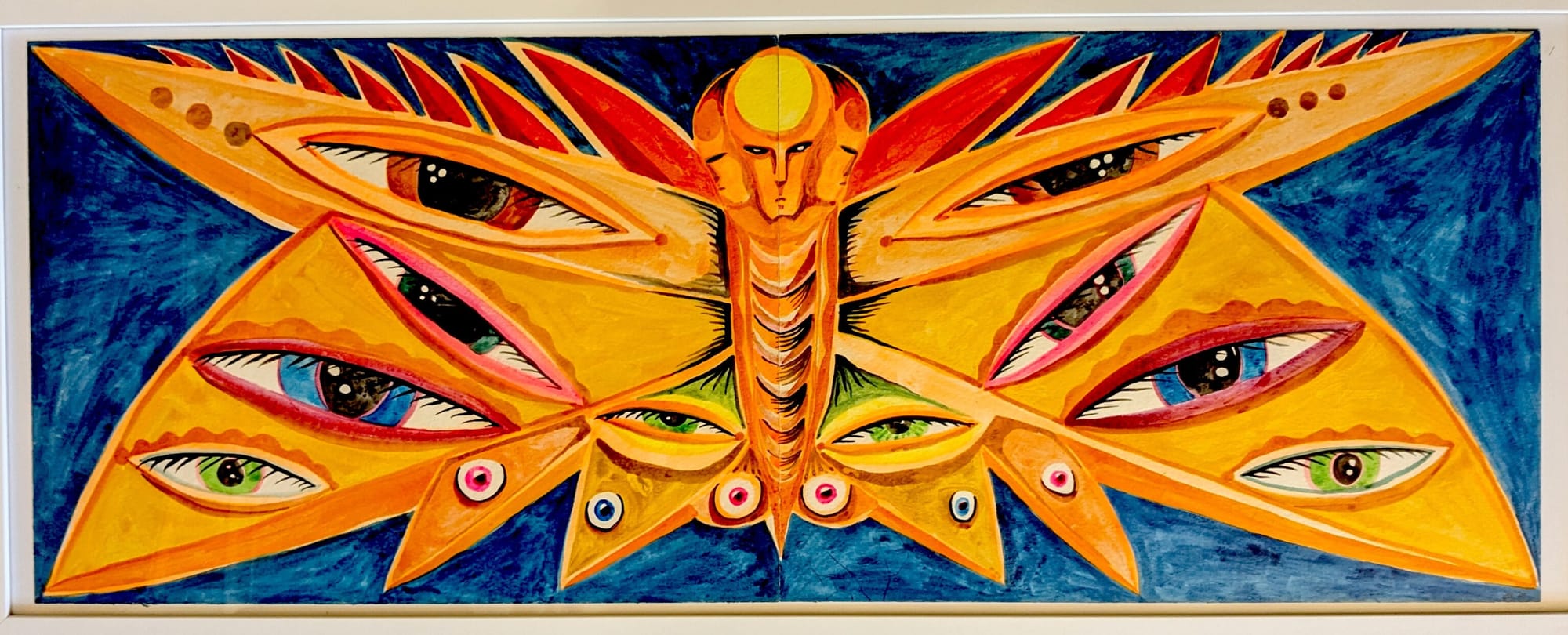
“Thru A Lens” by Candacee White
Liggett Studio
through January 29 (gallery hours 5-8pm Thursdays, 1-5pm Saturdays)
You remember it from geometry class: the lens, a 2D shape that emerges at the center of two intersecting circles, a shape like an almond or an eye or a lentil (which is where the word “lens” comes from). In three dimensions, a lens focuses light so intensely that you can start a fire with it. It brings what’s far away closer, makes it possible to see things we couldn’t otherwise see.
In “Thru A Lens,” on view through January 29 at Liggett Studio, Tulsa-based artist Candacee White focuses her inner eye on this humble but ubiquitous shape. She finds it here, there, and everywhere—from organic forms to spiritual iconography to sci-fi fantasies—and refracts her own imagination through its gentle curves. The result is a show that teems with ideas, histories, colors, and mediums—many elements interconnecting through the inspiration of a single form.
“Thru A Lens” suggests that while a lens can be either naturally occurring or human-made, its real identity is something more like an archetype, a symbol that recurs through all of creation, a sort of cosmic signature that we’d do well to meditate on. With her intentional use of methods and mediums, in work that emerged out of an artist residency in Mexico City last year, White gives us many angles through which to do that.
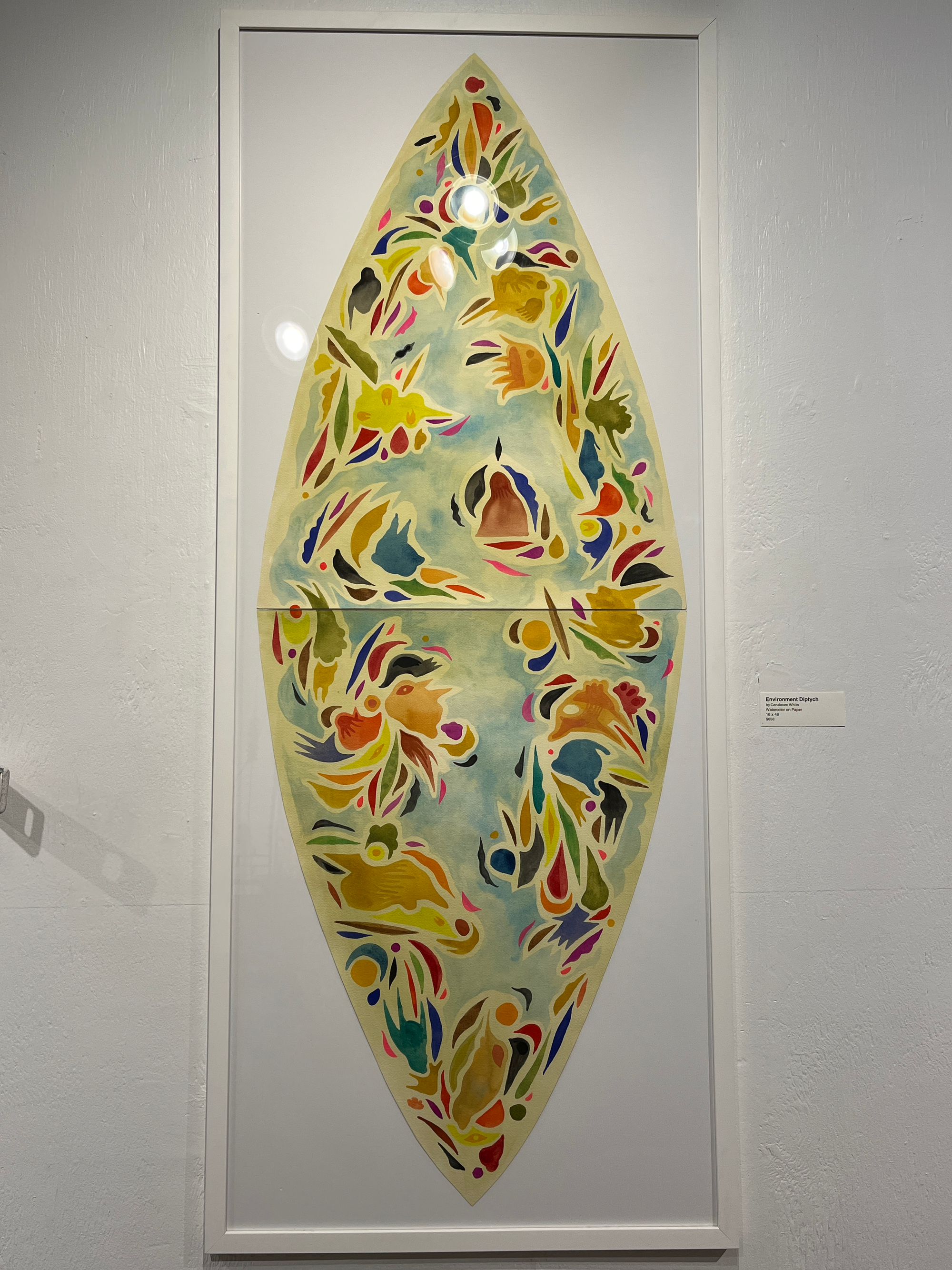
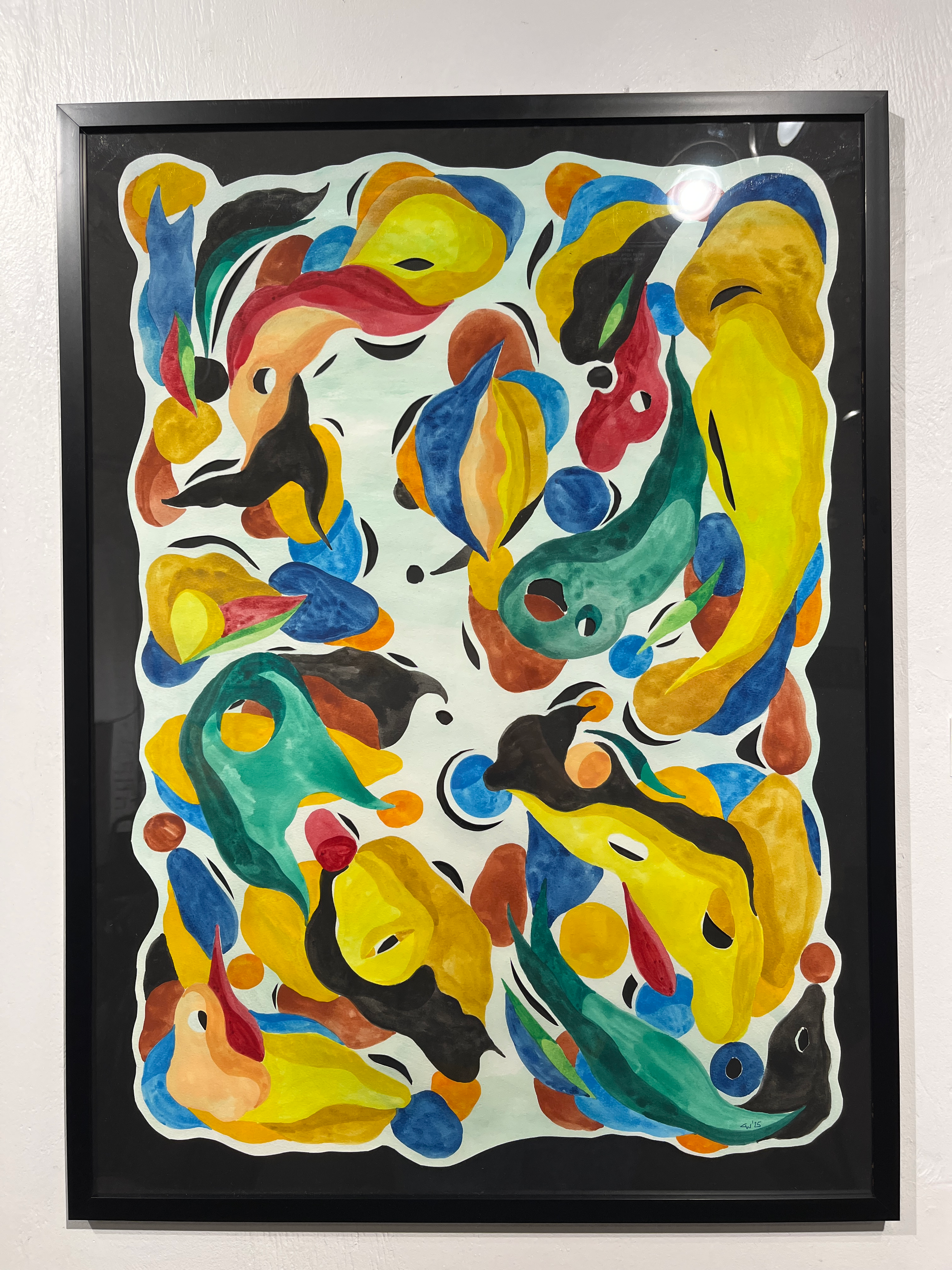
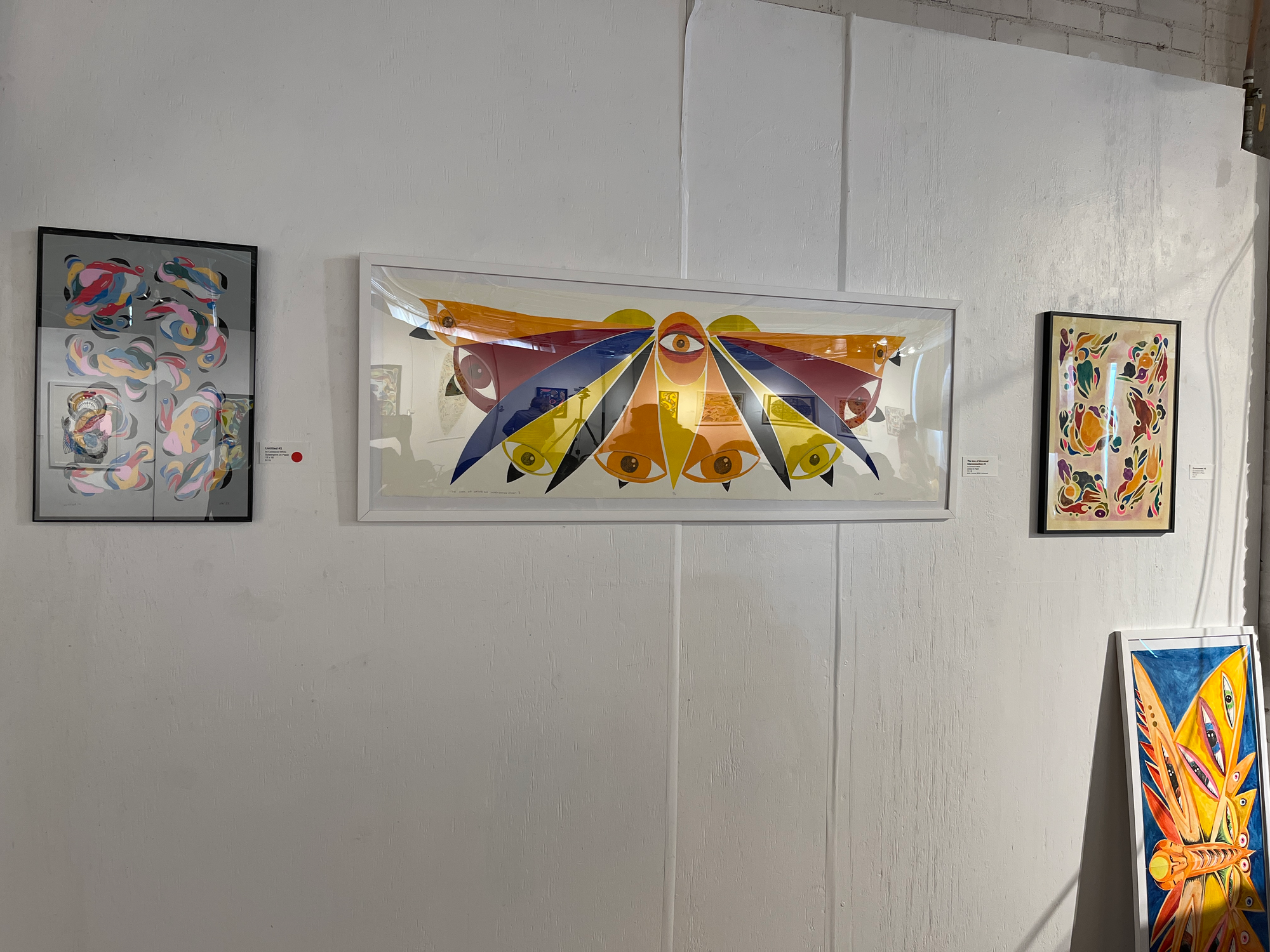
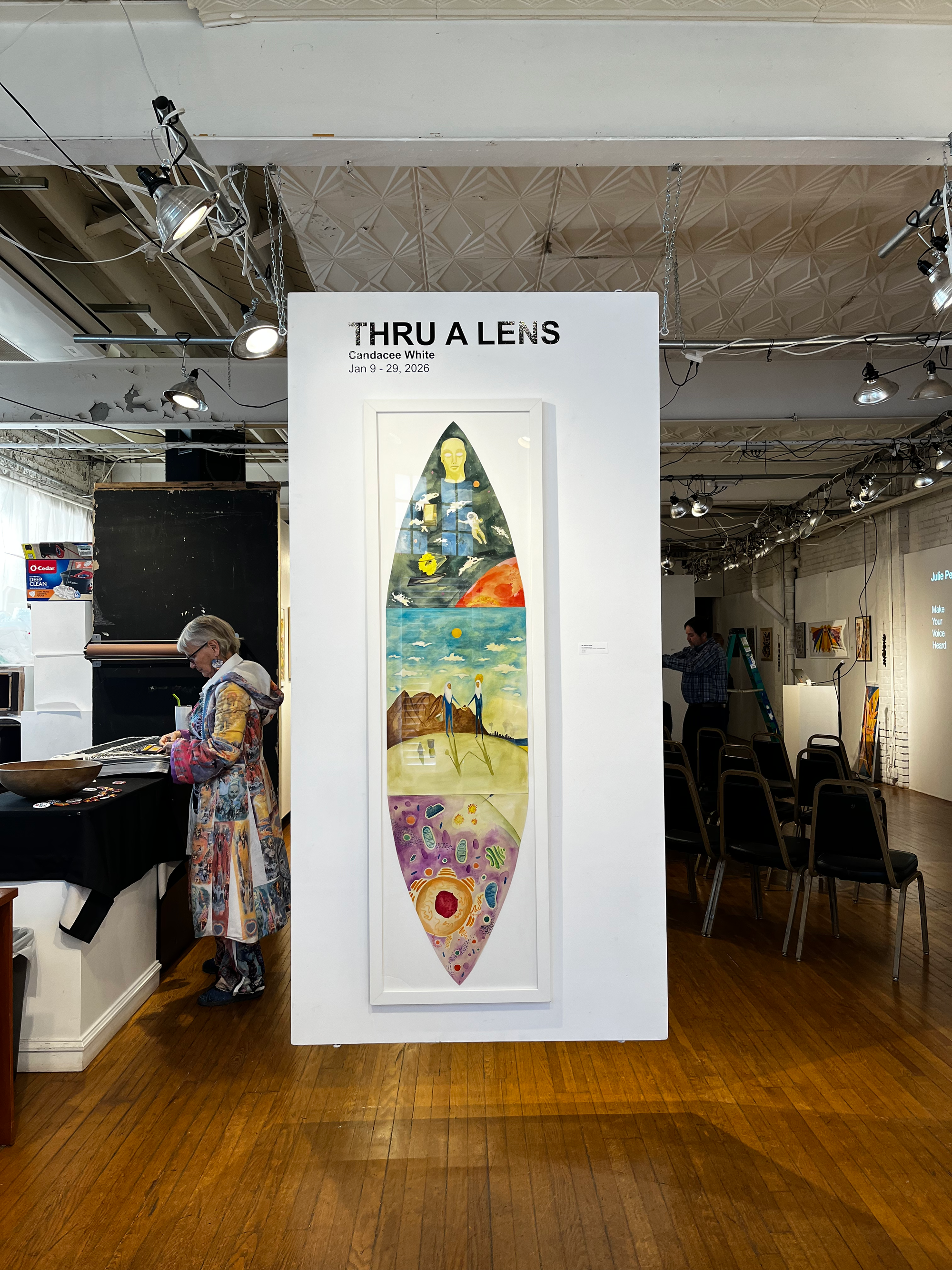
In a series of pieces she calls “environments,” she uses watercolors to soften the clean lines of the lens shape into blobs and corpuscles, gathered in an oozing bloom like what you might see looking at a drop from a tide pool through a microscope. My favorite of these watercolors, hung vertically, evokes an entrance to a cave, or perhaps a kayak, a shield, or the pupil of a cat's eye.
photos by Alicia Chesser
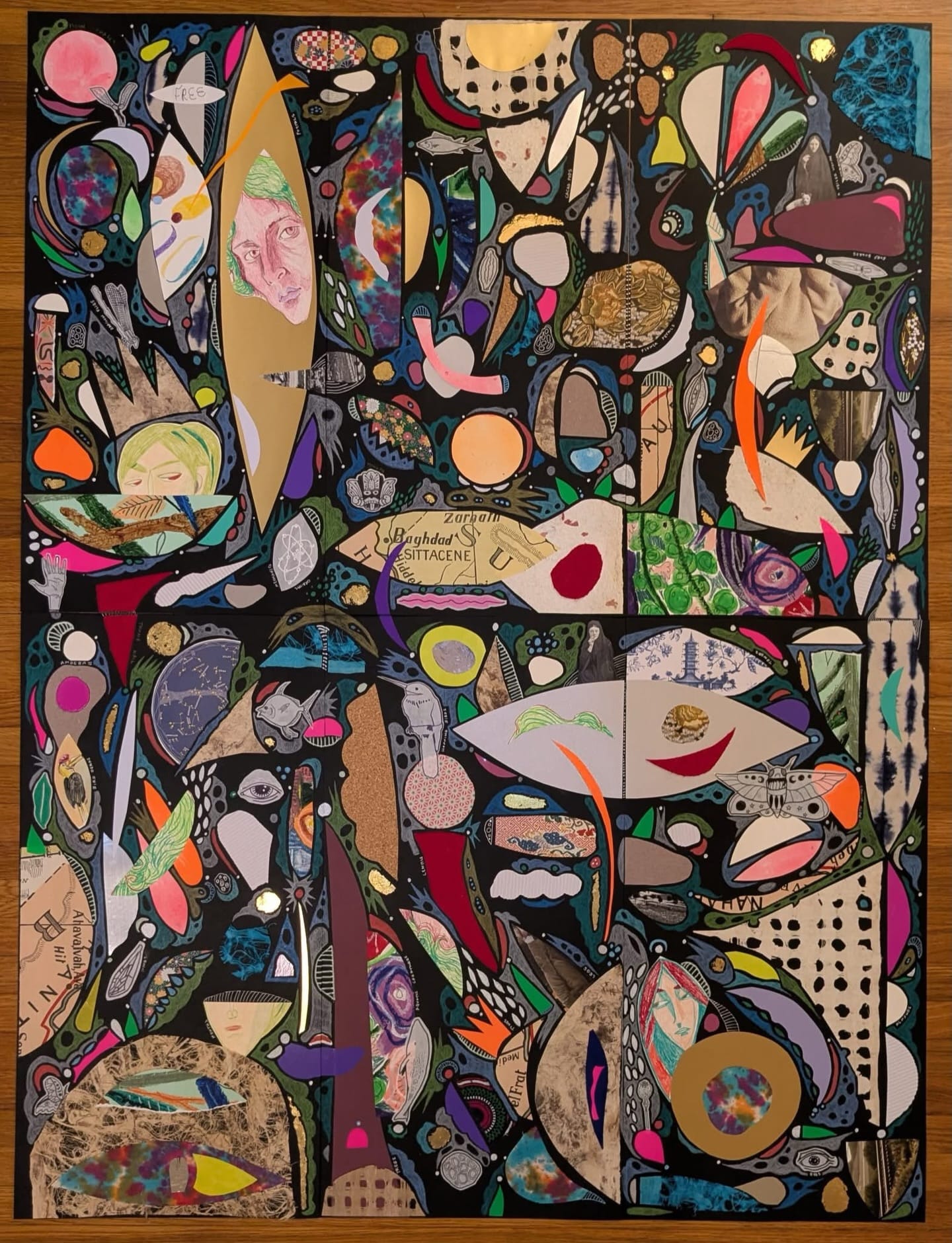
Intricate handmade collages draw from White’s extensive world travels to create environments with a totally different feel, conjuring the speed and noise of civilization—almost a visual anthropology. Scraps of images, colors, and words meet and overlap, murmuring in many tongues through time and space, suggesting unexpected connections and delivering dozens of tiny pleasures as my eye traveled through the profusion.
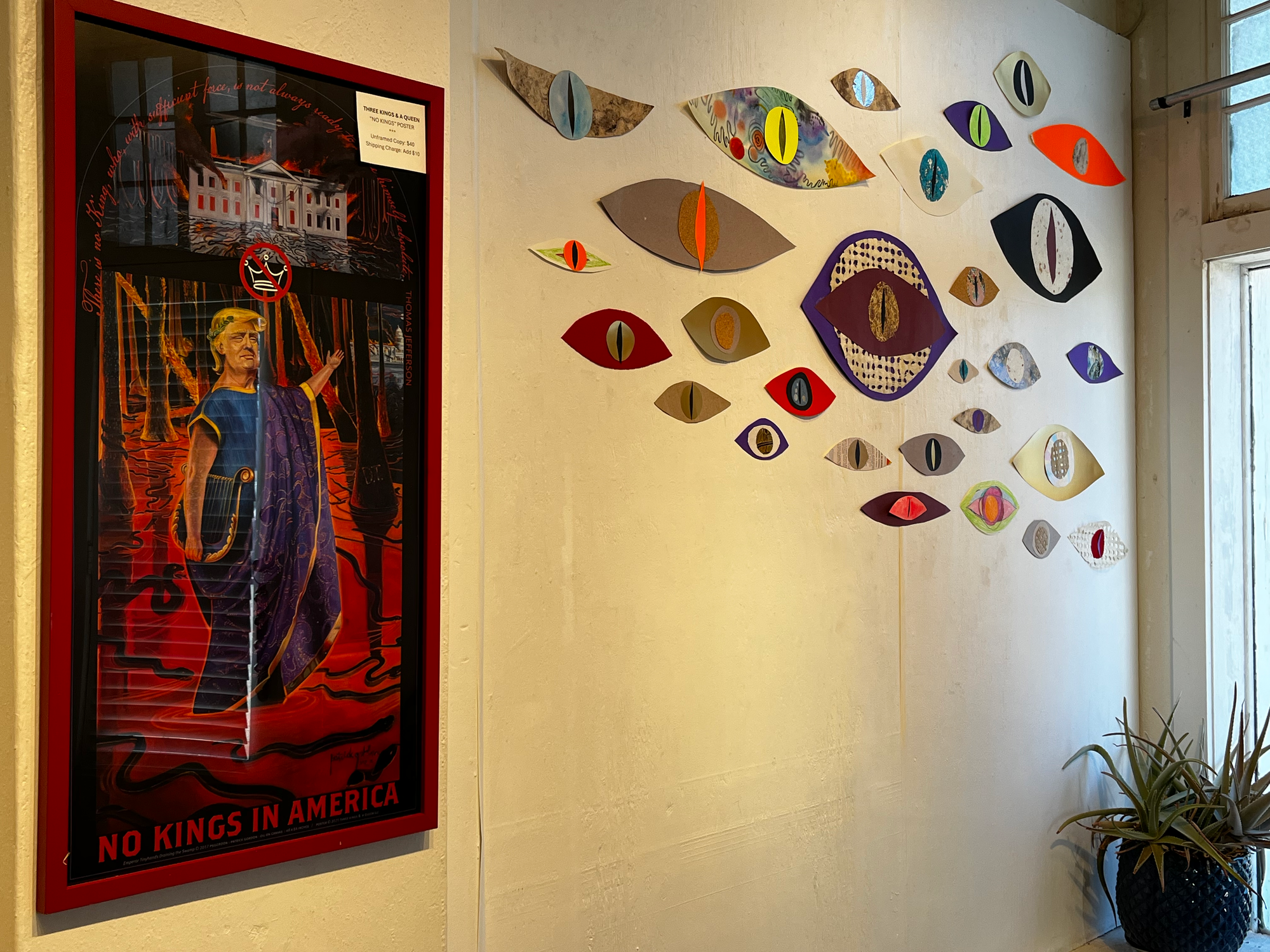
White plays with the form of the lens in every piece, picking up its shape in crescents and leaves and clouds, suggesting expressions of vulnerability or protection: a slice of something that you can peek around, a cupped place to rest, an arc overhead. But she doesn’t leap to obvious analogues (like, say, a literal umbrella); she stays with the lens as its wide-ranging self, urging the viewer to make their own associations, to see more through something simple, enjoying its abstraction as well as its reality. One exception is a striking wall of eyes just to the right of the gallery entrance. On the day I visited, a “No Kings” poster stood beside these eyes in preparation for a talk about protest art, and I appreciated their watchfulness, their urgent message to keep looking.
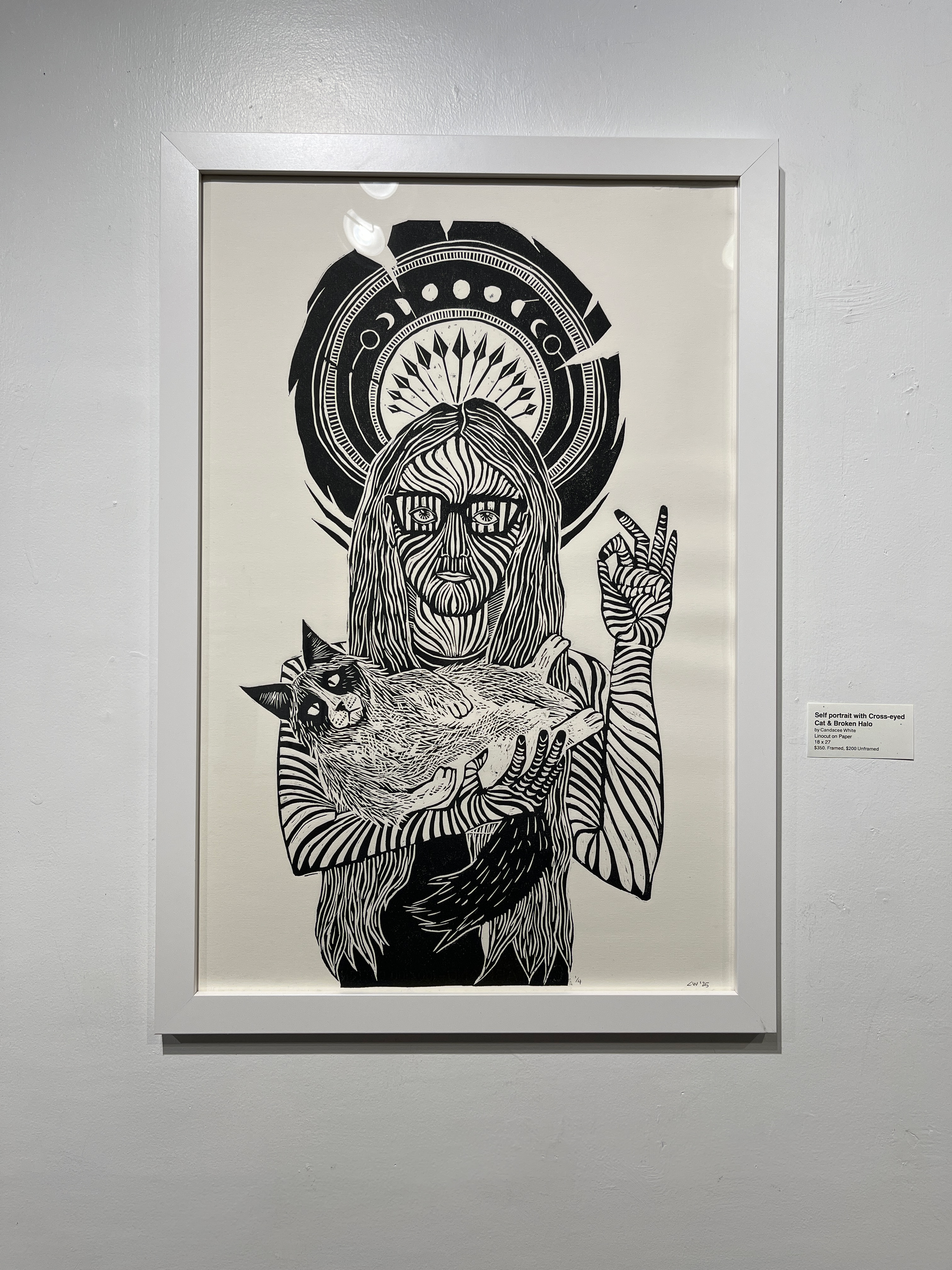
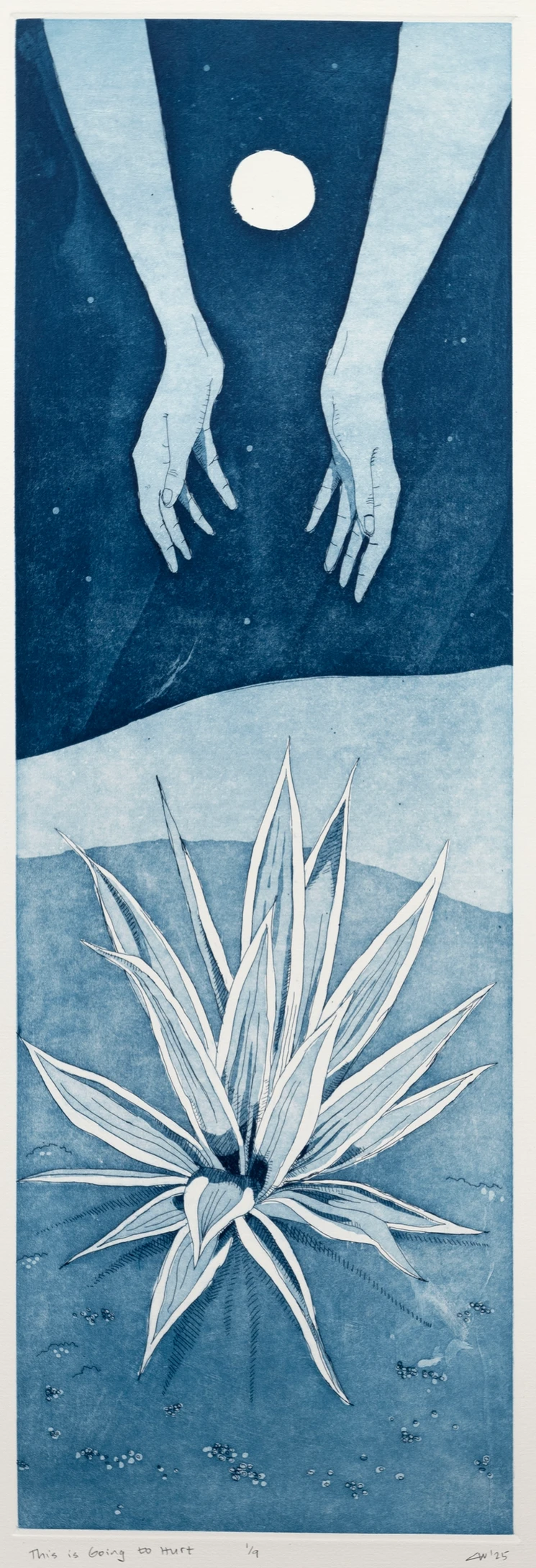
Self-portraits and human forms recur throughout the show. In one, a broken halo of arrows and moon phases frames the head of the artist, holding a cross-eyed cat in one arm; in another, moonlit hands prepare to dive into a yucca plant whose leaves reach up as the fingers reach down. Referencing both iconography and evolution, these pieces make for moving interludes, prompting more personal reflection. Are we simply who we are, or are we a series of traces of change, a form through which a mysterious life force shifts and refracts? As I looked at White’s exquisite woodcuts and linocuts, I thought of the physical action that these mediums involve—carving, scooping, rolling, pressing down, peeling away—and how the relief image itself appears in the “empty” spaces, where the ink isn’t, like the image that appears when two circles intersect.
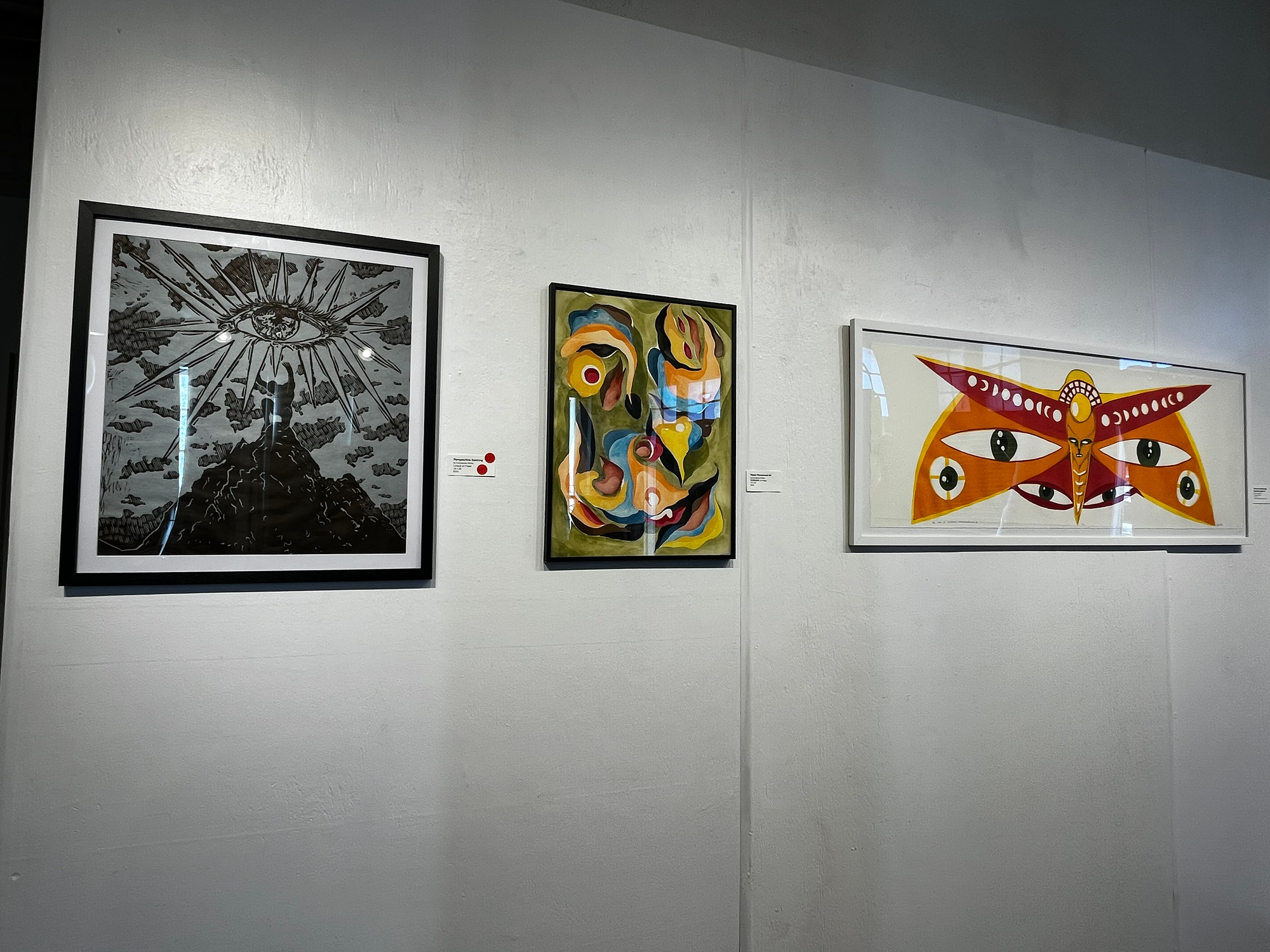
I particularly love White’s ventures into the realm of speculative invention here, her mashups of the religious and the science-fictional. Her “icons of universal interconnection” are stunning, evoking moths and masks and spacecraft and those six-winged angels with eyes all over them.
photos by Alicia Chesser
And the very first piece you see in the show is its own kind of cosmic aperture, again hung vertically, showing three realms of life—the teeming darkness of space, the earth and its relationships, the microbes under earth’s surface—inside one lens. I loved being confronted right at the start with the stakes White is working with in her show: this is about the whole range of experience, nothing less.
photos by Alicia Chesser
Both maximalist and minimalist, metaphysical and very human, “Thru A Lens” left my brain buzzing when I walked out of the gallery. I find myself looking for lenses now everywhere, considering openings and interconnections, through my own lens-shaped eye.


