
We Make A Library
Institute Library
New Haven
Through Sept. 19
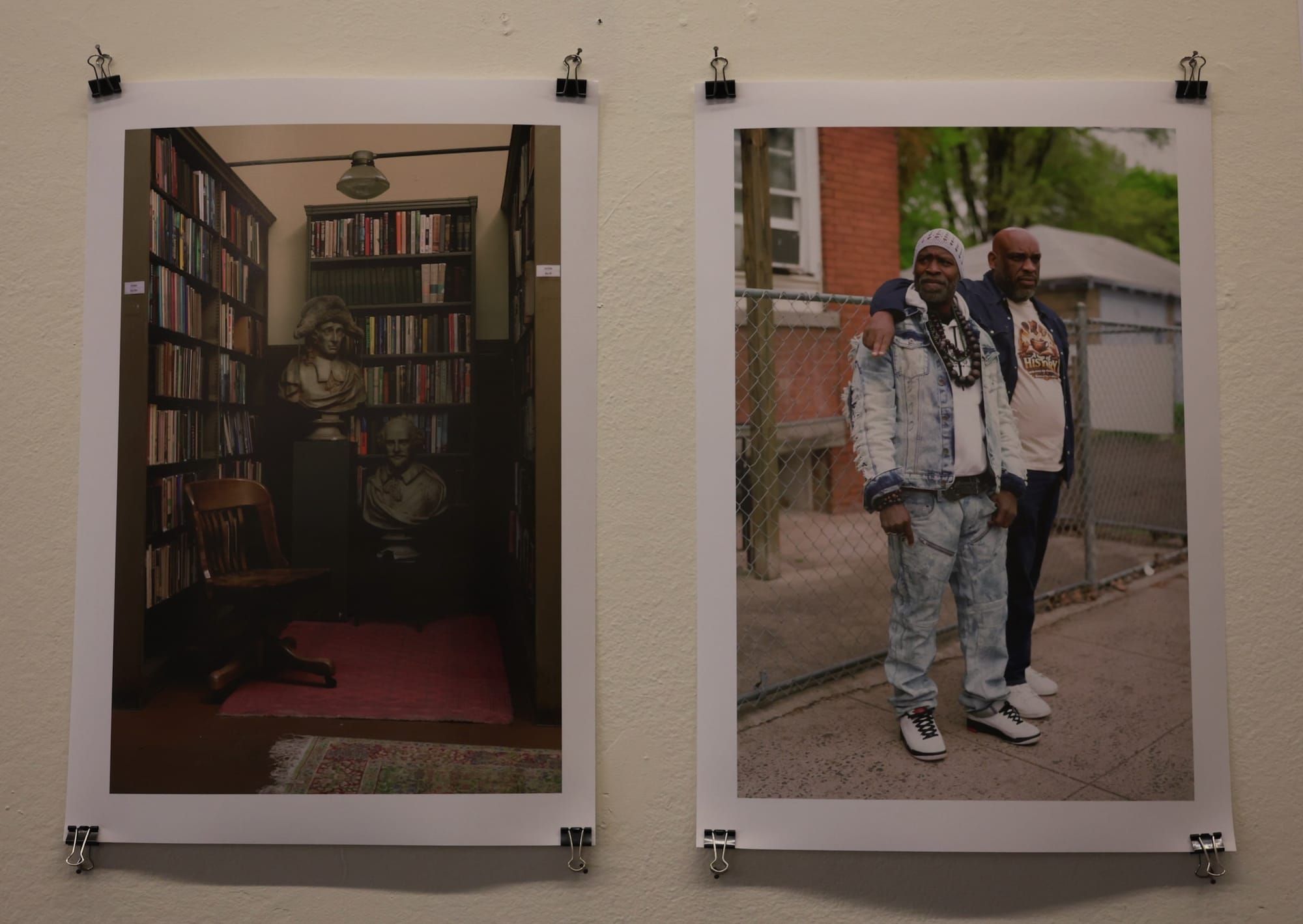
On the left, photographer Jonathan Peterson captures a nook in the Institute Library, with its carpets, its close stacks, the observing sentinels of its lighting. The busts of two men inhabit it, looking like old friends, long past casual conversation, just enjoying each other's company. On the right, Peterson shows another two men. Whether they're friends or family is hard to say, but it's obvious they're close; they have an ease around one another that most men don't have. There's no lamp above them, no carpet below. There are no shelves of books enclosing them. But you know they contain volumes.
The two photographs get at the essence of We Make a Library, a show of photography and book art running now through Sept. 19 at the Institute Library on Chapel Street that swirls with ideas about what makes a library, and how far knowledge can go, what forms it can take.
"As we observe our 200th birthday, come experience the Institute Library, past, present, and future," an accompanying note states. The exhibition leans hard into the future, featuring work by Wabi Arts FOCUS fellowship students under the mentorship of artists Kim Weston and Jonathan Peterson. "Their group effort, Through Their Lens: a Bicentennial View, represents the culmination of months of research, discussion, and creative residency within the library walls, distilled into a remarkable whole by these skilled young artists," the accompanying note explains. "This is a special glimpse of the library as a very human institution made manifest by up-and-coming talent, showing us the bright future of art in Connecticut."
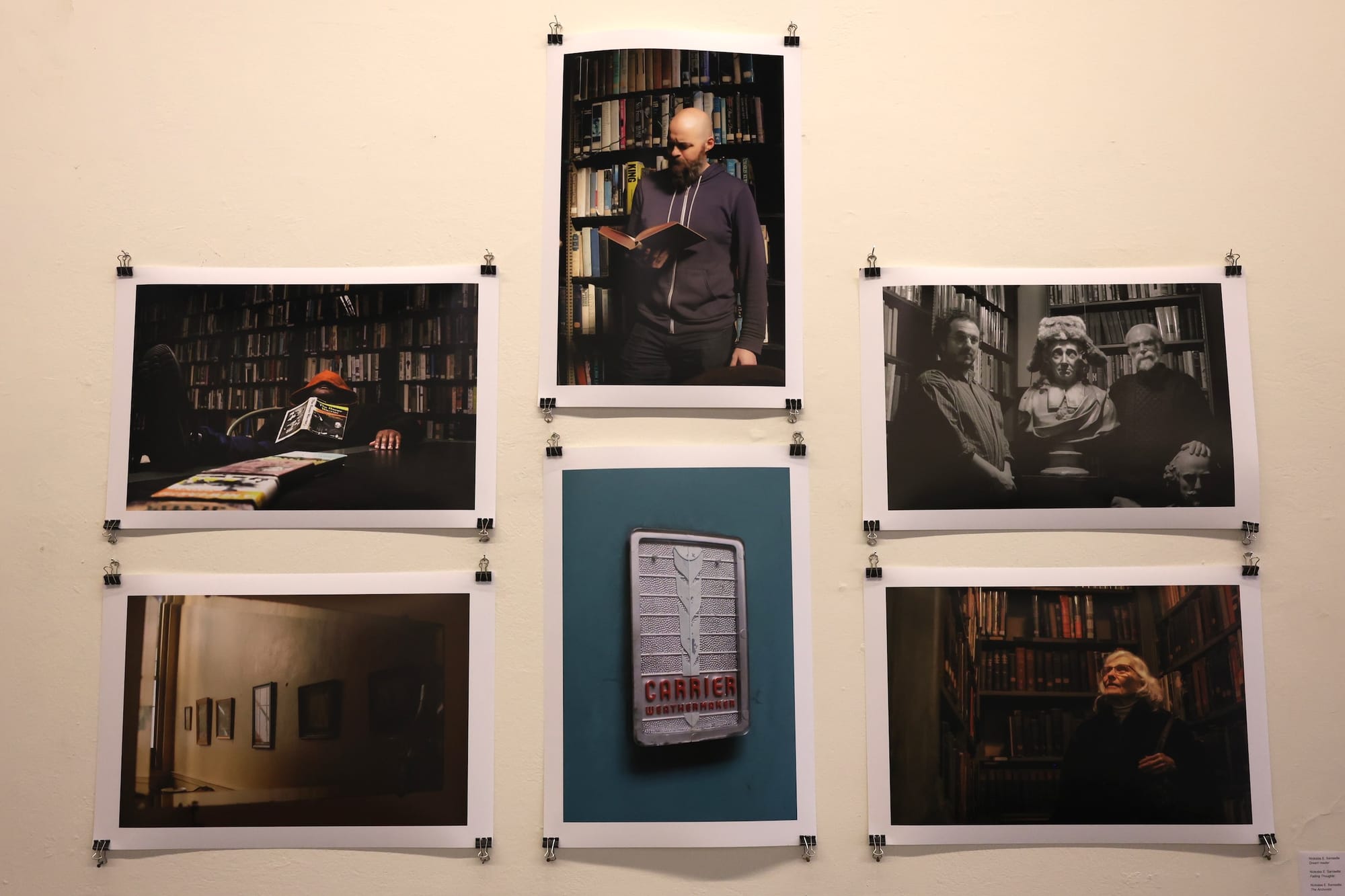
Many of the photographs—by Brock Bowen, Dejanay Cammock, Nya Drake, Cristel Mishel Martinez Gomez, Tywan Harris, Allesson Vanessa Cosetl Muñoz, Asia Murphy, Jonathan Peterson, Nickolas E. Santaella, and Kim Weston—were recognizably taken inside the Institute Library itself, and have the energy of perhaps having gotten away with something. Libraries are often places where you're not allowed to do things you can do elsewhere: eat, drink, talk above a whisper, play music. What about taking pictures? Is that allowed? And what about the actions of the people in the pictures? Are they allowed to do that?
The existence of the photographs suggests the answer is yes, and point toward the Institute Library's own sense of itself as more than a library. With its many nighttime events, from readings and concerts to record listening parties, and its run of art shows in its gallery, the Institute Library acts more like a community space, interested in what a library can be to the people who choose to use it here and now.
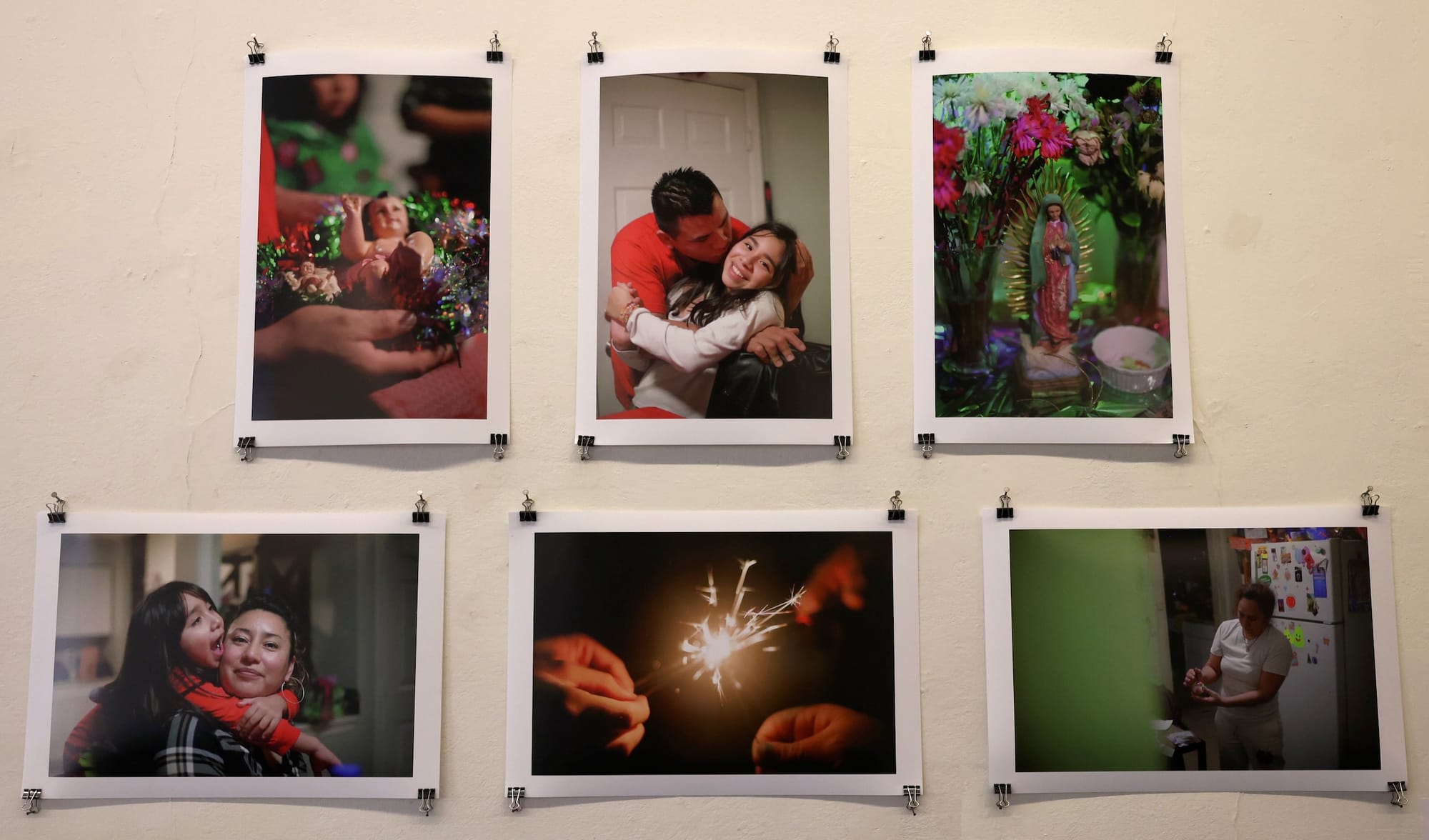
It makes sense, then, that some of the photographs included in the show are outside the library, in places around New Haven. In the context of the show, it sends a message: The library is more than the space between its exterior walls and what's enclosed within them. It's defined in part by the people who go there and carry it with them when they leave. Which reminds us that, in some ways, people are themselves libraries—places where knowledge and memories are kept, some ready to be shared if you ask nicely.
The photographs play with ideas about how libraries are made up of people and vice versa. The other group of artists contributing to the show—Marsha Borden, Alexis Brown, Akinei Burruss Jr., Leonard Charla George Corsillo, Matthew Feiner, Eden Fisher, Eva Geertz (Institute Library operations manager) and Martha W. Lewis, Allan Greenier, Fritz Horstman, Linda Lindroth and Craig Newick, Courtney Malanga and JaKyah Williams, Mary Tyrrell, Susan Yolen, George Zdru, and Robert Zoo—play with ideas about what constitutes a book.
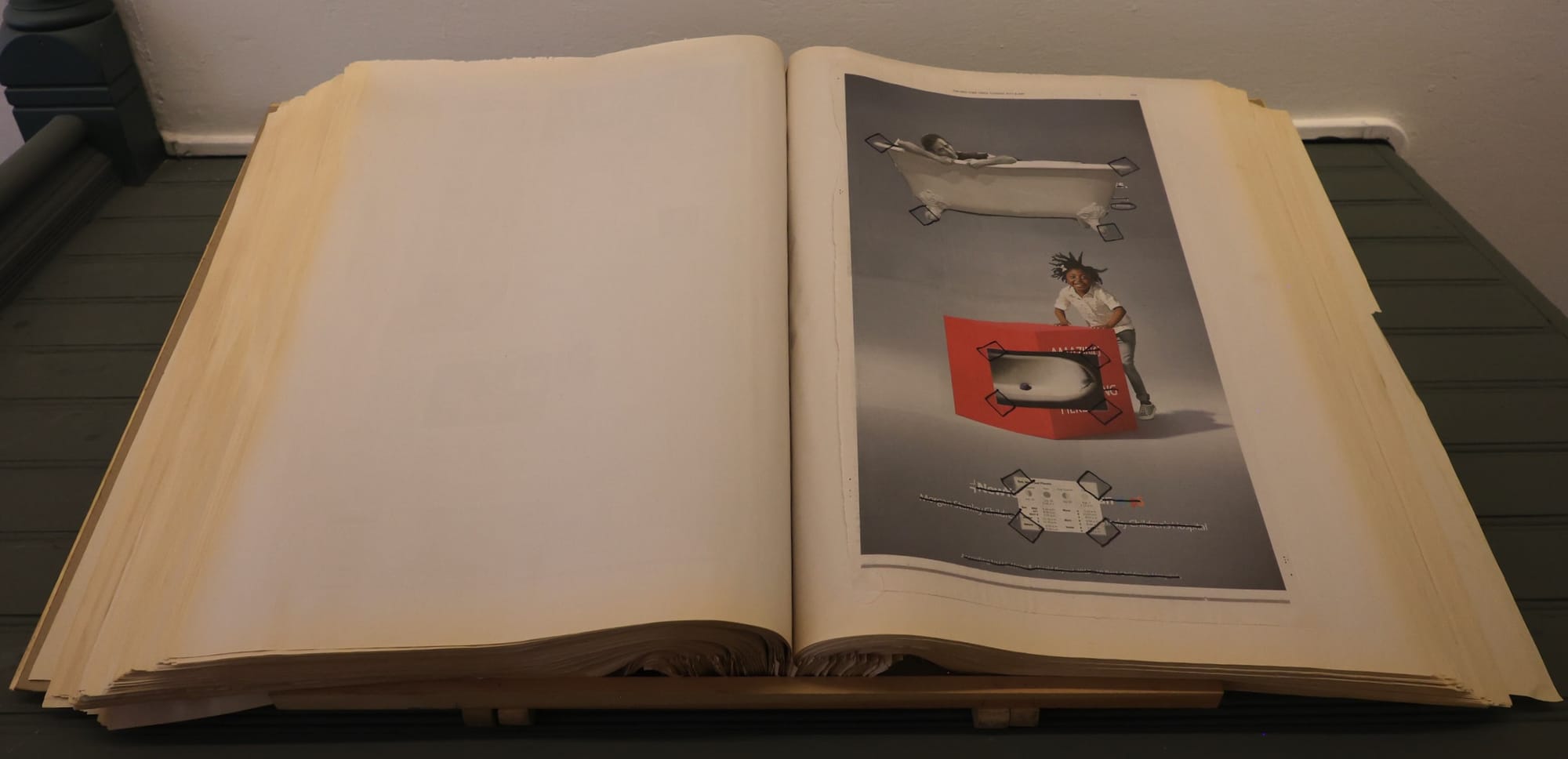
Some artists make their books into accordions, displaying classics like a personal card catalog, or detailing scenes from card games. Other artists submit works that feel like sketch books full of ideas that could spill onto the floor if you dropped them. Several artists head toward collage, creating collisions of ideas that get at the idea of books as sources less of information and more of inspiration. Matt Feiner's gargantuan Horoscope Codex encapsulates many of the ideas at play. As an object, it comes across as an ancient tome, an artifact, like an original Gutenburg Bible. Within, however, are a series of images, one more playful than the next as you turn the pages. What do they mean? Feiner's title for the piece gives us a clue as to how to approach that question, by rephrasing it. What do they mean to us? What do we want them to mean?
The energy in the show adds up to a vibrant concept for what the Institute Library—and any library—has been, is, and can be. It's a place where the past and the present can collide, intermingle, slide off one another, fuse into one. It's also a place where that action can help shape the future, not only of the library, but the people who use it, and the city all around it.


