Imbolc presents The House of Tarot: Brigid’s Journey
6540 Saint Antoine St.
Detroit
Through Feb. 1
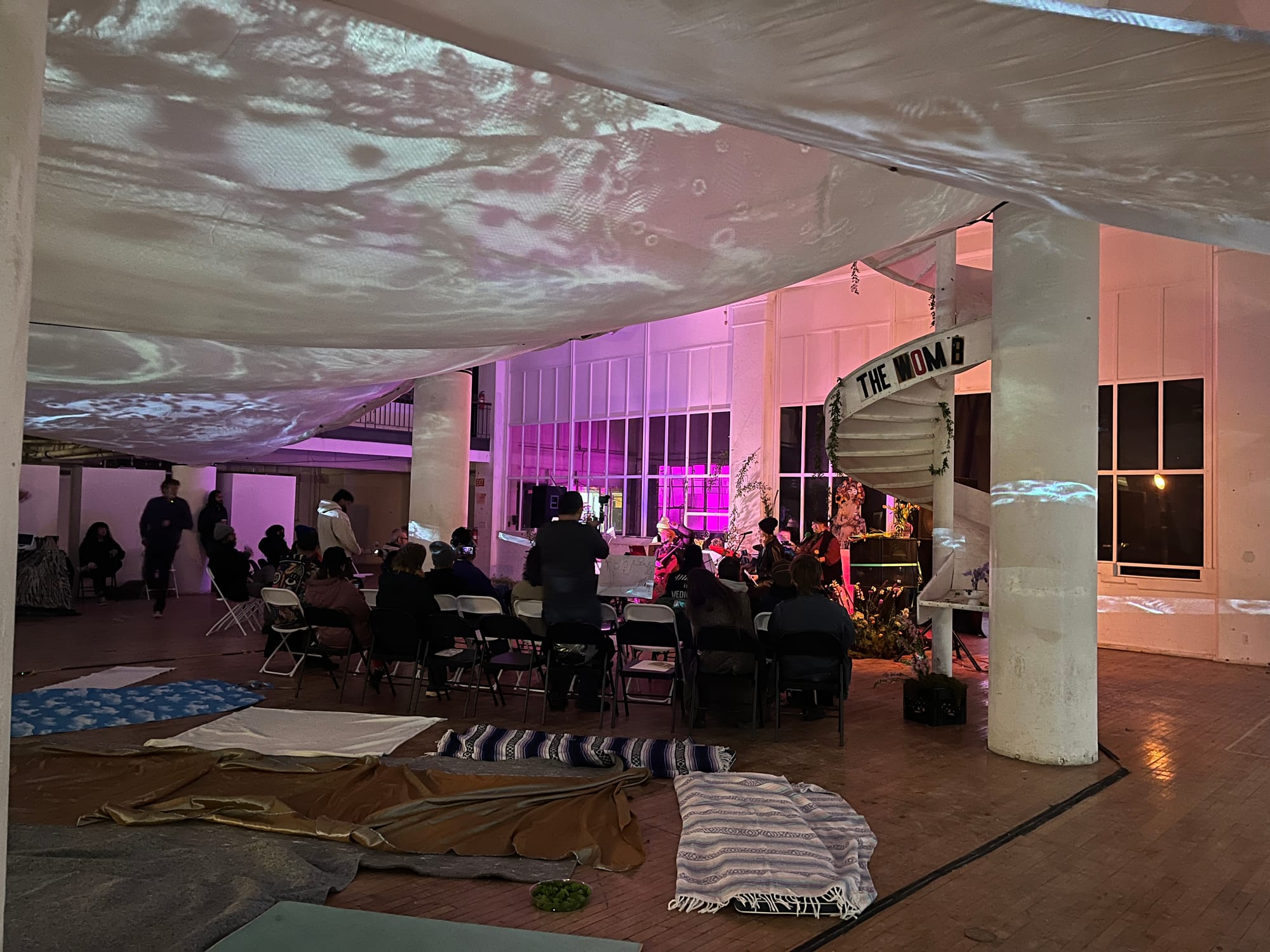
At Detroit’s recent Imbolc House of Tarot art show, every room at the Boyer Campbell Building pulls you into a distinct sensory and emotional feeling. Some spaces are packed wall-to-wall with paintings, while others lean towards abstraction: people draped in fabric, pieces made of flowers, crocheted swords, and installations that feel closer to ritual than exhibition.
The show features 13 artists interpreting cards from the Minor Arcana, with work centered on healing and illuminating Brigid, the queer Celtic goddess of fire, poetry, and wisdom. Fittingly, it partnered with Imbolc Detroit, a citywide, artist-led winter festival rooted in ritual, care, and collective creativity. (The Celtic holiday of Imbolc marks the halfway point between the Winter Solstice and Spring Equinox.)
This exhibition follows House of Tarot’s 2025 debut at the Herman Kiefer Building, which featured a room for every card in the Major Arcana. A few artists from that original show return here in smaller, reimagined ways, creating a sense of continuity without repeating the same visual language.
While this iteration felt slightly lacking compared to the first, House of Tarot remains one of the more compelling immersive art experiences in the city for me. When I visited, a live music performance was also taking place in the space, adding to the atmosphere in a way that felt intentional and meditative.
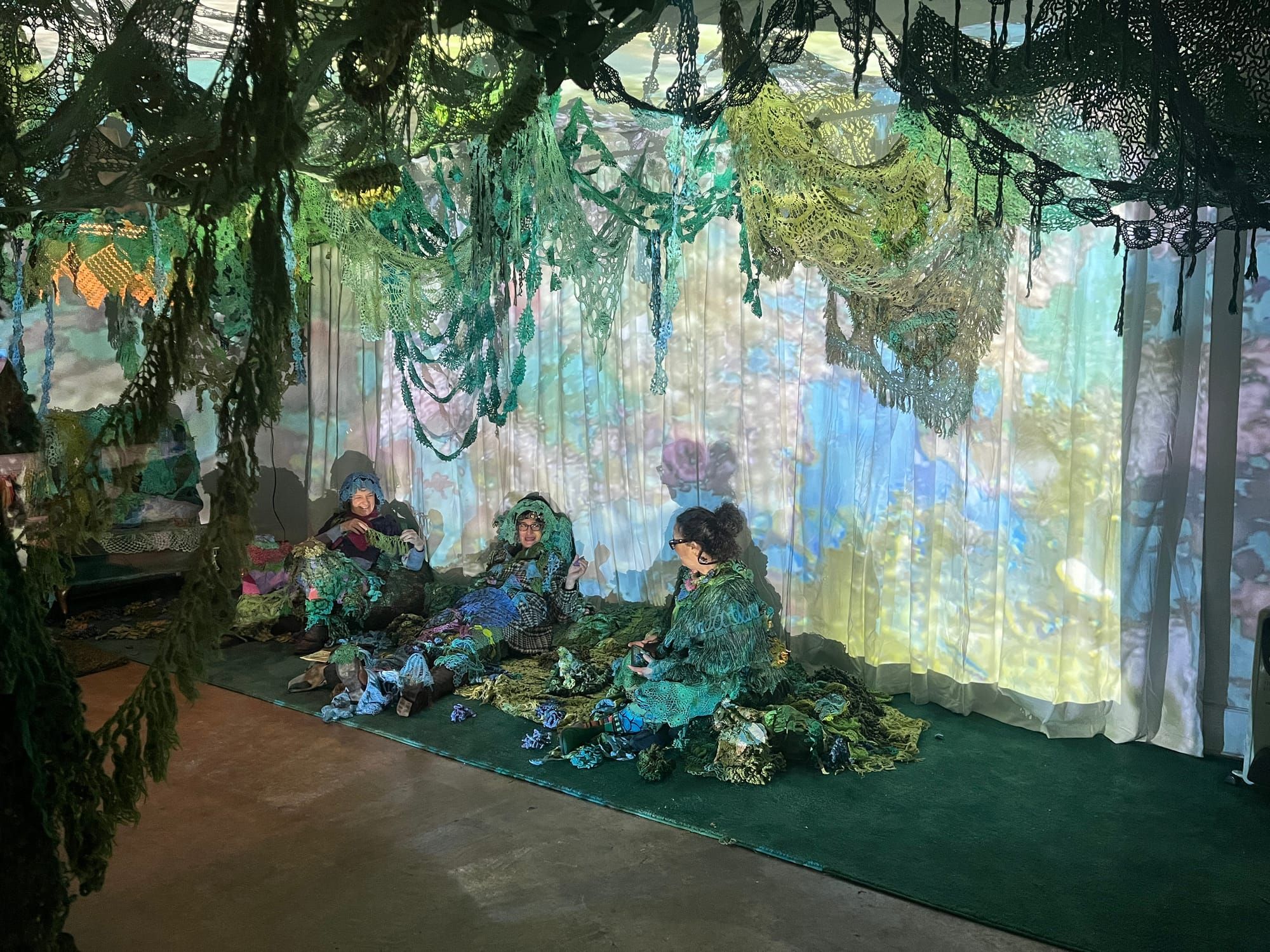
The room that struck me the most was the King of Cups, created by artist Melissa Webb.
“Through my work, I imagine a reclamation of the Earth by wildness—a less human-centered future where we learn to live and thrive in symbiosis with the natural world,” her artist statement reads.
Rather than inviting viewers inside, the installation is viewed through a large window. Three people are physically immersed in the work itself, tangled in green and blue fibers and fabric, becoming part of the piece rather than just observers or creators of it.
It was immediately intriguing and represented the theme of “healing” in a fully consuming manner.
“This is the elder who knows how to hold storms because they have watched seasons turn without stopping them,” the card description on the wall reads. “The King of Cups offers unconditional presence. It is a love that does not rush growth nor demand healing on a schedule.”
Webb’s installation merges the artist statement and the tarot interpretation both figuratively and literally. Standing there, it felt like a rush of healing and growth—but one that was warm, slow, and unforced.
Another piece that lingered with me was Nine of Pentacles by Jesse Kassel, tucked into a small room off the stairwell. The space resembles a chaotic office: mismatched fabric plastered to and hanging from the walls, papers scattered across a desk and floor—some carefully arranged, others crumpled and discarded.
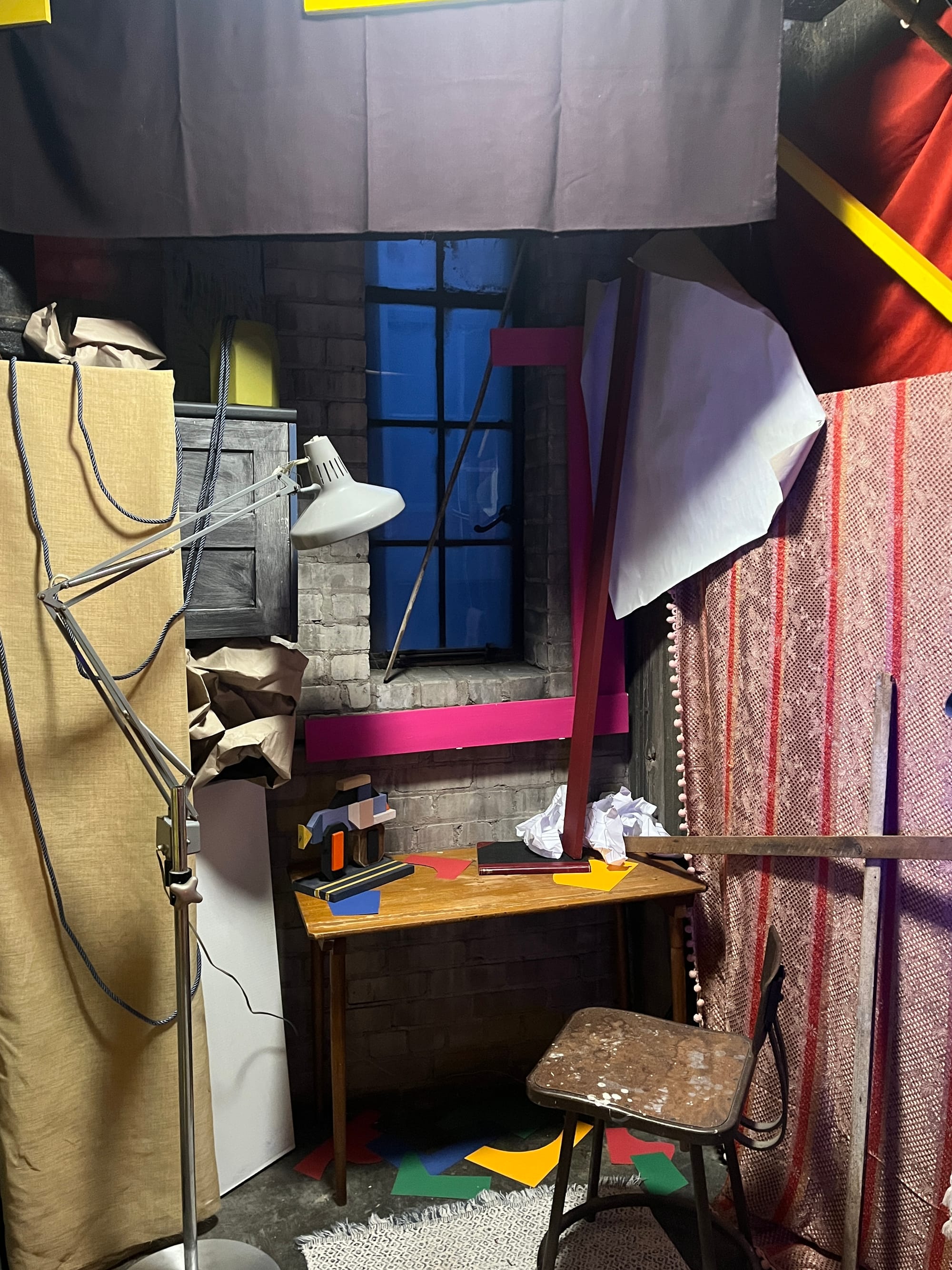
At first glance, it’s disorienting. I wasn’t entirely sure how to read it, which is my hope with art, to allow some room for openness and duality. That uncertainty was intentional.
“Whether this room is interpreted as a display of abundance and well-cultured luxury or as marking insecurity with material possessions is dependent on the position of the 9 of Pentacles,” the card description explains. “The installation is for an individual to consider their success as coming from a place of genuine confidence and stability or an attempt to create the appearance of wealth and culture.”
Because tarot cards shift meaning depending on whether they’re upright or reversed, I appreciated how this room held both interpretations at once.
Immersive, room-based exhibitions like this continue to be some of my favorite ways to experience art. While the first House of Tarot show pulled me in more fully, perhaps just due to its scale, this iteration still offers moments of real resonance.
Regardless, I’m very much looking forward to seeing House of Tarot continue to evolve through new card interpretations and artists willing to take risks with how we move through and experience art.
Published in conjunction with Detroit Metro Times.


