
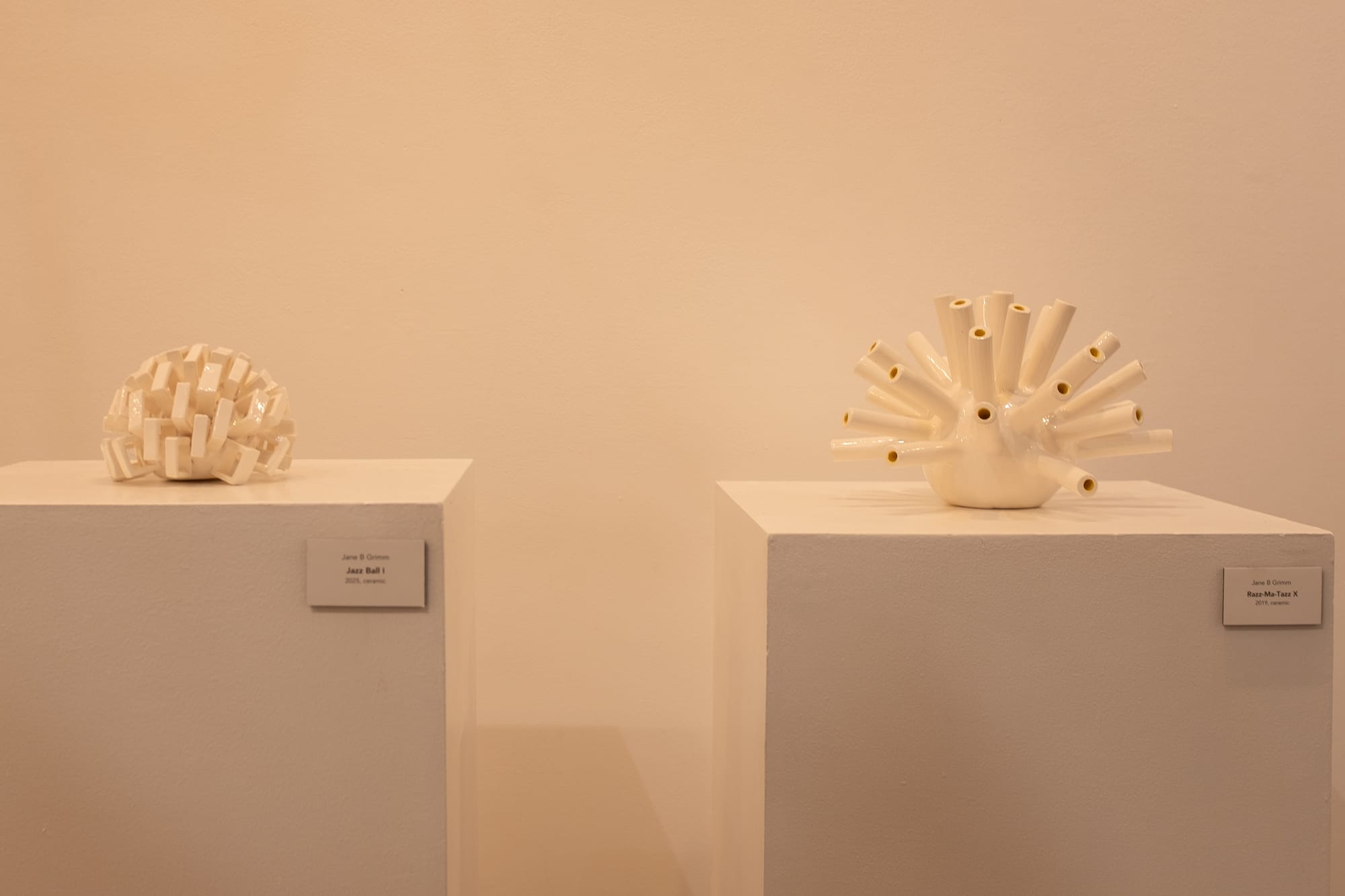
Selected Works from Pacific Rim Sculptors, Curated by Ruth Santee
770 W Grand Ave, Oakland
November 13 2025-January 3, 2026
Fashioned from found objects and fine art filliments alike, many of the widely varied sculptures on display in Transmission Gallery’s high-ceilinged and bright space do in fact feel, well, light. The current show, Not Heavy, features items and installations small and large, intricate and slickly simple, and all manner in between. An appreciation for and embracing of fun, curator and gallerist Ruth Santee’s criteria were simple: the pieces must “uplift the spirit or defy gravity in form or feeling…work that is buoyant, playful, warm, whimsical, uplifting, or even humorous.”
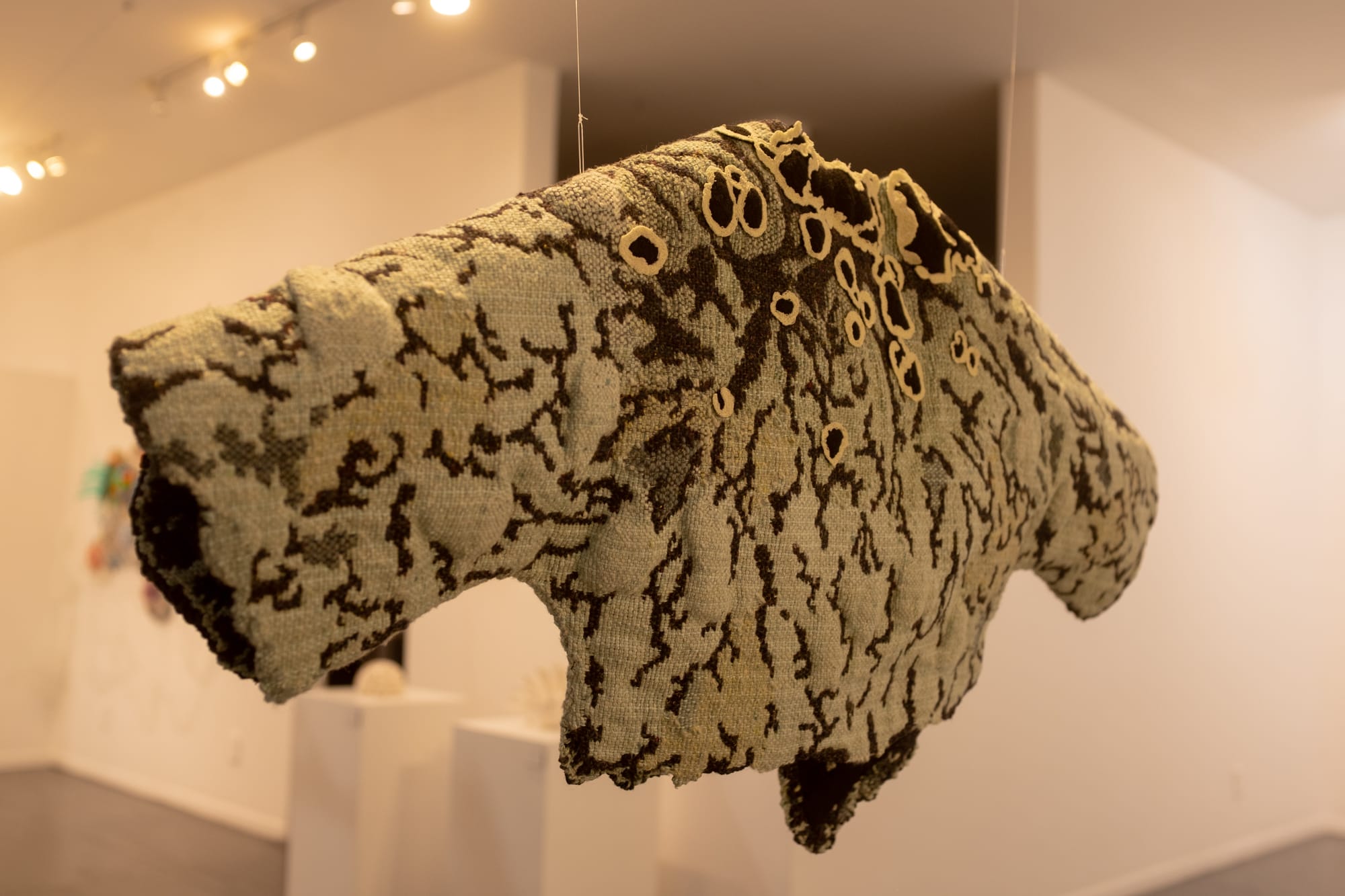
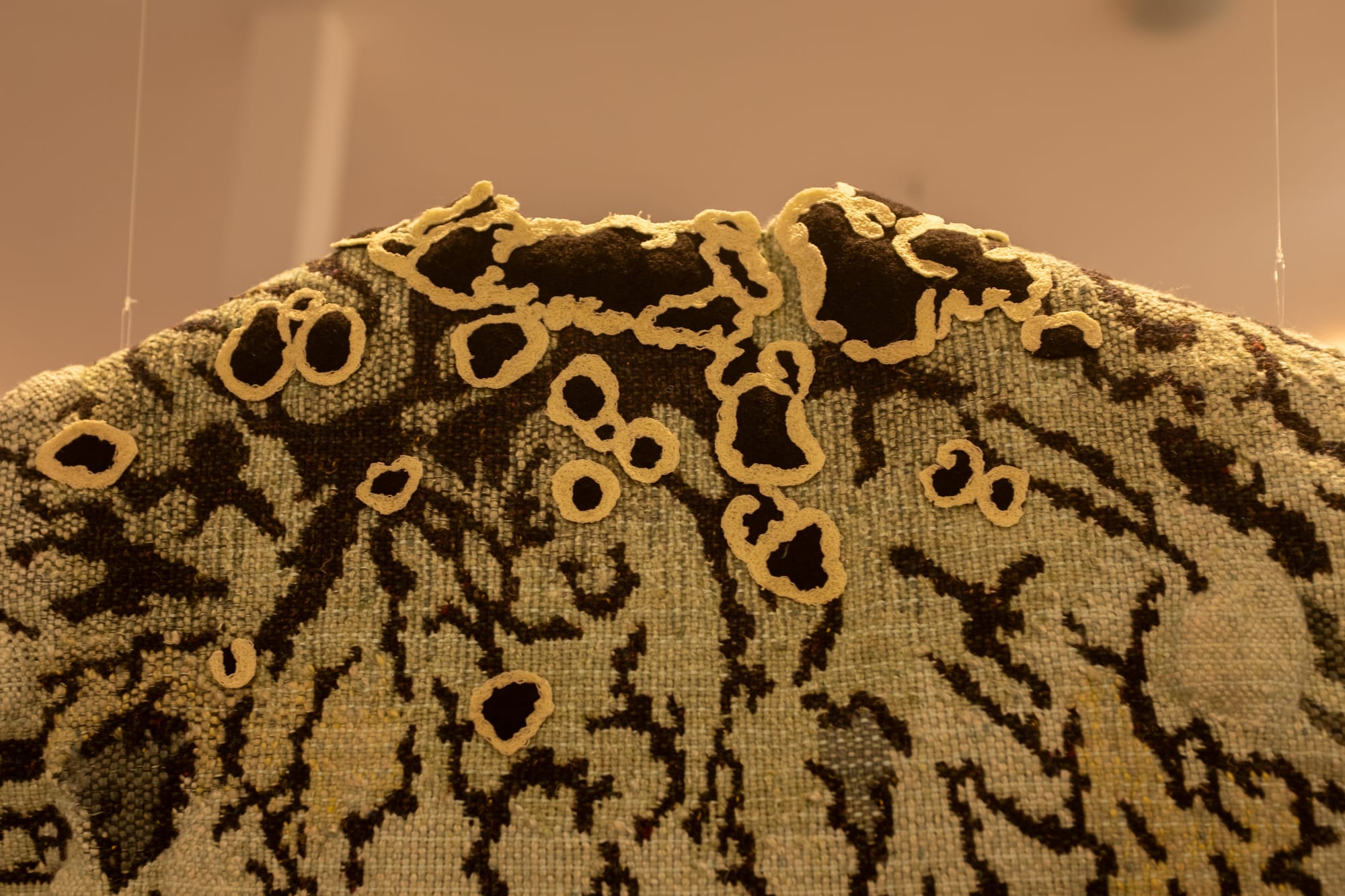
Lichen Bolero, George-Ann Bowers
I cannot say that I saw the sense of humor or felt the levity behind every piece, but greeted by George-Ann Bowers’ ethereal floating Lichen Bolero before even exiting the stairwell, I knew I was in for a treat. Bowers’ fabric fungus, stiff but clearly still soft, is a marvel. Elegant and lightly grotesque, the mottled black splotches sewn just so, a necklace and darling design element elevating the bolero’s bulbous texture and slimy subject.
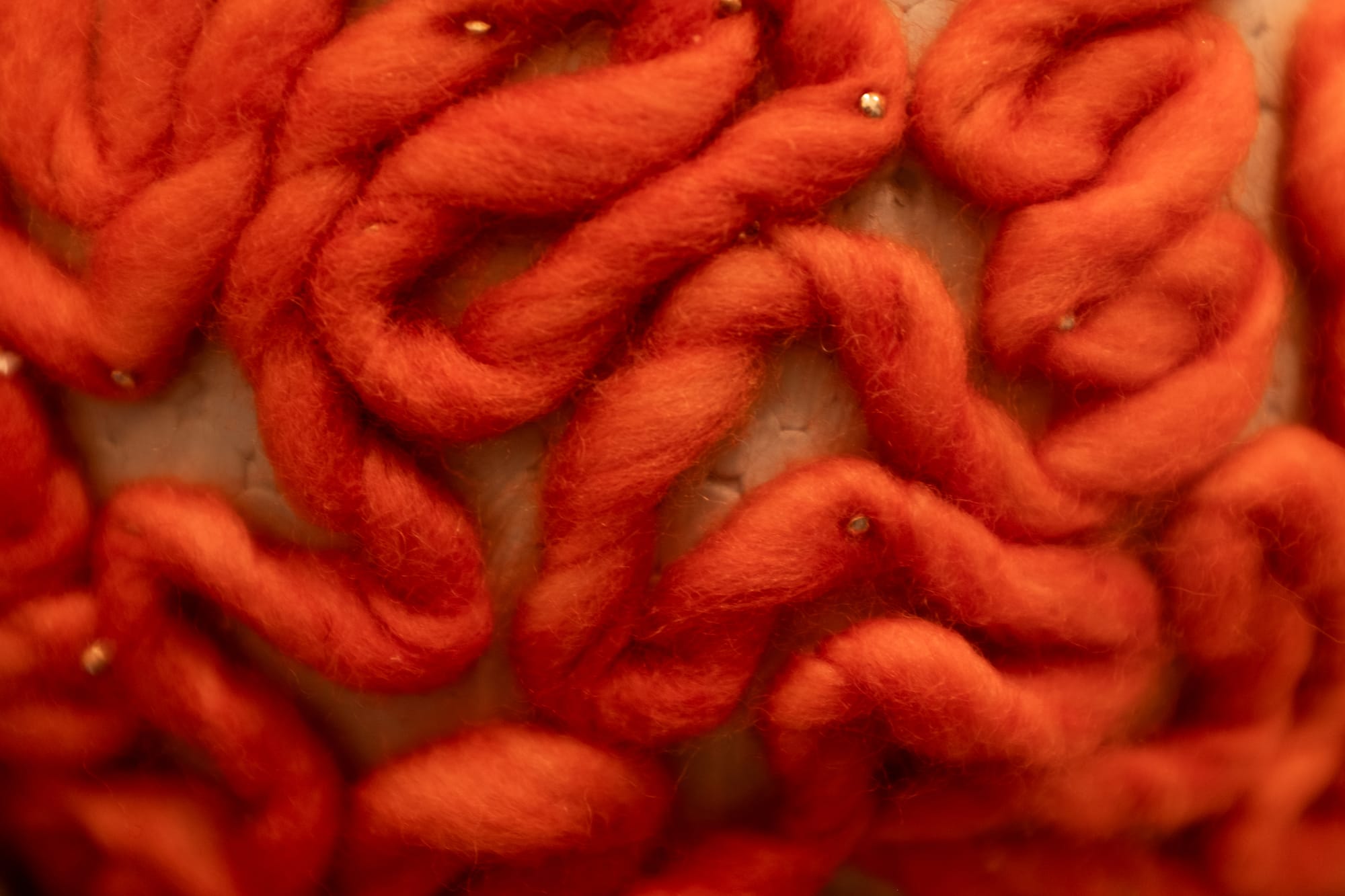
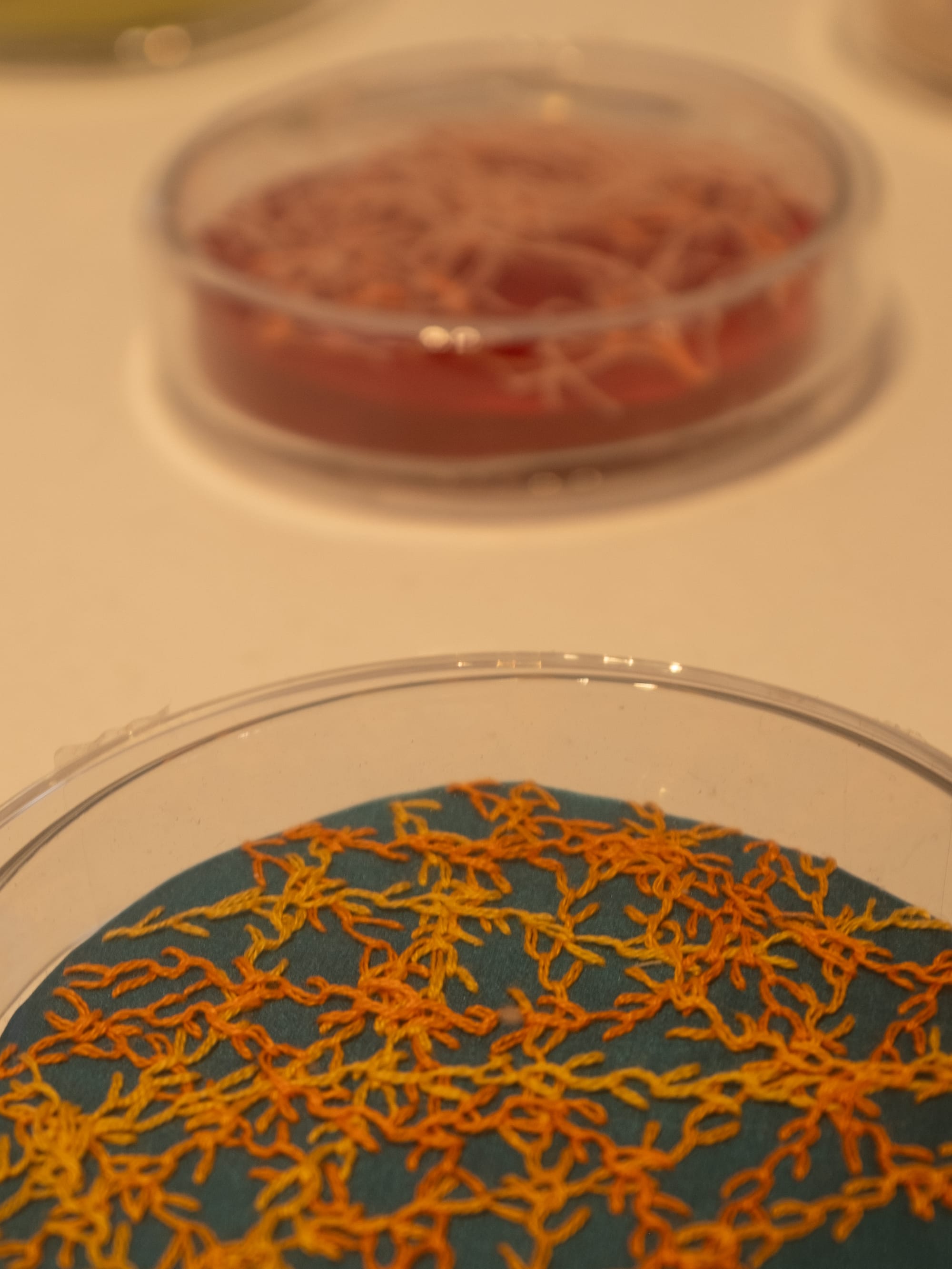
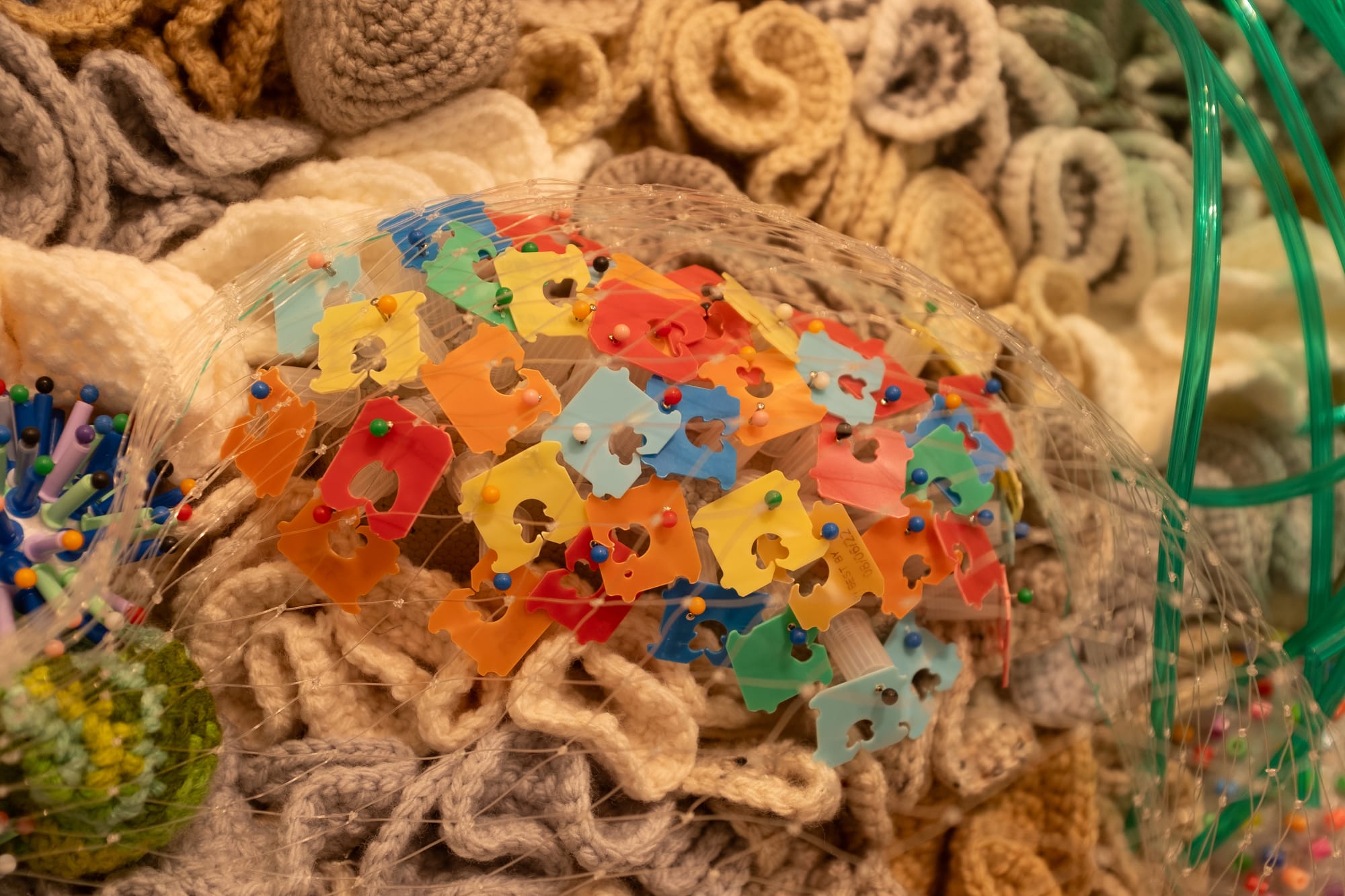
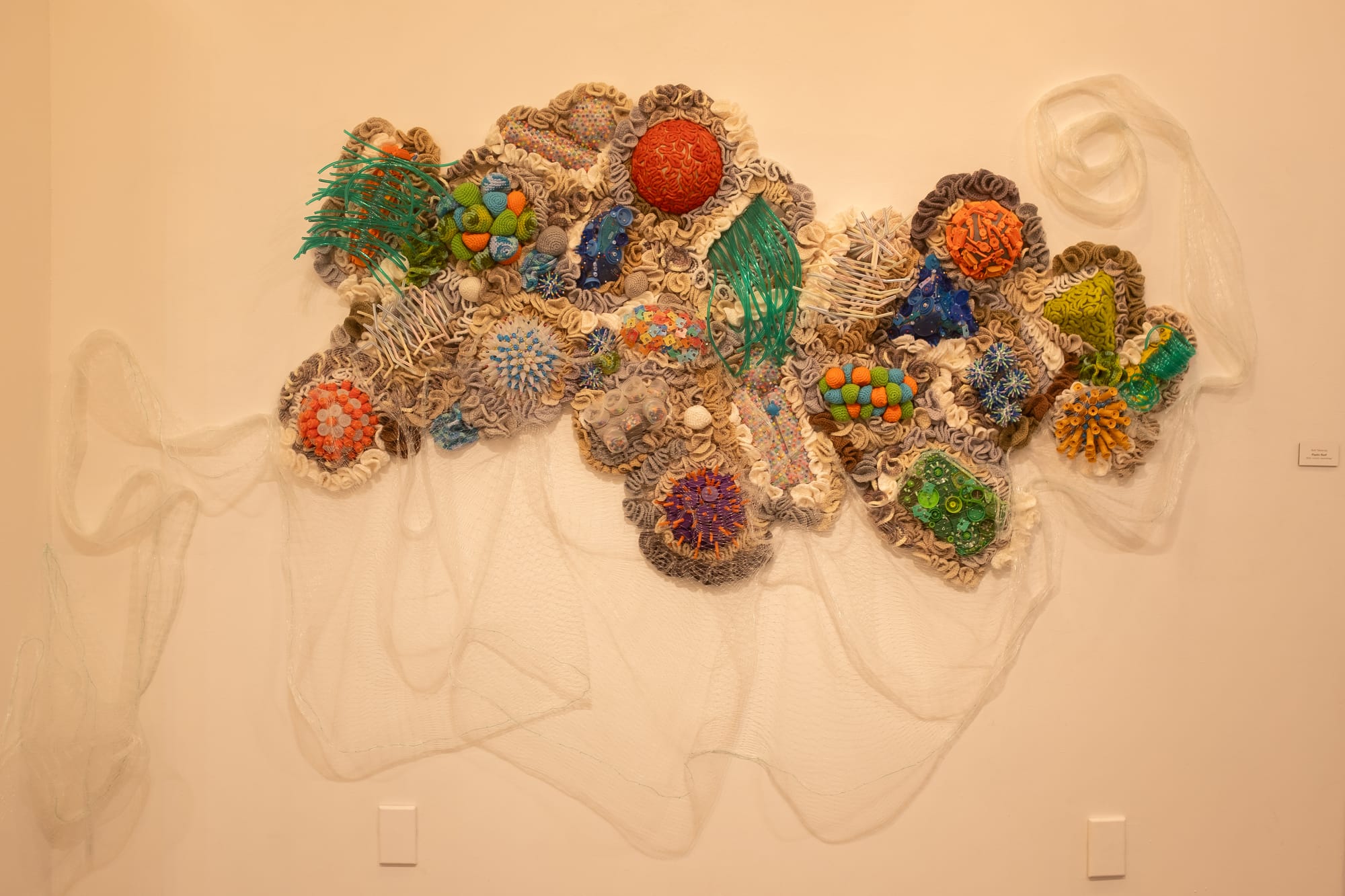
Details of Tabancay’s works: left and right from Plastic Reef, center from What’s In You and On You
Working in round, the first of Ruth Tabancay’s two selections came next, offering a minute, microbial take on naturally-inspired textile art. What’s In You and On You 5.0, series of microscopically-accurate petri-dish bacterial and fungal embroideries dotting a sterile white pedestal, burst bright colors from their clear plastic encasements. Tiny fibers stretched out, their feelers ready to tickle. Around the corner, Tabancay’s Plastic Reef stretches a languorous 106” across. Despite their wildly differing scales, the level of intricacy and detail, craftsmanship and scholarship was readily legible in both, the reef providing a bugged-out, waste-filled human virus mirror to the natural strains contained in yet more plastic.
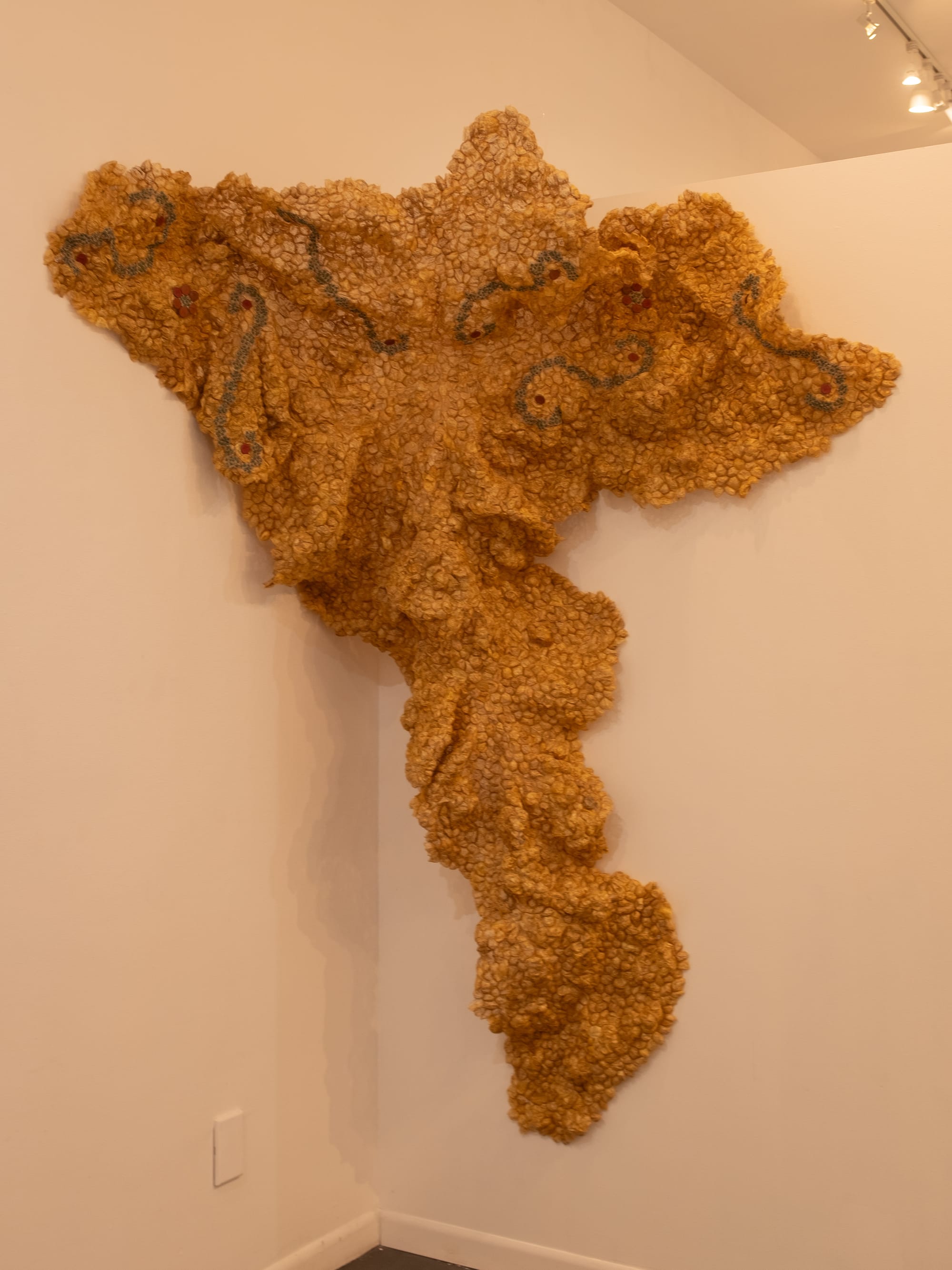
In another mammoth display of waste repurposed, this one of a natural shedding, Dale Eastman’s A Conference of Moths hovers in the crook of two surfaces, dead and alive, golden and glowing, ready to fall to dust at the wrong touch. Made mainly of shed cocoons and decorated with beaded wires mimicking a wing pattern, the hole-y, paper-like structure is fragile as anything, but still strong enough to remain aloft, on the cusp and life and death.
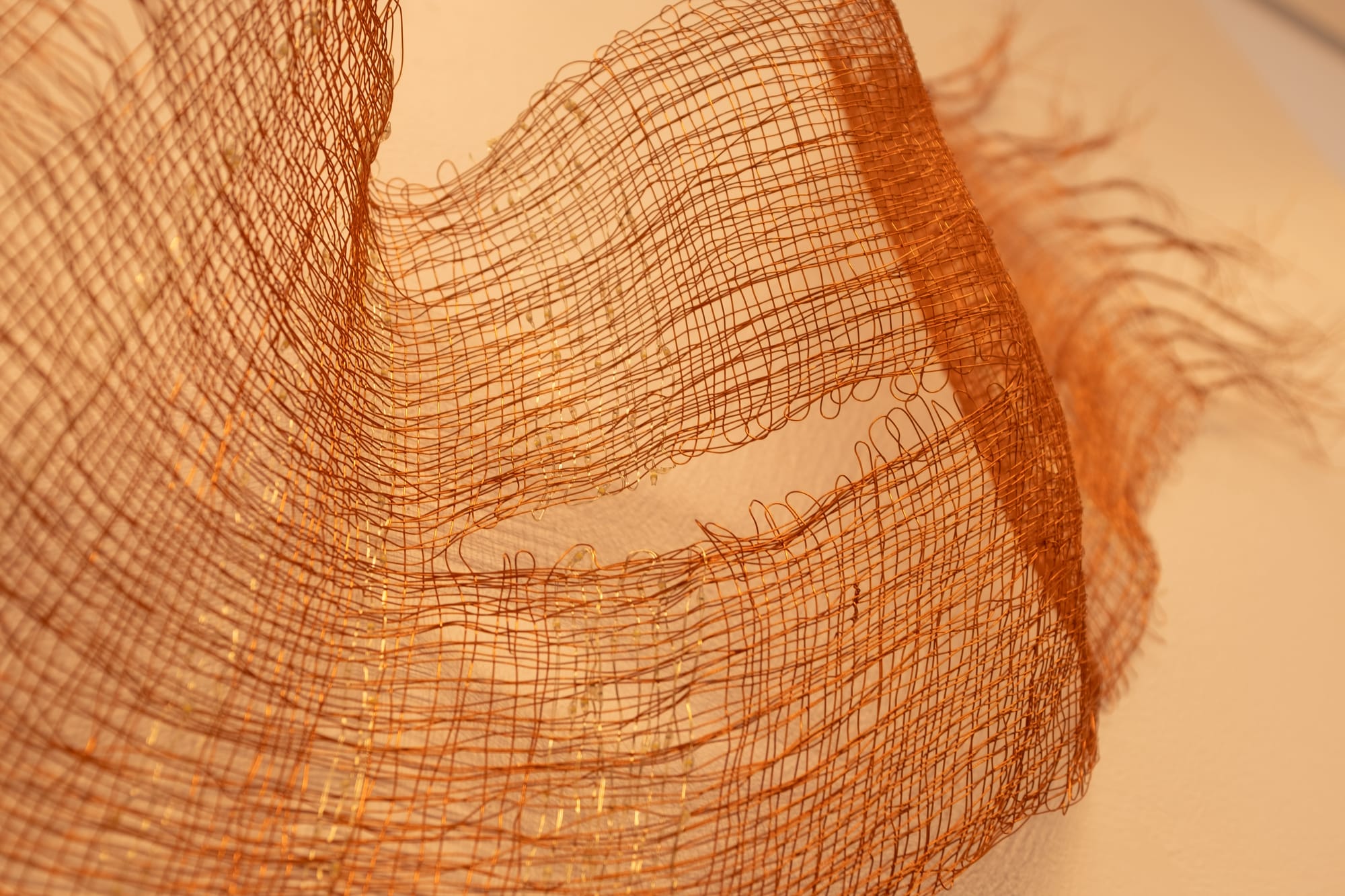
Perhaps rather literal, but still highly effective, Margaret Michel’s Weightless, woven of copper wire, hung suspended in a breeze, rippled, dappled, fringes akimbo. In the center, a large, intentionally woven hole: to let air through? Allow feelings or negativity to pass through without further scarring? Unclear, but unnecessary to know, a shawl to cage or protect, not to warm.
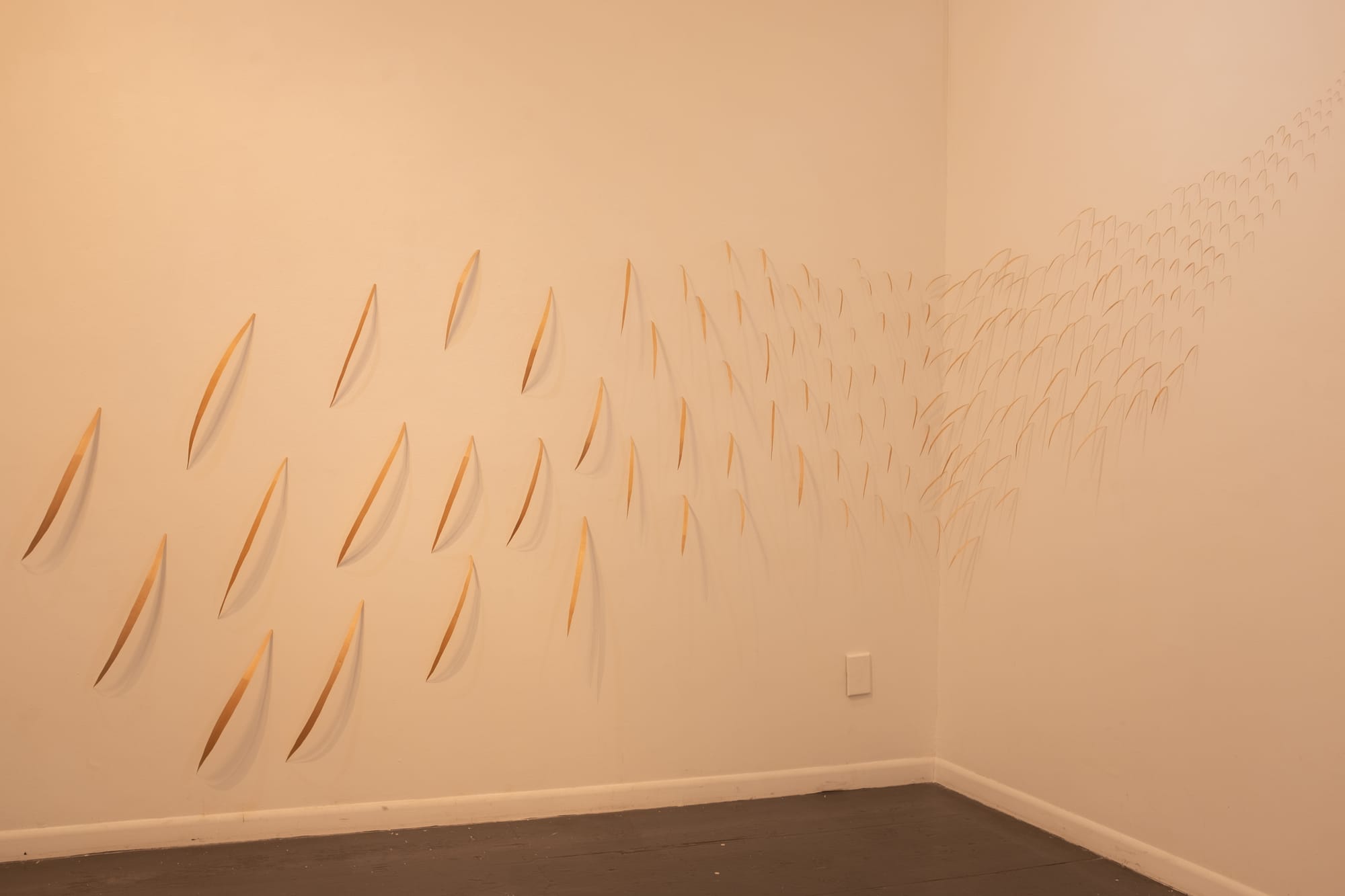
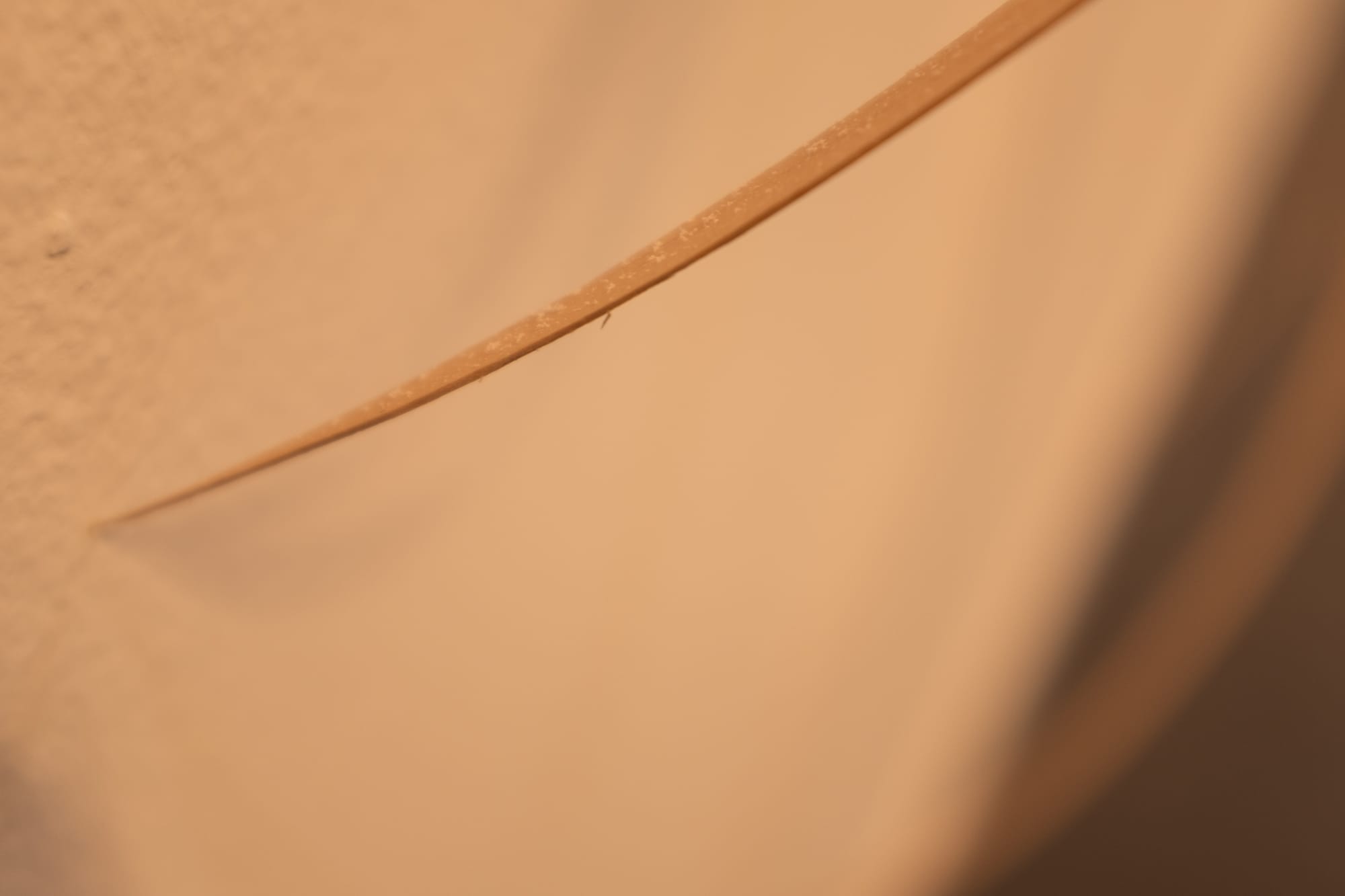
A flurry of activity, stilled. Meadow’s Eye, right, and its salt?, left.
And then, finally, tucked in the furthest reaches of the (not large) gallery, Kline Swonger’s Meadow’s Eye is able to take flight. Slivers of wood veneer—and salt, which confused me, leading to some really close crouching and inspection—protrude from the walls. Their fluid form is intuitive: a school of fish, a flock of geese in flight, the splinters, either increasing or decreasing in size, swell as you take them in, breathing with you. A whoosh, a release, a somatic synchronicity with their breezy hayseed journey. An attempt at meditation over that dang salt (unsuccessful, just made me hungry), and a flight into the unheavy.


