
Good Fire: Tending Native Lands
Oakland Museum of California
November 7, 2025- May 31, 2026
When I read the provocative title of OMCA’s new exhibit “Good Fire,” I was briefly reminded of James Dalton’s words in the 1989 classic ‘Road House’:
“Pain don’t hurt.”
But “Good Fire” is neither oxymoronic, nor moronic, as ‘Road House’ is (If I recall correctly, I only gave it two scraps of carrion in my original review).
“Good Fire” corrects the record as only the Original Stewards of the Land can. It bridges the gap between our contemporary, (understandably) visceral, fear of fire, and fire’s role as a creator/destroyer/renewer.
California has always burned, and many of those fires, pre-contact, were set by the indigenous peoples of California, working in accordance with the land and its natural cycles. That practice was interrupted with their forcible dispossession, enslavement and genocide.
“The Oakland Museum of California occupies the unceded, ancestral land of the Lisjan people…”
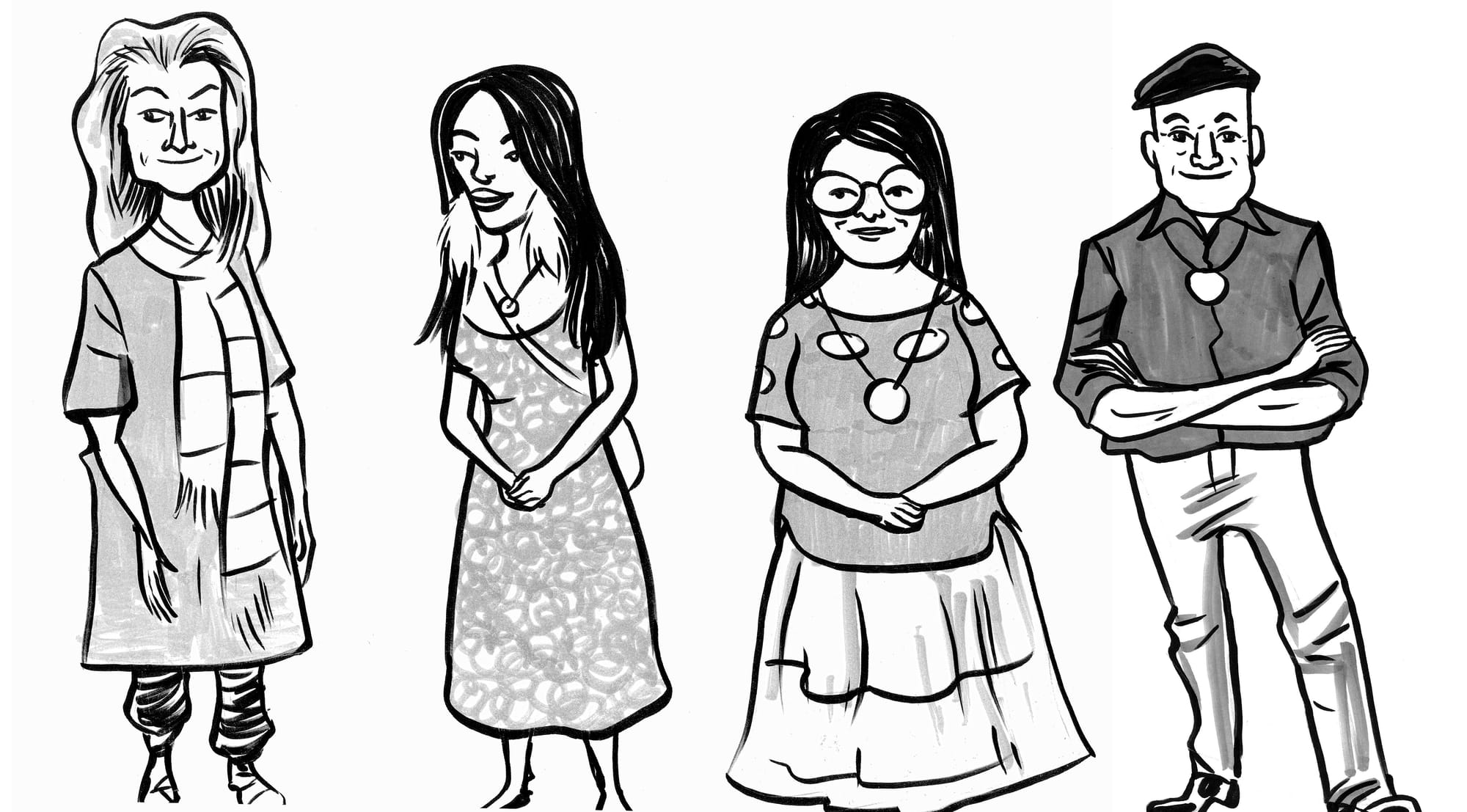
OMCA Executive Director & CEO Lori Fogarty’s reading of the Native Accountability and Land Acknowledgement hit considerably differently given the occasion. She was joined by exhibition co-Curators Ryder Diaz, an OMCA staff member, and Brittani Orona of the Hupa Tribe and Associate Professor of Native American Studies at UC Davis, as well as Patricia Franklin (Scotts Valley Band of Pomo Indians), a basketweaver, and Frank Lake (Karuk), a fire practitioner. Franklin and Karuk were but two of a long list of people Diaz and Orona tapped when convening with experts on the subject.
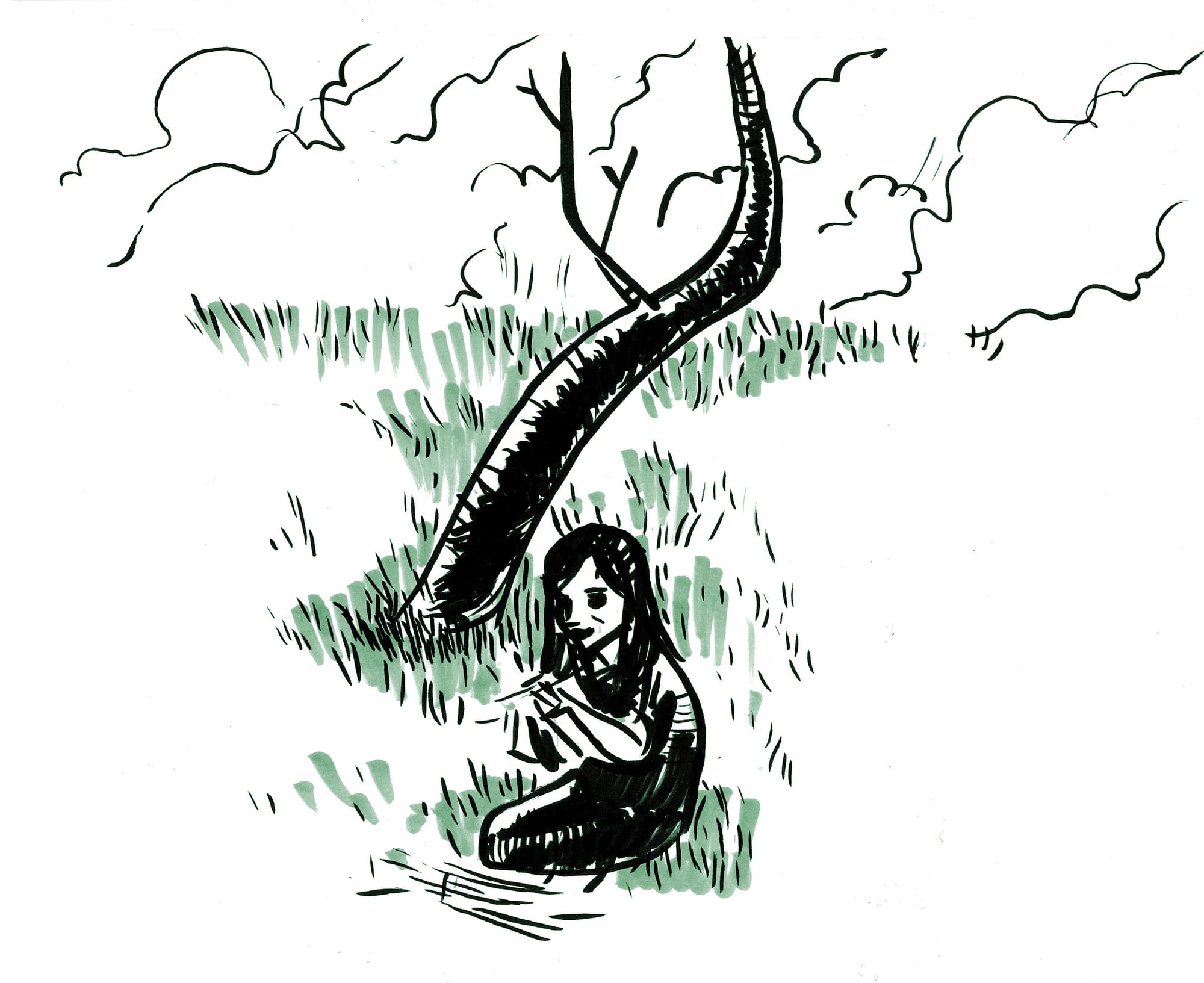
The first section “Working with Fire” highlighted the dichotomy between renewed, healthy forest with members of various tribes harvesting basket weaving shoots, now green and flexible after the previous year’s burn, while an active burn is conducted on a neighboring parcel. The photo, split into overlapping planes, gives a sense of time passing within a scene. Past and present converge. Traditional and contemporary fire tools converge as well, both on display and photographed in action during cultural burns. These burns bring tribes and generations together and to the land.
“This knowledge is culture based...to bring health back to the land in a Native way.”
Artist Harry Fonseca’s (Nisenan) painting “The Maidu Creation Story” further displaced Fire from its usually negative association with his energetic painting, depicting fire, forest, people and animals in harmony. It was a perfect lead-in to the next part.
Frank Lake, a fire practitioner, introduced the second section of the exhibit, “Good Fire, Interrupted”. Lake credited his practice for bringing him back to his cultural roots. Colonialism displaced his people from their land and white settlers ended the controlled burns, taking a purely extractive and exploitive relationship with the land through forestry, invasive agriculture, cattle ranching and, most devastating to native populations, gold prospecting. This has continued with Federal interference.
“Good Fire, Interrupted” began with beautiful, life-like dioramas showing cross-sections of forest prior to and following a burn. Fire destroys, but also recycles nutrients, controls animal and pest populations and (most importantly) reduces fuel for future, potentially more dangerous, wildfires. Cross-cuts of wood revealed previous burns that the sample tree survived and flourished after. A diagram at its side showed the all-or-nothing gambit of fire suppression.
“Tule needs fire,” basket weaver Patricia Franklin advised, referring to the native grass used in weaving for baskets, clothes, food and shelter by Indigenous Californians. “Tule flops over when it’s old, and blocks sun. Fire restores health, to the water and the tule.” Tule feeds the fire and fire feeds everything. “Vermin run, hawks circle…Circle of Life.”
A row of beautiful, traditional woven baskets made from tule and other native fibers provided a visual reminder of the importance of this restorative practice, creation emerging from the literal ashes.
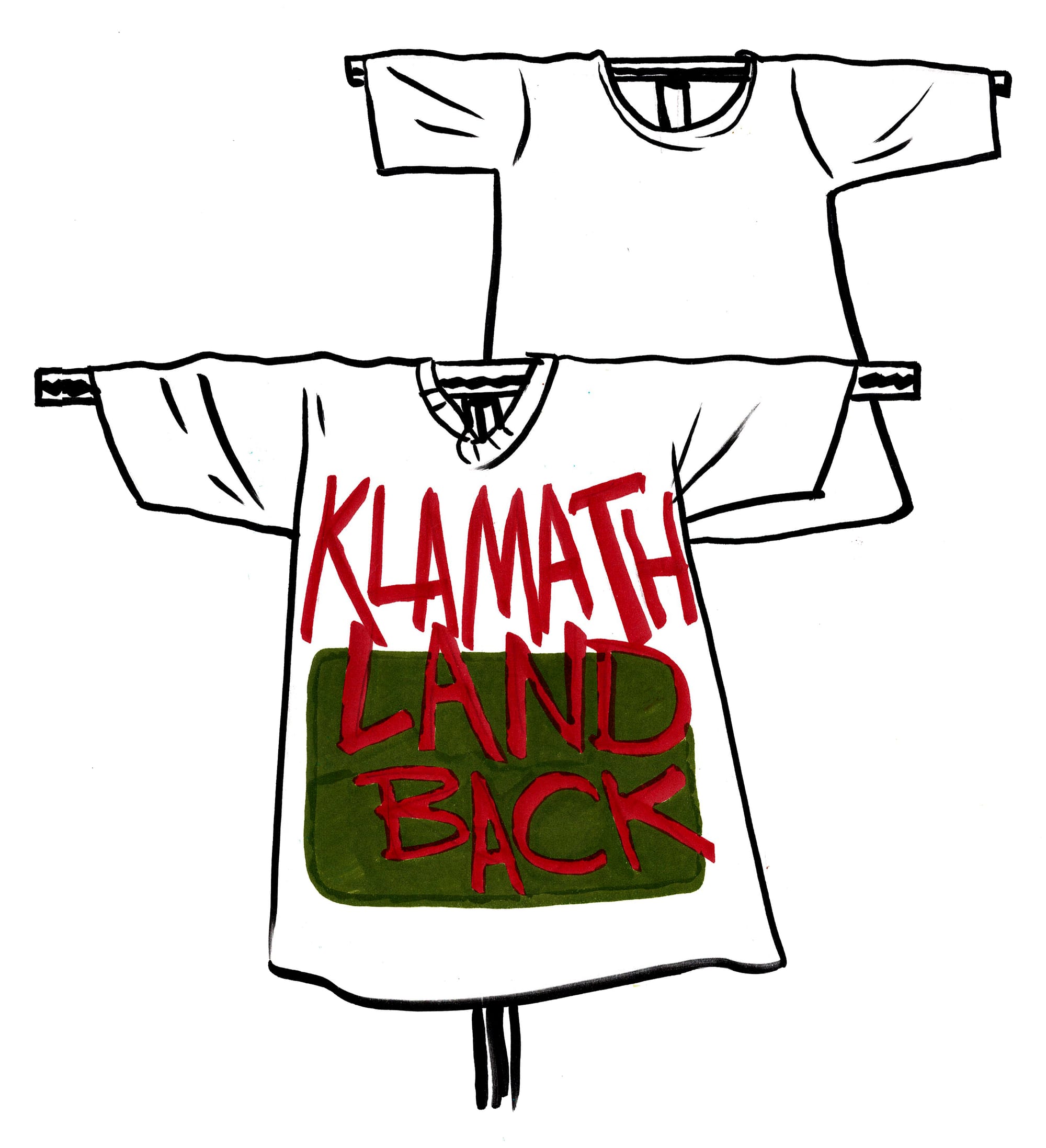
The final section, “Future of Fire”, turns an eye toward a hopeful future, in which Native land management is enacted on a large scale as is the art of fire. Band shirts are passé, but fire shirts? That's hardcore. And exclusive. A row of shirts on the far wall commemorated burns and events for posterity.
It seemed fitting to end with artist Renée Leann Castro-Ring standing proudly before her piece “Rinihmu Pulte’irekne”, a triptych representing past, present and future.
“The only way to tell the story is to do the art.” As one visual storyteller to another, I couldn’t agree more.
Recent grad Castro-Ring is of a considerably younger generation than her cohort. She’s one of the culture bearers who will deliver this message and knowledge to the generation after hers, keeping the flame alive.


