
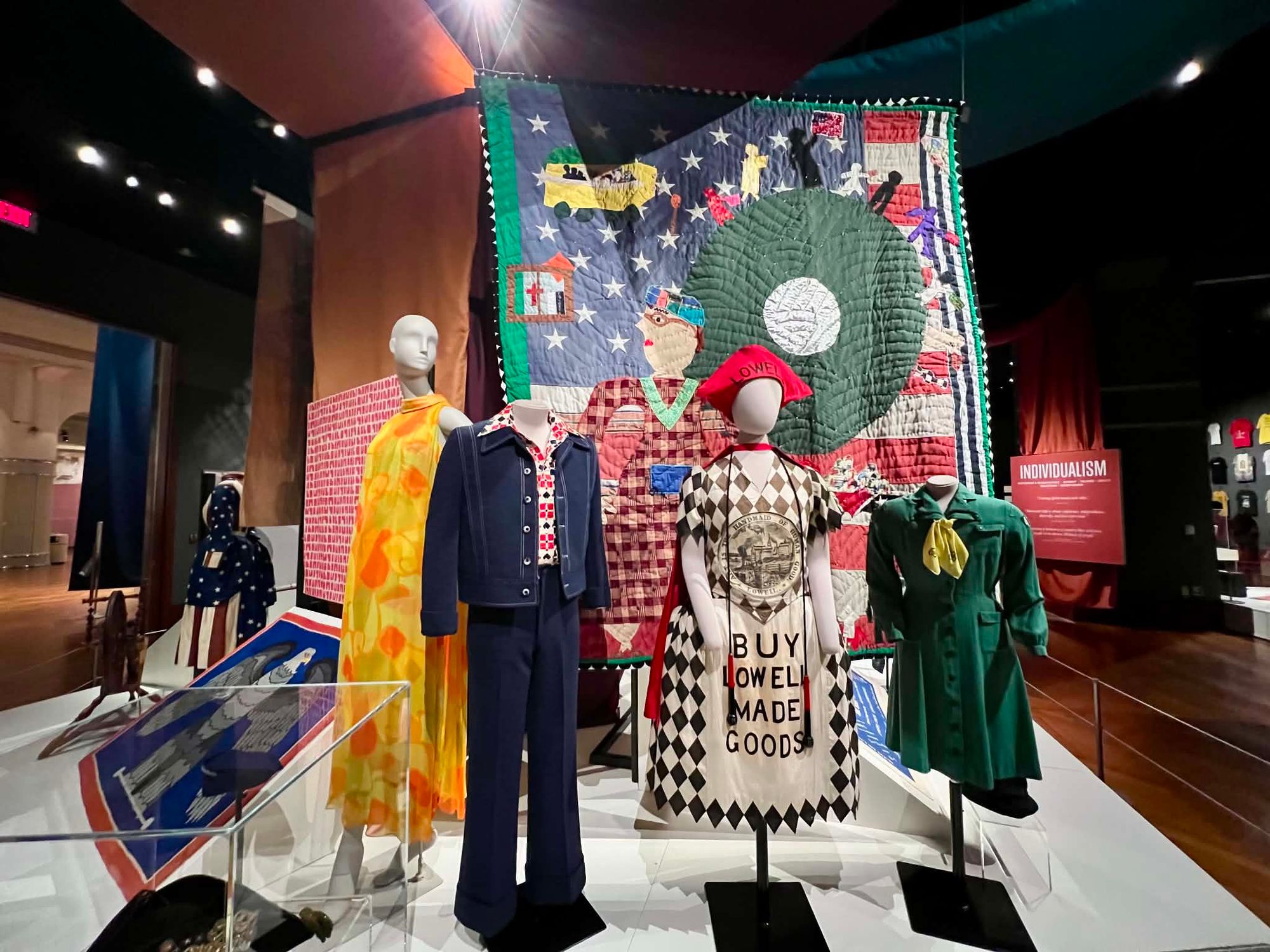
"Fabric of America: Our Fashions, Textiles, and Technologies"
Henry Ford Museum of American Innovation
20900 Oakwood Blvd.
Dearborn
Through Sept. 13, 2026
Clothing has always been one of my favorite forms of art; indeed, I’ve been to eight fashion exhibits already this year. Now it may become a favorite part of history after I visited the Henry Ford Museum’s newly opened exhibit, “Fabric of America: Our Fashions, Textiles, and Technologies.”
The exhibit – part of their “America: 250 Years in the Making" commemoration – explores how fabric has shaped American history and identity.
The exhibit’s more than 500 artifacts span hundreds of years and go to the present day. It’s not presented chronologically. Instead, sections are organized by themes that include liberty, practicality, inventiveness, abundance and individualism. It features clothing as well as quilts, fabrics, fabric designs, the tools and methods to make fabrics and more.
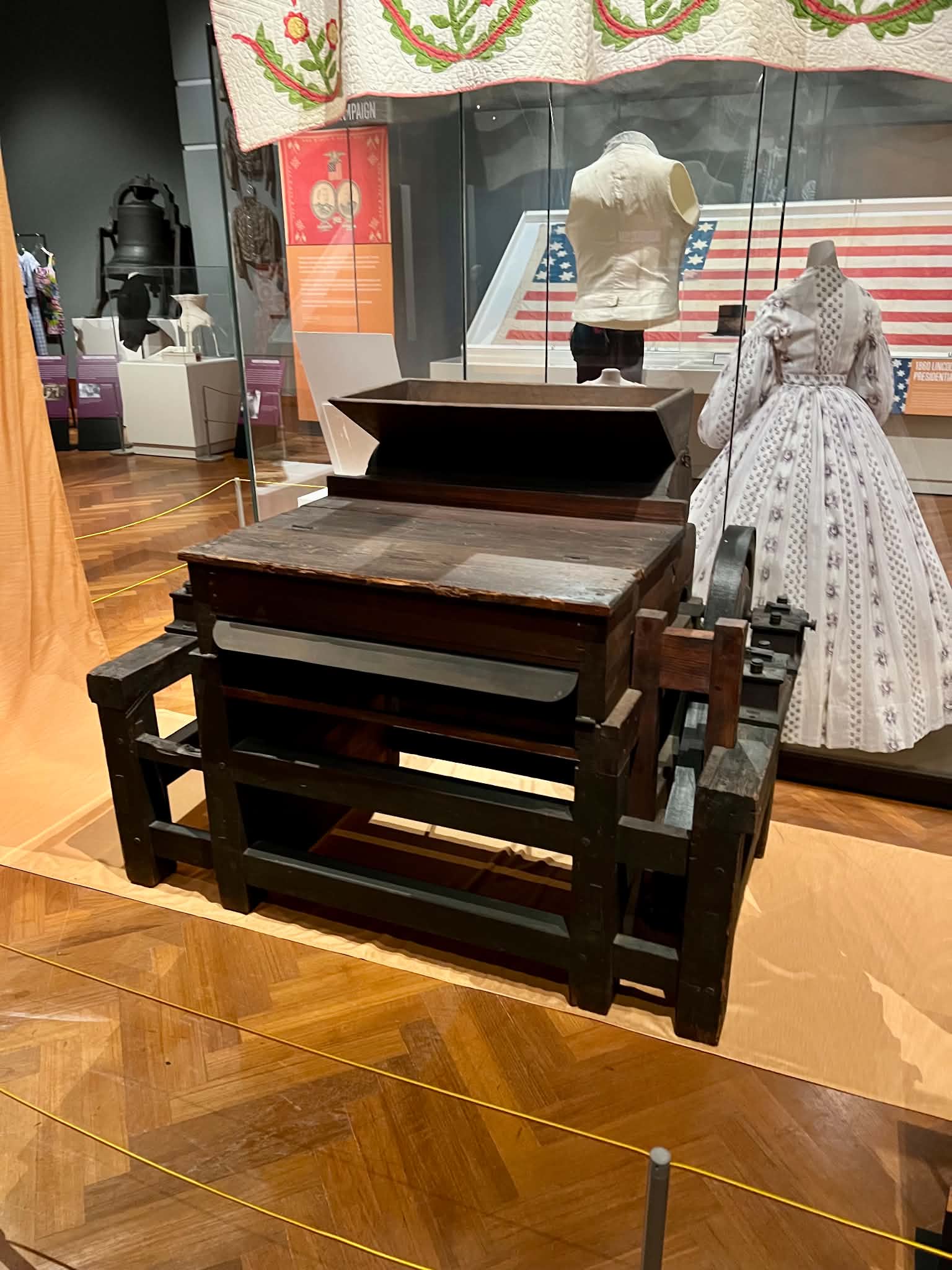
The evolution of fabric production is a major through line, which follows the prevalence of cotton – based on slave labor – to advancements like the cotton gin, sewing machines and the Industrial Revolution that contributed to mass-produced, ready-to-wear options. The political/movements section has objects that ranged from “The Coming Man” top hat – worn to support Abraham Lincoln’s presidential election – to modern-day MAGA caps and pussyhats.
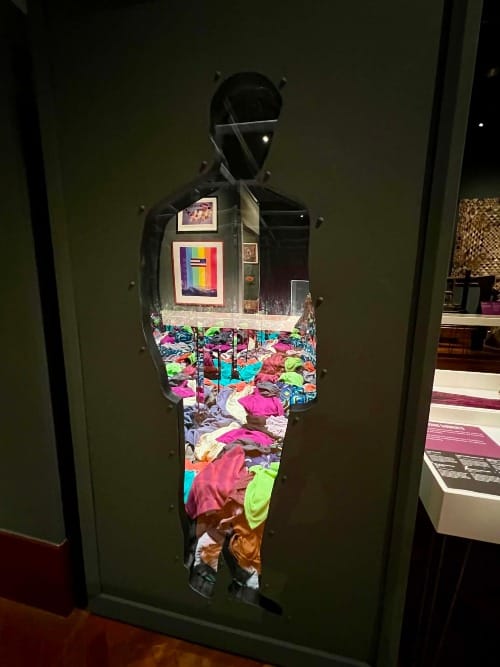
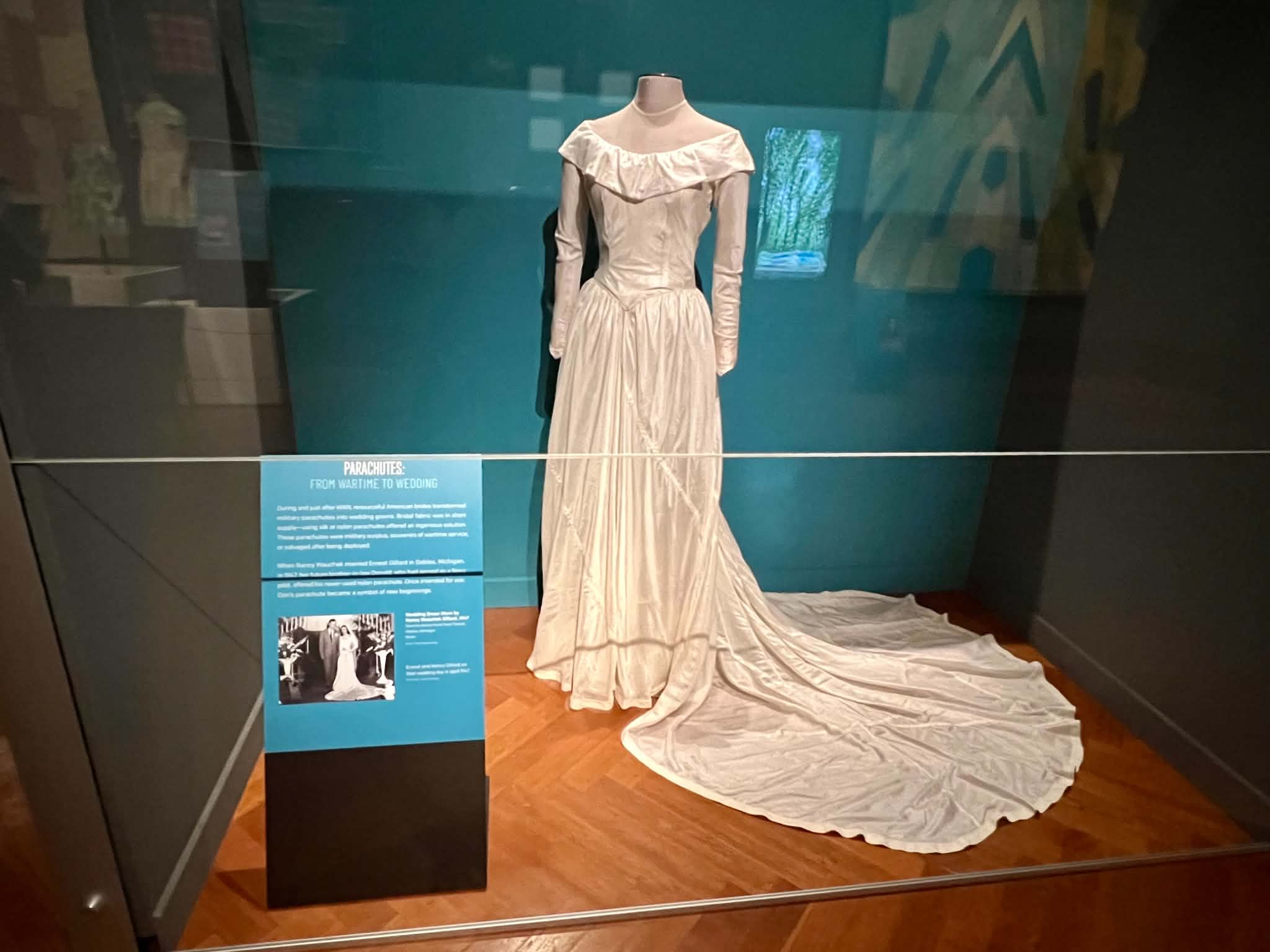
One area I found particularly poignant is a section on fast fashion and modern-day waste. It notes that Americans have more access to cheap, quick, easily changed clothing than ever before – resulting in 11.3 million tons of textile waste annually, often made by underpaid workers overseas in unsafe working environments. Nearby, a person-shaped mirrored box of cheap clothing invites visitors to reflect on their own roles in contributing to this waste and exploitation. This is framed in contrast to sections on resourcefulness, like reusing flour sacks to make clothing or a wartime parachute to make a wedding dress.
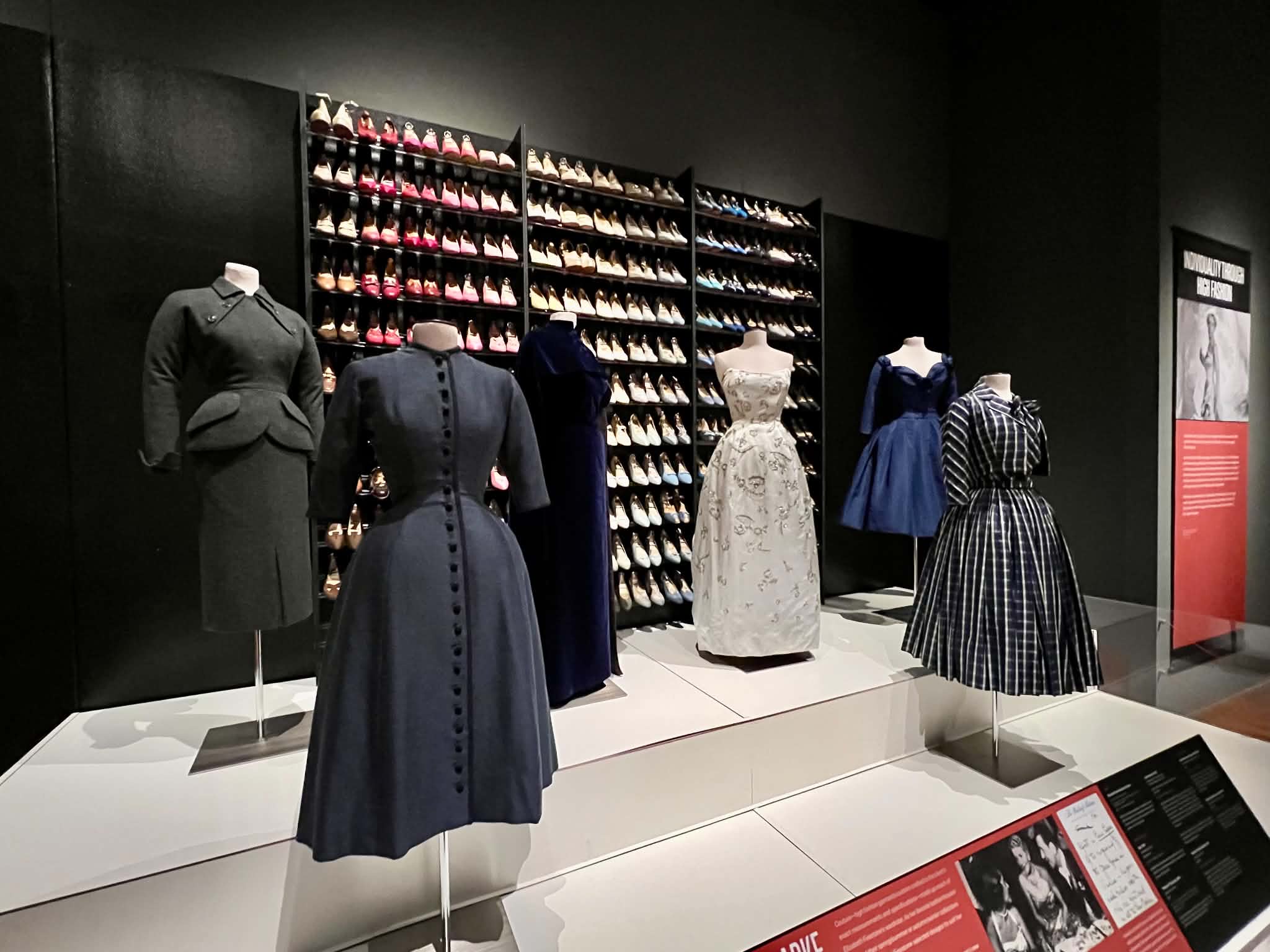
Of course, I’d be lying if I didn’t say my favorite parts of the exhibit are the actual fashions, especially the ballooning Civil War-era gowns and Elizabeth Parke Firestone’s couture “closet.” Firestone’s collection features six dresses by Dior and Balenciaga in front of a mountain of shoes. Waste isn’t limited to cheap clothing, but excessive designer fashion is much nicer to look at.
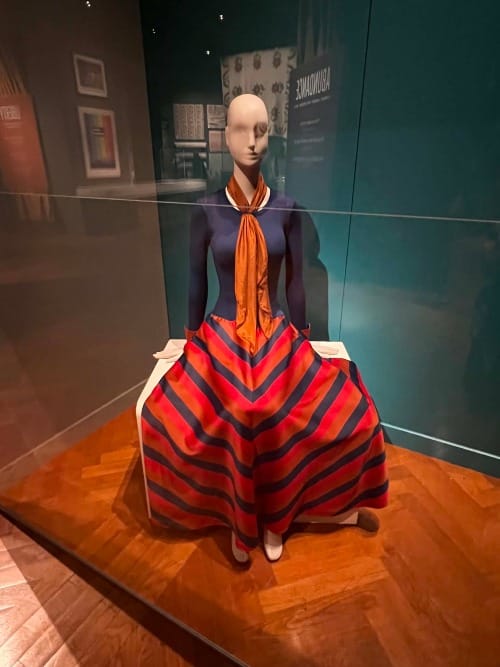
Influential American designers are also featured in the exhibit. I particularly enjoyed learning about the female designers whose clothing was stylish but also broke boundaries in accessibility. Vera Maxwell was part of a “Functioning Fashion” movement from the 1950s, a collaborative project that aimed to increase off-the-rack options for people with disabilities, led by Helen Cookman. Maxwell’s 1974 “Speed Suit” was a pullover dress without any buttons, zippers, snaps or other fasteners that would be difficult for those with physical limitations, which I found both lovely and interesting. Patricia Moore was a designer who regularly disguised herself as an elderly woman – complete with prosthetics – to better understand the clothing needs of aging adults, which was part of her “Universal Design” advocacy for creating clothing that served a wider range of people. It’s a wild story that demonstrates an admirable conviction to a cause.
We might not think too closely or too deeply about what we put on our backs. But clothing has always been a significant part of our culture that can signify personal identity and represent an entire ecosystem of production we often take for granted. “Fabric of America” is both fun and fascinating, and you might walk away never looking at a T-shirt in the same way again.


