

“DaVinci The Exhibition"
The Henry Ford
Dearborn, Mich.
Until May 3, 2026
Leonardo da Vinci was a renowned Renaissance artist and inventor, arguably most famous for painting the “Mona Lisa.” The Henry Ford museum’s latest exhibit,“DaVinci The Exhibition,” produced by Imagine Exhibitions, takes a deep dive into da Vinci’s mind and work with a 7,500 square-foot display featuring more than 65 full-scale inventions and over 20 fine arts studies.
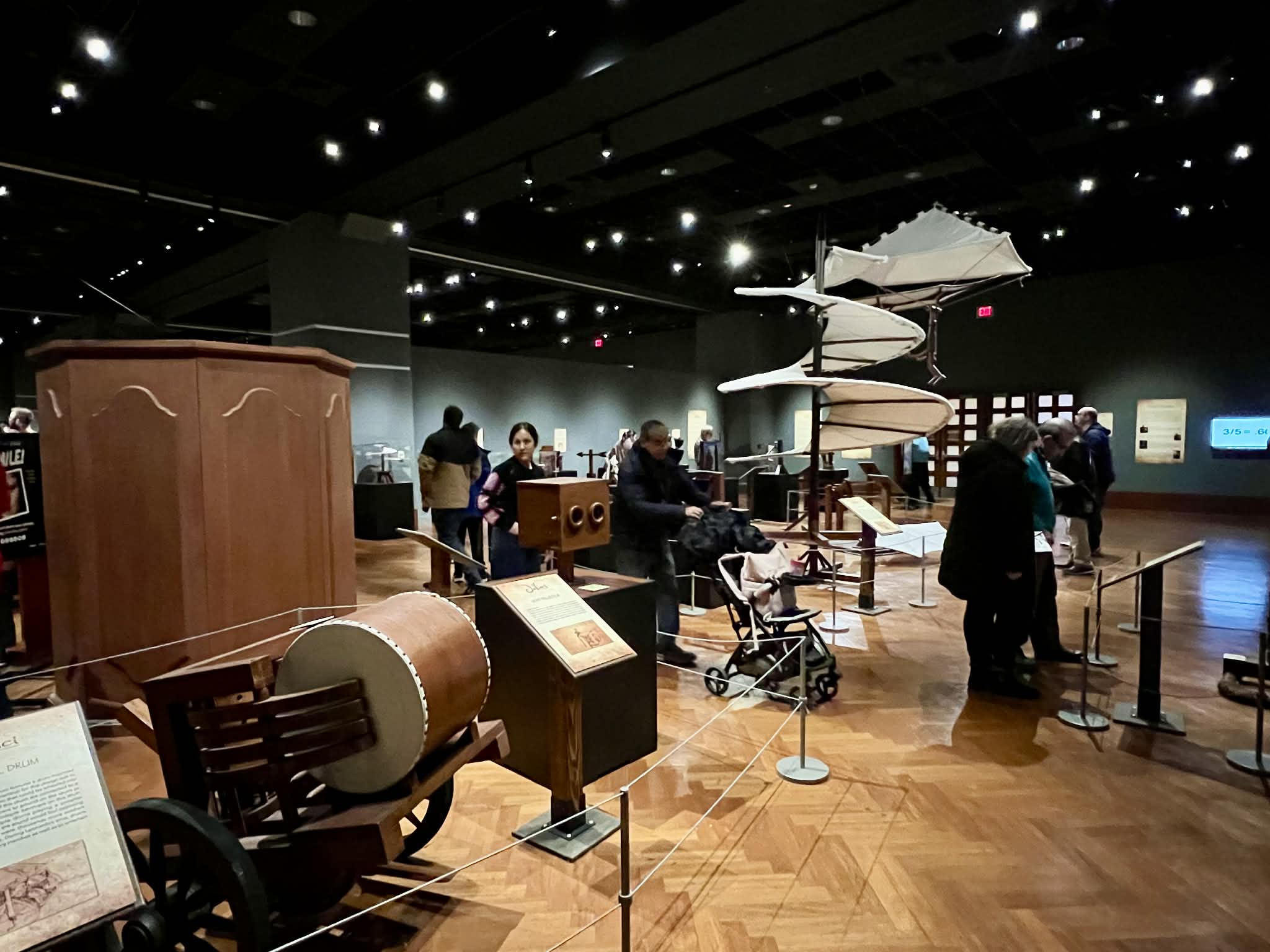
It begins with a brief overview of da Vinci’s early years before dividing into the different aspects of his work, encompassing civil engineering, hydraulics, flight, wartime machines, physics and of course, his art. The number of objects to see in the exhibit is almost overwhelming, with paintings and small inventions lining the walls and the biggest machines in the center of the display. Several hands-on options let you turn the machines to understand how they work.
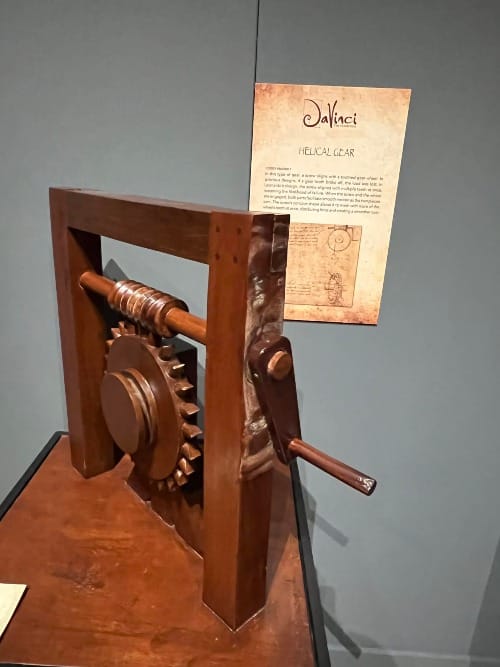
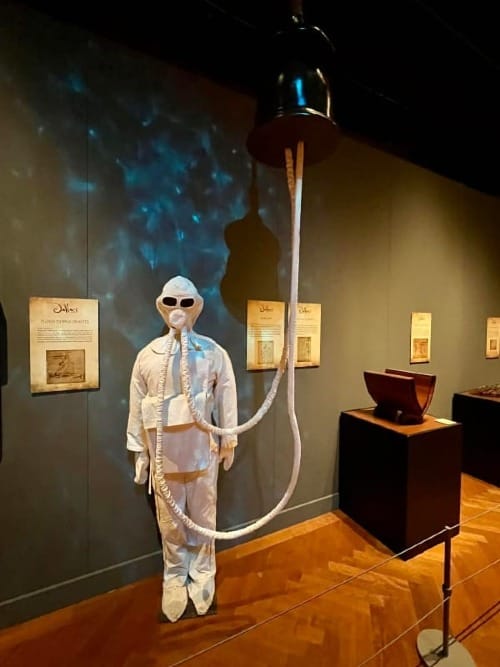
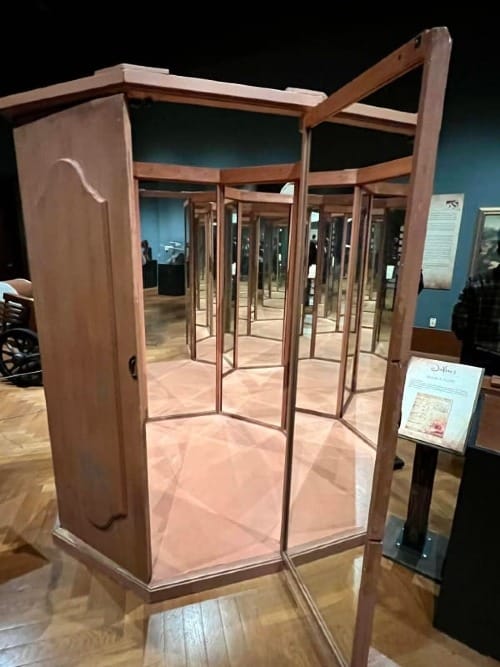
On the inventions side, I found the hydraulics and flight sections most interesting, as I learned about the influence of nature in all of da Vinci’s designs. He had lofty goals for manipulating water and flying like birds. While many of these never came to fruition, his ideas contributed to later scientific advancements. Some of the inventions on display were ski-like shoes to walk on water and early prototypes for flotation devices, scuba gear and submarines, plus a parachute. Another one of my favorite inventions was a cool, walk-in room with eight angled mirrors, which da Vinci apparently used to better understand the human form.
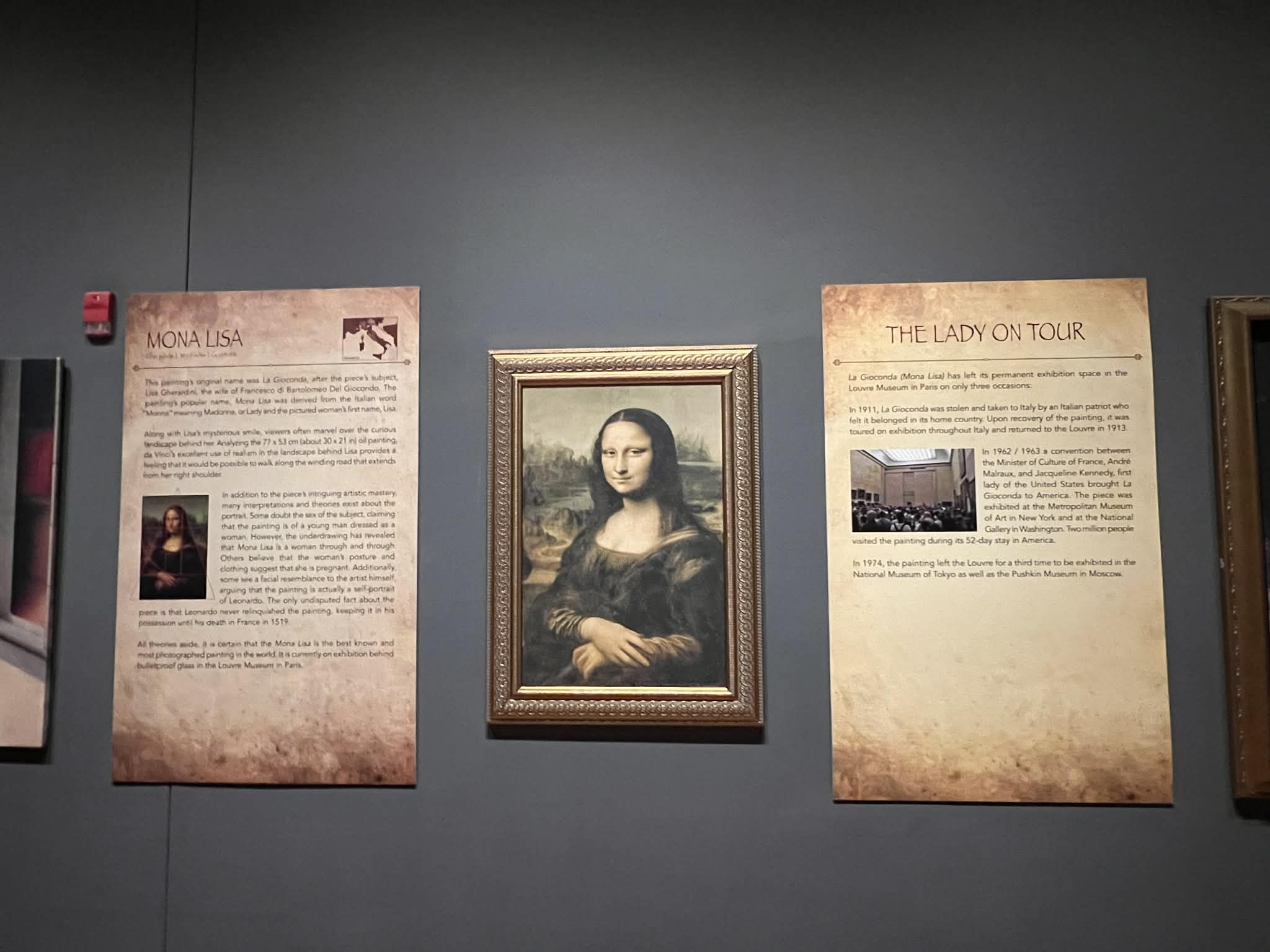
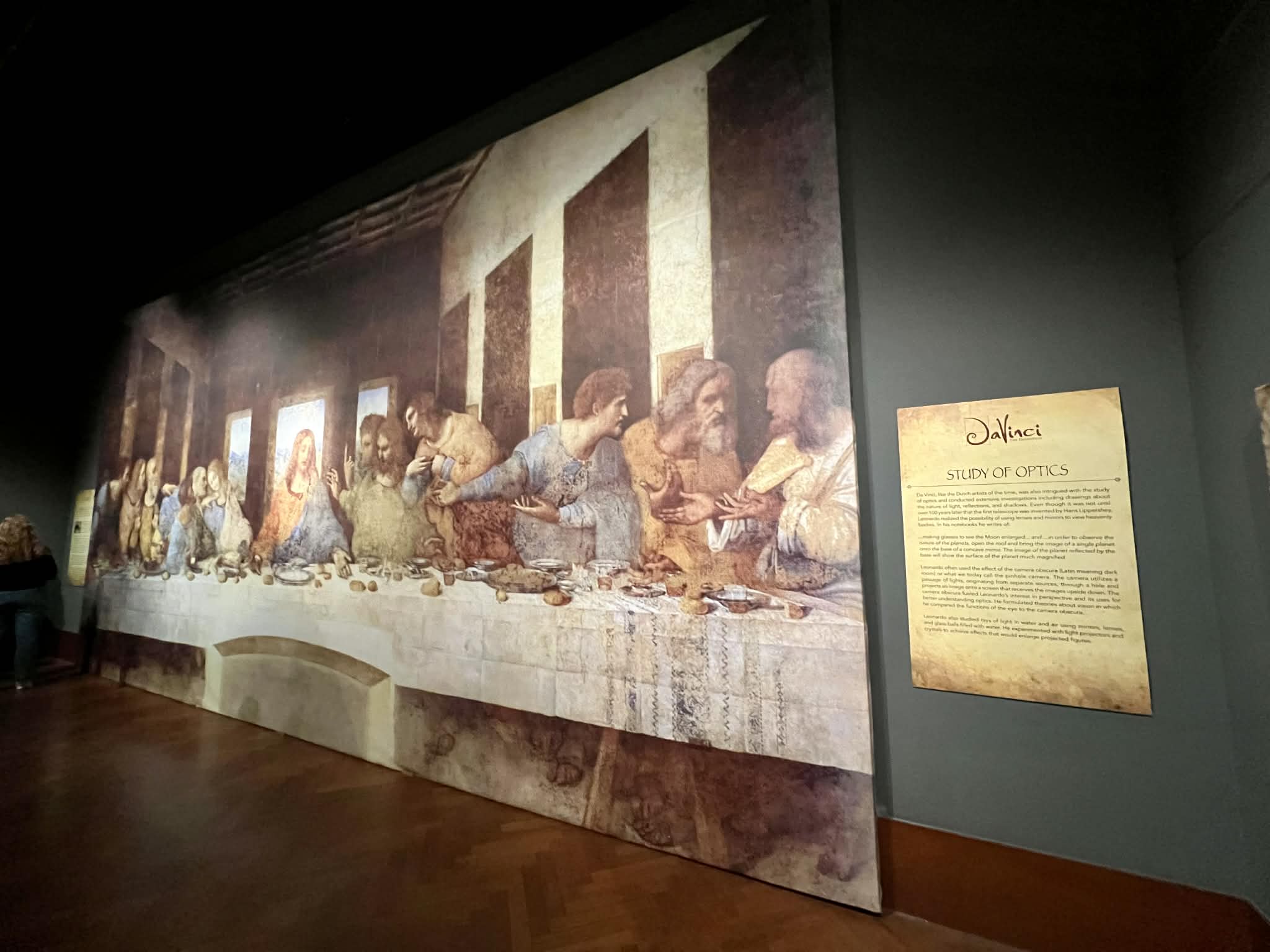
Da Vinci’s most famous paintings hung on the walls with short explanations and histories, including the “Mona Lisa,” “Virgin of the Rocks,” “The Annunciation,” “St. John the Baptist” and a wall-sized replica of “The Last Supper,” plus lots of sketches. One of the most interesting aspects of the art portion was learning about the math and science behind the paintings, like da Vinci’s frequent use of the Golden Ratio or Divine Proportion – a recurring number found in nature – which helps explain why his art is so aesthetically appealing. The exhibit also describes the significance of da Vinci’s “Vitruvian Man” and how his understanding of the proportions of the human body contributed to the understanding of the structure of the universe.
Although the inventions and paintings were expansive, covering a range of actions and subject matters, they displayed an overall theme understanding da Vinci’s fascination with the natural environment, the human body and solving problems. In a world often divided between art and science, “DaVinci The Exhibition” explores the possibilities that can happen when you combine the two, looking into the work of one of the most fascinating people in history.


