
![Defying Boundaries with "Box [M]"](https://storage.ghost.io/c/75/ae/75ae44e9-a895-4fc6-ab69-476b77203965/content/images/size/w2000/2026/01/Box-M-032.jpeg)
Box [M] presented by Flying Rabbit Circus
825 Athens ave. Oakland
January 10, 2026
In a moment when trans backlash dominates national headlines, Flying Rabbit Circus’ “Box [M],” starring Landyn Endo and Os Roxas, offers a poignant and deeply felt breath of fresh air. Presented for one night only at Spire the Church, this intimate and inventive work blended dance, circus and acro pole to tell a nuanced story of a father and his trans son.
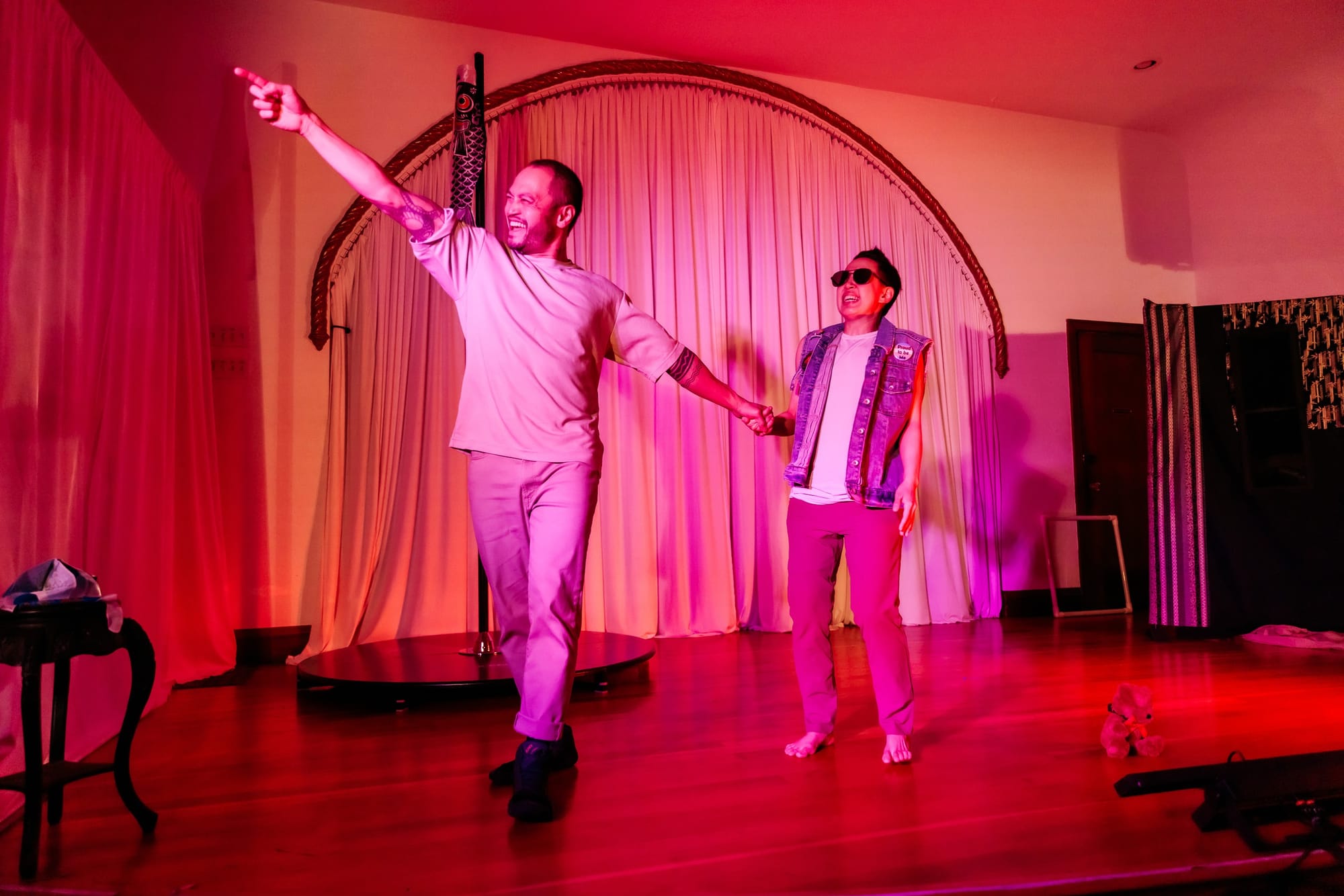
The show opens in near silence. A flashlight glows against a dark red wash as the audience holds its breath during a stylized birth. Brief flashes of a father’s worried face alternate with a baby’s expression of wonder and fear. When the lights rise, the scene reveals a child’s bedroom. The child stands alone, a tutu looped around his neck, studying himself with confusion. The father enters and gently shows his child how to wear the tutu properly, watching with pride as his kid dances with the delicate precision of a ballerina. The moment is fleeting. The child’s smile falters, and the tutu is handed back to a suddenly uncertain father.
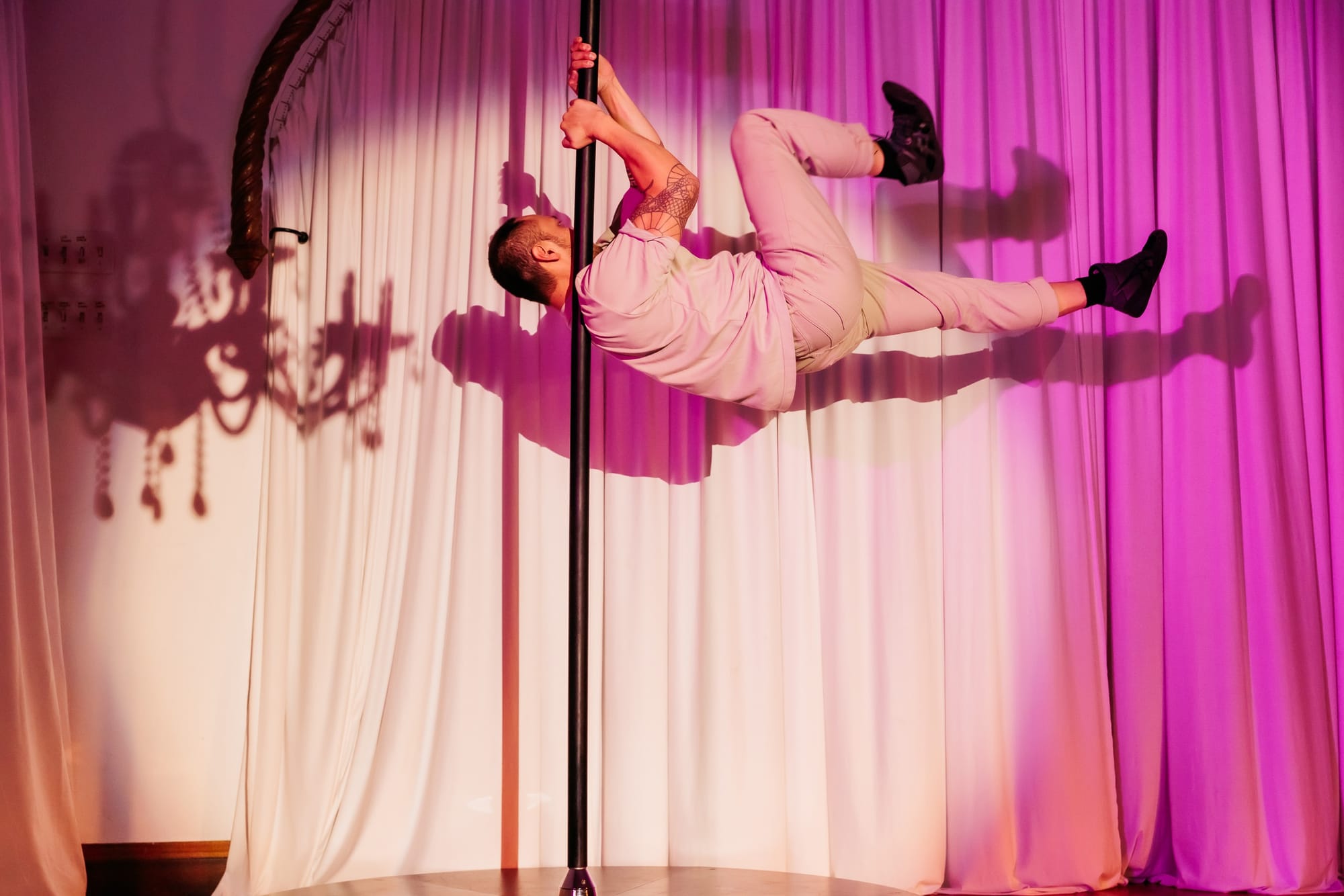
Endo’s performance charts an elegant and emotionally precise transformation from tutu wearing child to rebellious teenager. Through speed, physical control and expressive movement, he embodies a young person yearning to belong and to be recognized as a boy. His playful energy serves as a sharp contrast to Roxas’ father figure, who is by turns bemused, frustrated and unyielding. On the acro pole, Roxas displays a grounded strength and restraint that mirrors the character’s emotional journey. He meets his child first with anger, then with love, attempting to pass on his understanding of masculinity in the only ways he knows.
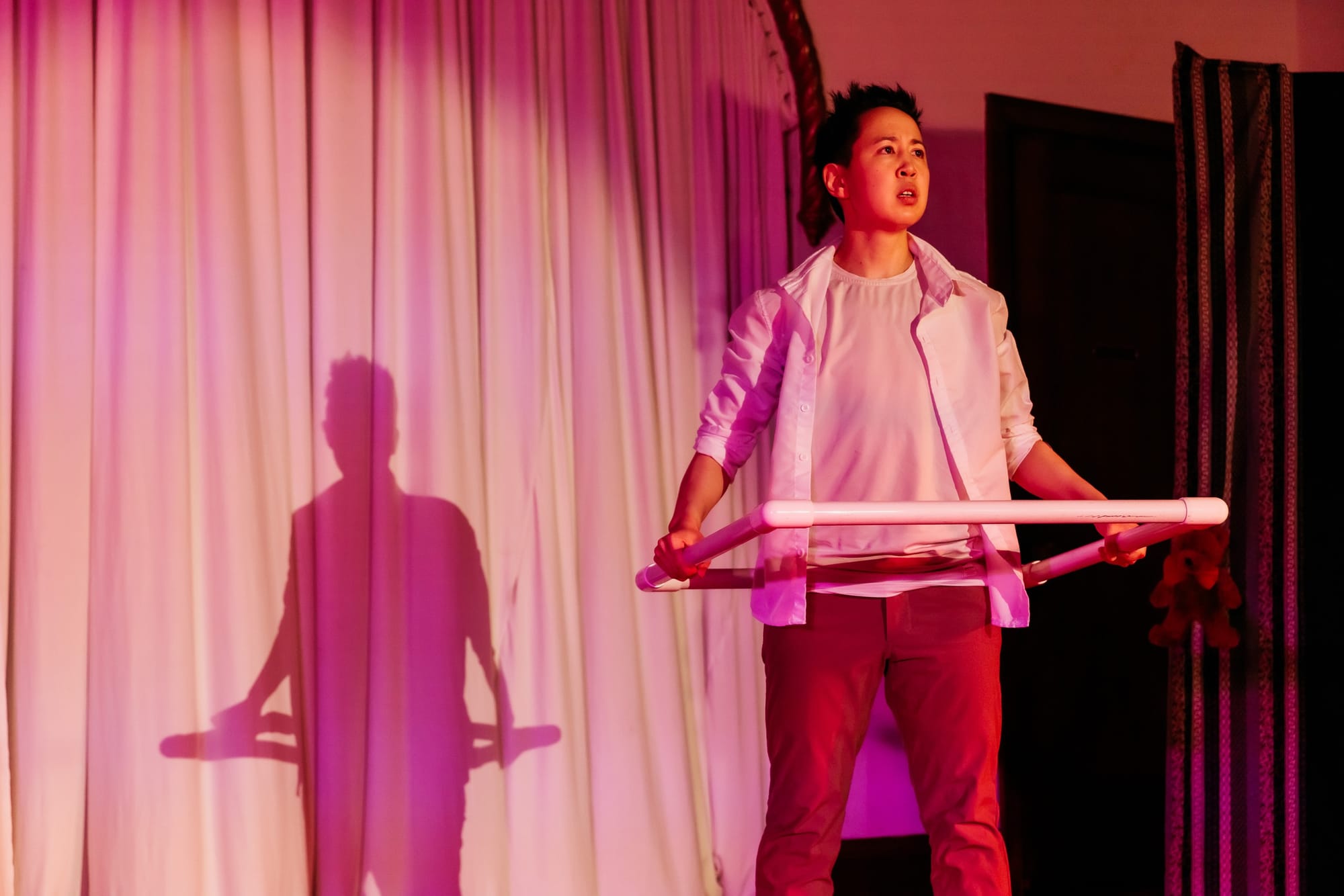
The title “Box [M]” refers to the limited gender options found on official forms such as passports, where one is often required to select either [F] or [M] in order to access health care or benefits. For trans people, these boxes can carry an unnecessary and profound burden. The performance conveyed this tension entirely through movement and intention. No words were spoken, yet Endo and Roxas made visible the weight of societal expectations pressing against personal identity.
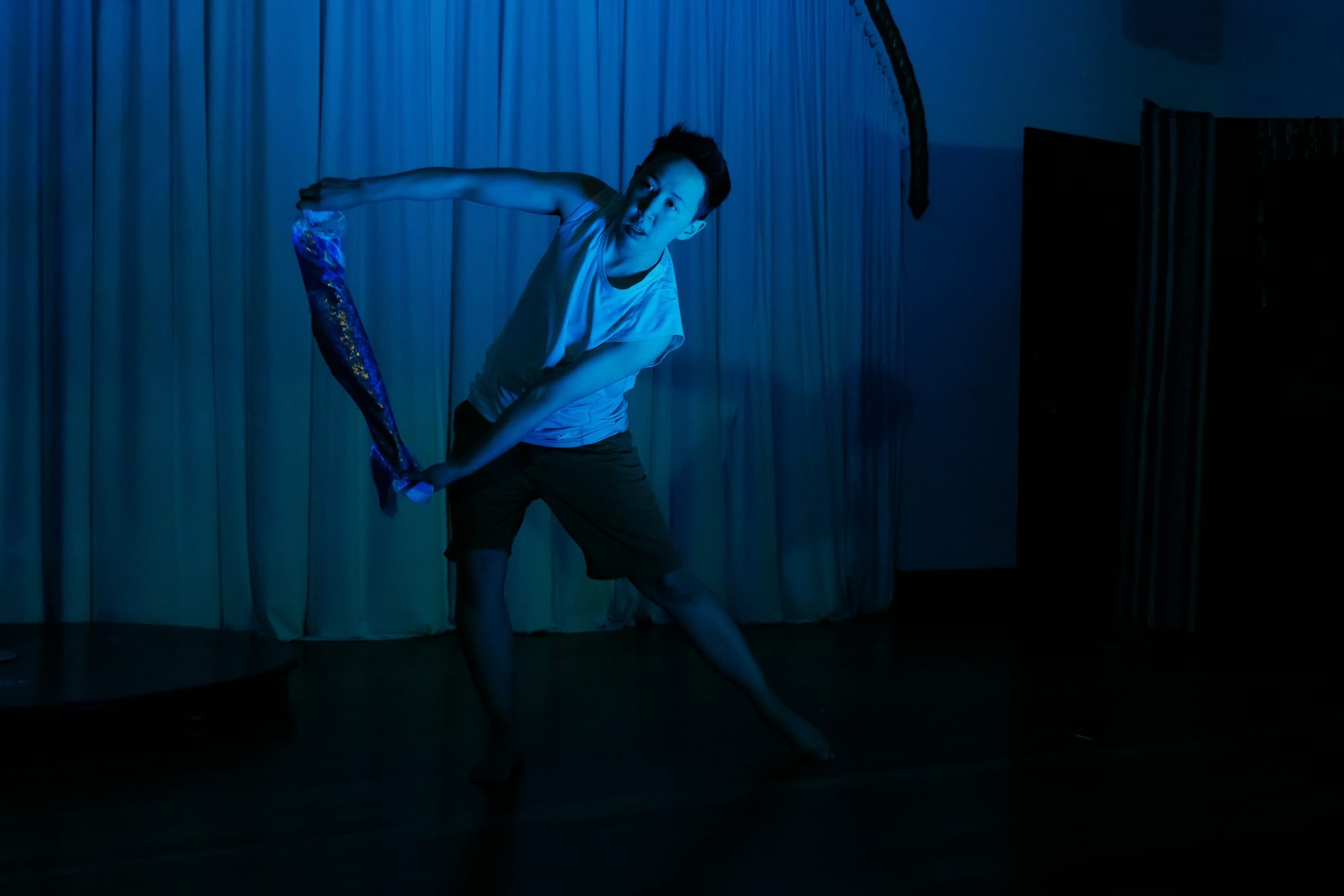
Throughout the performance, two symbolic objects recurred. A mirror is used by both father and son as a tool for deflection, distraction, enchantment and denial. A carp flag also figures prominently: atop the pole hangs a large black carp flag, referencing the Japanese tradition of Boys Day, when families raise carp streamers to honor their sons. The son repeatedly waves a smaller blue carp flag toward his father, hoping to add his own to the display. Each attempt is refused. This detail resonated personally, as Endo’s own family practiced this tradition during his childhood.
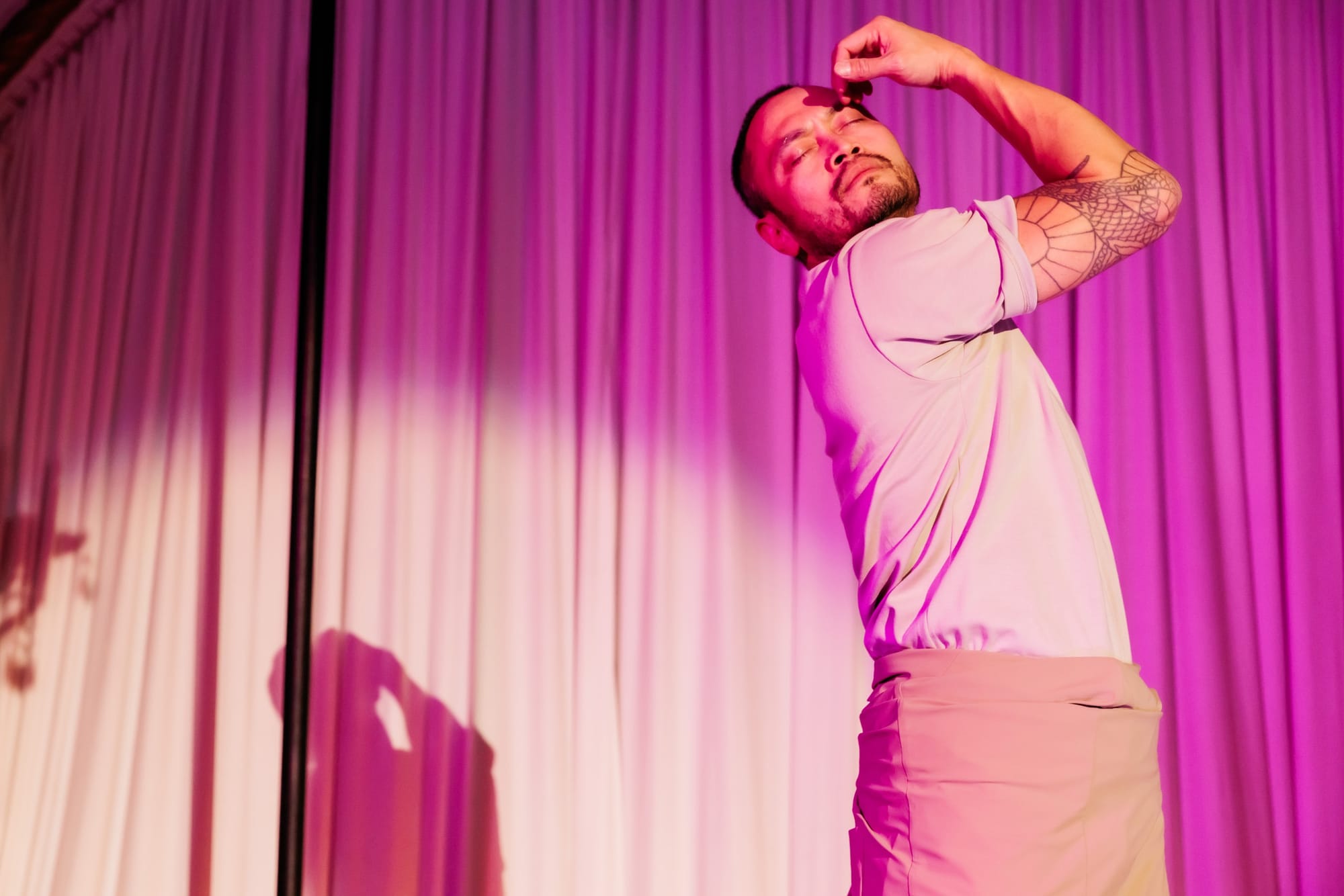
Directed by Genie Cartier, “Box [M]” is a finely crafted work that thoughtfully weaves together trans experience and Asian immigrant identity. The storytelling is assured, the physical execution masterful and the soundtrack especially effective.
I wished for stronger lighting to highlight the actors’ emotions, and the stage itself at Spire did create some problematic moments with the performers legs getting caught in the curtains. Despite these shortcomings, the piece concluded on a powerful note both musically and physically, leaving the audience with a sense of earned hope. While family and society can be complicated and many layered, “Box [M]” reminds us that love can still find its way forward when those involved are willing to meet one another with openness and care.


