
Passages
Susan Clinard and Fethi Meghelli
Creative Arts Workshop
New Haven
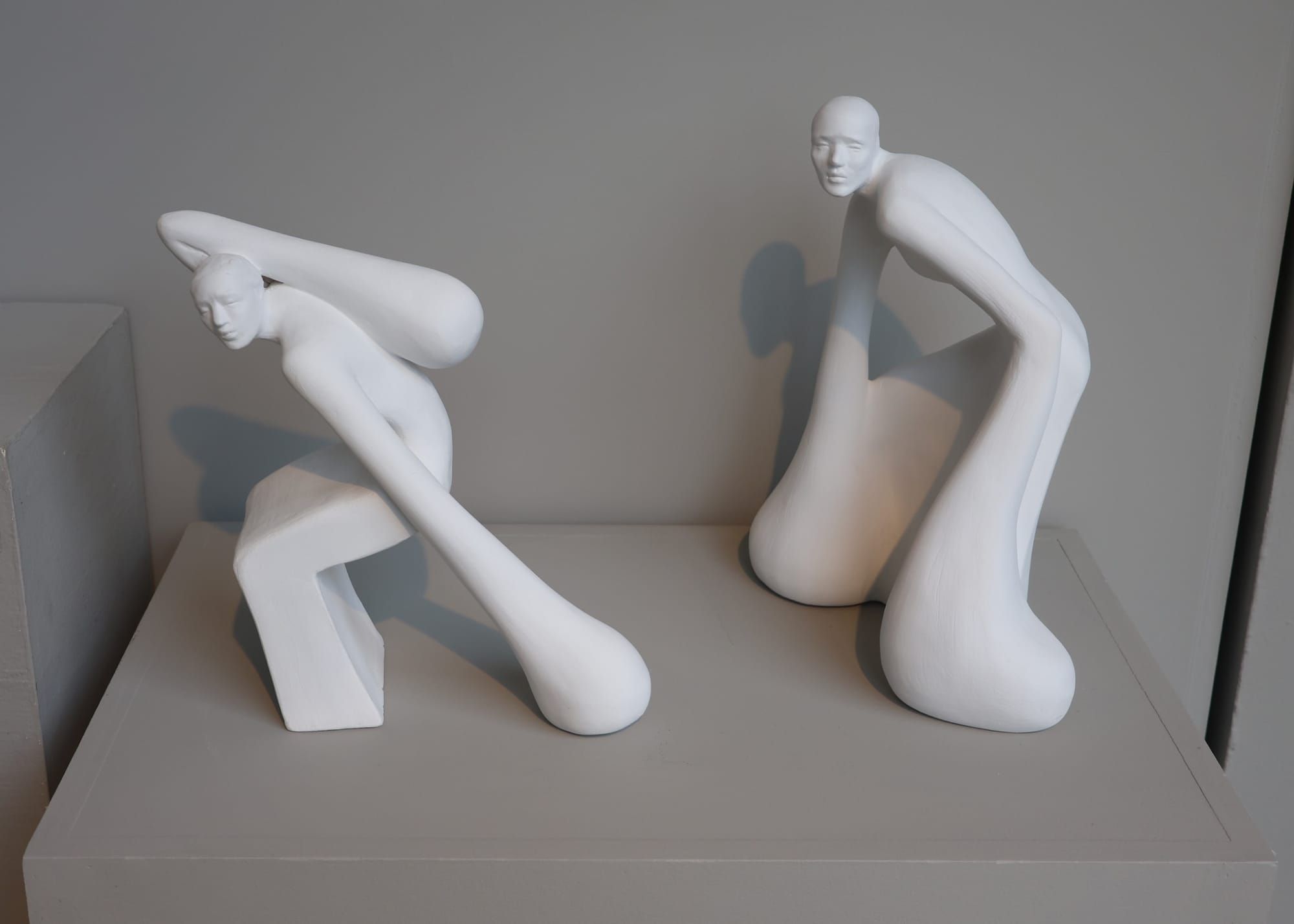
The two figures are mostly abstract, featureless, defined by their overall shapes. Their limbs connote heaviness—concrete blocks, bags of water or sand—that both bodies labor to move. We know how they feel about it from the complexity of the emotions on their faces. They are tired. They are, perhaps, on the verge of tears. But there is hope and strength in their eyes, too. They're not lying down, succumbing to their burdens. They will carry them as long as they can. Or maybe they'll learn to lighten them.
The sculptures, part of a series called The Weight We Carry, were inspired by "the theory of epigenetics and intergenerational trauma, which suggests that the effects of trauma can be passed down through changes in the way our genes function," writes sculptor Susan Clinard. "I was moved by the idea that we may carry a biological trace of our ancestors' pain—a concept that connects us, deepens empathy, and points toward collective healing. As a sculptor, I began to imagine what the human psyche might look like if made visible. What would it mean to pull, lift, or drag the weight of past and present injuries? The forms in this series suggest the emotional burdens we carry throughout our lives—yet also something that can be moved, reshaped, and slowly healed over time."
The pieces are part of Passages, an exhibition of work by artists Susan Clinard and Fethi Meghelli. "Bringing together sculpture and mixed media, Passages explores themes of displacement, memory, and material transformation through a deeply human and resonant visual language," an accompanying note states. "Both artists engage the emotional complexities of movement across borders, histories, and inner landscapes.... Strength and vulnerability, pain and joy, hope and sorrow come together in memorable experiences of a shared humanity that tug at one's heart and point to the complicated essence of what it means to be alive."
The note relates that when Clinard and Meghelli met in 2008, Clinard found "an immediate and visceral connection between our work." They made a deal then to do a dual exhibition one day; that day has arrived.
"Looking beyond individual experience, Clinard and Meghelli engage shared histories and collective narratives, seeking connection rather than division," the note continues. "Their work stands in quiet resistance to contemporary currents of fear and separation, offering instead a vision rooted in empathy, continuity, and human resilience."
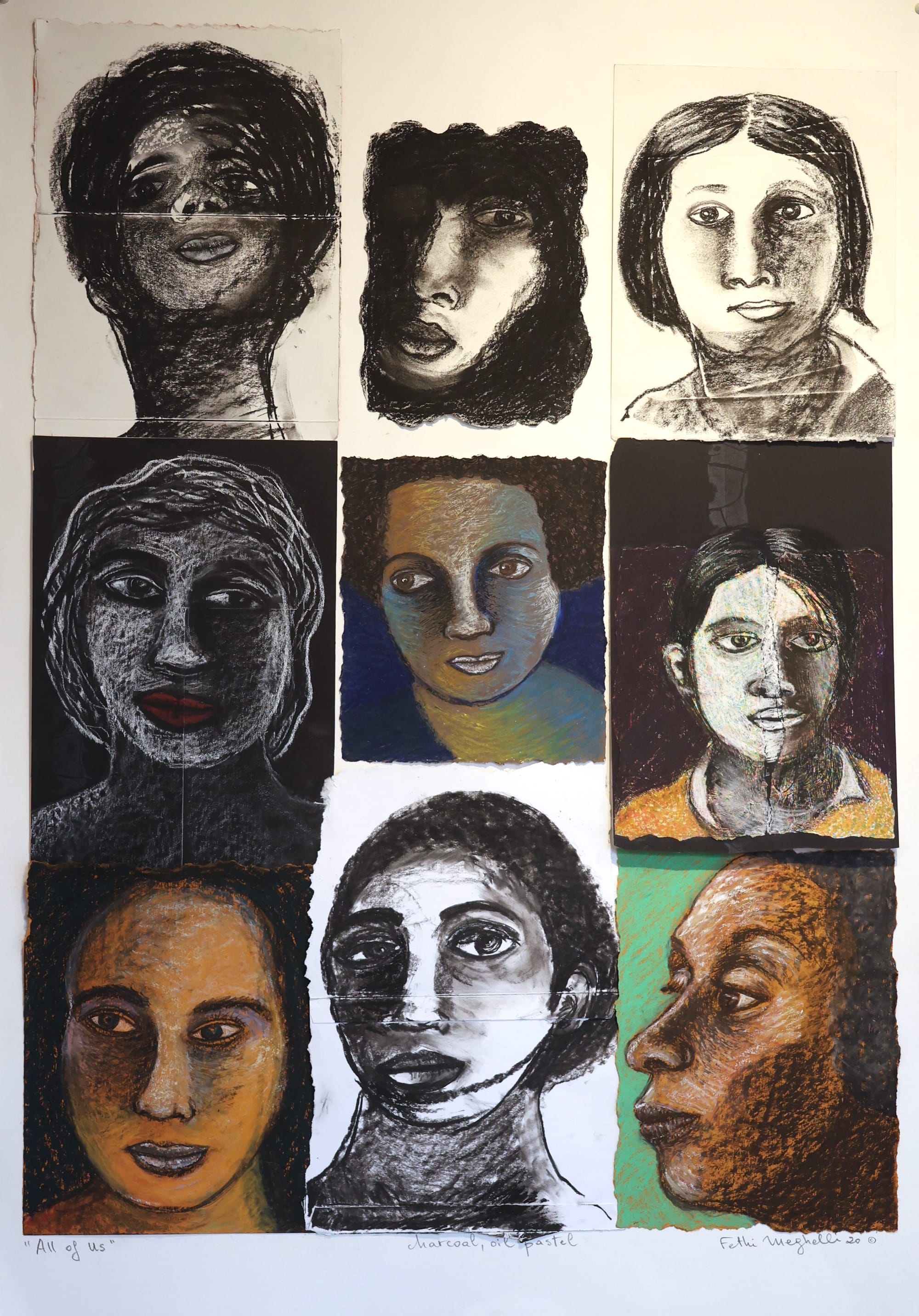
Meghelli's work exudes a sense of togetherness even as the tone varies sharply from piece to piece. All of Us, a series of portraits, has a warmth suggesting that all the people in the piece could be family or friends, people with a lot of fondness for one another.
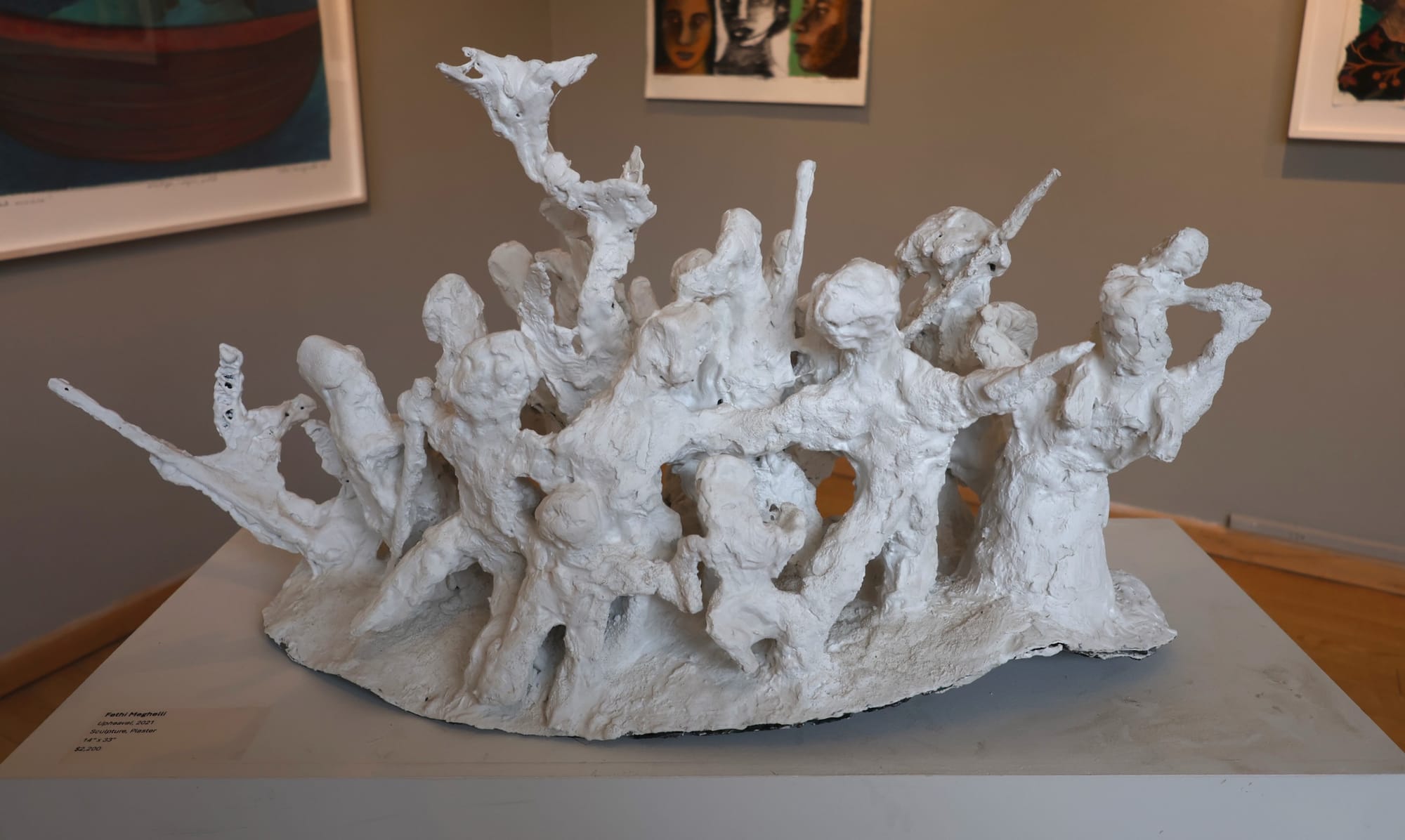
Where All of Us is calm and reassuring, the sculpture Upheaval connotes movement and perhaps violence. But in the malleability of its figures, who seem to change form before the viewer's eyes, there is also the possibility for revolution, a feeling of collective action.
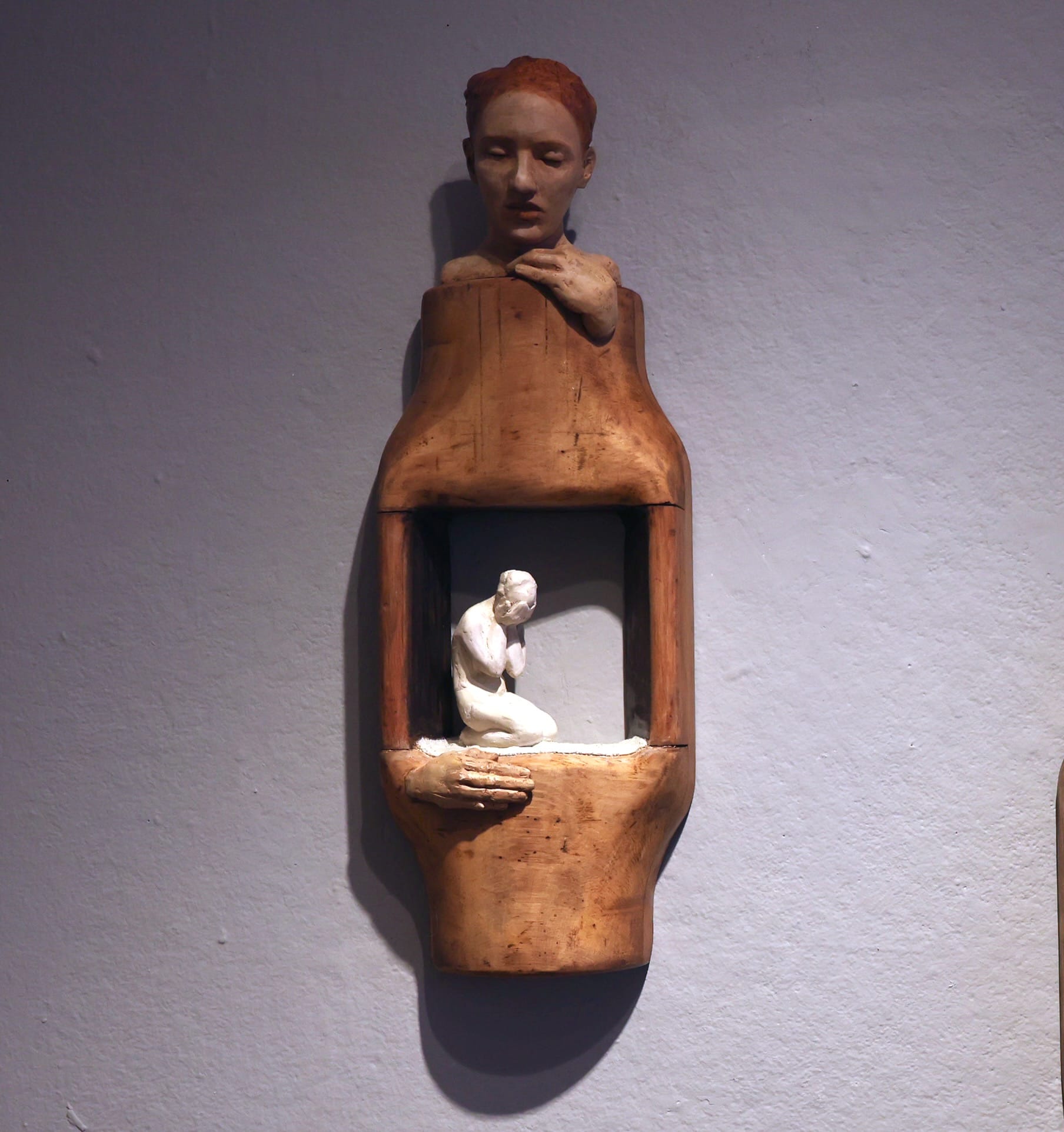
Clinard, meanwhile, has a rare gift for making external what is internal. She pulls emotion out of her pieces, which in turn pulls emotion out of us. In The Spaces We Hold, the weeping figure within is powerful enough, thanks to Clinard's deft work with gesture. But its juxtaposition with the external face—we now know that it's a face trying to keep its composure—is what makes it heartbreaking. We see that the figure is nurturing the crying creature within, and also, perhaps, doesn't yet know how to let it out.
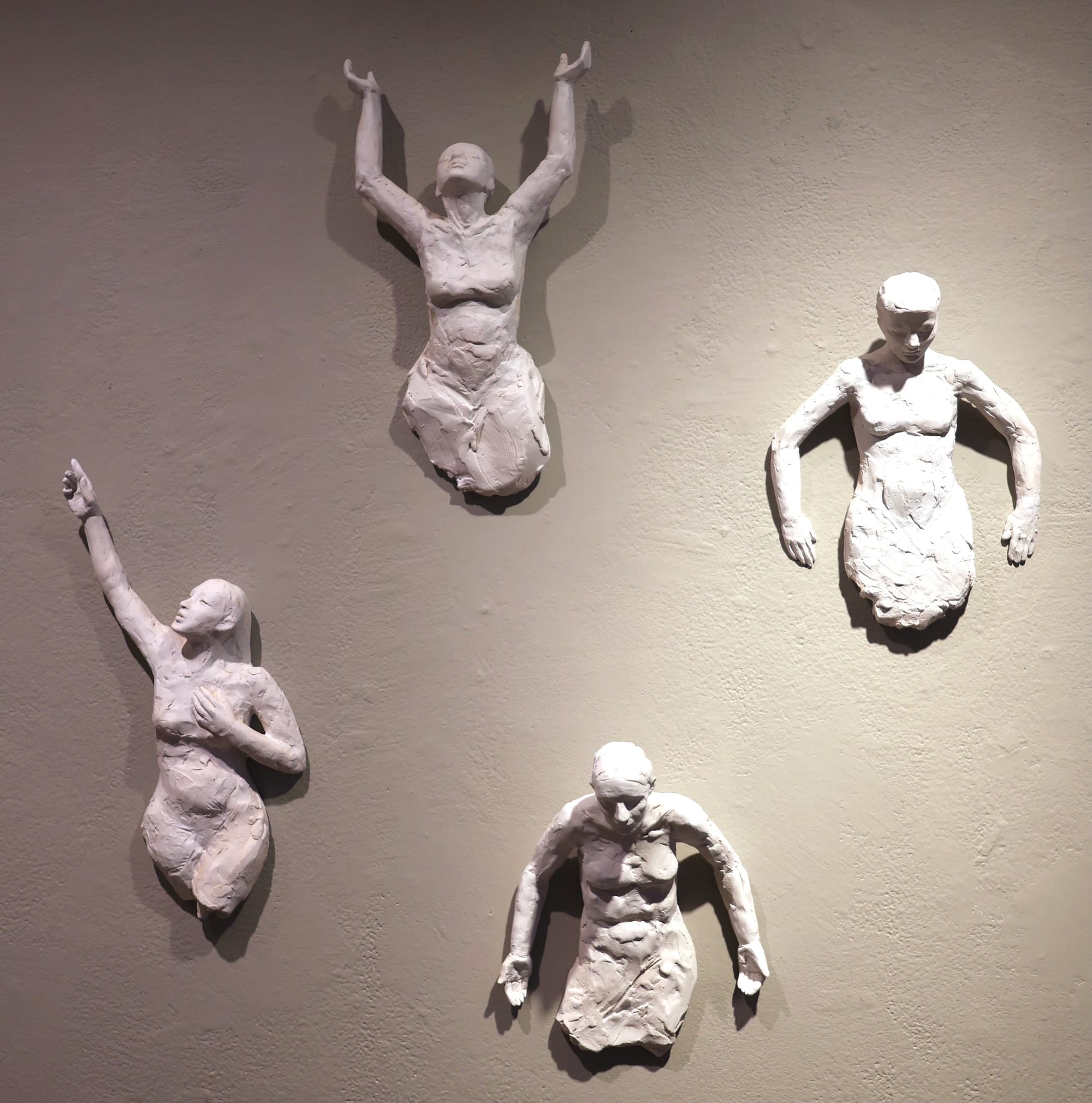
Just as relatable are the figures in Peace of Mind. Where The Weight We Carry and The Spaces We Hold had Clinard showing us heaviness, the figures in Peace of Mind are letting go of their burdens, gathering strength. They seem ready to take flight, or perhaps not even need to; they could just become weightless instead.
Clinard's and Meghelli's work is united by its insistence on deep empathy, for ourselves and those around us. It seems simple enough. But we have lived in a time of political upheaval and an overheated news cycle for several years. A lot of art about that upheaval has been overtly political, or busily complex, mirroring that upheaval, trying to keep pace with it. We might imagine that radical action looks like that: sharp, swift, decisive. But in the gallery of Creative Arts Workshop, Clinard's and Meghelli's art—asking us to slow down, to notice, to take a deep breath and feel—can feel like the most radical move of all.


