Ionne
Lost in New Haven
New Haven
Jan. 24, 2026
“But how can we enjoy the sun/ Iff the twilight never comes,” Ionne (née Maurice L. Harris) sang over the buoyant reggae groove of “The Neverending Sun,” an ode to the agonizing truism that there is no light without darkness.
As the New Haven-based singer’s rich voice weaved between hypnotic electronic beats, the controversial statue of Christopher Columbus stood stage left, seeming to look askance at him.
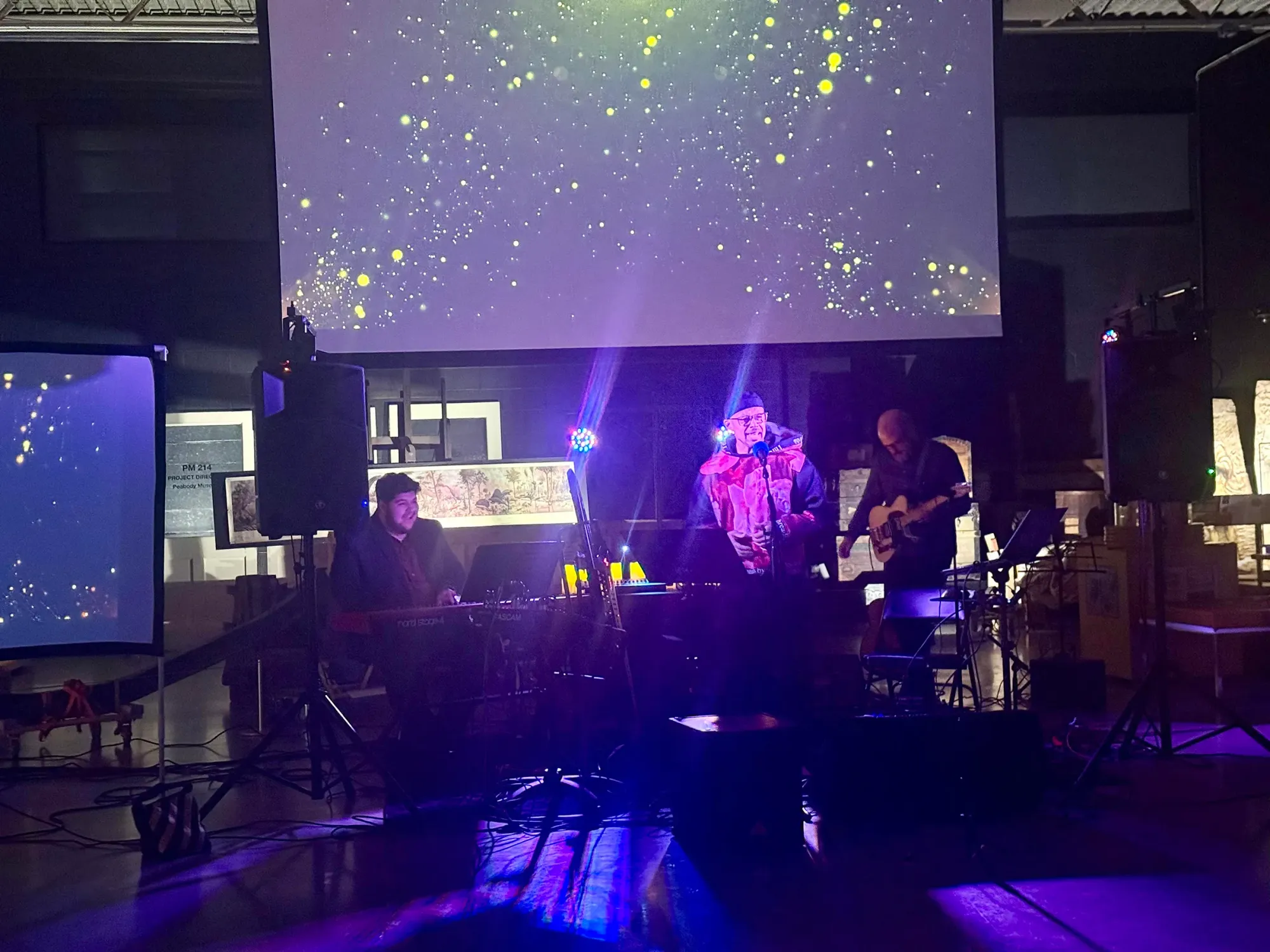
That was the scene Saturday evening at the remarkable museum Lost in New Haven, which played host to the electronic artist. Ionne staged a three-part extravaganza to a full house on a bone chilling night, a testament to the city’s desire for a unique experience. The show featured intermittently punchy and silky synth-driven soundscapes, set to the backdrop of meticulously designed AI-animated videos. It took place amid the compendium of New Haven’s artifacts, the past hearkening to the future.
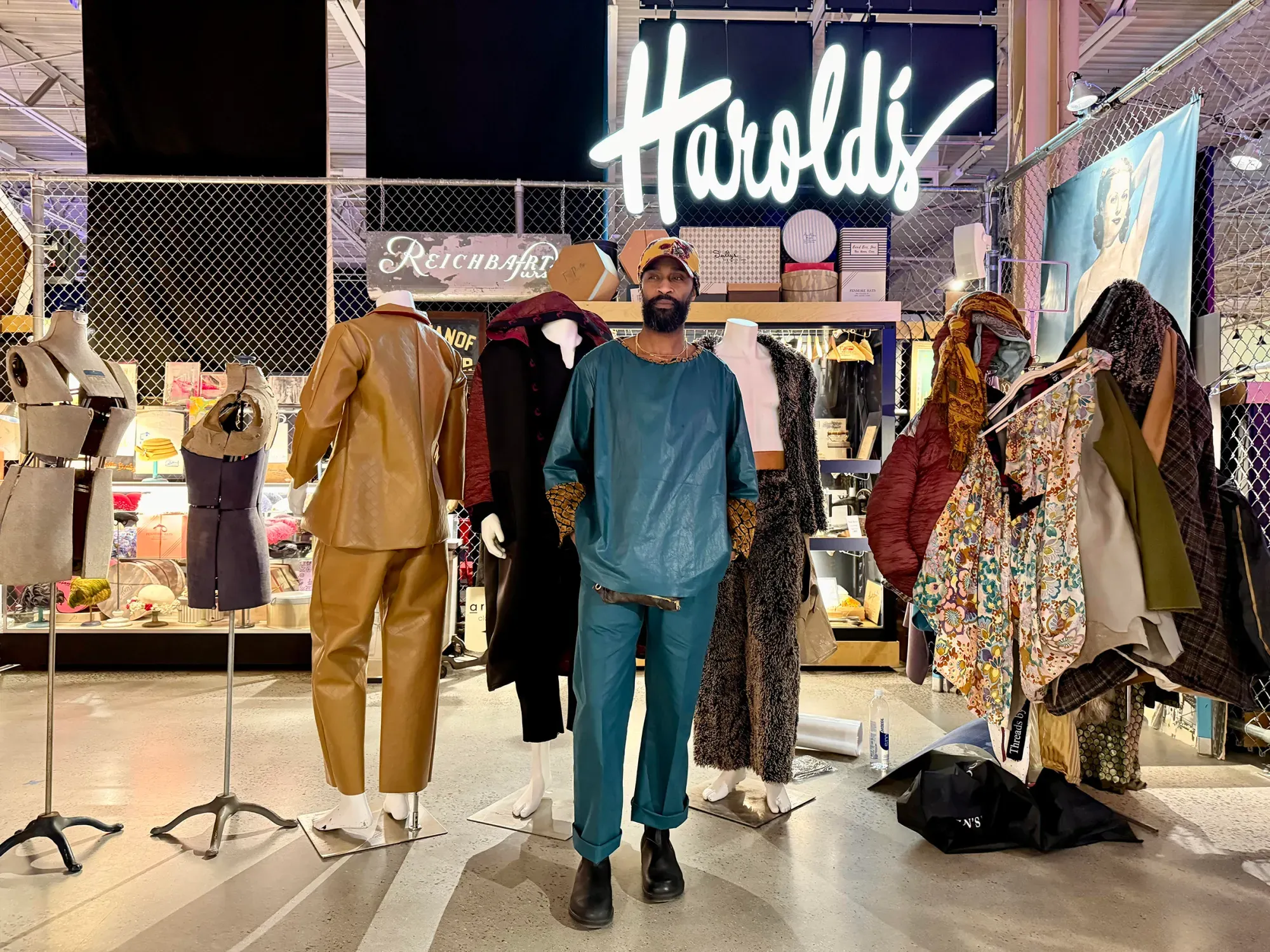
The “excital” (a portmanteau of exhibition and recital) presented stories of “identity and agency,” with lyrics of insight into the human condition from Ionne’s introspective albums Pathos and A Light Untruth. Pathos is an ancient Greek rhetorical device that appeals to an audience’s emotions. Ionne’s captive audience could certainly see the pulsing heart on his sleeve. Each song represented the different emotional themes of pride, envy, imposter syndrome, patience and acceptance. These themes were also reflected in the colors of red, green, blue, earth tones and black that creative entrepreneur Tea Montgomery chose for the bespoke clothing that was in his summer fashion experience. (The word “show” doesn’t suffice.) Pathos, the name of both Ionne’s album and Montgomery’s multi-sensory presentation, came about when Montgomery asked Ionne to make a soundtrack for the event.
“Pathos is the second part of a series, an introspective view into the traits and characteristics that form who we are, how we present to the world, and where our power lies,” shared Montgomery. “It is about that journey of how we overcome those emotions, and how we act and react when people project those emotions onto us.” Lost in New Haven exhibited a few of Montgomery’s boundary-pushing pieces from Pathos in tandem with the show. A taupe suit was notably made with upcycled car seat leather. His favorite piece, a warm-gray, shawl-collared fur suit, was particularly stunning.
During the show, Ionne opened every song with original poetry, in what he referred to as “song cycles” or a collection of songs that are all linked together by a central theme. Austrian composer Franz Schubert was known for his emotionally fraught song cycles that covered themes of love and despair, and Ionne channeled these age-old emotions. His lyrics, often framed as personal revelations, ultimately gesture outward, touching on collective anxieties around belonging, visibility, and self-worth. Ionne sang of shining in his full glory, defeating monsters, saving souls, love and destiny, and the patience to endure – big themes belted over inventive beats sometimes accompanied by agile piano lines and nimble guitar work. The AI-generated projections paired with the songs mirrored the themes; in the video for imposter syndrome, models wore white masks that broke apart, piece by piece.
For Ionne, his performance lived comfortably amongst the abundant history featured at Lost in New Haven.
“The focus on New Haven history and creativity is really what drew me to this space. Yes, there’s some Benedict Arnold artifacts here but there is also a mix of old and contemporary history.” Robert S. Greenberg, founder of Lost in New Haven, named it so because visitors always get lost in the “magnificence of it all” when they see his collection. It’s an immersive experience of New Haven, where people get to learn about the different denizens who make up their community
Alongside sepia-toned photographs of New Haven’s settlers sat avant-garde pottery from Yale University Art Gallery. Signs for some of New Haven’s long-gone companies like toy manufacturer A.C. Gilbert were displayed not too far from the original signs for the famed, still-thriving music venue Toad’s Place. At the center of it all was The Anchor’s original wooden bar, touched by the likes of Lucille Ball. History here was not fixed or triumphant, but layered and unresolved, much like the emotional terrain Ionne explored in his songs.
The juxtaposition of emerging technology with storied, physical artifacts underscored the idea that identity – personal or civic – is constantly being renegotiated, though always vital. Just as New Haven continues to redefine itself through waves of industry, culture, and creativity, Ionne’s work insists on identity as something earned but continually examined.
What would the real Columbus have made of Ionne’s resonant voice and his technology-driven installation? According to historian Colin M. Caplan, founder of A Taste of New Haven, “Columbus isn’t orchestrating. He’s not standing over. He’s absorbing. He’s a sponge now. We’re forcing him to take in all the culture of our day.”
At the end of the night, the Columbus statue was no longer a looming symbol of supremacy, but rather an artifact undergoing quiet transformation. No longer centered, it simply existed alongside a powerful voice, evocative stories, and innovations of the present. Ionne’s performance insisted that the future is built not by denying the past, but by daring to create in its shadow.
To learn more about Lost in New Haven, visit their website. For more on musical artist Ionne, click here.