
Current
Kehler Liddell Gallery
Through Feb. 1
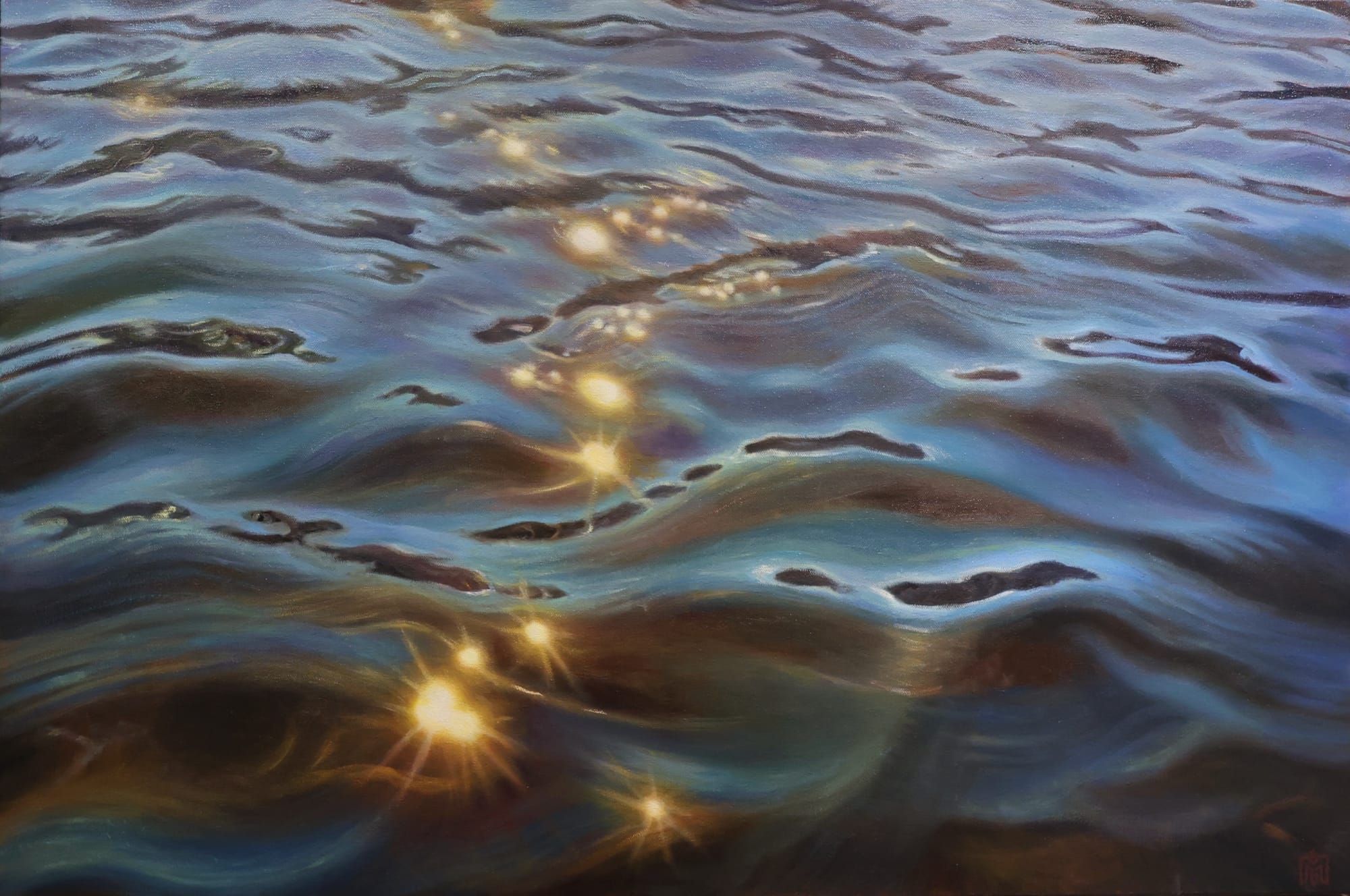
Melissa Imossi's Light Dance is a portrait of water — off the shore of a lake, maybe — that you can almost hear, the lapping of small waves. But it's also one of those photos that capture just the right moment when a chain of reflected suns is thrown across the water's surface, something like a constellation of stars in the night sky. The photo contains energy and placidity, heat and coolness.
This duality exemplifies "Current," the large group show running at Kehler Liddell Gallery in Westville through Feb. 1, which plays with several meanings to weave together a cohesive whole.
The call to artists for the juried show began with a prompt, based on the multiple definitions of the word current: "belonging to the present time; happening or being used or done now, actively moving in a recognizable stream or direction, either figurately or literally. Today’s art scene is dynamic, multifaceted, and heavily influenced by technology, social issues, and global interconnectedness leading to a wide variety of definitions and approaches. As a creator, how do you define current?" Dozens of artists answered the prompt, leading to the sprawling show featuring 20 gallery members and 49 more guest artists, encompassing painting, photography, and sculpture and bound together by a common sense of motion.
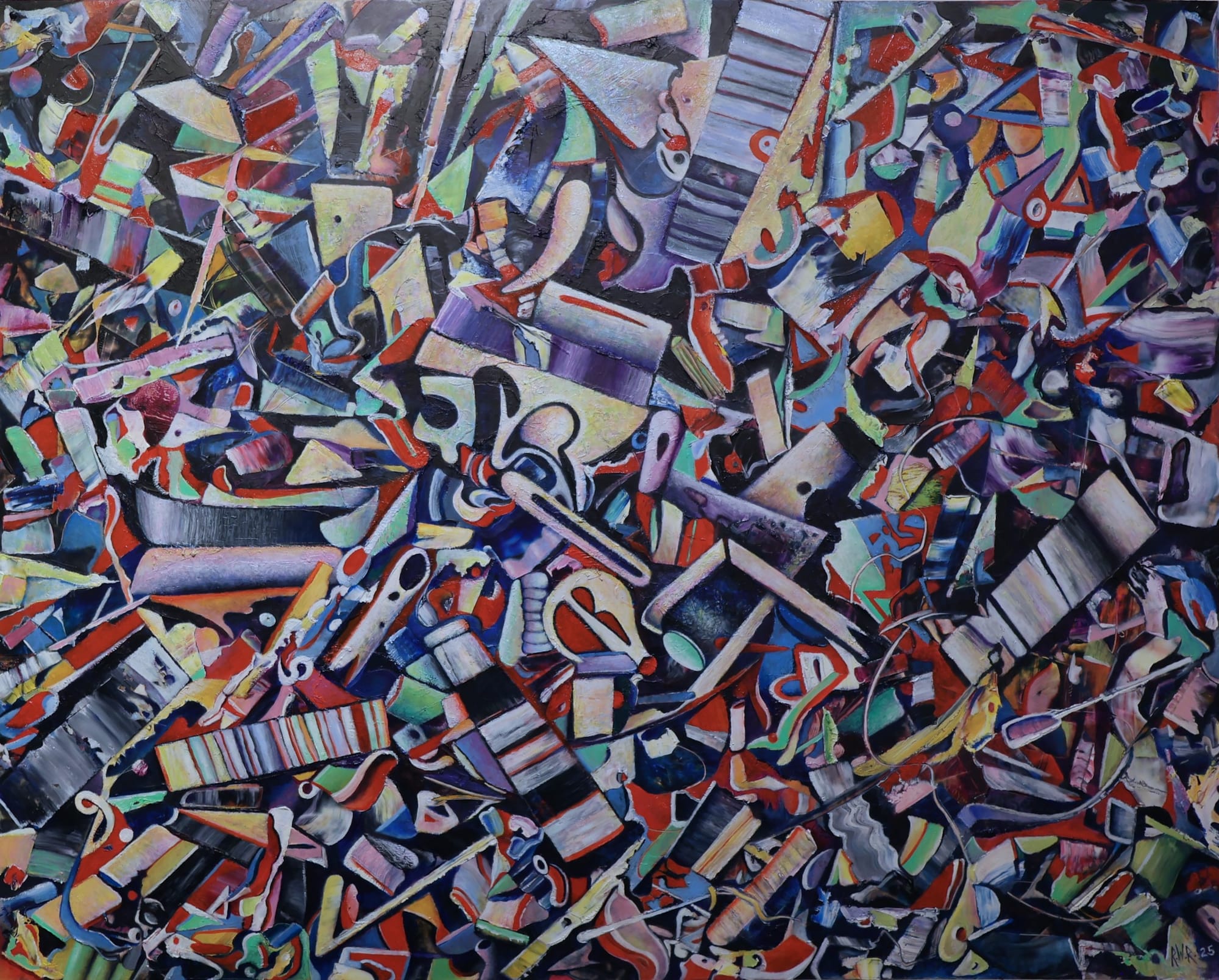
The shimmering, shifting shapes in R. Wayne Reynolds's Quantum Chaos connect directly to the idea of current as something electric, in buzzing motion. It's easy to imagine this painting as animated, the shapes swarming around each other as they change form. Other abstract pieces in the show have a similar approach. Sam Panthauer's painting Frenetic Energy Labyrinth couldn't be more aptly named, as its lines and colors seem to swirl around one another even as they follow chosen paths. Kate Henderson's Electric Current could be a photograph of a riot of soap bubbles, if those bubbles were on acid and stirred up into buzzing action. Likewise, Bess Gonglewski's wire sculpture Untitled (two songs) escapes its own frame. The way the wires weave across the surface beneath them connotes swiftness; it's no surprise that, when they reach the edge and continue into open space, they zig, zag, and curl back on one another.
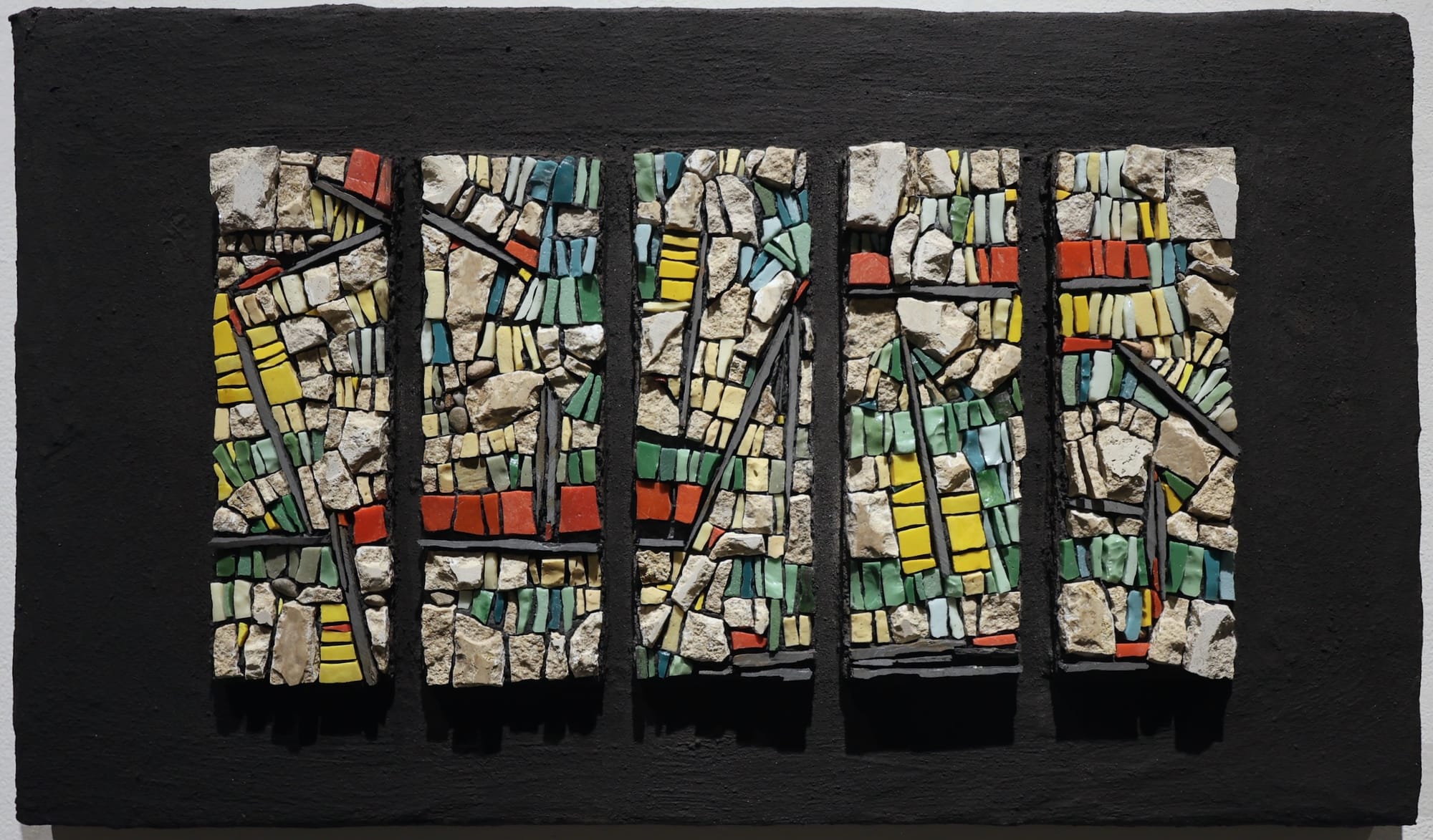
Several of the pieces find their energy from the textures they create. Tom Edwards's Tempest 2 (Troubled Waters) depicts a storm-wracked sea, but the tossing vertigo is accomplished through deftly executed lines and shade that exchange realism for a heightened sense of the storm's power. Bridey McGlynn's abstract Two Figures works in earth tones with dashes of sky blue, but the brushstrokes still buzz with the movement the brush must have made to create them. And Beth Klinger's Equilibrium suggests not static stone tablets, but a collection of pieces held together perhaps only for the time being. Maybe they will recombine, or fly apart and come back together.
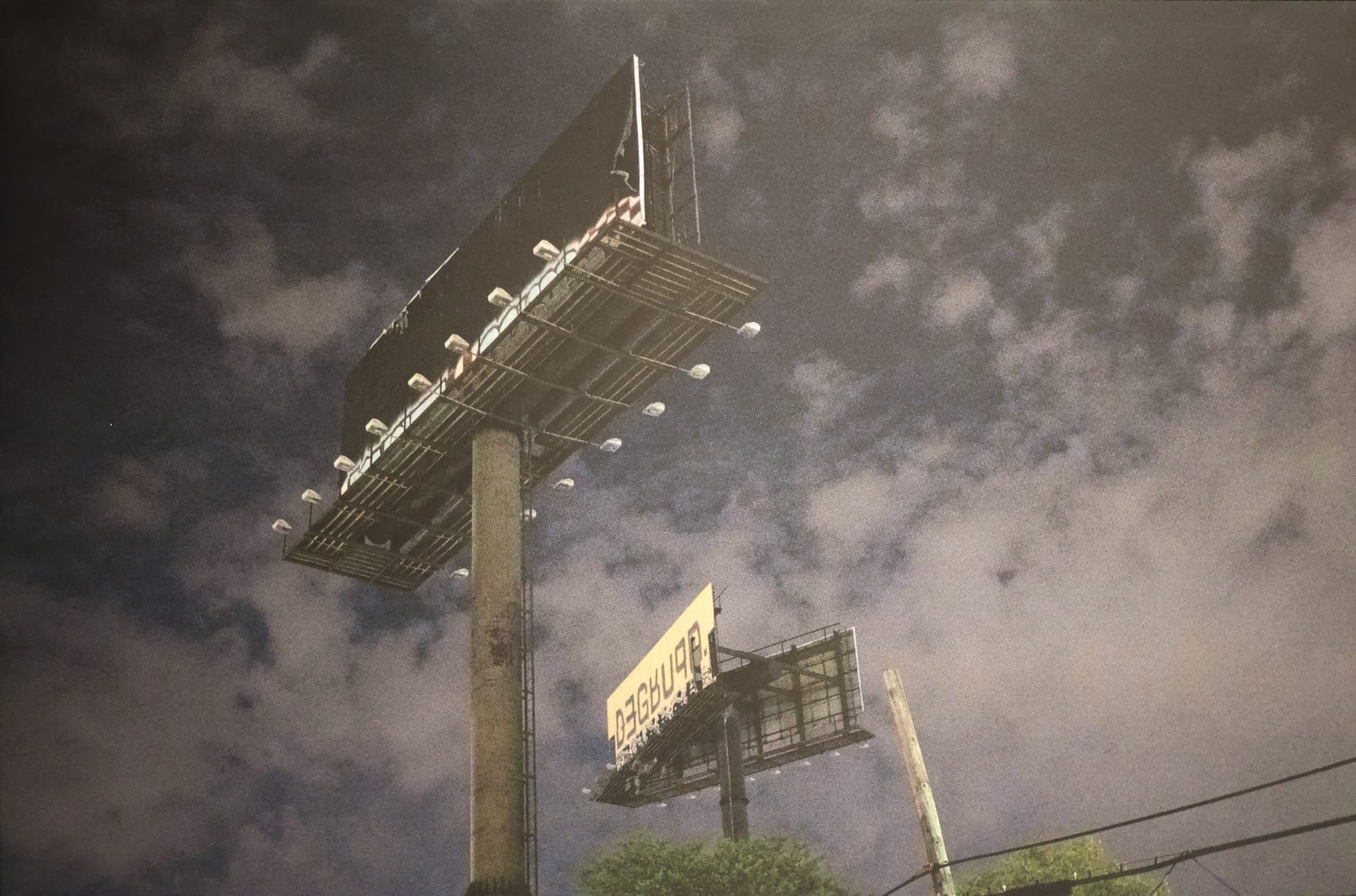
Of course, several of the artists in the exhibition use the prompt to get at something more literal. Chris Ferguson's Lavender Farm Killingworth and Frank Bruckmann's Vermont Stream are deftly painted, sunny, and evocative landscapes of their respective subjects, the streams moving through them in grand New England style. Eric March's pointed painting Migrants depicts a Latino family knee-deep in a river, fording it, in the manner of countless photographs of families crossing the Rio Grande, excepting one element: the father figure in the family is carrying a very large White man in his underwear, as though he's a baby. But something in the seething rhythms of Regan Avery's Everything Must Go gets at the idea of a current as directly as anything else in the show. The darkened billboards float above us, menacing and vulnerable at the same time. The current in Avery's image feels like the coiled lightning in the sky, gathering its energy to strike.


