
Pronounced Ah-Beetz
New Haven Museum
New Haven
Through Oct. 2027
Photographs of row after row of pizza pies. The faces and names of pizzerias, and pizza makers, past and present. A pack of soda bottles in a crate, and a cryptic green phone with a sticker on it, asking if the viewer knows the secret number. All this and more are in celebration of apizza, the "thin, chewy, crispy and often charred crusted pizza common in and around New Haven, Connecticut," as it's defined in "Pronounced Ah-Beetz," a show about the history of New Haven's pizza culture running at the New Haven Museum.
Co-curated by Jason Bischoff-Wurstle, the museum's director of photo archives, and Gorman Bechard, Dean Falcone, and Colin M. Caplan, the producers of the documentary Pizza: A Love Story, the museum show offers a brief yet thorough education in how apizza came to New Haven and became part of the city's culture. It's also a lens to view how the city of immigrants continues to change since its heyday as an Italian-American enclave a few generations ago.
The show begins with the word itself, apizza, which "was brought here by the Southern Italian immigrants who spoke the Neapolitan language over 100 years ago and is the translation of la pizza in modern Italian." Pizza's murky origins, in continues, "date back over 2000 years to the Mediterranean region, where the tradition of making flatbreads topped with meats, vegetables, fruits, or fish were enjoyed by many cultures," an accompanying note states. "The word pizza is believed to be derived from either the Greek word pita or from the Latin word picea, both different types of flatbreads. However, what we know and love as pizza today was first created during the 18th century in the region of Naples, Italy, with the help of some important global influences."
It reminds us that a certain fruit we think of as essential to Italian cooking is actually a relatively recent arrival to European cuisine. "After the introduction of the first tomatoes to Italy from Peru in the mid 1500s, it took another two centuries in Naples and the surrounding region before tomato sauce and pasta became unified into a dish, followed soon by its application to pizza," the exhibit explains. "Early pizzaioli," or pizza makers, "in Naples sold triangular slices of pizza right off tables that lined the street. They were made at shops called pizzerias, topped with garlic, fish, lard, olive oil, and tomatoes. Pizzas ranged in size and cost but they quickly became a popular dish for peasants, students, and even royalty. Italy's Queen Margherita was documented eating pizza as early as 1880, during this same period that waves of Italian immigrants began to arrive in America along with each family's pizza recipe." The first pizza for sale in New Haven was from Italian immigrant "Natale Acunto, who was making pizza in Bristol in 1908. However, ongoing research indicates that Acunto likely made pizza at his bread bakery in New Haven as early as 1891."
The exhibition is full of apizza and related ephemera that offer quick delights and place the New Haven apizza culture in its context, whether it's a corner about the origins of Foxon Park soda or panels about the connection between pizza and beer, from Prohibition to the age of microbreweries we live in now. It has the hat Frank Pepe wore in the 1940s, with his name embroidered on it, and the cash register Pepe's had in the 1950s. It has part of a pizza box from Pepe's from 1936 "that is believed to be the oldest pizza box in the world," as well as an array of boxes from apizza joints from all over the area. It has replicas of the original Sally's menu and the green phone on the end of the place's fabled secret phone line. It has a thoroughly charred oven peel that was in service at Modern up until 2020. And it has a sign from Bar advertising alternative music on Wednesdays, which it stopped doing years ago.
The show centers, as it should, around the Big Three. Francesco "Frank" Pepe and his wife, Filomena Pepe, opened Frank Pepe Pizzeria Napoletana in 1925, "in a one-room brick building with a massive coke-fired bread oven. While originally intending to only bake pizza on weekends, the simple bread product with tomatoes and grated cheese quickly outpaced bread sales and became the focus of his business," the exhibition relates. "Pepe and his family made 12-inch pizzas that sold for five cents each. They were sliced by a knife, placed on a flat piece of cardboard, wrapped in paper and tied with a string. He sold them along Wooster Street from a large pan carried on his head and transported his pizzas to produce markets and factories by horse-drawn cart."
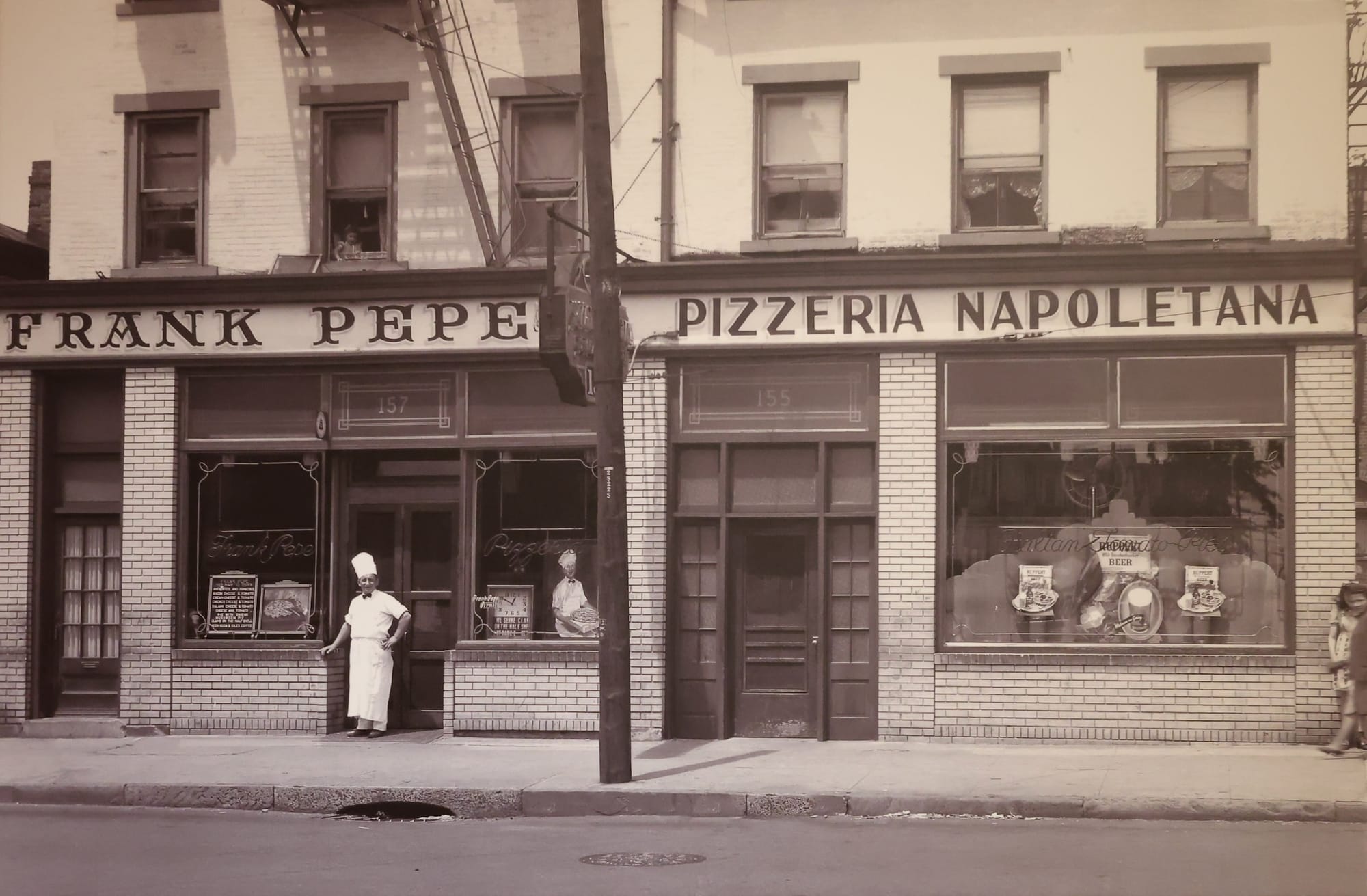
By 1930, however, the family added seating to the bakery, and in 1936 "purchased and renovated a former meat market and grocery store" nearby "into the largest pizzeria in the United States at the time."
By 1938, when Salvatore "Sally" Consiglio opened Sally's Apizza, "pizzerias were developing across New Haven," the show notes. "Sally, who at the age of nine started working for his uncle Frank Pepe, had extensive experience making pizza." His storefront "had previously been a bakery and pizzeria, complete with the signature 10×10 foot coke-fired oven that is still in use today. Sally's Apizza served lunchtime and dinner crowds as well as made pizza deliveries to local factories."
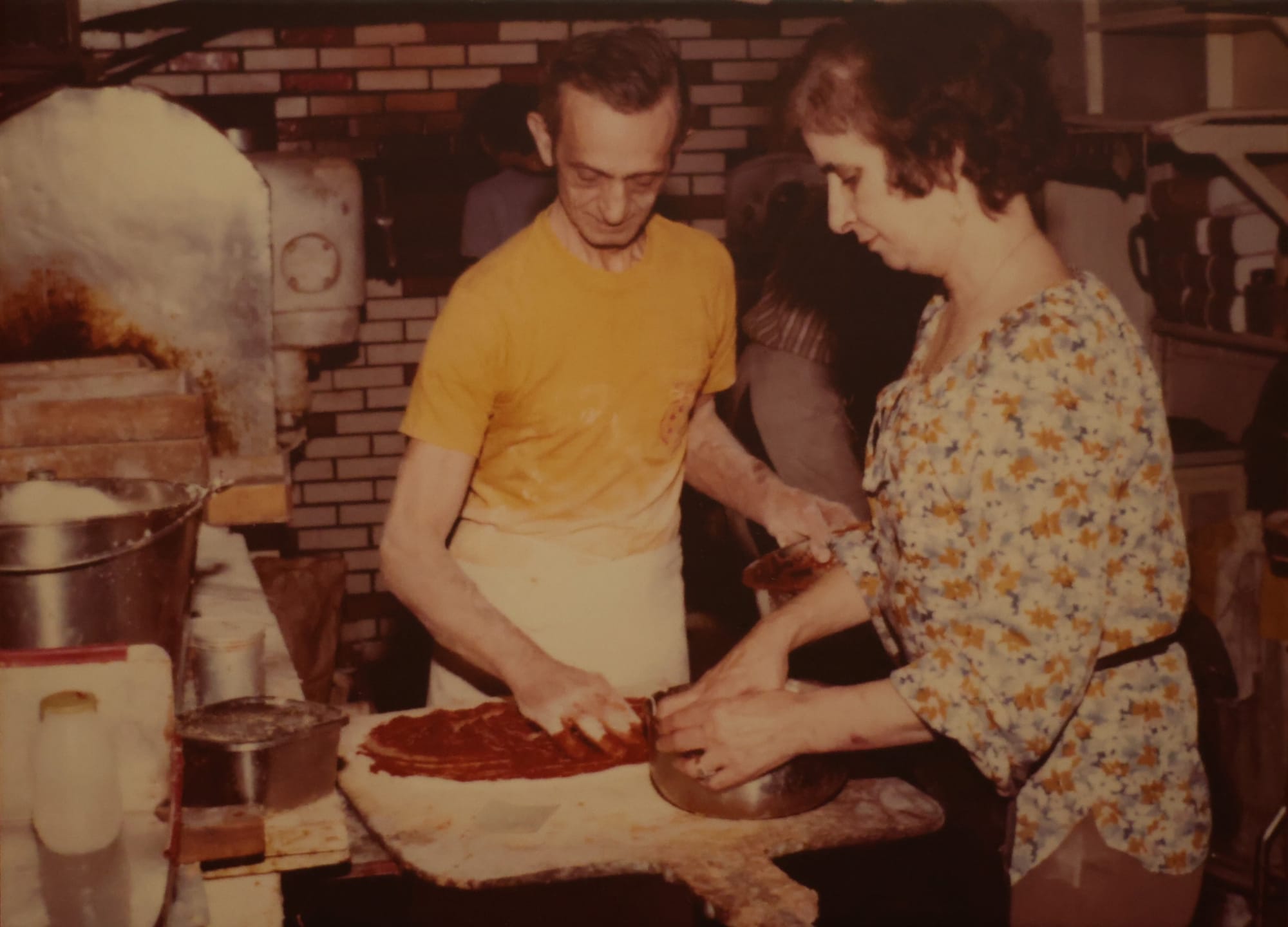
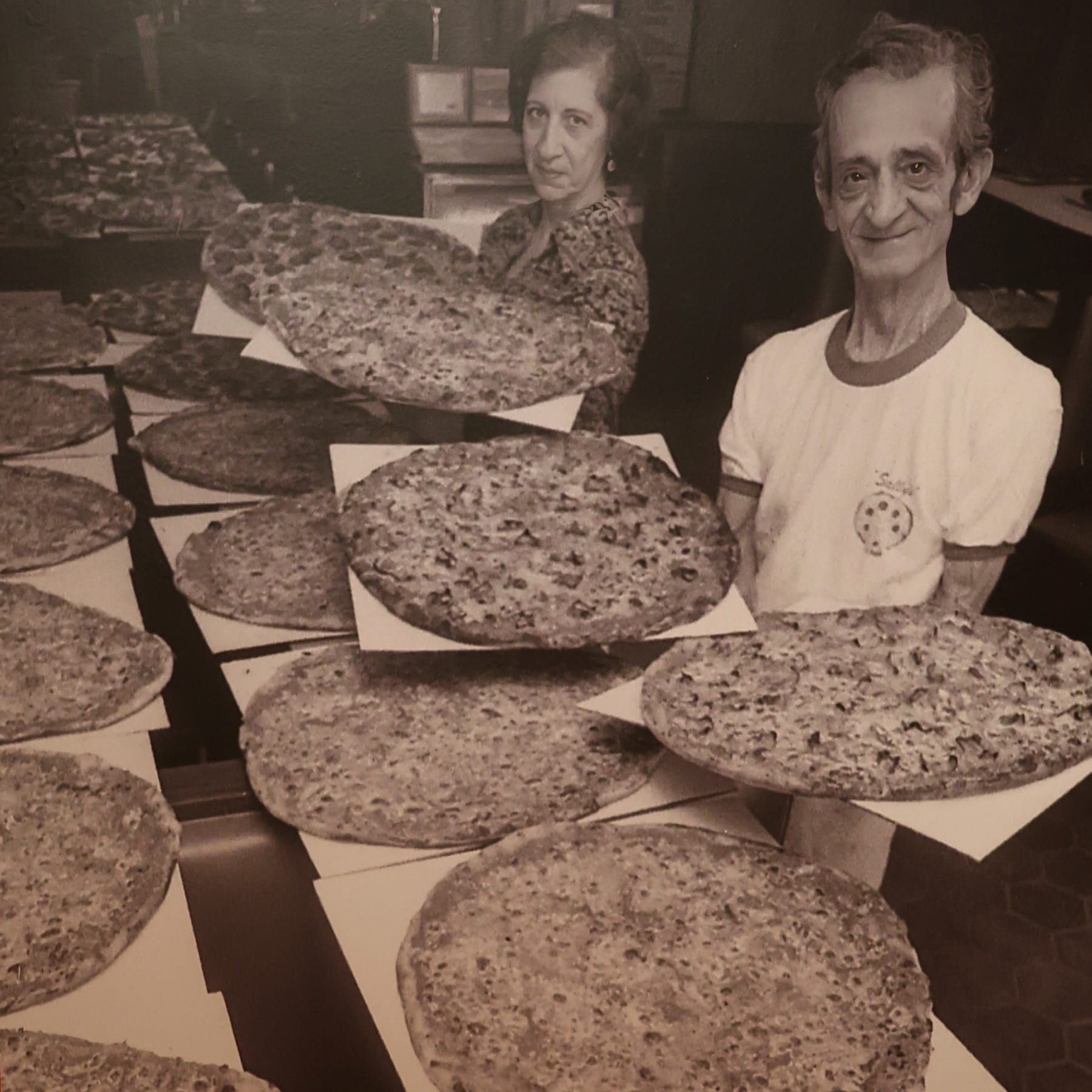
Like Pepe's, Sally's was a family affair. The show points out that part of the Sally's formula was business acumen and the ability to court celebrities early on. "Their quick success was propelled by Sally's brother Tony, who befriended crooner Frank Sinatra while playing hookey from high school in 1935. When Sinatra performed in New Haven with the Tommy Dorsey Orchestra on March 21, 1941, all 22 musicians dined into the early morning hours at Sally's Apizza. Tony's connection to Sinatra facilitated introductions to many other stars, who became Sally's customers, including future presidents John F. Kennedy and Bill Clinton."
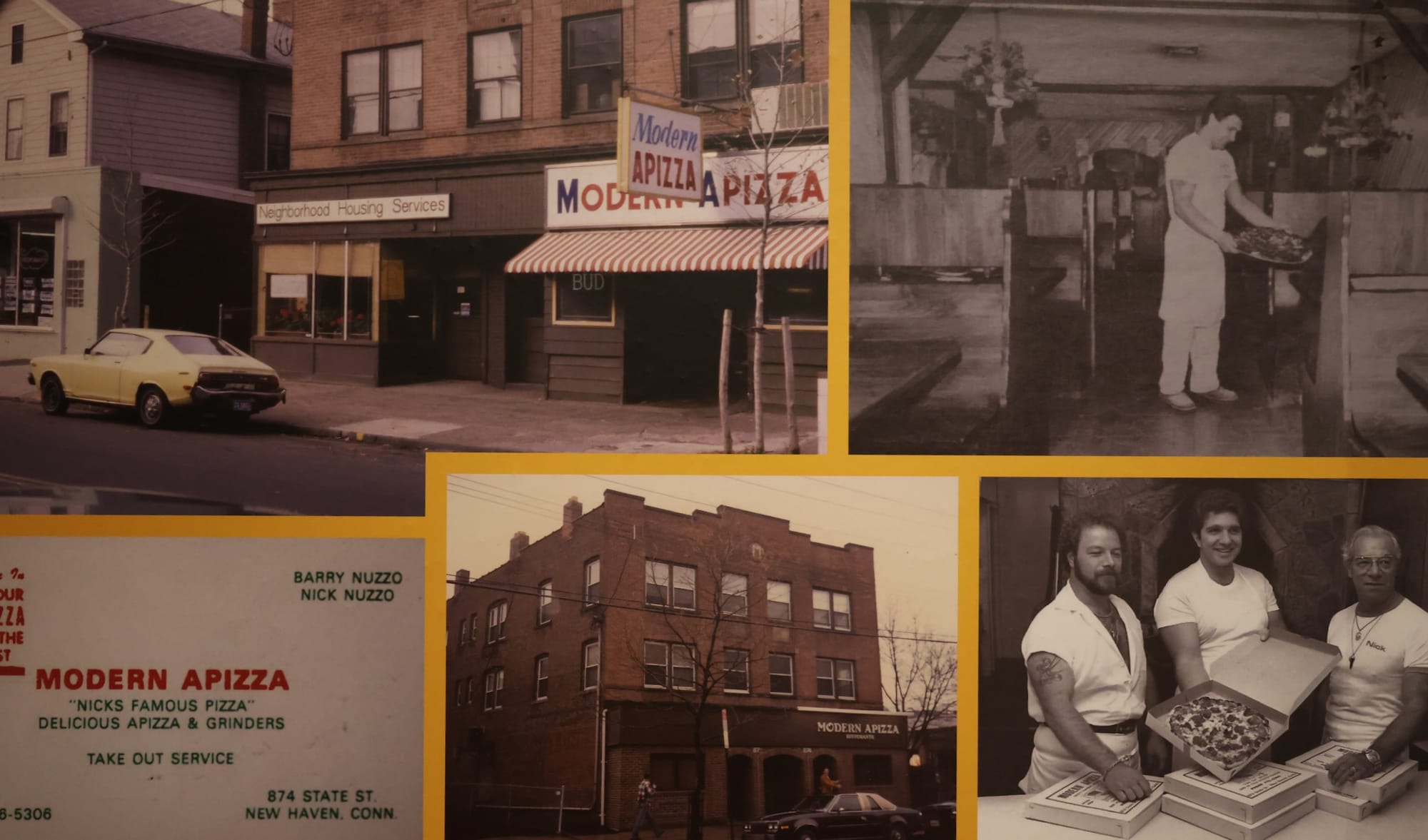
The story of Modern Apizza, meanwhile, exemplifies the allusion to pizzerias opening all across New Haven early. In 1934, Italian immigrant Antonio "Tony" Tolli "partnered with his cousin Joseph to open Washington Pizzeria in the Hill neighborhood in 1934. They separated, and Tolli went to State Street in the East Rock neighborhood where he opened his own pizzeria, Tony's Apizza, in 1936. He had a 10x10 foot coke-fired oven installed for his storefront dining room. Tolli continued to open pizzerias throughout the New Haven area (including Tolli's Apizza in East Haven in 1954)," but "he sold the pizzeria on State Street to returning veteran Louis Persano in 1944, who along with a longtime employee named Nick Nuzzo, changed the name to Modern Apizza."
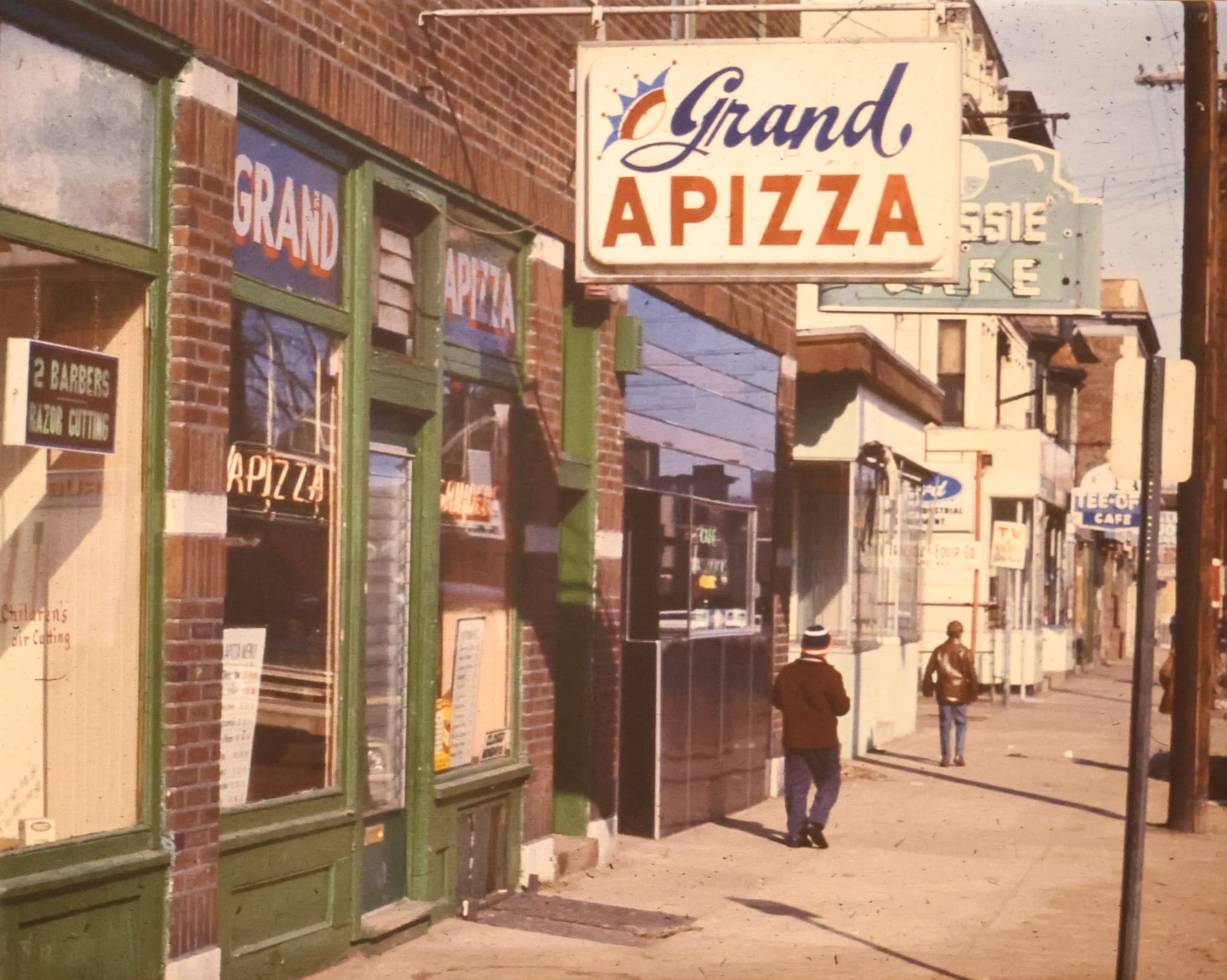
In turning to the next generation of pizzerias, the exhibition points out that the proliferation of apizza across the greater New Haven area and beyond started early. Domenico Zuppardi opened his first bakery in New Haven in 1932 and moved to West Haven in 1934. His son Tony changed it to Zuppardi's Apizza in 1948. Mike Buonocore started Mike's Apizza in West Haven in 1946; his cousin, Ernesto DeRiso, learned how to make pizza there and opened Ernie's in Westville in 1971, passing it down to his son Pasqual. Grand Apizza opened in Fair Haven in 1955; its owner, Fred Nuzzo, had learned the trade from his brother Nick at Modern Apizza." North Haven's Olde World Apizza, which opened in 1996—the same year as Bar, on Crown Street—learned its craft at Modern and "modeled their oven to simulate the large beehive style oven at Modern Apizza."
The narratives underline an idea that complicates the image that the New Haven apizza places are staffed by small-scale artisans with pizza-making secrets. They knew how to make pizza, but they were also entrepreneurs from the start. Frank Pepe expanded his business when and where he could. Sally's made sure it had good publicity. And Modern changed hands again in 1988, when "Bill Pustari, a young man with extensive pizza making experience, became the new owner, along with his wife Mary. Raising their four children in the State Street building, they expanded the dining room and added a second oil-fired oven in 1990."
That baked-in entrepreneurial spirit offers a small corrective to those who might accuse New Haven pizzerias of selling out by adding locations. Technically, Pepe's opened a second location when it purchased its original place in 1977 and made it The Spot in 1981. While "Modern is still run by the Pustari family and retains their singular location with many of the same staff who have been employed there for nearly 30 years," in 2006, "the Frank Pepe Pizzeria Development Company began expanding to new locations, and today there are seventeen in seven states and counting." Likewise, in "2018 the Consiglio family sold Sally's to Lineage Hospitality, which now has "eleven new Sally's locations opened or planned in Connecticut and Massachusetts." Meanwhile, while the original Grand Apizza zoomed in 2024, it "opened a satellite location in Clinton in 1993," and "family members eventually opened nearly a dozen pizzerias in the Greater New Haven area and as far away as Sedona, Arizona. And "Zuppardi's has two locations, pizza trucks and a frozen pizza line that is distributed to supermarkets, businesses and homes around the country."
The exhibition arrives at a point when New Haven apizza's reputation is as solid as it has ever been, to the point where it has official government endorsement. Tourists and influencers have traveled far and wide to sample it. It gets mentioned from the stage by possibly every other touring band that plays in town. New Haven is now touted as the Pizza Capital of the World on highway states as drivers enter the state. Sally's, Pepe's, Modern, and the next generations of apizza makers in town all enjoy steady support from New Haveners old and young, who, if they go other places, declare wistfully that the pizza there — wherever there is — just isn't like it is here.
But simply by being in the New Haven Museum, next to exhibitions about the Amistad and New Haven's 19th-century history, "Pronounced Ah-Beetz" has a point to make about the way the city has changed. While the apizza restaurants in New Haven are still going strong, the very local, neighborhood culture they were born out of, and that sustained them in their first decades, is gone. Wooster Square and Upper State Street aren't actual Italian neighborhoods anymore and haven't been for a long time. The pizza places used to serve factory workers; those factories closed a while ago. Saxboy's drive-by viral and oddly accurate song about his day in New Haven contained the observation that "tourists line the streets for apizza" (pronouncing it correctly) "but locals eat the gandules" (pronouncing it somewhat less correctly). He's right: New Haven is still a city with a thriving immigrant population, but those immigrants have brought their own cuisines and cultures that New Haveners have all grown to love, from the Caribbean, Latin America, Asia, the Middle East, and elsewhere.
That all the food options exist side by side is testament to New Haven's omnivoraciousness and the adventurous palettes of its diners. But will any of those other foods, and the cultures that support them, get the same lofty treatment that apizza has? The question moves fast, beyond culinary taste and into the city's economic development strategies, past and present. The exhibition alludes to the fact that "Frank Pepe was instrumental in defining Wooster Street during the redevelopment era of the 1950s and 1960s, with the pizzeria being the center of a budding tourism district." Put more bluntly, he and his community succeeded in saving Wooster Square from being razed to make way for a highway, a fate other parts of New Haven were not spared. As the city today eyes Long Wharf for development, one of its current culinary gems are the Latino food trucks that line the road — an important part of New Haven's food reputation that extends beyond the city's borders. Will those food trucks get the same dispensation Frank Pepe got, when the planners, builders, and landscapers arrive?


