
Detroit Jazz Orchestra with Ali Jackson
Spread Art Detroit
5141 Rosa Parks Boulevard
Thursday, May 14
For years, Ali Jackson played drums for Wynton Marsalis and the Jazz at Lincoln Center Orchestra.
You’ve never seen him in a setting quite like this.
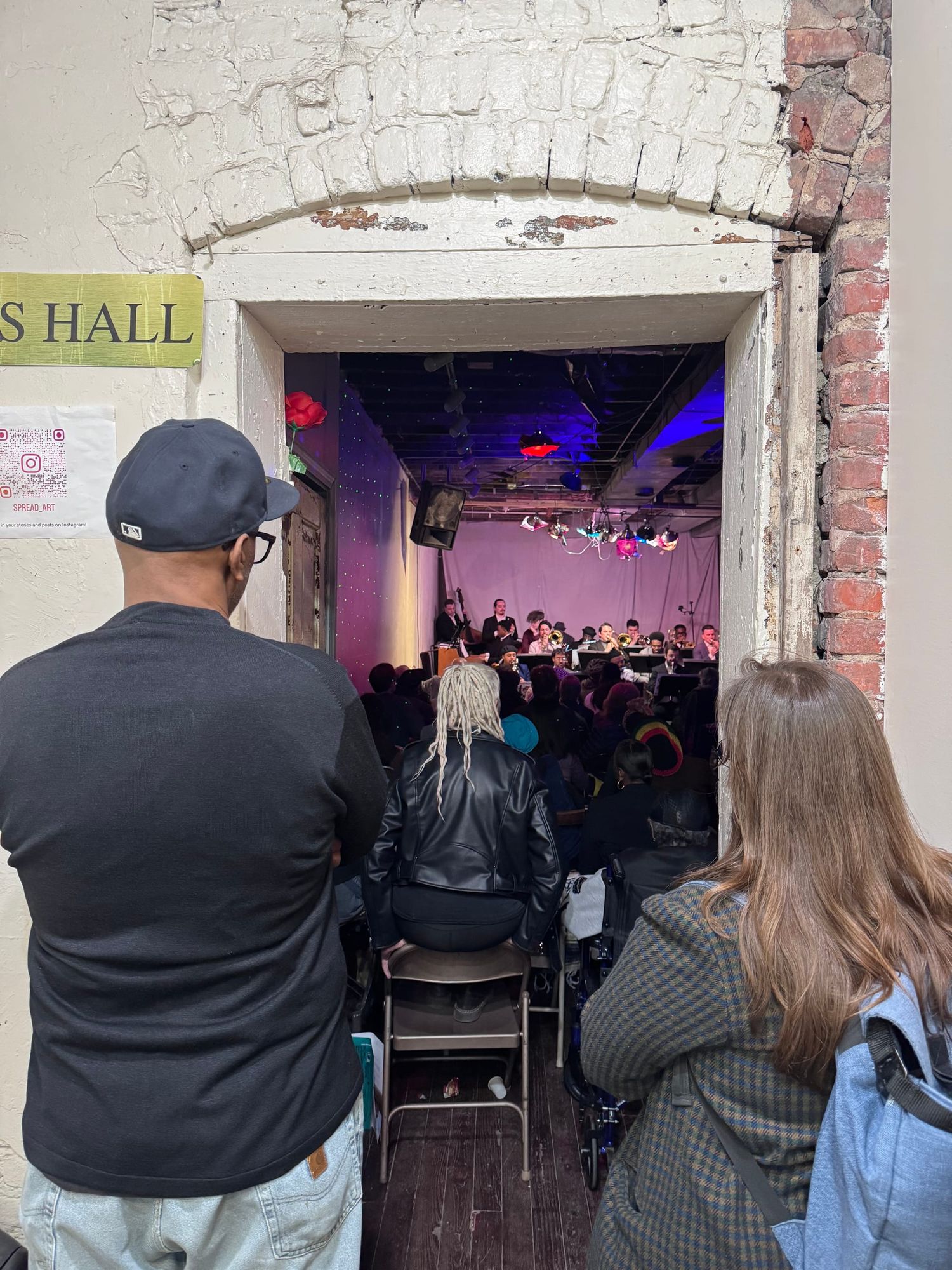
Jackson led the Detroit Jazz Orchestra inside of the small Spread Art Detroit arts space, which acts as a de facto incubator, venue and recording space for working artists in the city just north of Woodbridge.
It’s a bit rough around the edges, but no doubt a critical alternative space that gives birth to a lot of creative energy and resources that Detroit would otherwise be lacking.
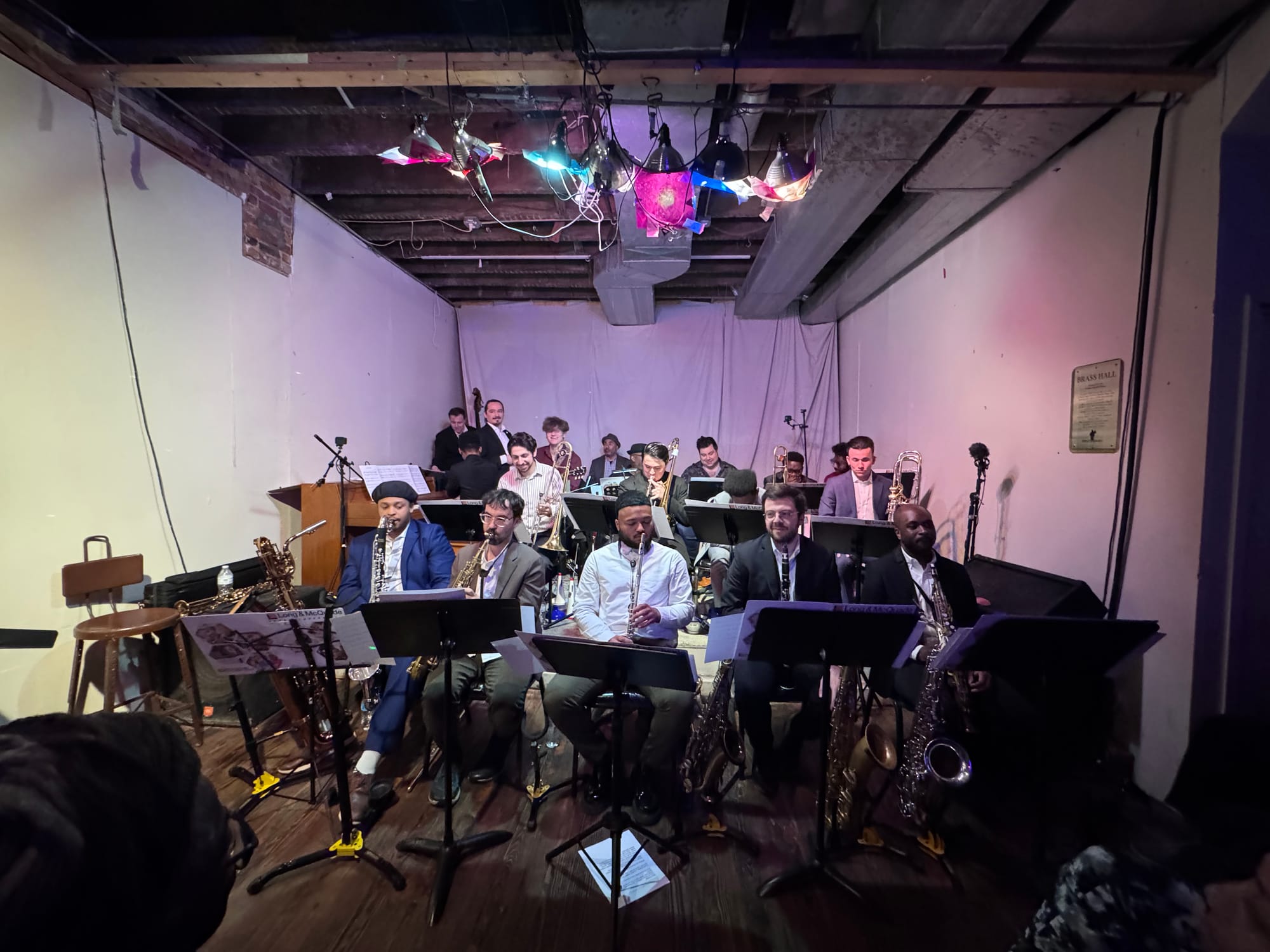
To see a 17-piece jazz big band pack the stage of this small-but-mighty venue is an absolute sight. Sure, it’s not hard space to pack (maybe less than 75 people in the room?), but it was absolutely packed.
Most importantly, it was brimming with energy from an audience that couldn’t believe what they were seeing, either, with several members of the audience standing up throughout the orchestra’s second set to perform impromptu standing ovations and hoots of approval.
You don’t see many big bands anymore these days. You don’t see many big bands of this caliber at all outside of the international jazz fest circuit. And you certainly don’t see them filled with living legends like Jackson and Wendell Harrison, plus the next generation of great talent alongside them, including Allen Dennard, Kasan Belgrave, Russ Macklem and others.
Kasan Belgrave was the leader for the evening, sitting front and center (on the floor and off the stage, for lack of space) and playing his saxophone. Watching his hand movements to let the band know when to stop, how hard to play was like watching a makeshift maestro lead the room.
To his credit, this band didn’t overplay the room. As they worked through numbers composed by Jackson and accessible blues-based works from Lou Donaldson (performing “Blues Walk”) and others (like closing on Jackson's original composition "Original Optimism"), it was with respect for the size of the space. No one was the hero, overplaying and blasting out notes that stunned the ears of the audience. It was subtle. It was warm. It was closer to how the recording of Duke Ellington’s “Mood Indigo” sounds than some contemporary .wav file that’s jacked up to the brim of where decibels should even go.
Jackson is back in his hometown of Detroit once again after years away, and he says that these performances are set to become a regular part of the cultural diet of Detroit. I’m sure it’ll rotate venues, but there was something so iconic about seeing it in an alternative arts space like this. It was taken out of the orchestra hall and given to the people in the most accessible way, and that was without the doubt the most beautiful part of last night’s performance.


