
Published January 13, 2026
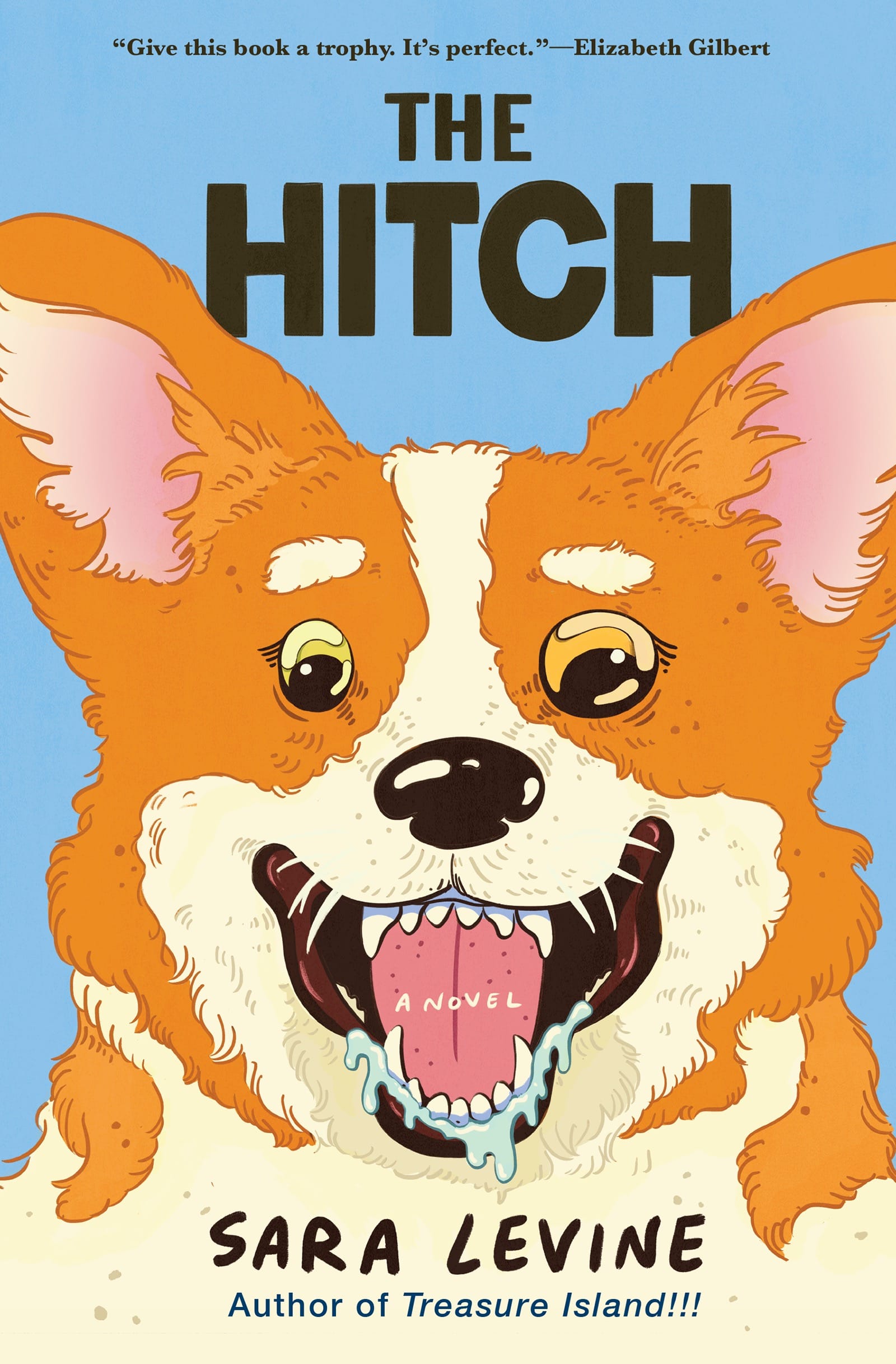
Vegan eco-warrior Rose Cutler lives outside Chicago with her Newfoundland dog, Walter. She has high-end tastes and, to her eternal ethical shame, owns a thriving artisanal yogurt business. Her circle of friends is minimal, and she longs for more connection with her six-year-old nephew, Nathan. Rose’s opinions are strong and arrive in an unceasing wave of words. When Nathan’s parents decide they need to escape to a deeply ecologically unethical resort in Cancun for a week, Rose begs to be the one to take care of him. Her plans for a quiet week of home-cooked vegan meals, chess, and listening to Mahler are thwarted on the very first day when Walter mauls and kills a corgi, a dog which Rose deems to be a “dwarfish anatomical disaster”, during a walk in the park, right in front of Nathan.
Instead of being traumatized, Nathan is ecstatic. He claims to have seen the corgi’s soul jump from her body into his own, where it now resides. Enter the ghost corgi, Hazel. Sara Levine’s new and completely bizarre comic novel, The Hitch, leads readers on a convaluted journey through loneliness, hard truths, and sharp comedic timing.
As Rose searches for a cure to separate Hazel from her nephew, we see the many ways her unyielding and endearingly irritating personality has deteriorated her relationships with friends, family, and coworkers. Nathan, who has begun to bark, overeat, and display an eerie ability to suss out people’s deepest secrets, lets slip that his parents refer to Rose as “Aunt Rant.” As Rose faces the possibility that her loneliness may be of her own devising, rather than the fault of her sister-in-law or anyone else, she begins to confront the idea that she might be her own worst enemy.
“Sometimes my mind gets active as a prairie dog, and I build elaborate tunnels underground,” Rose reflects. “Room after room of judgment and justification.”
As Rose continues to look for effective ways to exorcise Hazel from Nathan’s body, readers are offered glimpses into Hazel’s surprisingly wise philosophies. Where Rose is prickles and thorns, Nathan and Hazel together bring light and humor to the story. The Hitch is the kind of novel that could end in countless creative ways, but Levine chooses an ending that is enjoyably unresolved. It is not a happy ending, nor is it neatly wrapped. Instead, it is emotionally messy, painful, and very funny, leaving more mysteries than it resolves, and it begins with plenty of them.
With a ghost corgi at its center, this novel is anything but average, and Levine rises confidently to the challenge. Love her or hate her, Rose’s reflections on her own limitations and relationships wander far from any predictable path, and that unpredictability is deeply satisfying. The Hitch is a novel for corgi lovers, complicated humans, and anyone in search of an offbeat reason to smile this winter.


