
Noir City 23
Grand Lake Theater
3200 Grand Avenue, Oakland
January 25, 2025
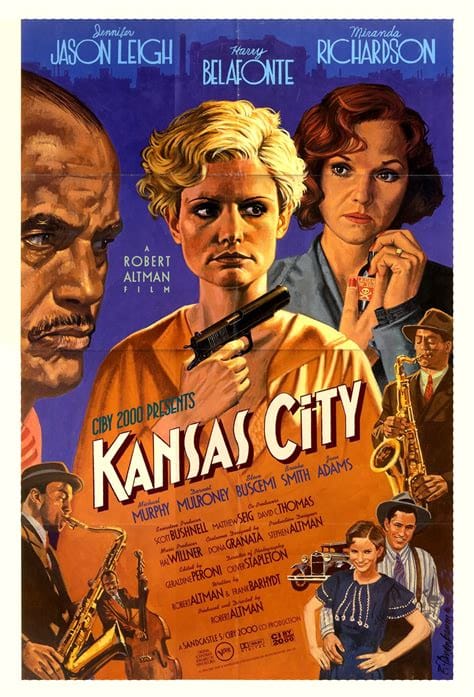
The final day of Noir City brought a double feature with a bonus: Kansas City (1996) and Round Midnight (1986), accompanied by the short film Jammin the Blues (1944). Opening night, host Eddie Mueller had emphasized their curatorial focus on films that leaned heavily into music, and this was my first time I attending the festival where I felt the selections well and truly stepped outside the traditional noir genre.
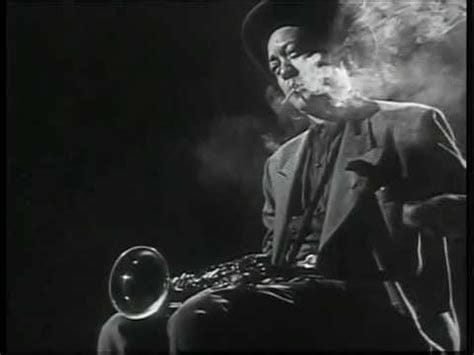
Jammin the Blues, introduced by an enthusiastic Nick Rossi of the Nick Rossi Trio, who praised it as a musical masterpiece, was undoubtedly the surprise of the evening. The American short film, created by Gjon Mili and Norman Grantz, recreates the energy of a nightclub jam session and proved to be a visual feast on the big screen. The lighting, compositions, and camera work nod to classic noir aesthetics and the music showcases musicians at the height of their powers. As the film shifts from black backgrounds to white, fingers fly and the music flows like milk and honey in artful harmony. Saxophonist Lester Young, vocalist Marie Bryant, and jitterbug dancer Archie Savage are among the featured performers.
Of the two feature films, it was Robert Altman’s Kansas City that most commanded attention. Originally met with tepid reviews upon its release in 1996, the film benefits from reconsideration. Crooked politics, racial segregation, bad romance, more than a little violence, and, of course, jazz, are woven together against the backdrop of Kansas City during the elections of 1934. Johnny (played by Dermot Mulroney,) is a small time thief who robs a wealthy Black gambler from a taxi, only to discover that his victim is a longtime client of crime boss Seldom Seen (portrayed with chilling authority by Harry Belafonte).
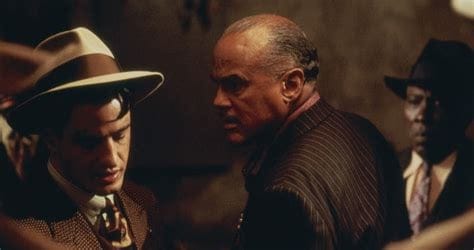
Johnny is quickly apprehended by Seldom’s henchmen and taken to the Hey Hey Club, where jazz is a constant presence. When Johnny’s wife, Blondie, learns her husband is missing, she pleads with Seldom Seen to free him. He coolly asks whether she would like her husband returned in a bag or a box. From there, the Jean Harlow impersonating manicurist escalates matters by kidnapping the wife of a political leader, played by Miranda Richardson, in hopes of securing Johnny’s release.
Altman’s disjointed narrative, full of reckless behavior, sudden violence, and sharp characters, is interspersed with extended jam sessions featuring musicians such as David Murray and Geri Allen. Much of the film’s power rests with Seldom Seen, whose long monologues reveal unsettling philosophies about power and survival. Mueller noted in his introductory remarks that Belafonte was permitted to ad lib much of his dialogue—the result is a bitter and unsparing critique of the greed and division that underpin American society.
What makes Kansas City a compelling inclusion in Noir City is the way it remains recognizably noir while filtering its violence and power structures through a distinctly 1990s lens. Seldom Seen, ruling from a self made empire as an untouchable force, is a figure that would not have been permitted in classic 1940s noir.
Blondie, whose actions drive much of the loose plot, also stands apart from classic noir archetypes. Unlike earlier female leads, she relies on no man (apart from her unhealthy codependence with Johnny). As an independent and often violent protagonist, she operates according to her own choices and ambitions for the future.
Overall, the films made for a strong conclusion to a successful festival. While there was some longing for more traditional noir, the opportunity to explore unfamiliar territory and revisit overlooked works proved rewarding. Several selections this year unfolded like extended jazz sessions, with only a hint of plot. Still, the lush cinematography, striking costumes, and dark themes offered more than enough to satisfy noir devotees.
Check out our prior coverage of the Noir City Festival here.


