
Forecast: Reading the Signs
Institute Library
New Haven
Through March 28
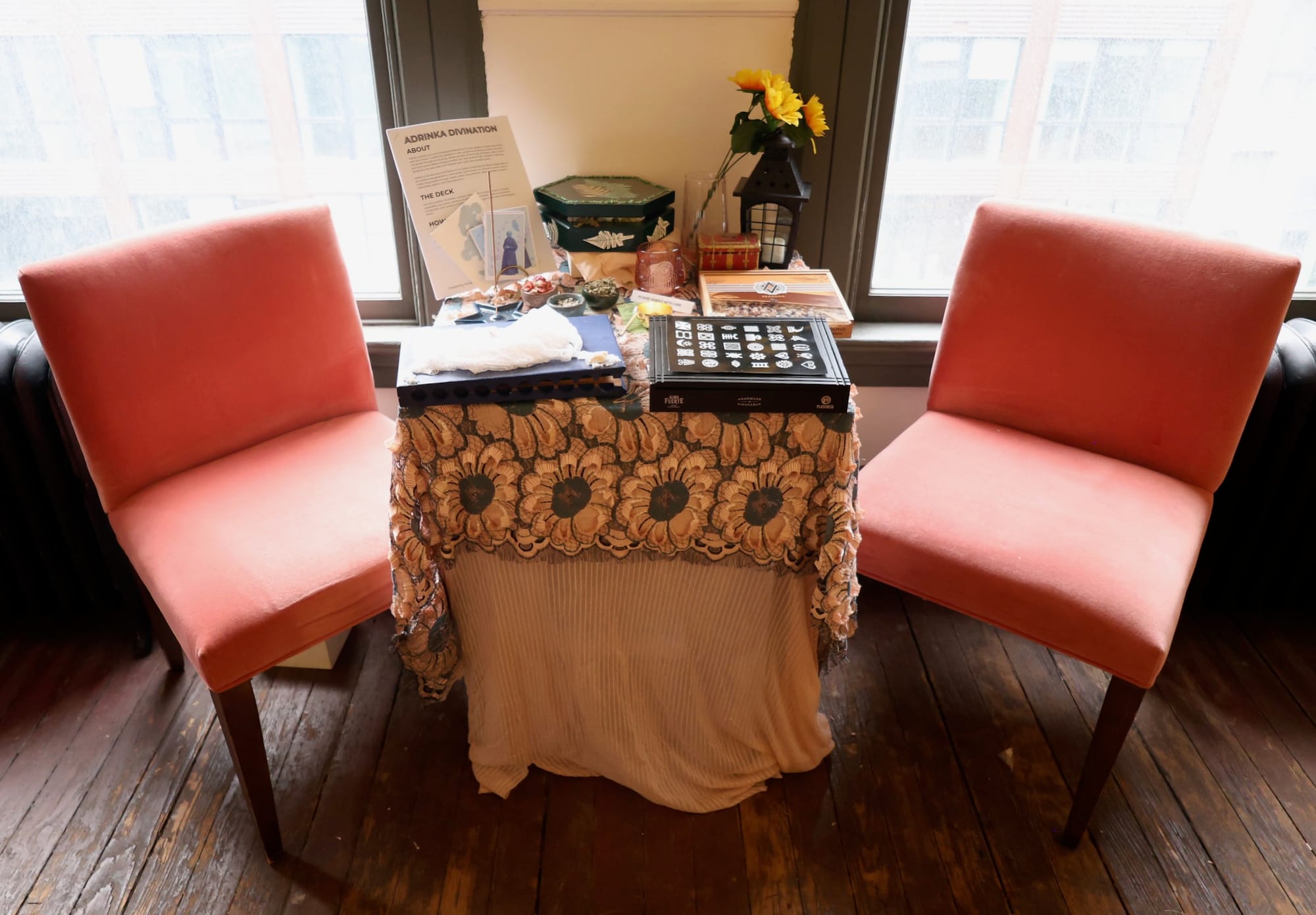
Nadine Nelson's installation for Forecast: Reading the Signs — running now in the upper gallery at the Institute Library through March 28 — is a sunny nook in the middle of the art show: two cozy chairs in the window, a snug table filled with intriguing objects, among them a deck of symbols. It's a moment to relax, but also a portal to a divination technique.
"Adinkra symbols are a visual language developed by the Akan peoples of present-day Ghana and Côte d'Ivoire," Nelson's accompanying sign explains. "Traditionally stamped on cloth, carved into architecture, etched into tools, and passed through oral teaching, Adinkra symbols communicate philosophy, ethics, history, and social values without relying on written text. Each symbol holds a proverb or teaching, designed to be read slowly and reflected upon rather than decoded quickly."
"Adinkra is not decorative shorthand," the sign continues. "It is a system of meaning that allows complex ideas to be shared across generations, communities, and contexts. As a divination practice, Adinkra invites interpretation through wisdom rather than prediction, offering guidance rooted in relationship, balance, and lived experience."
The deck of cards, of 109 Adinkra symbols, "speak to strength, others to humility, adaptability, love, justice, patience, or collective responsibility. There is no hierarchy among them. Each symbol is complete on its own, yet gains depth when read alongside others."
To use the deck, Nelson's note explains, "you may hold a question, situation, or curiosity, but clarity is not required." You find the message by choosing one card, or multiple cards, by intuition. But first, she suggests, "take a moment to arrive."
Nelson's piece is an apt introduction to the rest of Forecast, which sees 30 artists exploring several different traditions of divination, from tarot cards to weather predictions, with diverting and reflective results.
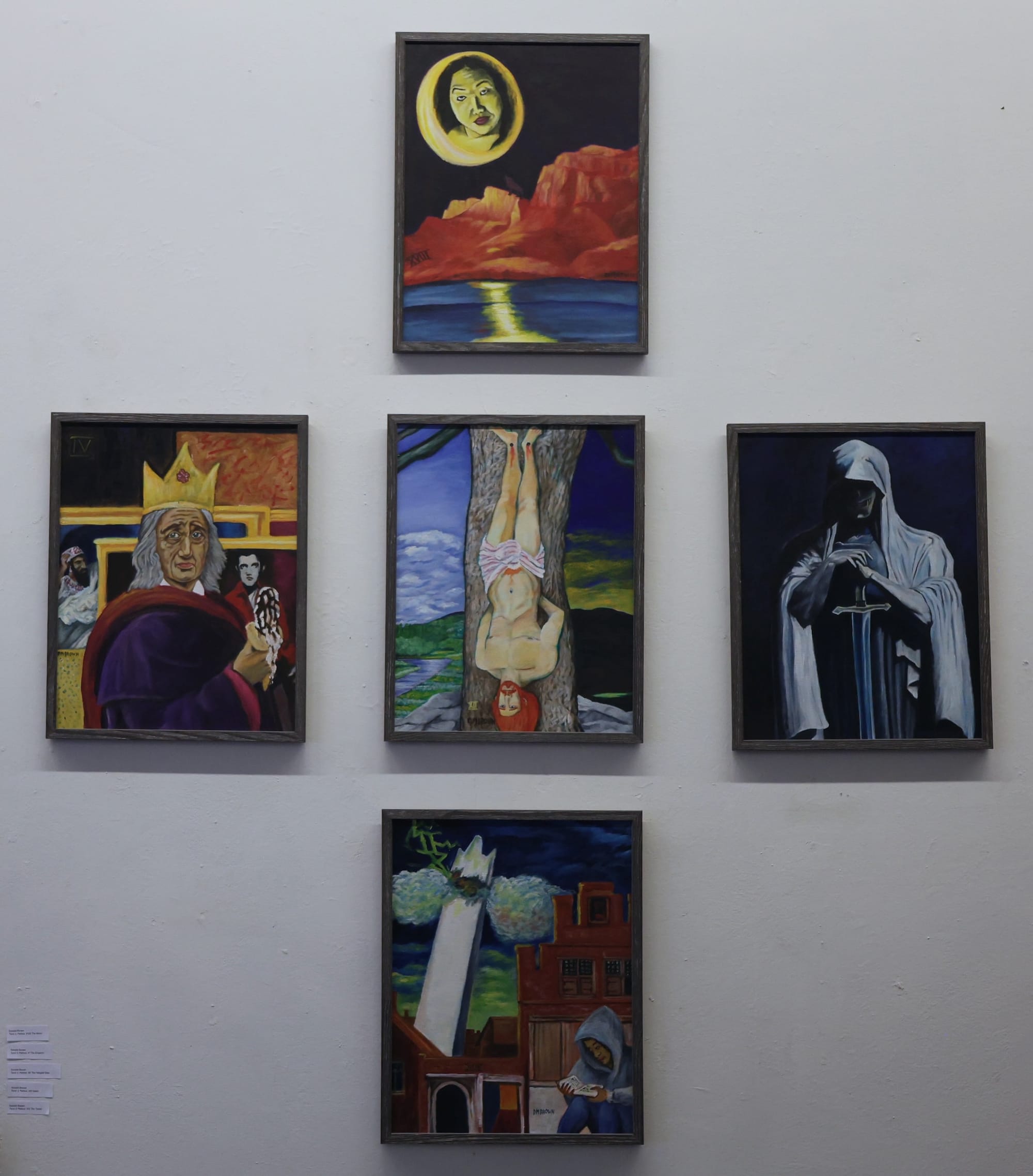
The tarot deck proves irresistible to a number of artists in the show, for great reason: it has a parade of images ripe for depiction and reinterpretation, and why not layer even more meaning into a deck already full of centuries of readings? Donald Brown plays his hand with a series of five paintings that combine the mysterious with a sense of sly humor; it wouldn't be surprising if a reading from these cards were a little tongue in cheek. Lys Guillorn's deck of collage cards, with no text around them at all, offers a similar sense of play. The juxtaposed images on the cards offer a sense of friction and interpretation while offering no particular direction for that interpretation to go. Perhaps it's up to the one using the deck to decide their own fate.
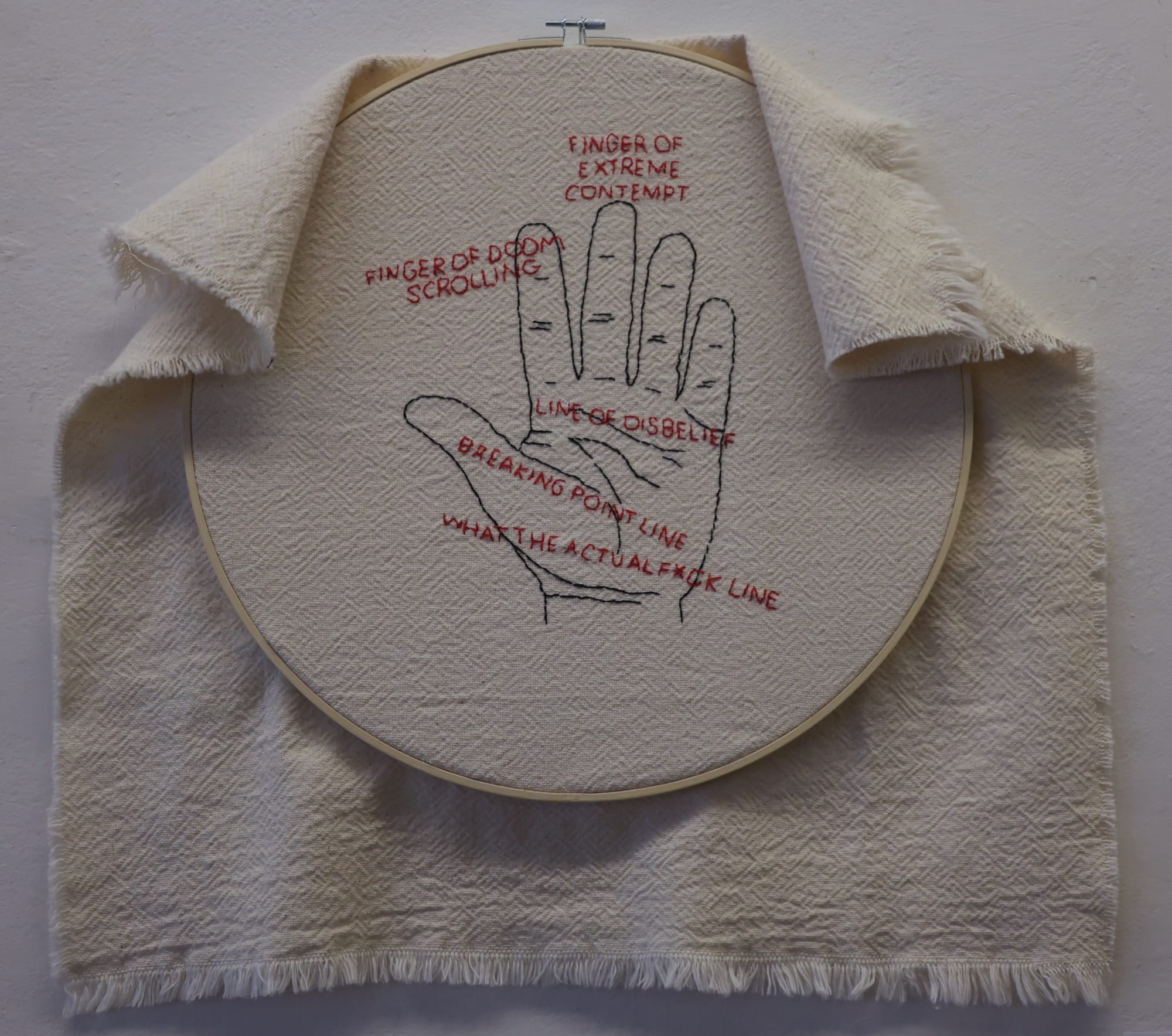
Marsha Borden's piece plays with ideas of palmistry, transporting the traditional messages of longevity and wisdom into a more modern, earthy context. Another set of pieces enters the realm of connecting with spirit. Asia Ingalls's pieces, of direct, warm abstract shapes, offer a path to guiding yourself by listening to your own intuition. Lydia Viscardi's artwork, meanwhile, are journeys to fantastical places abounding with mystical imagery.
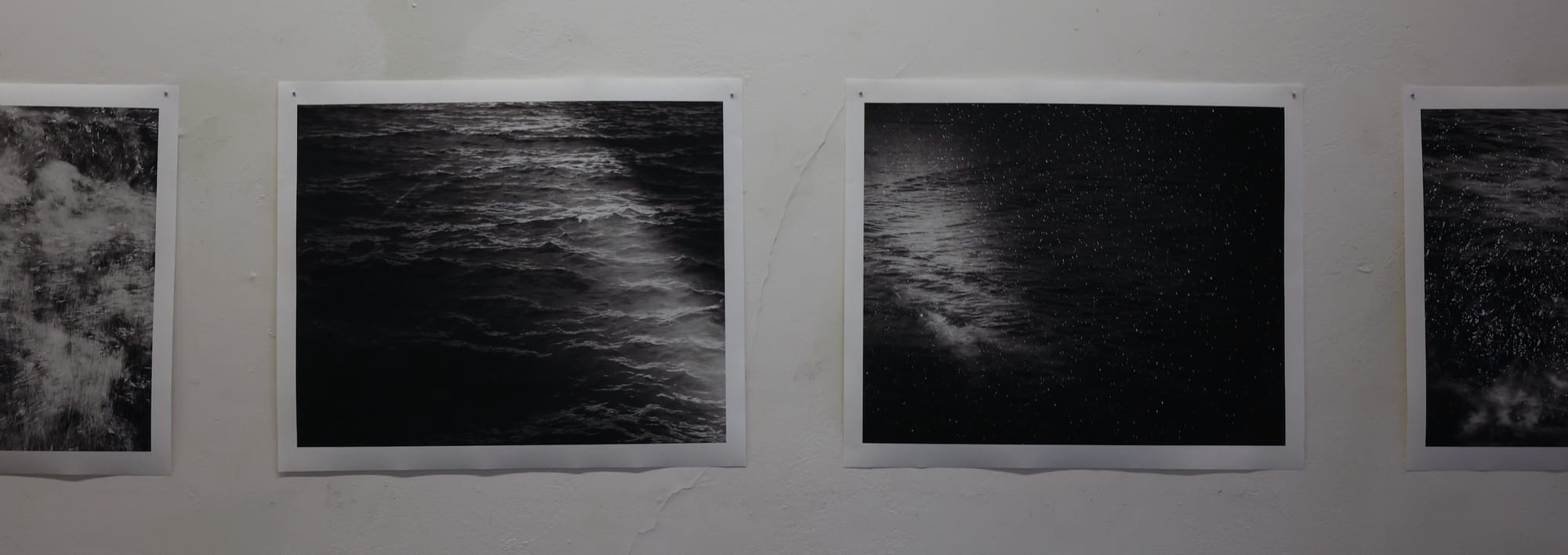
In the context of the show, Marion Belanger's moody photographs of the surface of a tumultuous body of water offer a complex commentary on a modern form of divination—weather forecasting—thoroughly rooted in science yet, as forecasts routinely demonstrate, still subject to whims outside of what we can understand. We rely on the weather forecast constantly to shape our days, from wardrobe to activity choices. But Belanger's images capture the sense that we are dealing with systems we still don't fully understand. We run our forecast models, and gaze outside the window. But sometimes, still, fortune favors us, and sometimes it doesn't.


