
Twin Peaks Pilot Episode Screening
At Lyric Hall, in partnership with Best Video
New Haven
Jan. 20, 2026
In the year 1990, television network ABC rolled the dice.
Would their audiences understand—let alone enjoy—the fancies of avant-garde filmmaker David Lynch, straight off a slew of mixed reactions to bizarro flicks like Dune (1984) and Blue Velvet (1986)?
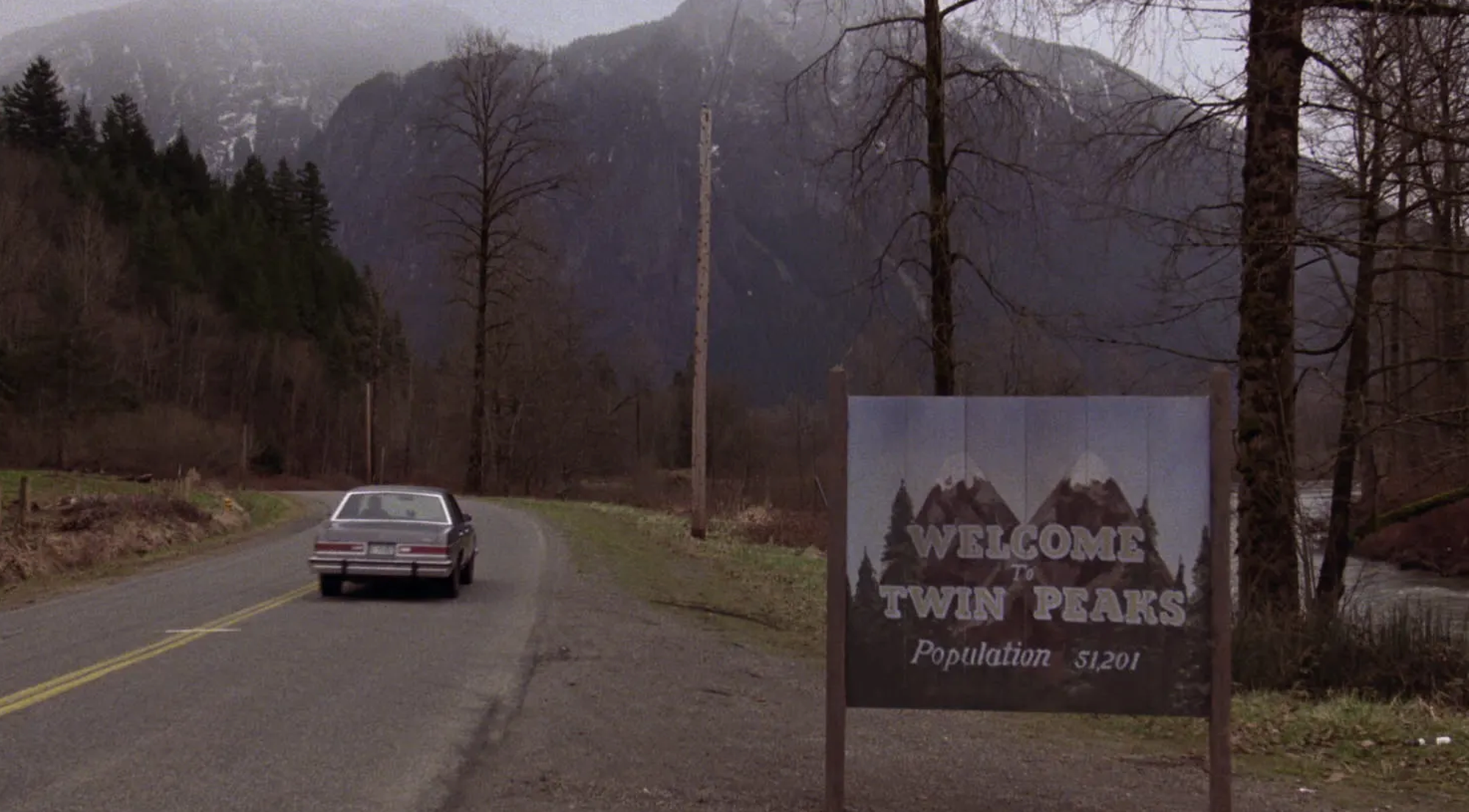
Three and a half decades later, it seems the answer was yes. Audiences everywhere are still watching Twin Peaks, the off-kilter mystery melodrama Lynch premiered back in 1990. For those who have somehow never seen it, there are forces like Westville’s Lyric Hall and Hamden’s Best Video who will team up to fix that.
On Tuesday night, the two well-loved community institutions put on a sold-out showing of Twin Peaks’ 90-minute pilot episode. Lyric Hall supplied the theater. Best Video procured the DVD and the screening rights. I’m not sure who brought the popcorn, but it was delicious.
Before the movie started, Best Video member Michael Domangue set the stage with insightful pre-show remarks and jokes.
It was thanks to his intro I got to fully appreciate the context Twin Peaks was born out of. I hadn’t realized how unlikely its success may have seemed at the time. Domangue noted that what we were about to watch was just one cut of the pilot. In another cut, the series’ central murder is solved with an extra half hour of footage.
The alternate cut was, Domangue explained, a hedging of bets. If the pilot tanked and Twin Peaks wasn’t picked up as a series, the longer version could at least be released internationally as a full-length film. If you want to see that one, you can find it in Best Video’s archive, Domangue said.
The last time I watched Twin Peaks was years ago. Rewatching it on the big screen, I was able to pick up little details, like police station secretary Lucy Moran’s subtle reflection in a window, listening in on a phone call.
The pilot had some heavy lifting to do, exposition-wise. It had to create an entire town. A focus on industry kept it fun. Viewers got to see the sawmill, the gas station, the high school, the hotel, the diner, the bar, the bank, the hospital, and the police station. The show’s haunting soundtrack balanced the dramatic expressions on screen, folding every piece of chaos into one grand melody.
In each scenario, the adults are trying very hard to do a good job. If they slip up, they do everything in their power to hide it. The teens, on the other hand, are looking for cheap thrills. They’re making out, getting in fistfights, and spilling coffee.
Strangely enough, both groups end up spending much of their time accomplishing the opposite of what they intend. In the town of Twin Peaks, kids grow up fast, and adults seem to age backwards.
It’s a setup ripe for tension and release. Special Agent Dale Cooper, the star of the show, values pie just as much as solving murders. He gets very serious, then asks about rabbits.
“I sure know how to pick ‘em,” says high schooler Donna Hayward about her boyfriend, coolly certain there are more important things in life. It’s a statement seemingly more suited to a long-married woman.
Lost in the movie magic of Lyric Hall’s theater, I thought of my own part in the societal dance. In one of the morgue scenes, a worker, trying to be a good host, apologizes to Agent Cooper and town sheriff Harry S. Truman for the flickering fluorescent lights. There’s an issue with the power, he says.
Around me, the audience laughed. I thought it was funny too. But why?
At least for me, it was because the lights in the scene were actually annoying. When the morgue worker issued his awkward apology, it calmed me in real time. And then I laughed, because I remembered I had a body.
Later, I looked up this scene and found out the lights were one of Lynch’s famous improvisational choices. The flickering lights were a set malfunction that Lynch decided to roll with, incorporating the gaffe into the scene.
With so much of the pilot focused on industry, set in a town so built on its industries, the lights at the morgue felt like a riff on the trials and tribulations of the movie industry. There is a certain comedy in how hard we try to fulfill our roles—an attentive audience, a careful director—and how often those plans go awry.
“You ever been surprised before?” Cooper tells Truman early on in their investigation. It’s a killer line, one that could encapsulate much of the show’s style. And its intrigue worked. After the screening, a group of friends joked they would refuse to leave until Lyric Hall and Best Video showed them Episode 2.
The Twin Peaks pilot is a single episode so good it was almost a movie. And, based on the context Domangue provided at the start of the screening, it’s actually so good it didn’t have to be.
Tuesday’s event was part of an ongoing partnership between Best Video and Lyric Hall. You can find Best Video’s upcoming screenings on their events page, and Lyric Hall’s events on their calendar.


