
Bird / Seed
Works by Tom Edwards and Gar Waterman
Kehler Liddell Gallery
New Haven
Through March 15
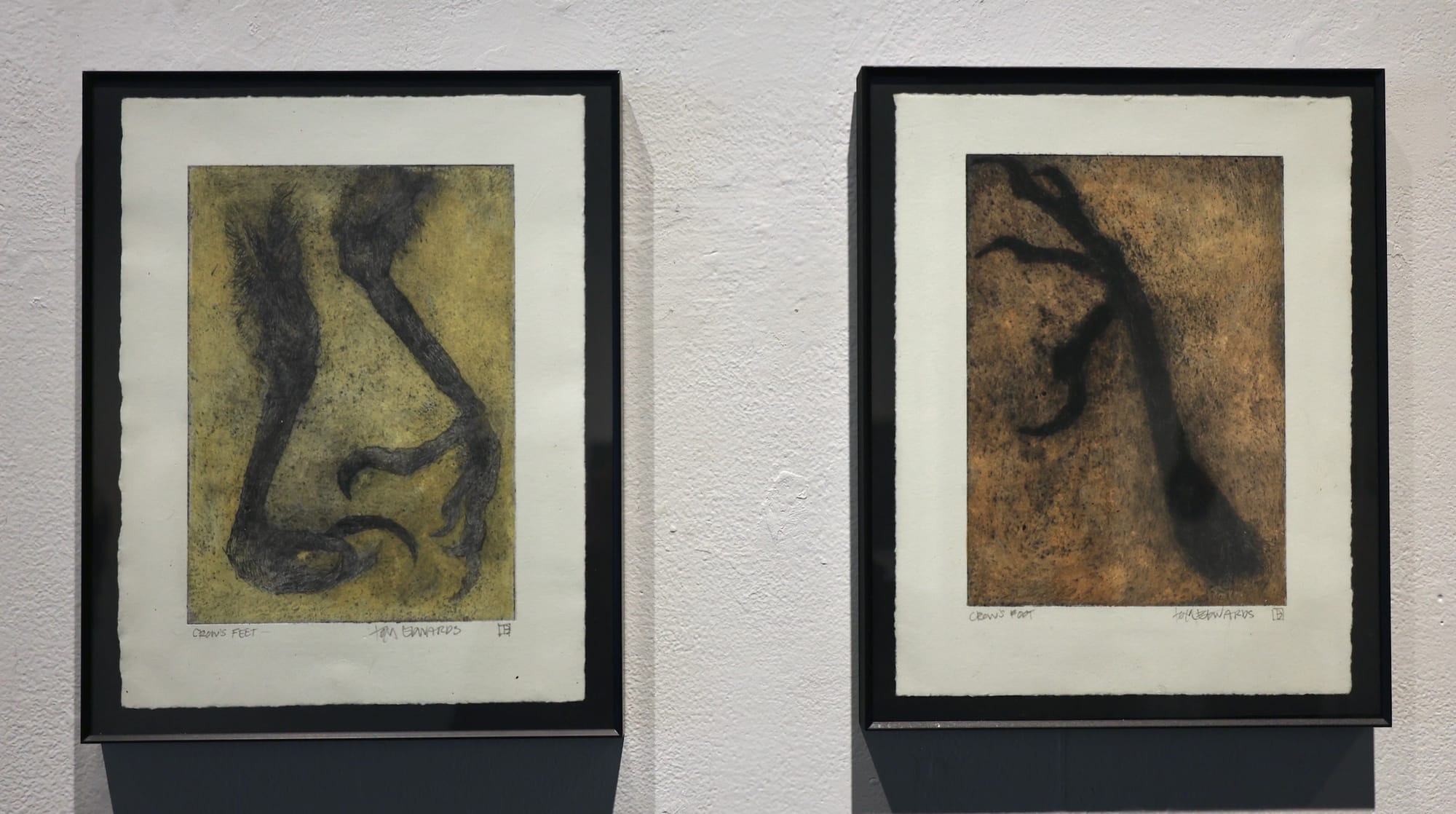
Tom Edwards's artwork depicting crow feet hovers somewhere between a specimen box and nature photography. On one hand, they could be still lifes of feet removed from bodies, a document of dead things. But the energy in the shapes and colors suggests that they're maybe still very much alive, and we're lucky to have caught them in movement. Edwards captures the knobby, craggy strangeness of their forms and the power they contain, to grasp, to claw, to carry. He also taps into the popular mythology that circles crows, as harbingers of doom, as creatures often associated with darker magic. It's easy to see how those associations formed. We see crows congregating in treetops, cawing and fluttering. We see them eating dead animals on the side of the road. But they've had no say in what we think of them. We have put a lot of meaning on those birds, whether they've asked for it or not.
The pieces, and the questions they raise, are part of Bird / Seed, a joint show of work by gallery members Tom Edwards and Gar Waterman running now through March 15 at Kehler Liddell Gallery in Westville. Their work is united, and flows together, by their common source of inspiration in natural forms, and the complex ways those forms point to greater meaning.
Edwards has over 60 pieces in the show, and "all of these works are linked in some way by the word bird," he writes in an accompanying statement. "They draw from many sources related to the history and mystery of birds in art and culture, the history of eggs in art, science, and culture, feathers, feet, nests, and my interactions with feeding and observing them. They are symbols of power, symbols of wisdom, symbols of foreboding and death, symbols of spiritual purity, and much more. We watch them, imitate them, feed them, hunt them and eat them."
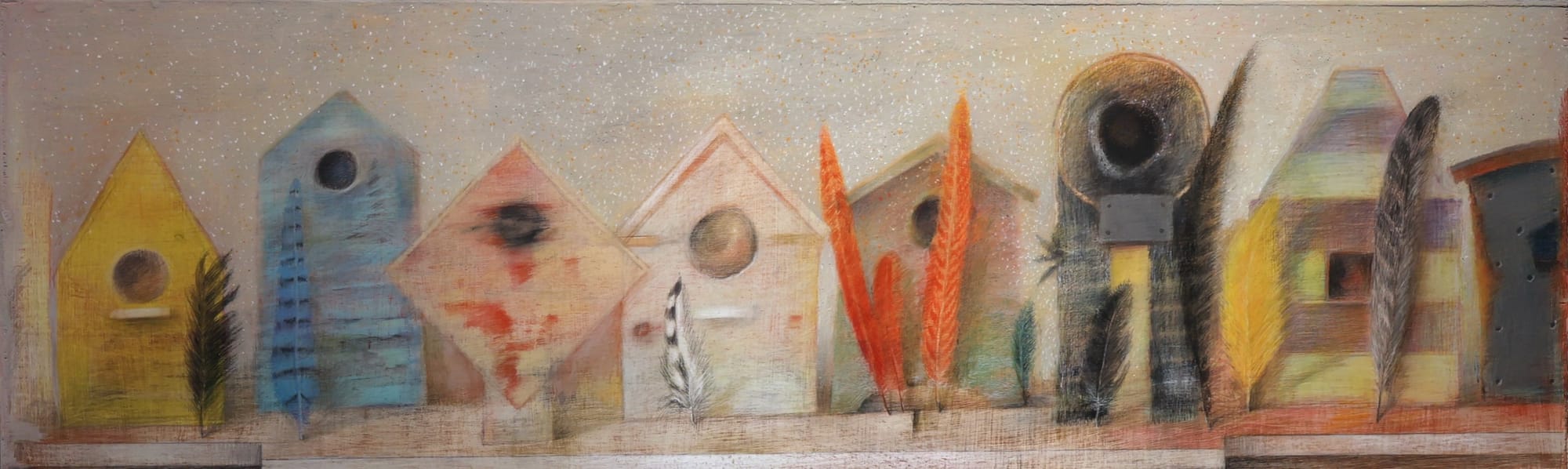
Edwards approaches his subject from a panoply of angles. Some are indeed straight still lifes, studies of feathers and skulls. Others place living creatures in shadowy, sketched-out landscapes, bridging a divide between realism and something else. Still others lean fully into whimsy. The vertiginous towers in Bird Feeders, a collection of sculptures, looms in the center of the gallery like a model of a fantastical city. And then there's Bird Street, which imagines what it might look like if birds lived in row houses; though perhaps it's also depicting how birds understand the actual habitats they live in and share with other birds.
The sense of potential energy that thrums in Edwards's work finds its reflection in Gar Waterman's sculptures. "Among the many natural phenomena that inspire my sculpture, seeds hold a particular fascination. These unassuming forms are vessels of quiet magic, each containing a complete blueprint for future life," Waterman writes in an accompanying statement. "Over millennia, parent plants have evolved extraordinary strategies for seed dispersal — myrmecochory (by ants), anemochory (by wind), and zoochory (by animals), among others — revealing nature's eloquent interplay between form and function. These mechanisms give rise to a remarkable diversity of organic shapes and surface topographies, each exquisitely sculpted by purpose. Charged with latent energy and the ephemeral promise of transformation, seeds endure as universal symbols of renewal and hope, bearing witness to the adaptive brilliance of the natural world. In translating these forms into sculpture, I seek to capture that moment of potential where biology, beauty, and imagination converge, allowing nature's quiet intelligence to inform both material and form."
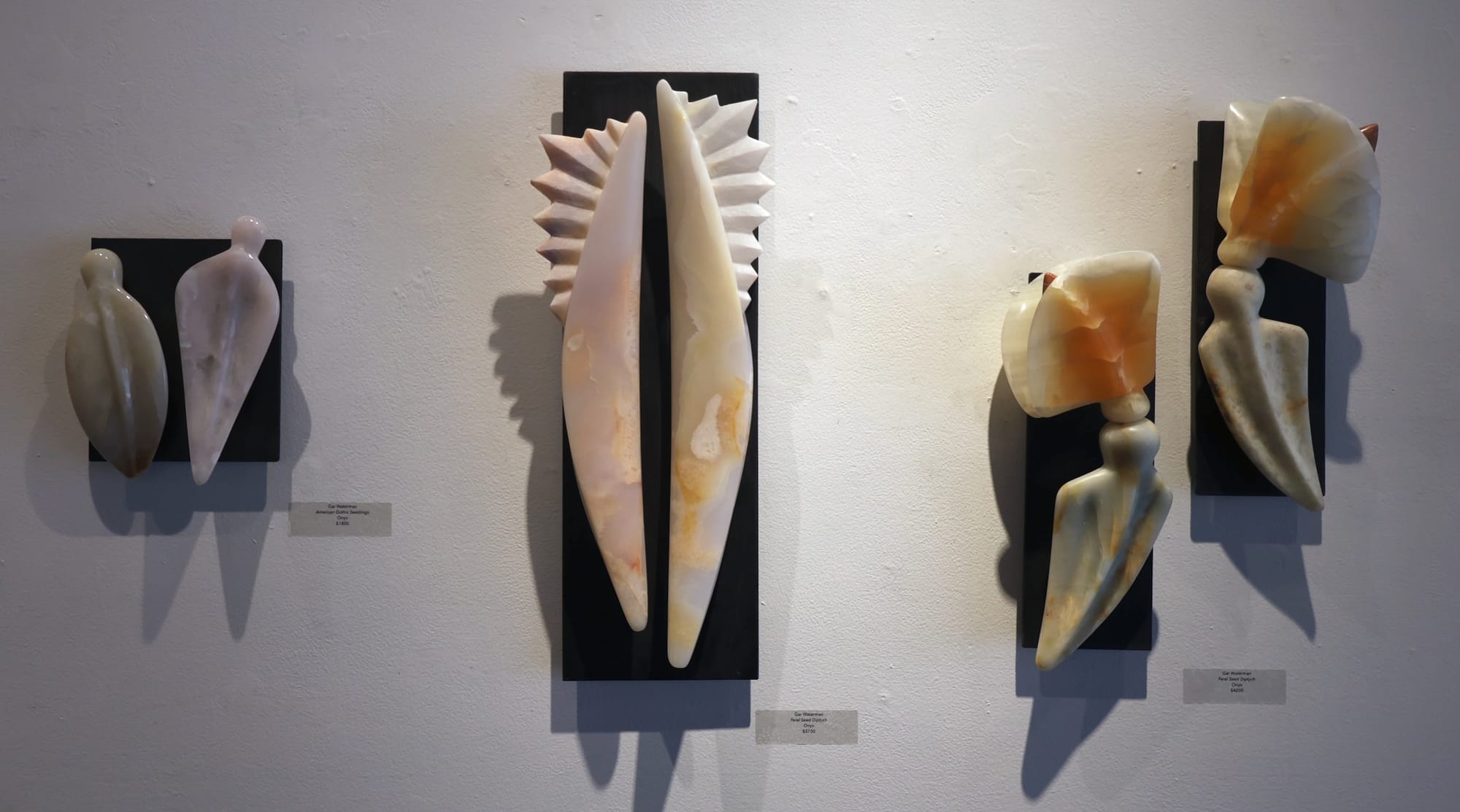
Waterman's sculptures, as their titles suggest, are all of seeds, and presumably derived closely from their forms as they appear in nature. But by playing with scale, color, and material, Waterman imbues each of his works with a sense of transient form. His seeds could be sea creatures or even simple humanoids. Every sculpture has it the sense of connection across the animal kingdom — a view that has its basis in science, as we now know that every living thing on the planet is descended from a single, first organism. Waterman's sculptures point out the profound and scientific fact that we are all related.
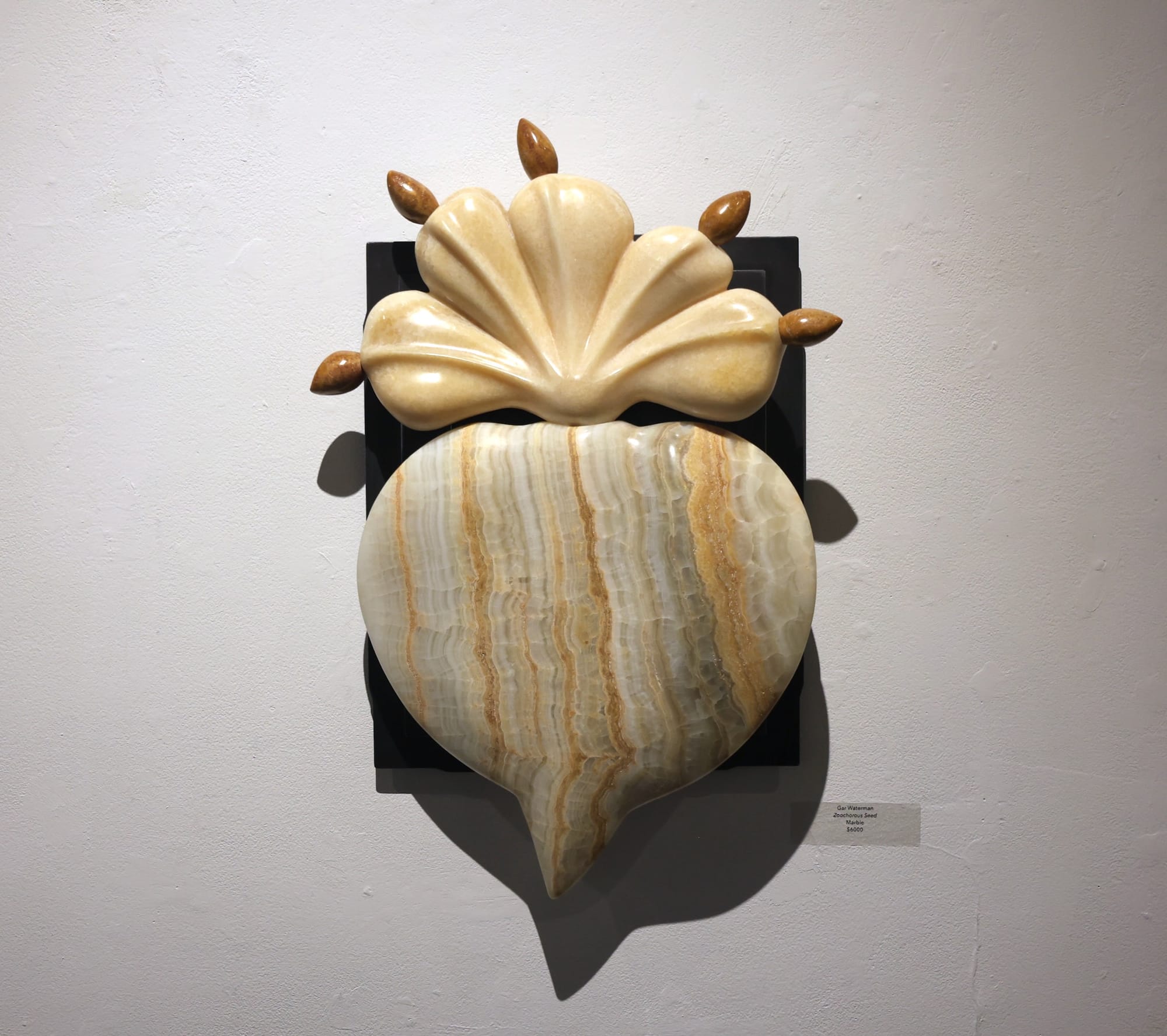
Some of the sculptures have such compelling forms that they appear to alter the materials Waterman uses. Zoochorous Seed is made from marble, and presumably heavy. But Waterman's polishing of the fronds emanating from the seed have the sense that they could move and grow in front of us. Meanwhile, the hues on the surface of the seed's shell flow like water. Suffusing the sculpture with movement reminds us that the source of the inspiration, sprouting seeds, are themselves not static objects. They stay the same long enough for us to take a sharp picture, or to serve as a model for a sculpture. But they're in movement, too, changing and growing. The only question is the scale of time.


