
An Evening With Harmonia Rosales
Amistad Center for Art and Culture
Wadsworth Atheneum
Hartford
Feb. 16, 2026
Just as the celebration of Black History should not be relegated to one month out of the year, our understanding of the expansiveness of Black History should not begin with enslavement in the New World. Black history stretches back to the beginning of time and space, as African mythology has its own take on the creation of the universe.
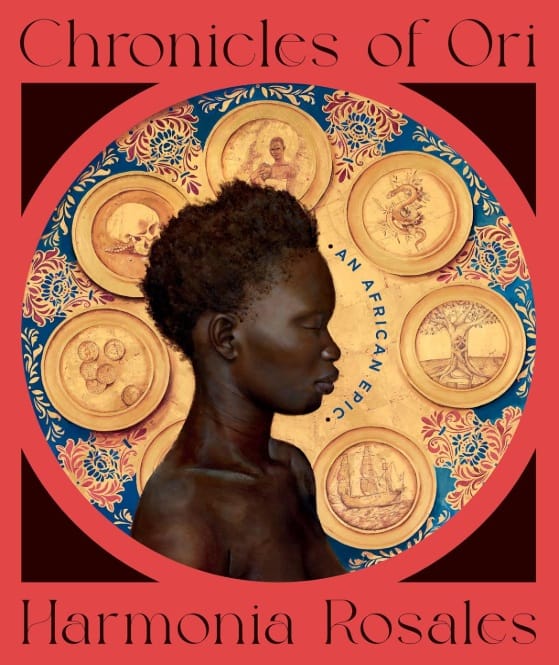
That mythology is detailed in an extraordinary book called Chronicles of Ori: An African Epic by celebrated Afro-Latina artist Harmonia Rosales. In her first published book, Rosales retells the Yoruba stories which explain the history of the universe, beginning with its formation by gods and the creation of our earthly realm and its divine spirits known as Orishas. She extends the tale all the way through the brutal violence of colonization and enslavement.
Rosales’ mythology is not a staid script of events and results, but a living tale where gods and mortals walk side by side, both growing and changing as history proceeds. One of the most gripping sections of the books comes towards the end, when the Orishas take on mortal form and endure the pain and humiliation of the Middle Passage that brought Africans to what she refers to as the West Lands. She renders her tale in lush, descriptive language, emphasizing the use of words to fill the reader’s imagination with supernatural beings stalking the land.
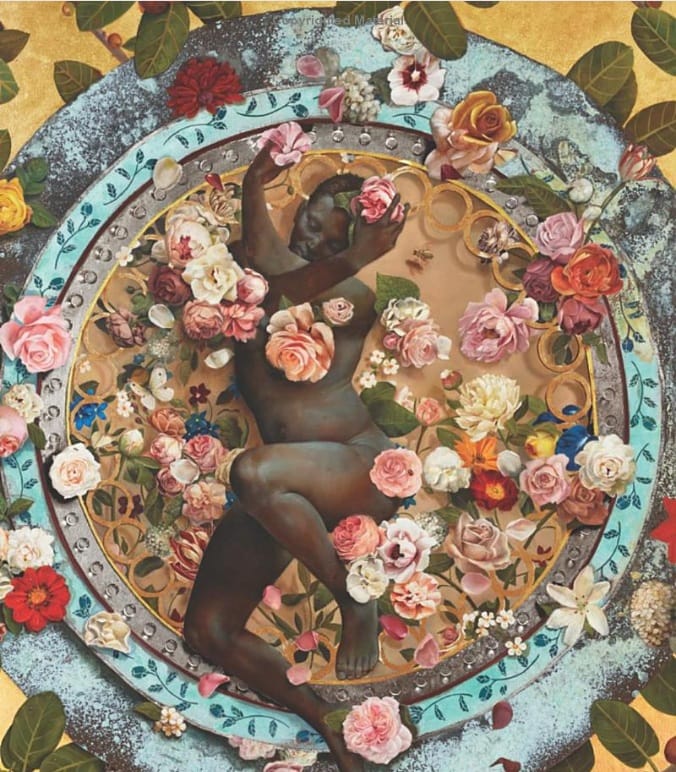
The most striking elements of Chronicles of Ori are the illustrations. Each illustration is a story in itself, dramatizing the story in vibrant colors and detailed imagery that cuts past the mind and strikes directly at the heart. It made me wish that more books had such incredible artistry to bring stories to life, but none would be able to boast the skill that Rosales brings to her work.
There was only one copy of Chronicles of Ori in all of Greater Hartford; I rushed to Prosser Library in Bloomfield to make sure I had my copy before Monday night’s book talk. It’s a breezy, entertaining read; I cruised through the book over the weekend. At the talk, Rosales explained that she wrote the book as a starting point for scholarly exploration of Yoruba mythology. She wants African myths to take their place in the Western canon alongside the well-known Greek and Judeo-Christian stories, describing her work as an act of historical correction, reclamation, and world building.
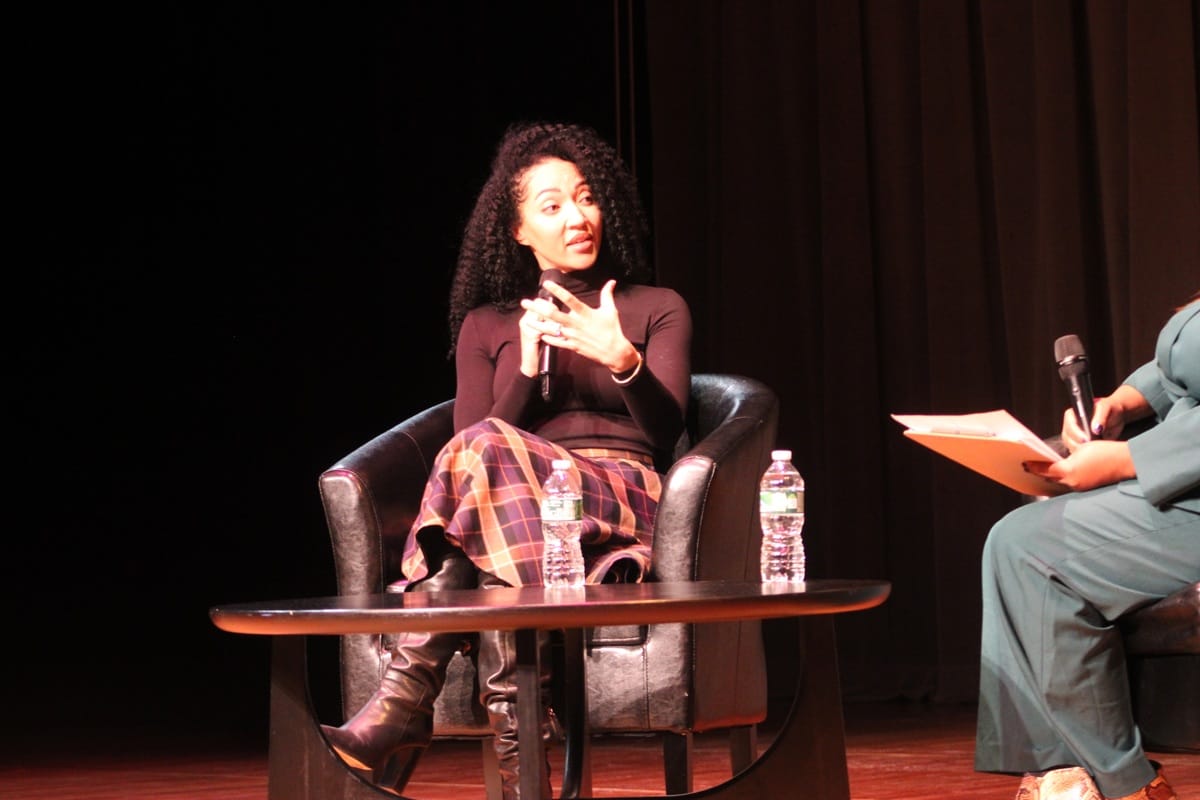
“When I first put the stories together, they're not supposed to be in a linear fashion. A lot of the understanding of the gods and nature is relational. And it takes away from the focus on us as humans, as being powerful," she said.
“My audience is not the ones who know, but the ones who are finding them, the ones who have forgotten who they were, and the ones who are just curious about these African gods.”
During the Q&A session, I asked Rosales why it was important to retell the stories in her own words. After all, I said, she could have done the artwork and simply shared a link to the Wikipedia page that explains Oshun and the Orishas.
“I'm not obviously the first woman to be painting the gods in a certain way or telling these stories,” she said. “But I realized there was something missing. Why haven't these stories been placed right alongside Greek mythology? Unfortunately, here in America, how we understand stories, it has to be linear. So what I did was to make it understandable.”
Rosales made the stories not only understandable, but enjoyable too for those of us with no background in African mythology. I watched as people lined up after the talk to purchase the book. I know I won’t be the only person in the city with a copy anymore.
NEXT
Jamil heads to Hartford Public Library to celebrate Black History Month.


