
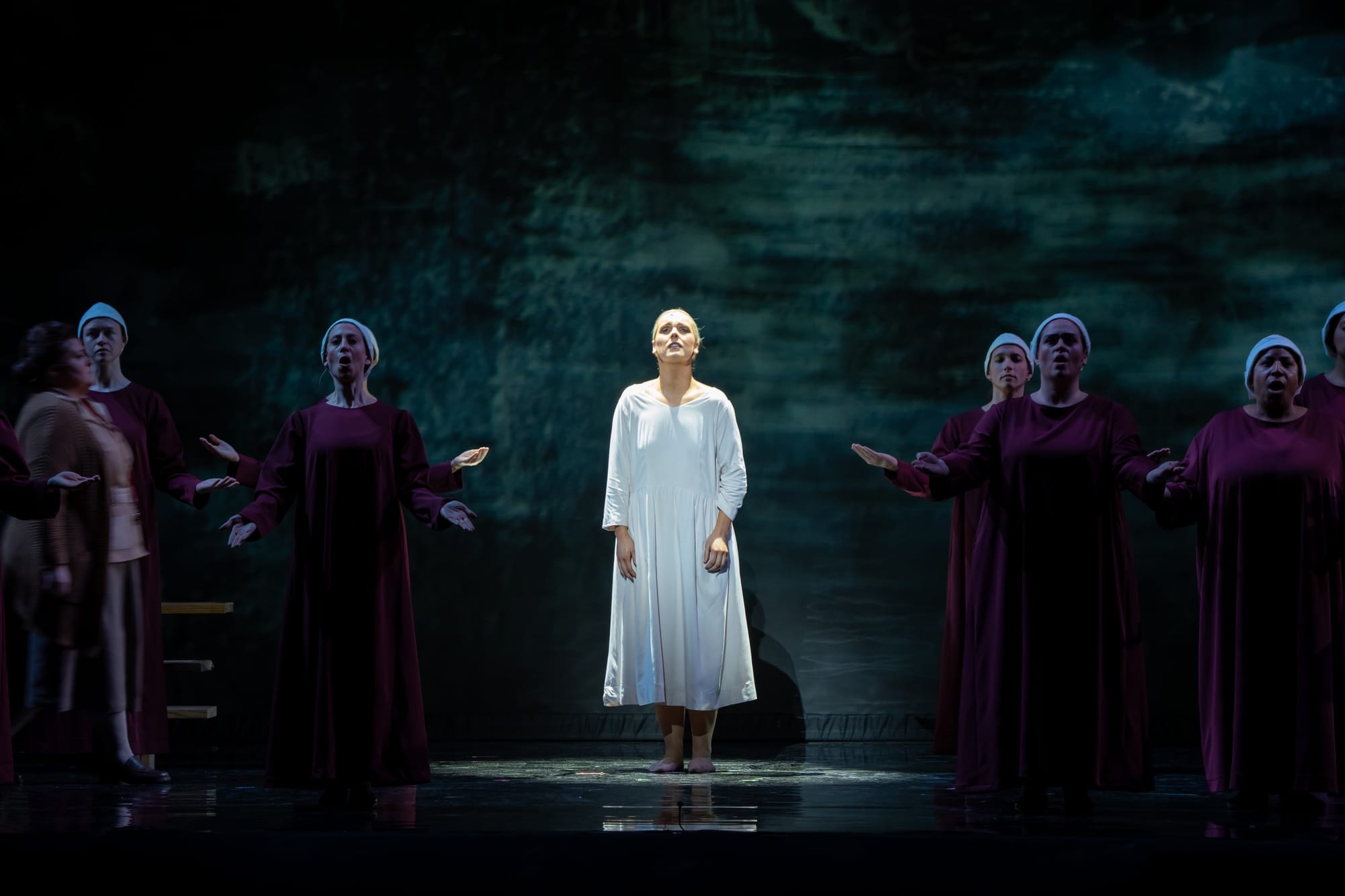
"The Handmaid's Tale"
Detroit Opera
Detroit Opera House
March 5, 2026,
Margaret Atwood’s chilling 1985 novel “The Handmaid’s Tale” has been haunting readers for decades, depicting a dystopia where women are stripped of rights and used only for the service of men. It’s since been adapted many times, including a 2000 opera by Poul Ruders and Paul Bentley, now performing at the Detroit Opera House. The Detroit Opera production stars mezzo soprano Niamh O’Sullivan and features an all-female creative team, including conductor Marit Strindlund and stage director Brenna Corner.
“The Handmaid’s Tale” follows the story of Offred (O’Sullivan), a young woman forced into sexual servitude in the new country of Gilead, the former United States, now led by an extreme, twisted Christian regime. During a time of rampant worldwide infertility, she and other Handmaids – all of whom have a history of successful motherhood – are placed into homes of the ruling class where they’re forced to have ritual sex with the Commanders to provide children for them and their wives. Women deemed incapable of having children are designated as Marthas – cooks and maids – or Aunts, the strict leaders of female affairs and enforcers of their roles. In Gilead, women are not allowed to read or write, earn money, challenge the system or have any control over their own lives. Disobeying results in severe punishment, which could be cleaning up toxic waste in the Colonies or being hanged and strung up on the Wall.
The opera leans into the horror of the times from the start. Bodies hanging from the Wall set the tone towards the top of the opera, with different sizes, genders and social classes switched throughout the performance conveying the extremity and range of punishment for those who disobey the regime. The Handmaids’ distinct red cloaks and white bonnets create a striking and eerie visual as they fill the stage in neat lines, heads down, pious and subservient, forced to repeat words that enforce their inferiority. Scenes of sexual assault are clearly depicted.
The opera is clever in bringing the book – which is written in the first-person – to the stage. A pre-Gilead version of Offred (Lisa Marie Rogali) along with husband Luke (Travis Leon Williams) and their daughter (Meridith Karls) recreate the scenes of our protagonist’s former life. The trio both conveys the personal life she was torn from as well as American society from the time before, which resembles real modern life in the United States, especially today.
The music is haunting. It’s not pretty, but neither is the story. Dark, ominous sounds replace sweet melodies, fitting a dystopian society where doom and fear have overtaken joy and freedom.
I don’t generally enjoy modern operas and was skeptical I’d like this one, even though I’m a fan of the book. But I did like “The Handmaid’s Tale.” Detroit Opera’s production was engaging, clearly conveying the world and customs of Gilead while capturing the horrific atmosphere with chilling sounds and dramatic visuals.
If the message of the opera wasn’t clear, the program’s insert with not-so-subtle messaging about women’s reproductive rights drives the point home. The story, however, spans significantly beyond that aspect of women’s rights. It’s about recognizing women as individual human beings whose value is independent of what they can do to serve men. It’s also a criticism of Christian extremism and weaponization and the severe consequences that can result if left unchecked.
Although the book came out over 40 years ago, it’s terrifyingly relevant to our modern-day political atmosphere and a warning we all should heed.


