
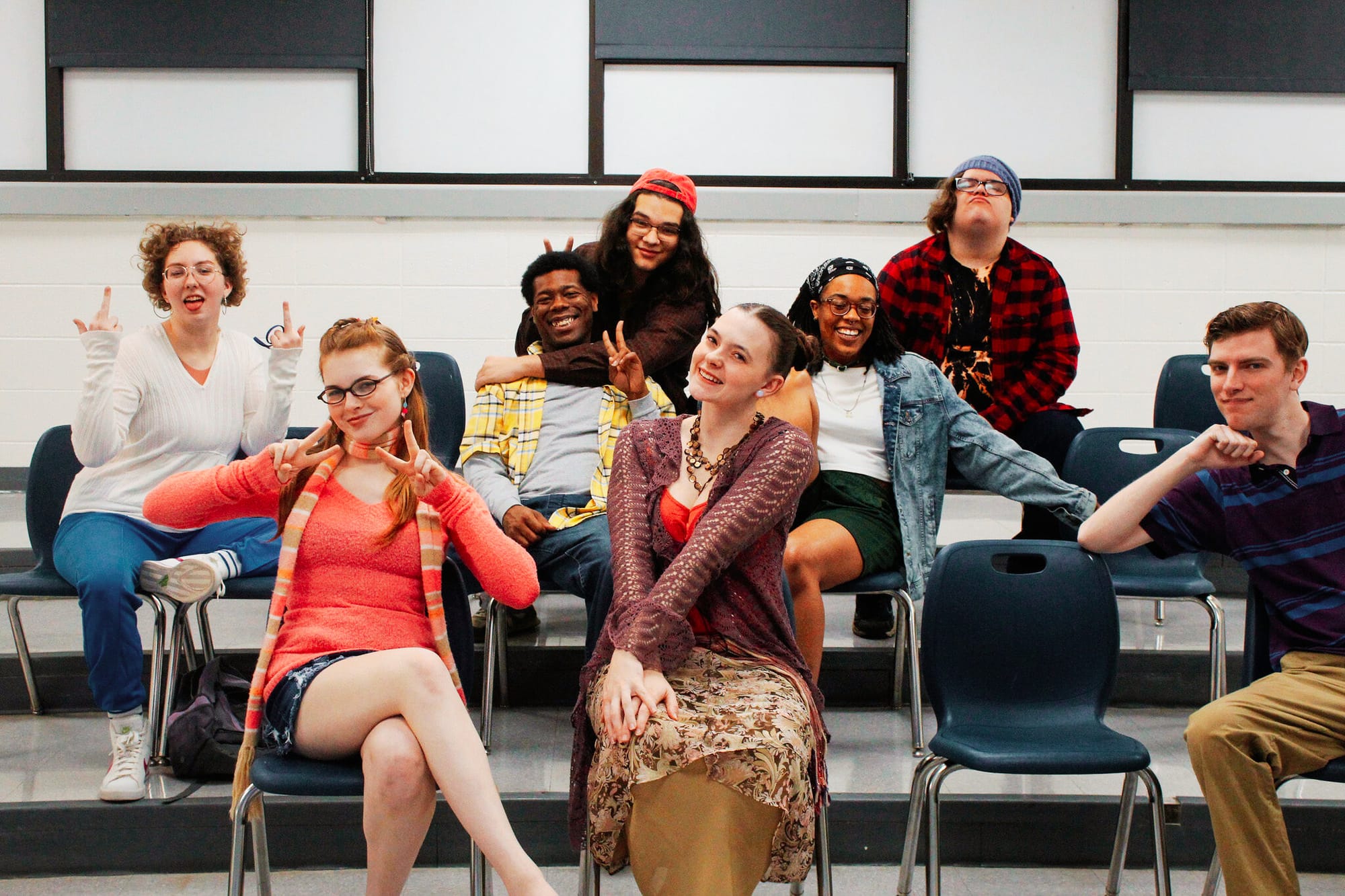
Theatre Tulsa x Karmen GoldenBough: Dog Sees God
Theatre Tulsa Studios
March 28, 2026
There’s something so satisfying about a Bildungsroman. As a teen, I found stories about youthful emotional growth melodramatic, but I’ve discovered a new love for them in my adult years. Uninhibited characters who are simultaneously so constrained by high school social politics! New budding love! Adults that just don’t get it! An epic house party where the drama of the school year shakes everything up! A final confrontation that’s usually violent and occasionally leads to death! You know this trope from all the movie classics: Mean Girls, Heathers, Thirteen, Superbad. When brought to the stage, as it was in Dog Sees God: Confessions of a Teenage Blockhead last weekend at Theatre Tulsa Studios, it’s totally cathartic.
Bert V. Royal’s 2004 play takes Charles Schultz’s beloved Peanuts characters, ages them up, and reimagines them as some of the worst high schoolers you’ve ever met. Matt (Pigpen), the jock, is an arrogant clean freak who can’t control his anger. Tricia (Peppermint Patty) and Marcy (Marcie) are your standard inseparable mean girls spewing fatphobic and homophobic rhetoric. Pothead Van (Linus) is philosophical but morally empty.
At the center of it all is CB (Charlie Brown), who finds himself disillusioned by the pursuit of popularity and embroiled in an identity crisis after the sudden death of his beloved dog. His confusion is amplified by his budding romantic feelings for Beethoven (Schroeder), a music aficionado and social outcast. Given that this play was written in the early 2000s and set in the ‘90s, CB’s sexual awakening does not go over well with his friend group. Actually, it goes horribly.
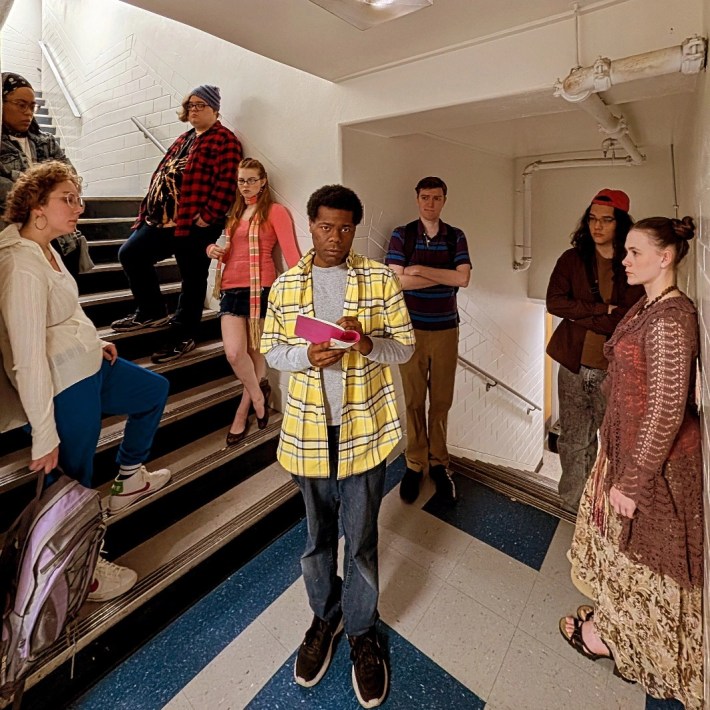
The tight cast of this show, self-produced and directed by Karmen GoldenBough in collaboration with Theatre Tulsa, fully leaned into their characters, not afraid of highlighting their rougher edges. Dawson Lynch was nauseating as Matt with his braggadocious bro-ness. You could easily find Ella Summers, who played Marcy, in the Mean Girls universe with her fully-embodied catty posture and tone. As Van’s sister, the Lucy parallel, Nicky Finch brought a comedic and cavalier mania that concealed the character’s true vulnerability.
Kymber Sage shined as CB’s sister, making the slightly obnoxious theatre kid who’s trying to find herself impossible not to love. Her one-woman-show monologue was an absolute show-stopper. Christian Stubblefield effortlessly led the cast as CB, his performance predominantly guided by the emotional desperation that comes with grief.
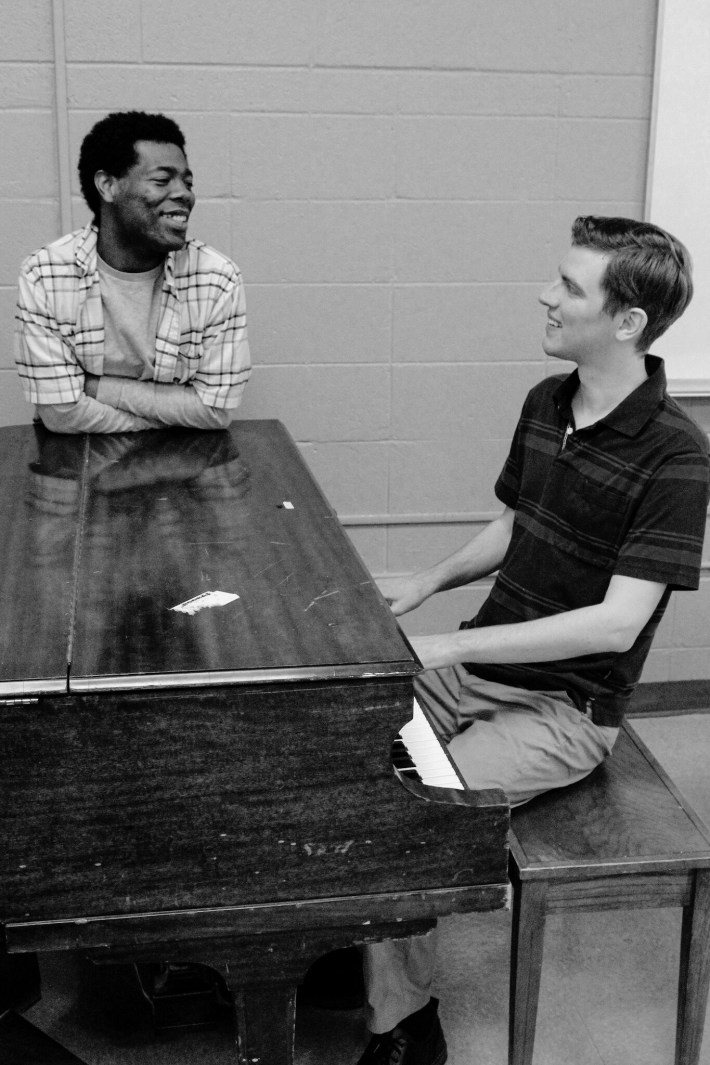
Amidst the play’s sea of angst, GoldenBough found moments for tenderness that felt like a breath of fresh air. In act one, overcome with grief about the death of his dog, CB is lured to a music room where Beethoven, played by Caleb Baumgartner, is practicing piano. These childhood friends find themselves on the outs at the start of the play, as CB is part of the popular group that bullies Beethoven for his perceived queer identity, and this initial meeting is awkward. I was gripped by the way GoldenBough guided these actors through CB’s despair and Beethoven’s anger—an almost-fight—and into the two characters falling in love while playing “Heart and Soul” on the piano. Thanks to the direction and Stubblefield and Baumgartner’s stellar performances, this was the best scene in the show.
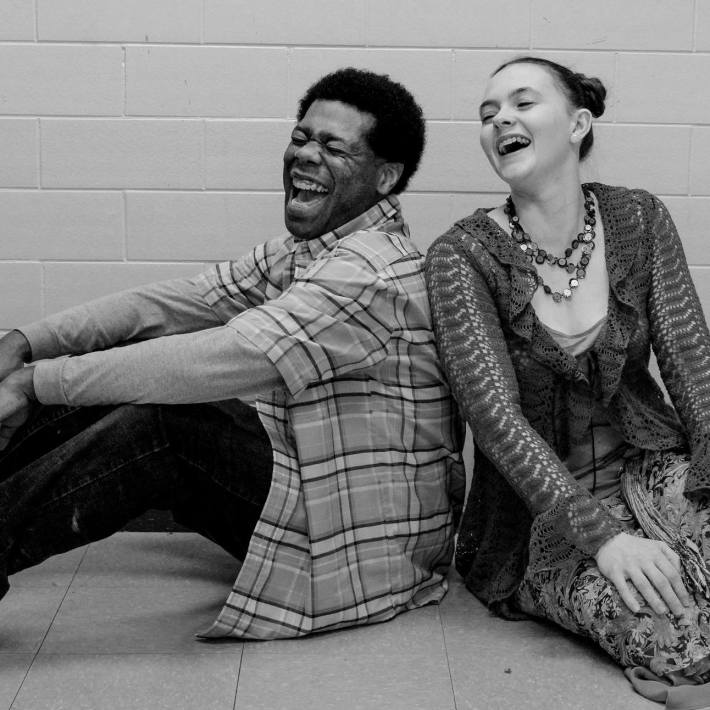
GoldenBough achieved another effective tone-switch at the end of the play when, after sharing a sweet moment of camaraderie with his sister (another strong scene in this show), CB finally receives a letter back from his pen pal, to whom he has been writing candid letters throughout the play when he needs an outlet for his sadness or confusion. This letter comes at a crucial time, when CB’s desperation has hit its maximum level after receiving the news that Beethoven has taken his own life. On top of it all, the bullies at school have started acting like Beethoven was their friend, and the fakeness makes CB even more upset. Out loud, the cast reads sections of the letter, whose invisible author assures CB that everything will be okay and that there’s someone in the world who cares about his wellbeing. Apparently, I needed to be told that as well, judging by the waterfall that cascaded from my eyes.
For the Peanuts fans, the easter eggs in this production delightfully extended beyond the character parallels: adults whose voices were loud and muffled, references to other minor characters in the Charles Schulz universe, and a moment when the cast broke out into the iconic dance from A Charlie Brown Christmas during a house party. With a fun lighting design by Anna Puhl and a musical lineup of absolute bangers from the early 2000s for the scene transitions, the show provided moments of much-needed levity in what was otherwise a brutal script.
Royal’s play doesn't add anything revolutionary to the traditional coming-of-age story, even with the question of sexuality that features so prominently in the main character’s arc, but GoldenBough’s production embraced the genre for what it is and created a loud, explosive, and enjoyable afternoon of theatre. It’s further proof that Theatre Tulsa’s black box space is consistently the home of some of the most interesting and accessible theatre in town.


