
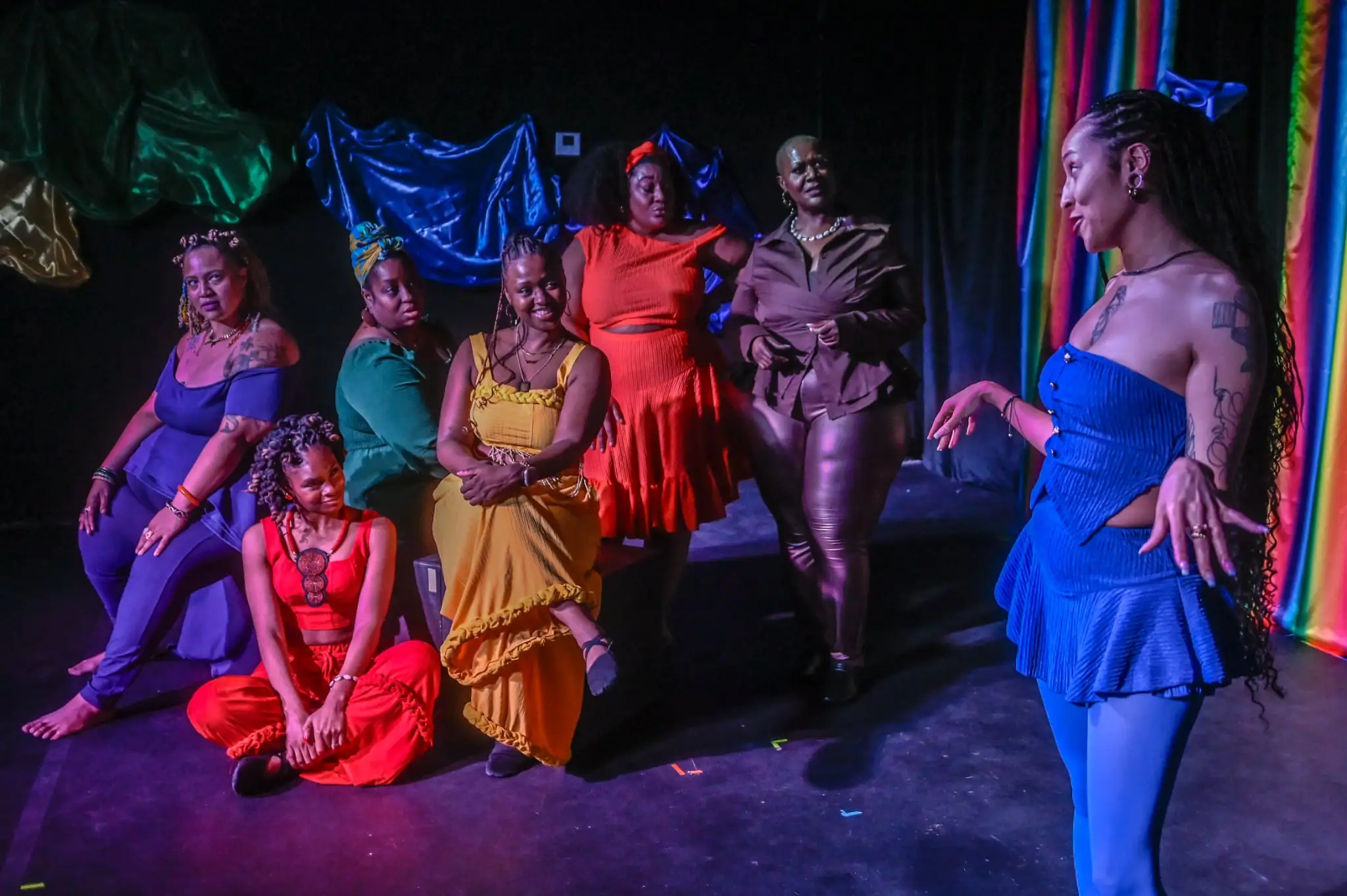
World Stage Theatre Company: for colored girls who have considered suicide / when the rainbow is enuf
World Stage Studios
February 27, 2026 (performances run through March 8)
I struggle to stay afloat in poetry. The aesthetics of words, the weaving of consonants and vowels to craft an impression or evoke a mood, the fact that there are rules but also there are no rules—it all makes me feel more adrift than ferried. The medium, done well, requires such naked vulnerability—which makes the act of reading or performing it intimate (or embarrassing, depending on who you ask). It’s not a genre I tend to seek out.
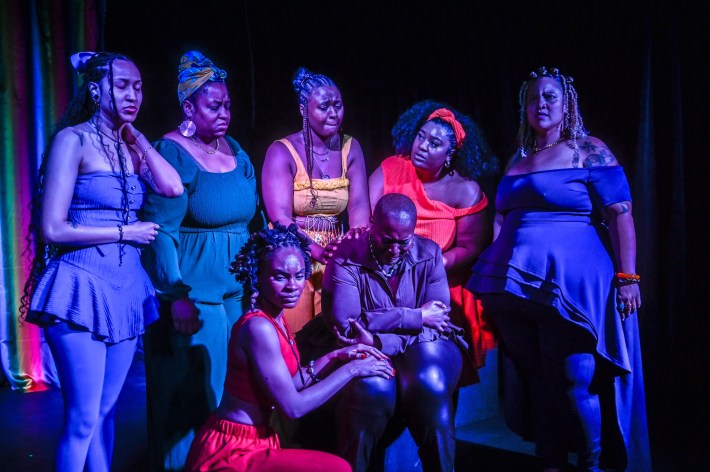
Because of this, Ntozake Shange’s for colored girls who have considered suicide / when the rainbow is enuf, which opened at World Stage’s cozy black box this past weekend, felt intimidating at first, and not just because of the subject matter. The Tony-nominated 1976 play is an unflinching look into the experience of Black women in America. Instead of a traditional story with plot, the piece pulls together 22 of Shange’s poems, performed by a cast of seven women, each referred to in the script as “lady in (insert color here).” The poems are strung together with songs, music, and choreographed movement. It’s a type of storytelling that Shange named “the choreopoem,” with roots in Central and West African traditions and the work of women involved in the Black Arts Movement, making it unlike anything I’ve ever seen on a Tulsa stage.
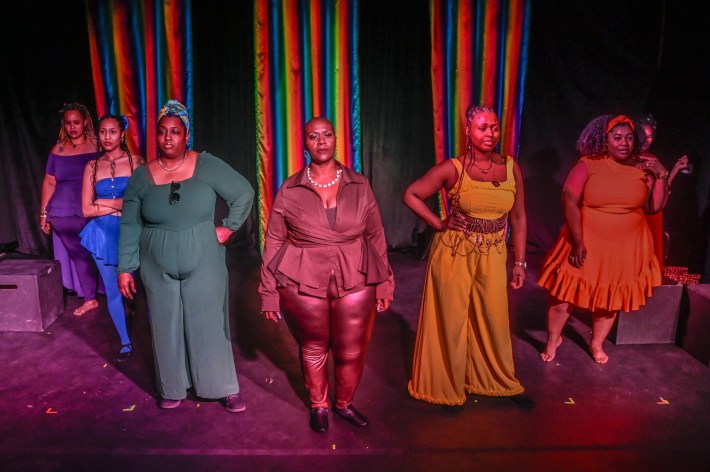
This was apparent from the moment the show began, when Bebe Taylor and Karina Huft silenced the giddy opening night audience chatter with their commanding drums. The lights (designed by Celeste Vaughns) swelled and, two by two, the cast danced onto the stage, a joyful overture that set up the entrance of Lady in Brown (Dionne Lambert), who leads the show’s opening poem “dark phrases.” In true “Alex listens to poetry” fashion, I got lost at first searching for the narrative in the abstract, but Lambert’s raw performance pulled me into the moment, into the words, and left me in tears. We were just three minutes into the show.
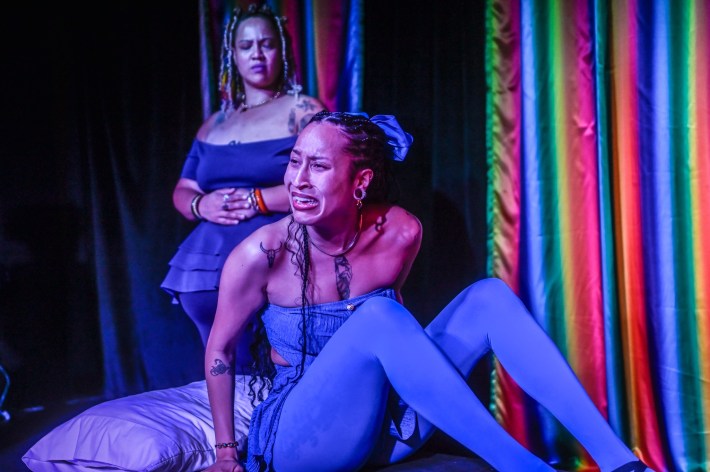
The 90-minute one-act is filled with gripping performances that similarly arrested my attention. In “abortion cycle #1,” the quiet trepidation of Élle Evans as Lady in Blue grew into aching terror before lulling into a tense guilt that made me feel absolutely (and appropriately) nauseated. In a line about the procedure itself, the way she said “like soft ice cream cones” was haunting.
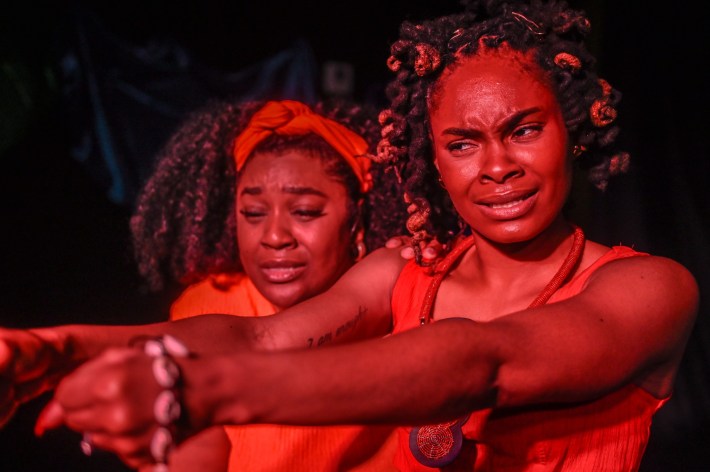
As Lady in Green, Stephanie Alecia Rose brought a deadpan humor that anchored the group moments and made me chuckle. She shined equally during her solo poems, where she brought an equally grounded yet layered delivery that had me hanging onto every word. In a dynamic performance, Brianna Nnenda (Lady in Red) commanded confidence in the poem “no assistance,” hilariously impersonated a man at one point, and expertly built tension in the penultimate poem "a nite with beau willie brown,” the conclusion of which—along with a supporting performance by Jerica Wortham (Lady in Orange), an expert lighting cue, and drum beat—left me in true horror.
While these moments stayed with me, the true power in this production emerged from the moments where all seven women shared the stage. Whether the scene was lighthearted (singing nursery rhymes in unison, playing with each other’s hair, dancing) or laced with loneliness and grief, this group of women came together in a natural and unified way, making them one of the most creative and effective vehicles of storytelling I’ve seen in Tulsa theatre.
This speaks to Kelli McLoud-Schingen’s power as a director. Her ability to bring these actors together and create a space where they all felt comfortable allowed them to navigate dense, vulnerable material and commit wholeheartedly in front of an intimate audience that might, on any given night, be filled with strangers. Seeing how these women connected to the material and how the audience responded to their performances made it clear that even though many things have changed since this play was first produced 50 years ago, many things have not changed. Its message is as relevant and urgently important as ever.
As I drove home from the show, I found myself thinking in alliteration and metaphor. I didn’t have a whole thought or story, just phrases, and they tapped on something that felt neglected. It reminded me of what good poetry does and why it is so important: it unlocks a language that allows us to communicate about experiences that are difficult, or impossible, to put into words. And, as this play and this production testify, there’s a greater power in sharing those experiences than in keeping them to ourselves. As Lady in Green says, “the strength and beauty of whatever we is will singularly outdo an i.”


