
Baton Rouge St. Patrick's Day Parade: Wearin of the Green
Baton Rouge
March 14
Baton Rouge has been on a holiday marathon since Halloween, and on Saturday, the Wearin of the Green parade rang in the finale.
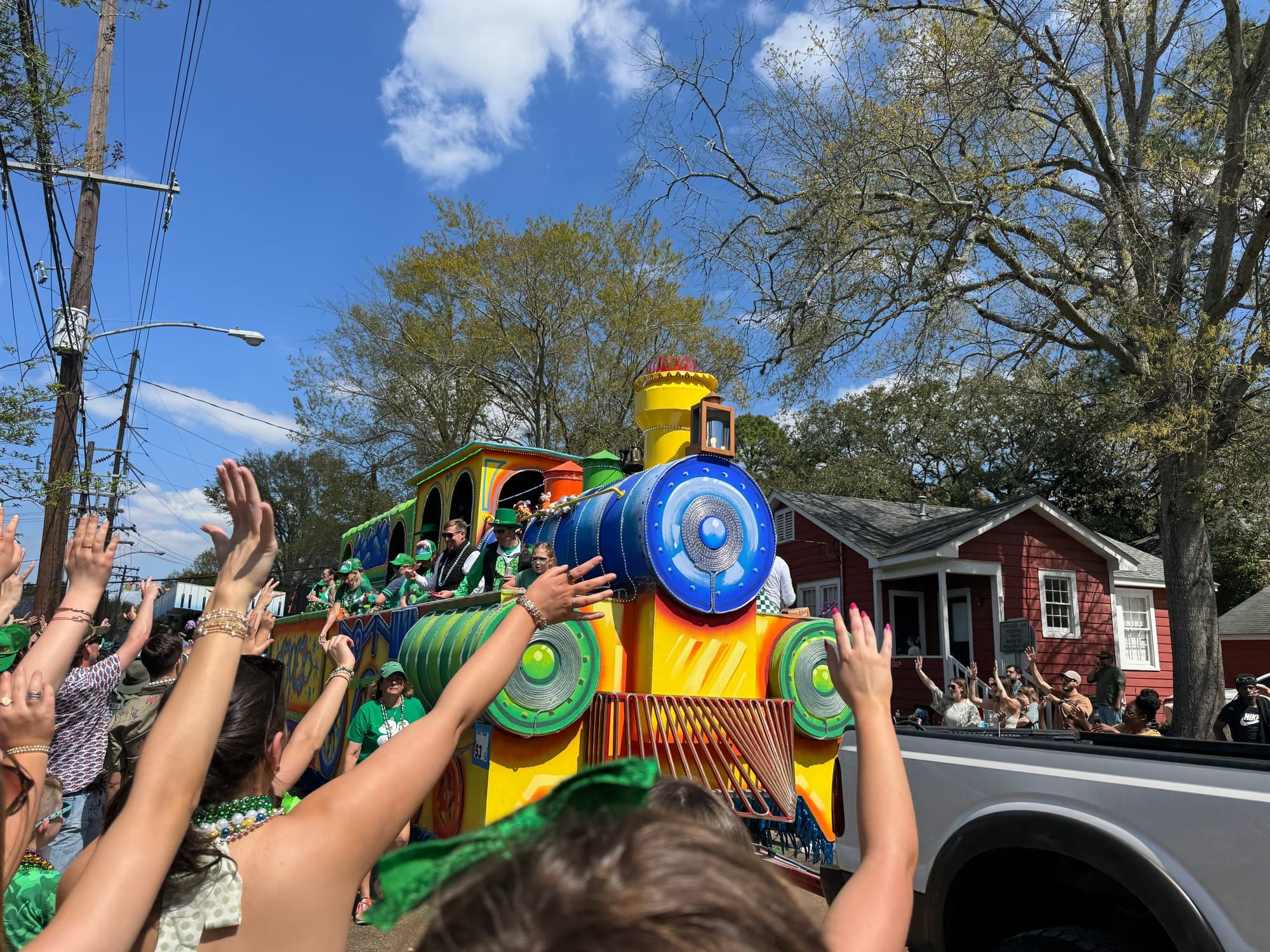
The annual St. Patrick’s Day is the second biggest parade day in Baton Rouge (the first being Spanish Town). In its 41st year, the parade was two hours long with perfect parade weather. The grand marshal was Jim Cantore, a beloved meteorologist for the Weather Channel who has covered many storms in the region.
The vibes for the parade are wholesome. It’s a family-friendly affair with lots of throwback music and fun rainbow colored floats. Compared to Spanish Town, there were a lot more bands marching in the parade. The Baton Rouge Caledonian society even pulled up with bag pipes and kilts.
St. Patrick’s Day is one of those holidays that are celebrated big and loud with little connection to the original purpose – which isn’t necessarily a bad thing. This year’s parade was long and joyful. Cantore, who is from the Northeast, was a welcome addition. Cantore usually comes to Louisiana for less joyful reasons, like hurricanes. Two years ago during Hurricane Francine, businesses and people alike made signs and posts in jest asking him to please stay away due to the fact that he’s always covering the eye of the storm.
The St. Patrick’s Day Parade last year was disparaged for participants not throwing enough stuff. This year, as if in direct rebuttal to these claims, the floats were stacked to the brim with throws, but the people riding in the floats didn’t seem ready to throw them. Instead, they were wrestling with packages, detangling beads, and in some cases throwing entire packages of 30-50, which often exploded upon impact on the street.
In recent years, concerns over the environmental/public health impact of Southern Louisiana’s parade culture have proliferated. According to the BBC, the beads that are so fun to catch not only end up clogging up local drains but have also been found to lead to elevated lead levels in the areas around parade routes and linked to increased cancer risk. Pointing this out makes one feel like a wet blanket. I've actively avoided writing about it in my parade coverage up til this point because it's not specific to any parade. It's a collective problem.
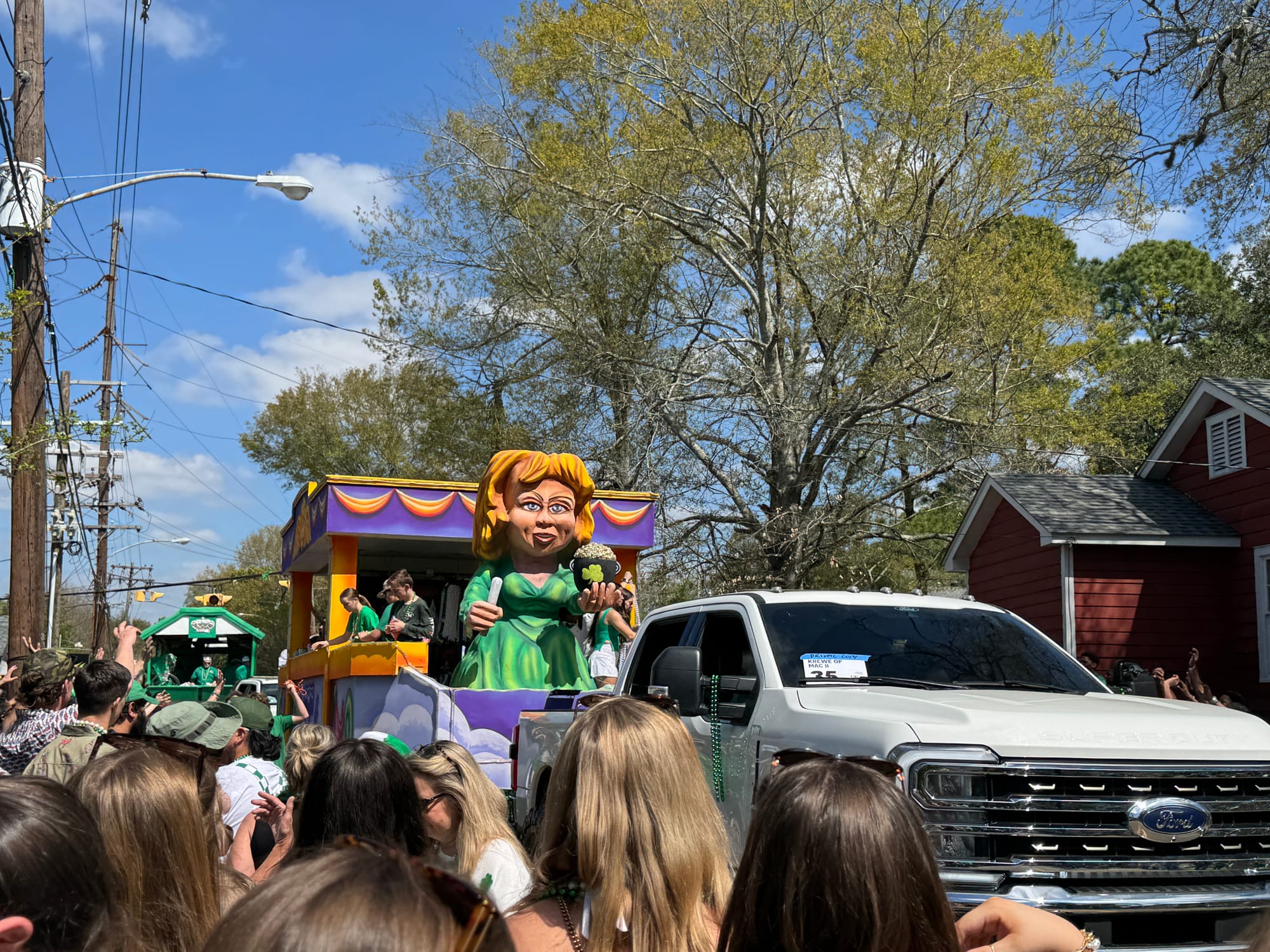
There’s a novelty to catching beads and parading. For longtime residents, I’m sure there’s nostalgia too. As a resident of Spanish Town, I can say that over a month after the parade and cleaners have swept through the streets, I still see beads on the ground and crushed bits of plastic on the street when I walk around the neighborhood. This is what’s getting rained on and flushed into our sewer systems. It might be uncool to say, but catching one string of beads is fun. Catching an entire pack of 50 feels like a waste. The problem is what happens to the beads after they’re caught … or simply crushed on the ground.
There has to be a better way to do this. In fact many people are working toward solutions, but they haven’t gone mainstream yet. The impasse is emblematic of the environmental challenges we face in general. The tradition must continue, solutions are expensive, plastic is cheap. I don’t know how we get out of this, but the bare minimum is separating throws so that people can actually catch them. Maybe next year, we can do better.


