
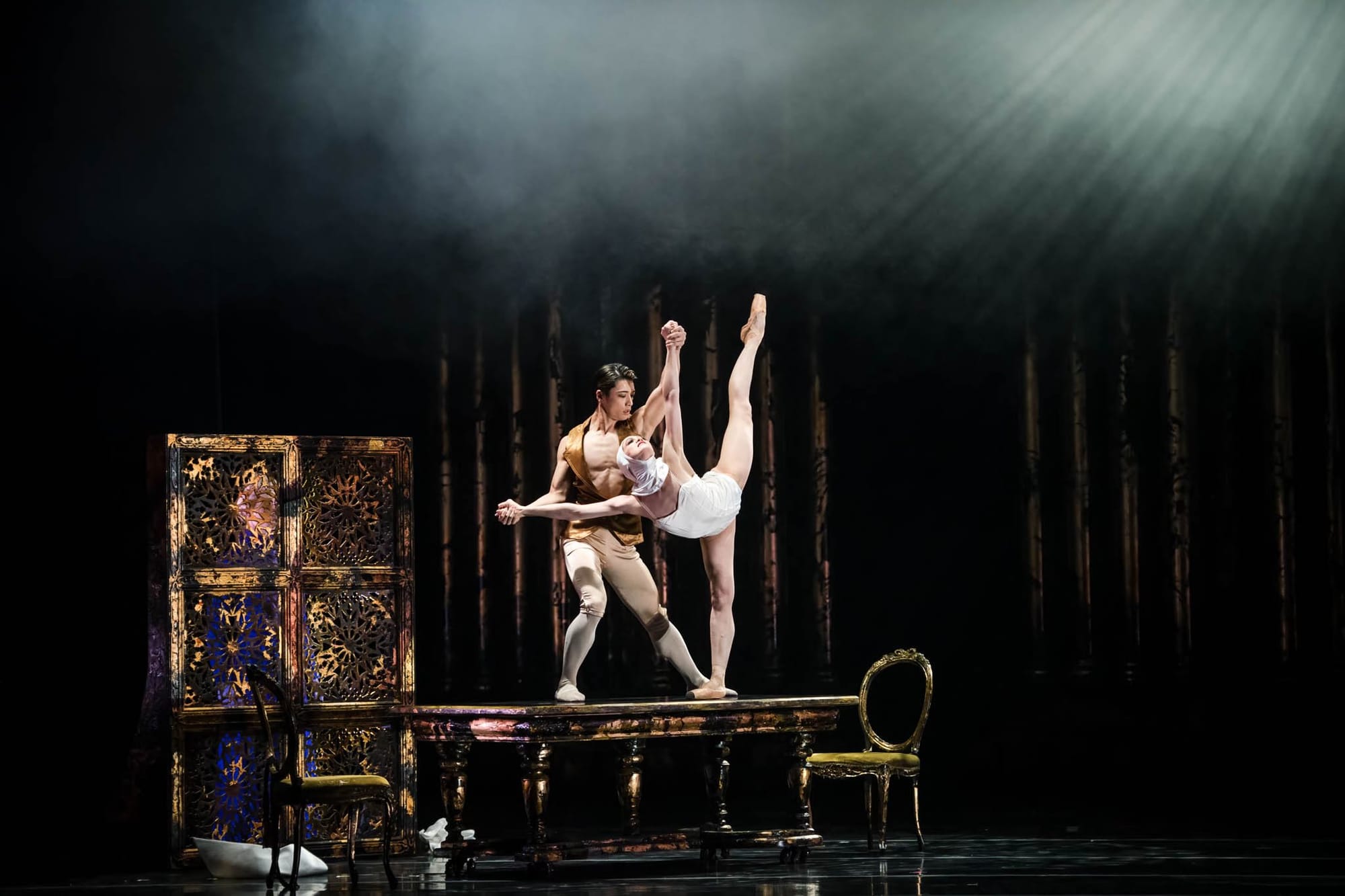
Tulsa Ballet: Casanova
Tulsa Performing Arts Center
March 29, 2026
As someone who remembers a time when it was considered risky for Tulsa Ballet to show two men partnering each other onstage, I was ecstatic to see Casanova hit the TPAC last weekend, complete with marketing that didn’t apologize for but leaned into the ballet’s sex appeal. Family-friendly productions are bread and butter for ballet companies, but there’s room for so much more. As it gets ready to perform five already-sold-out shows during its first-ever appearance at London’s Royal Opera House in May, Tulsa Ballet is taking “more” seriously.
How can an elite historic organization performing an elite historic art stay connected with today’s audiences? Like this: by reimagining what the art form can do for them. TB is gambling that people want to see something real now and then in a story ballet, not just fairy tale fantasies. It’s a smart move on several levels, as the company reaches toward audiences it maybe hasn’t reached before, and gives regular customers something that feels fresh, provocative, and personal, on a grand scale.
Tulsa Ballet has been experimenting with big, bold narrative ballets for years now, and in British choreographer Kenneth Tindall they’ve found a strong partner who’s built a repertoire for his own company, Northern Ballet, that reimagines old stories in new ways, with visual effects and set designs that rival Broadway’s best. Casanova, created for Northern Ballet in 2017, hits a sweet spot here with a period piece that brought the sensual dimension to the front. And Tulsa was ready: the applause at the end of Sunday’s performance went longer and louder than I’ve heard at the ballet in quite a while.
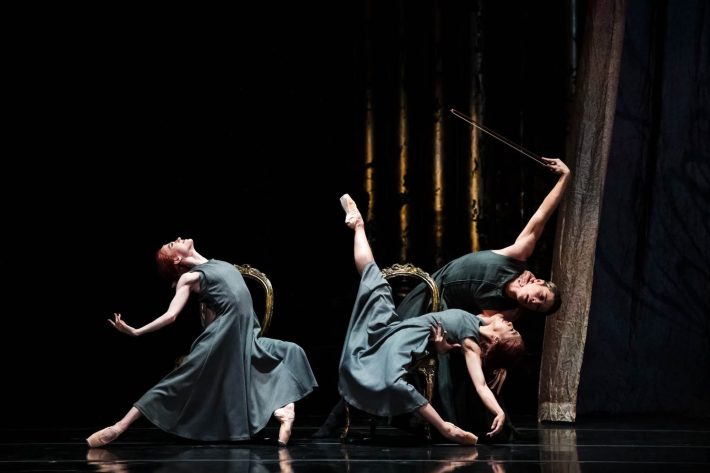
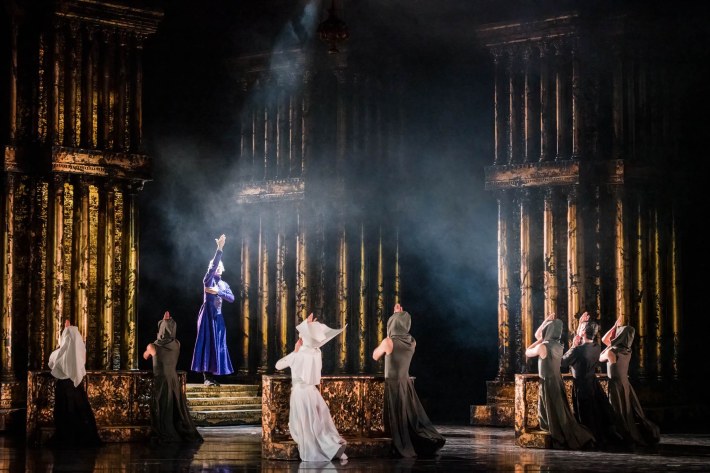
The promised sexiness of Casanova wasn’t a stunt or a tease but something very tangible, set in an 18th-century Venice I could almost smell, with huge columns of tarnished gold and costumes in shapes and colors that I wanted to run my hands all over. Monks and priests and nuns were as heat-inducing here, in their sleeveless robes, as the courtesans in their crinoline cage skirts and saturated stockings. (It wasn’t just apples getting tasted on those tables in Act Two.) European history is not a pure and holy place; it’s more often impure and unholy, and Casanova, based on a biography of the man himself, invited us to look at that head-on. In the world of this ballet, religious institutions harbored corruption. Society exploited the labor of women and sex workers, among many others. The powerful silenced the vulnerable to protect the privileges of their own cabal. This is part of European fine art's heritage, just as much as Sleeping Beauty is.
The hums of pleasure I heard during intermission conversations weren’t mainly about the dancers locking around and spilling over each other in every possible configuration, the hungry eyes and thighs and biceps. They were about the show’s theatrical, world-evoking alchemy: the costumes and sets by Christopher Oram that played with every glint of Alastair West’s jaw-dropping designs for light and shadow; the simple movable architecture that created moods from menace to ecstasy as the pieces shifted; the thrumming cinematic score by Kerry Muzzey; the movement that drew ballet technique into forms that looked like something from a music video, fluid and grounded and full of specific motifs (especially for hands and feet) that helped our eyes track ideas throughout the performance. Tulsa Ballet has a wonder on its hands in Rebekah Peddy, who as Director of Production kept all these elements perfectly titrated in a liquid landscape.
Casanova is a story about knowledge—spiritual, sociopolitical, and artistic as well as carnal. It literally begins with a book, a forbidden one, given by a Father Balbi (in a devastatingly vivid performance by Teague Applegate, a community theatre actor as well as a TB demi-soloist) to the protagonist, who starts out as an aspiring priest. LED lights set inside the book’s pages gave it a horror-movie punch whenever it was opened. Like the musician characters who bowed their bodies instead of actual instruments, this bit of stagecraft was well-deployed and memorable shorthand (very useful in a narrative so packed with characters and plot points that it was useless to try to follow it without reading the synopsis).
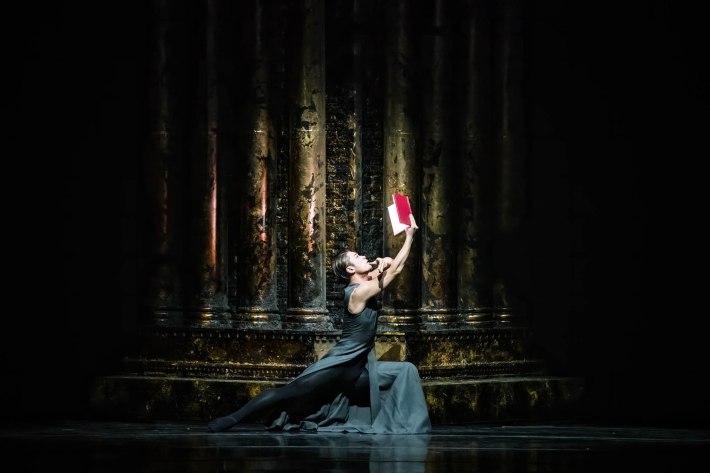
Helped in part by the fresh face of principal dancer Jun Masuda in the title role, Tindall’s Casanova came across not as a debauched fiend but as a lover: of esoteric wisdom, of music, of storytelling and fine clothes and people both simple and stunning. The word “erotic” comes from eros, after all, and eros means desire, and desire can move toward just about anything, from grimoires to girls to God. In Tindall’s estimation, this man—part polymath, part naïf—just wanted to celebrate everything he had ever touched, to mark it all down, to make it last through his art.
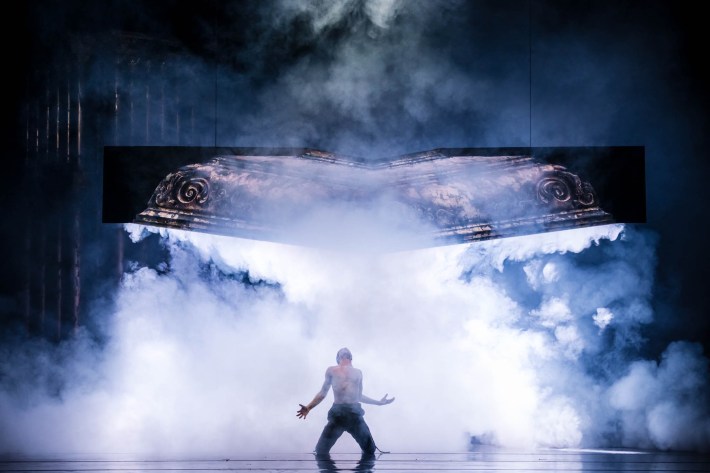
On the other side of desire is often despair, and Casanova’s almost killed him; near the end, we saw him suspended over the literal brink of the stage, floodlit from the front, as he prepared to end it all. But what haunted him from his life of wanting—the memories, the beauty, the heartbreak—resolved into a final scene reeling with color and movement and sound, with all those he had touched coming forward again to dance together, each holding a page of the book (Histoire de ma vie) that would establish him in history’s canon forever.
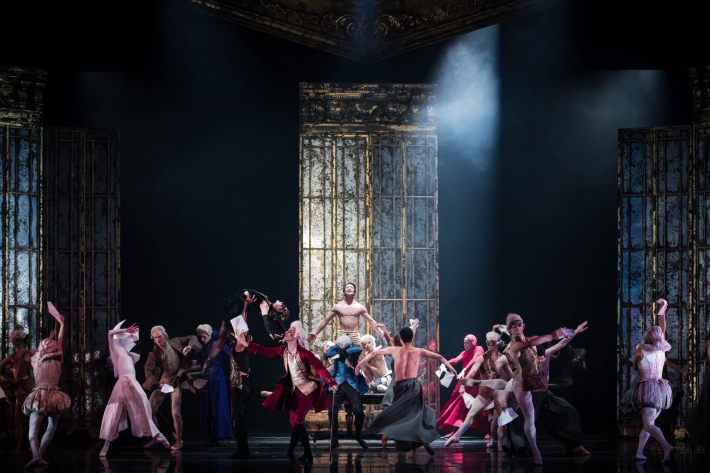
I gathered many moments during this show that’ll come with me in my own inner history: the huge chunk of ceiling above the stage that picked up hints of color from below and then pressed down to signify a prison cell, with bars made of light; the rose-colored curtain that unfurled from above at Casanova’s first seduction; the foot-propelled kneelers; the cascade of gossip down a long line of courtiers; the wrapping and unwrapping of a binder around the chest of Nao Ota, and the hand-over-face “mask” motif in her powerful duet with Casanova; Masuda’s time-stopping aerial maneuvers (and his many flawless costume changes right in front of the audience); the sunset shimmer that melted over the dancers’ skin; a repeated deep, carving reach with one arm across open pages, tabletops, and spaces between people.
Outside the concert hall, dance has always been a way to express and explore desire. We don’t often see it that way in the world of ballet, which usually strips the flesh off its dancers as it turns them into lean, keen instruments. But desire is a driving force there too: why else would a dancer spend hundreds of thousands of hours practicing this art? Why else do we go to see them perform these feats if not to relish their bodies’ intelligence and power, and reimagine our own? I love a Technicolor swoon or an abstract exploration or a fantasy pas de deux on the ballet stage, but I loved this dramatic unlacing of the corset very much—this reminder that dance is a way to know the world more deeply, not just escape from it.


