Present Day Traces of Segregation, Civil Rights, and Collective Memory in Louisiana
Old State Capitol
Baton Rouge
Through March 14
A juke joint where Black musicians could perform in the Jim Crow South. The site of the South’s first large scale bus boycott. Meeting places where activists organized and planned the Civil Rights movement. These are just a few of the many places in Baton Rouge that are connected to the Civil Rights Movement.
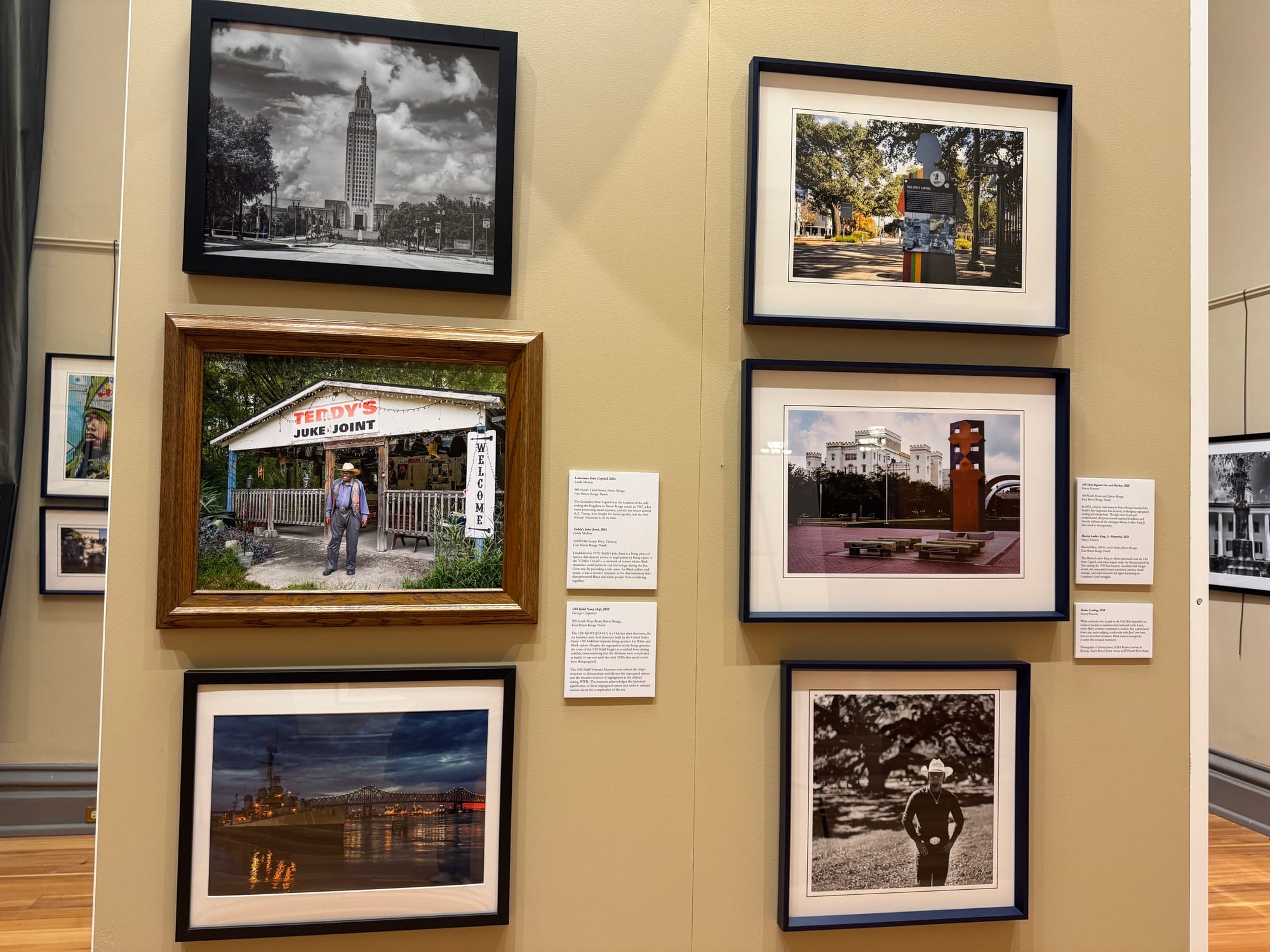
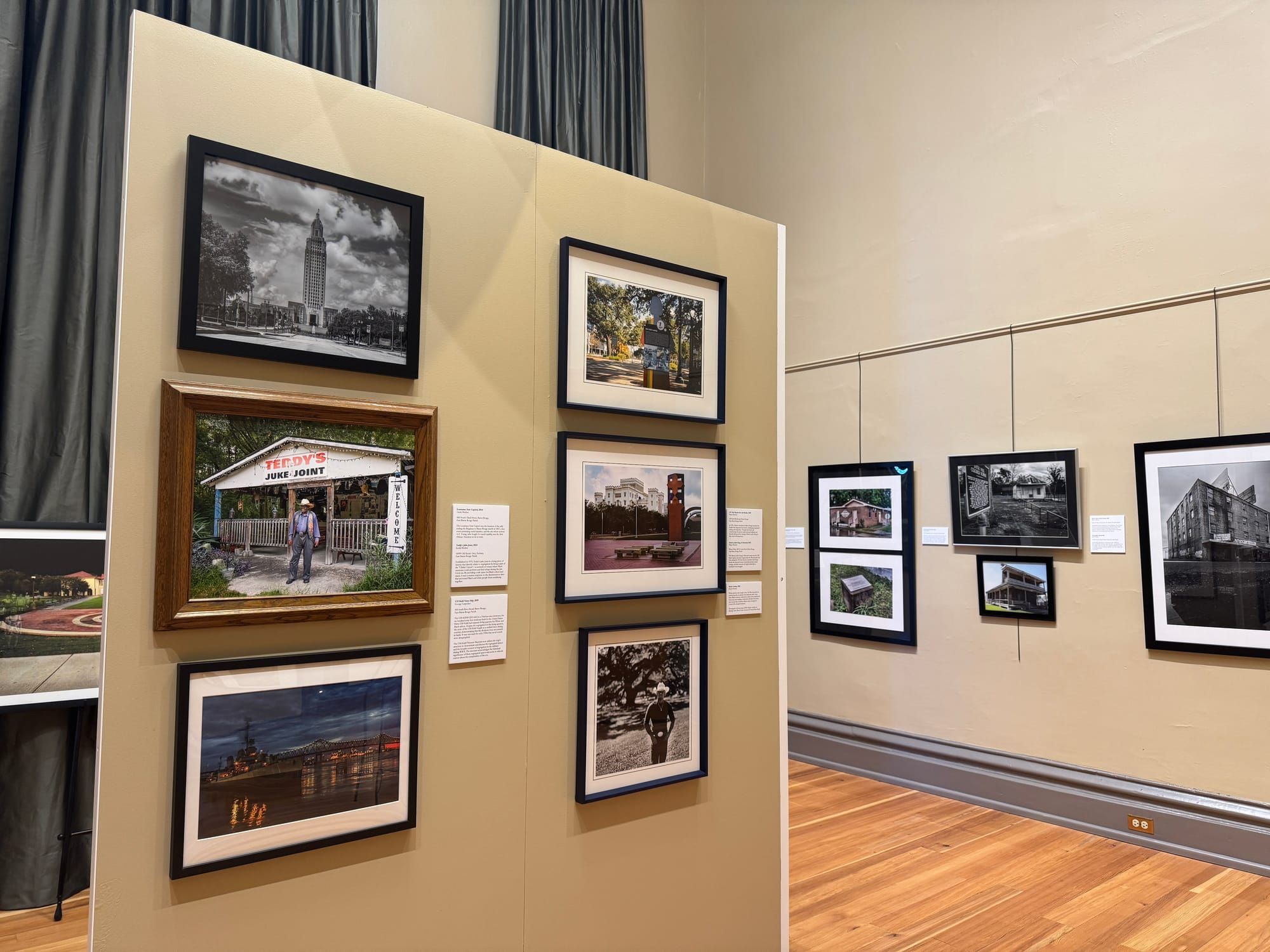
In Present Day Traces of Segregation, Civil Rights, and Collective Memory in Louisiana, the Louisiana Photographic Society presents visitors to the Old State Capitol building with over 75 photographs taken all over Louisiana showing sites of struggle, exclusion, and respite during the Civil Rights Movement, some of which are still around today.
The concept of the exhibit is interesting and relevant. Especially in times like now, it’s vital to tell stories of protests in the past to remind ourselves that change is hard fought and possible. It's important to remember that segregation, sit-ins and exclusion backed by law didn’t happen that long ago, and change wasn’t inevitable. It was the result of people working hard to fight for what was right despite the people actively working to dehumanize them.
The exhibit’s strength is that it points out buildings and places with history and encourages people to think more deeply about their surroundings, both in Baton Rouge and beyond. One does not have to look hard for traces of segregation in Baton Rouge. You don’t need an advanced degree to notice the stark differences between historically redlined North Baton Rouge and still-causing-major-budget problems due to their succession from the Baton Rouge school system, St. George.
But that’s not the story the photos are telling, at least not directly. Instead, many of the photos are aesthetic renderings of empty spaces, often in black and white. There are some color photos, and there are even some photos with people in them, but it’s hard to understand the significance without reading the informational panels. One panel explains that one of the biggest attractions in Baton Rouge, the USS Kidd, had segregated living quarters which have now been repurposed into a museum about segregation in the military. But the photo itself is just a photo of the ship at dusk that looks like it could be on any Baton Rouge themed calendar.
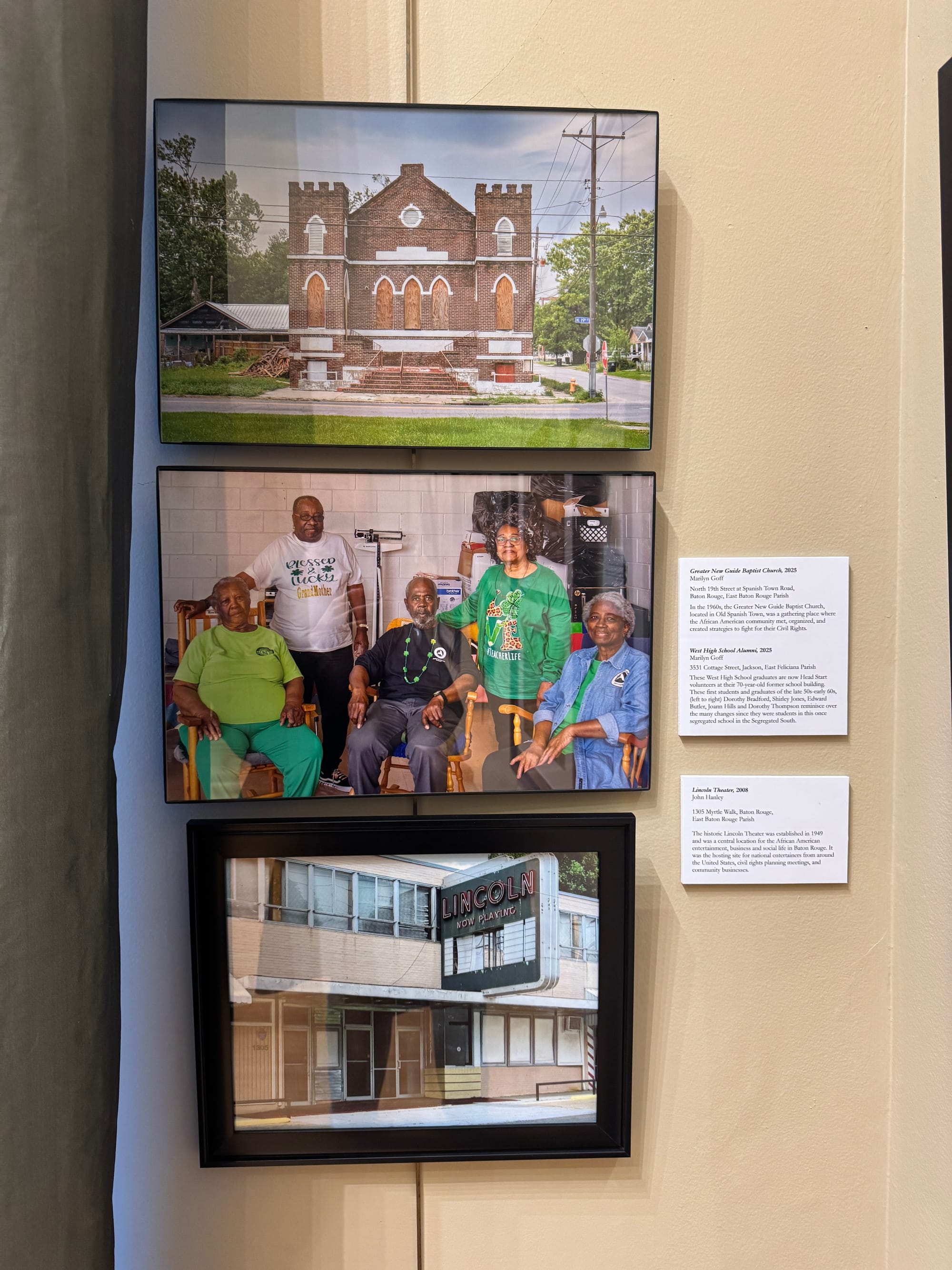
Another photo shows the exterior of the Lincoln Theater, which looks mostly dilapidated. The photo, by John Hanley, was taken in 2008. The informational panel says that the theater was a central location for African American entertainment, business and social life in Baton Rouge as well as civil rights planning meetings and community business. A quick google search would tell you that the building is the subject of a decade-long restoration project that will include a new Louisiana Black History Hall of Fame Museum and Cultural Center.
The inclusion of these photos is fine, but the problem is that they’re the only photos of these spaces. The real weakness of the exhibit is its failure to connect the past with the present. Why not show the people who use the space now or are trying to restore it? Side by side of the spaces then and now could have been really powerful. Instead of a black and white photo of the entrance of William Frantz Public School, the school Ruby Bridges attended in 1960, I wish that there was a photo of students entering the school now. Instead of an empty photo of the current capital building, I wish they’d picked one where people are protesting the injustices of today and contrasted it with the protests back then.
Maybe this would have felt too political. But for better or worse, this topic is political. These photos feel like they’re trying not to be. But if that’s the case, what is the collective memory that we are remembering here?