
Paul Taylor Dance Company
Detroit Opera House
April 12, 2026
When you listen to the upbeat swing music of The Andrews Sisters, “haunting” doesn’t often come to mind. But when paired with movement that both celebrates the American fighting spirit of World War II while showcasing the harsh realities of wartime, the contrast is unnerving. This was the case during the performance of the Paul Taylor Dance Company’s “Company B,” the most powerful of the three works the company presented during their stop at the Detroit Opera House this weekend.
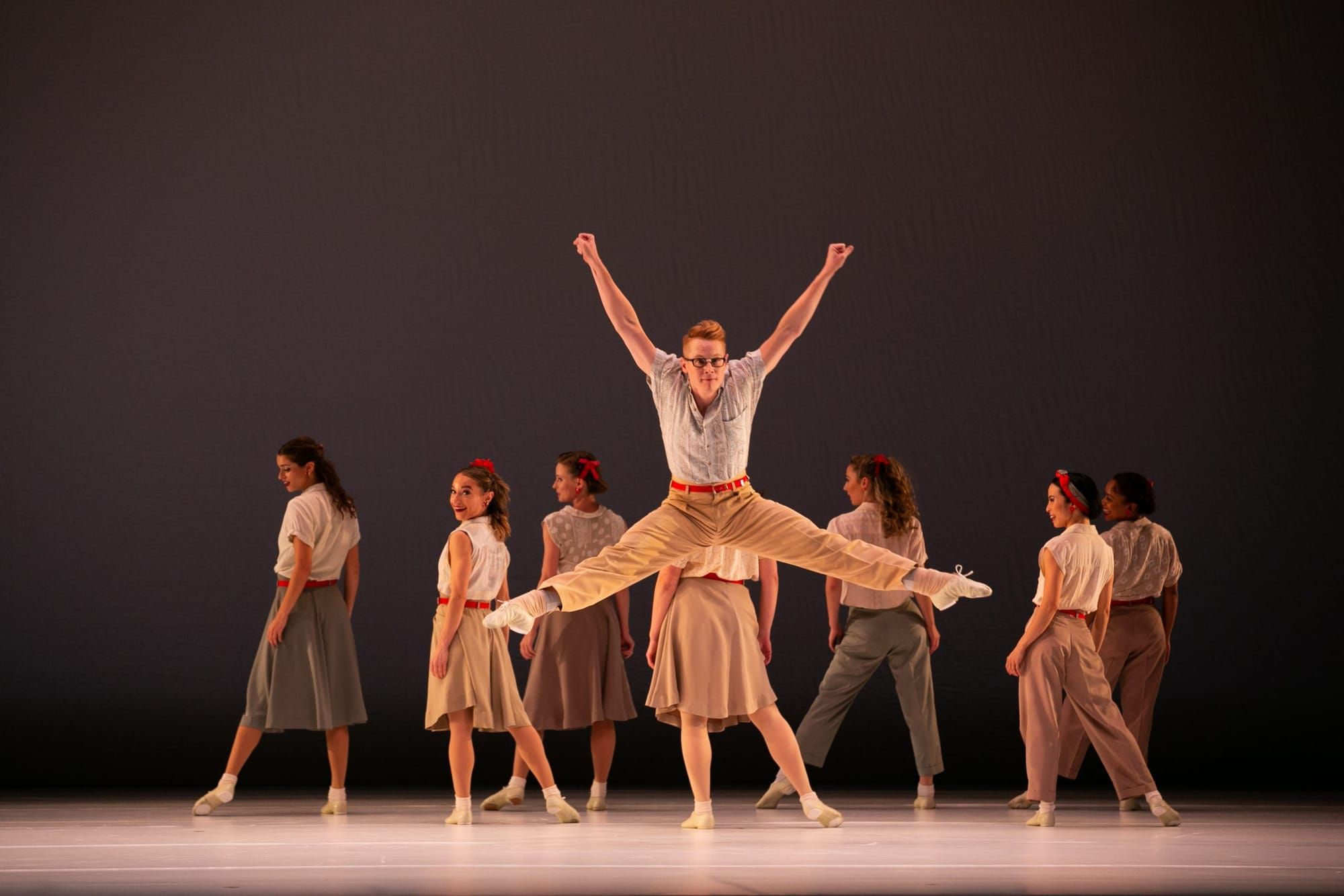
The work encompassed a series of smaller dances performed to 10 Andrews Sisters songs, danced by a cast of 13 dancers with a mix of full ensemble and smaller group pieces. Dancers dressed in beige and green neutrals with popping red belts, women in flowy skirts and Rosie the Riveter-style pants, men in slacks and collared shirts for a distinct all-American vibe.
The tone was superficially joyous and often playful, but ultimately heartbreaking. The vast majority of movement incorporated the high energy, flirty swing moves of the time period with big smiles spread across the dancers’ faces. But quietly – and sometimes not so quietly – male dancers collapsed to the ground as fallen soldiers, often in shadowed silhouettes behind the happy, shiny dancers in the spotlight.
One of the most jarring moments was John Harnage’s solo to “Boogie Woogie Bugle Boy (of Company B.)” After a jubilant performance to the Andrews Sisters’ most iconic song, the dance ended with a dramatic jump and collapse to the floor, as if shot in war. “There Will Never Be Another You” was a romantic duet between Elizabeth Chapa and Devon Louis. As the two danced downstage, male dancers entered upstage in silhouette, moving across the stage with slow, exaggerated marches. Louis eventually left his love to join them, leaving Chapa hunched over, seated on her knees broken-hearted.
“Company B” was sandwiched between “Brandenburgs” and “Esplanade,” less intense works performed to music by Bach. Both showcased the impressive stamina and athleticism Paul Taylor dancers are known for, with frequent leaps, jumps and travel across the stage. “Esplanade,” inspired by a woman running after a bus, explored ordinary movements, like walking, standing and running, performed in minimalistic costumes in shades of orange and beige. But “Brandenburgs” was my favorite of the two, a luscious dance of pure aesthetic delight in rich dark green costumes capturing the energy and joy of the busy Baroque music.
All three pieces were enjoyable, but “Company B” was the most lingering, highlighting the dire realities behind the often romanticized time in American history. We may be decades removed from World War II, but wars continue, and no amount of American spirit will counter the lives lost, horrors experienced and futures destroyed.


