
Glory
NXTHVN
New Haven
Through Aug. 30
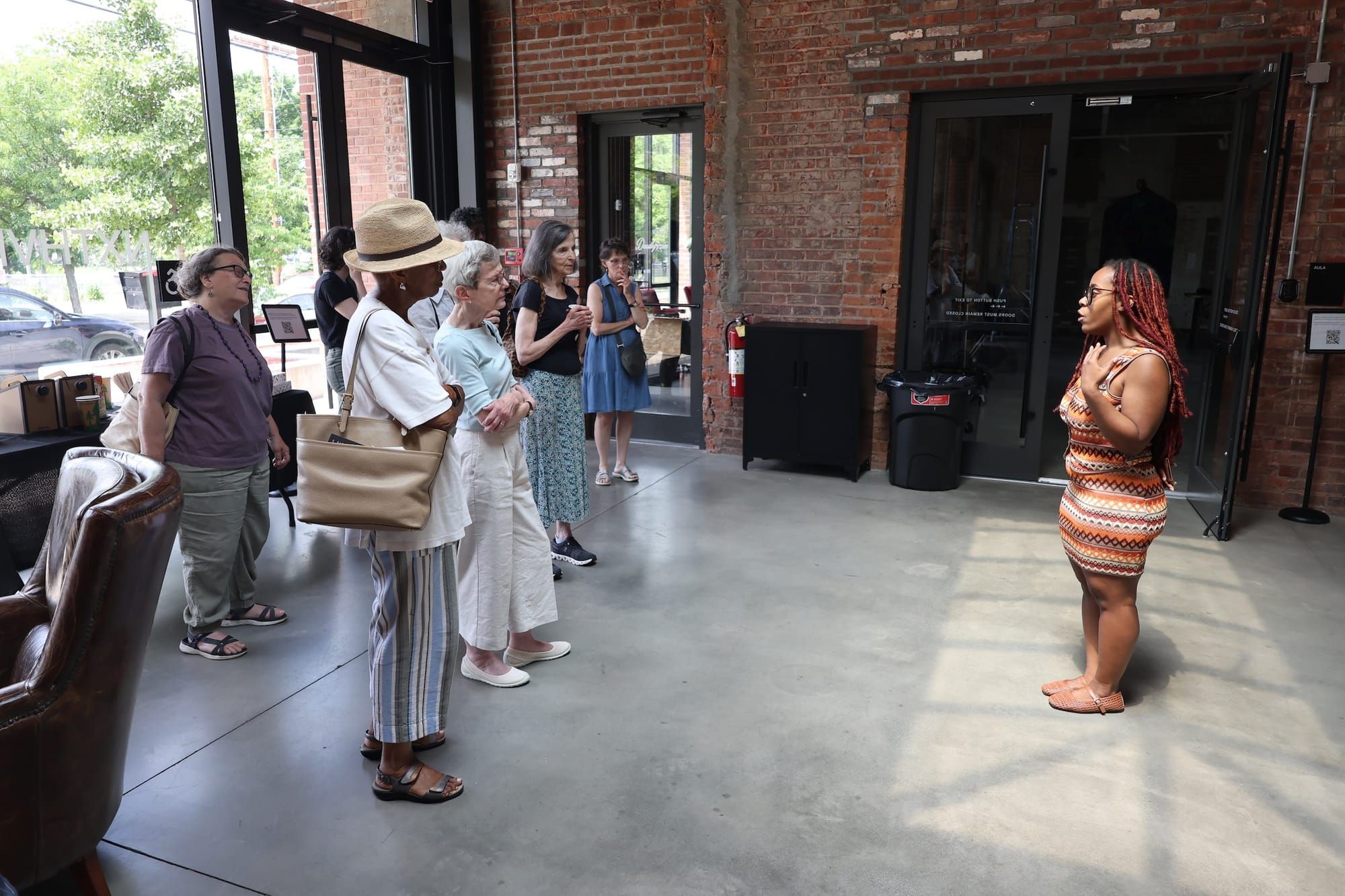
On Thursday morning about a half dozen people showed up in the lobby of NXT HVN on Henry Street, ready to take a tour of its ongoing art exhibition, Glory, running now through Aug. 30. The tour had been arranged as part of the International Festival of Arts and Ideas, running now through the end of June across New Haven.
Juanita Sunday, one of the curators of the show, was there to greet the half-dozenvisitors. She gestured toward the sitting area at the window to the street, which had some seating, a coffee table with some reading materials on it, and an old TV showing reruns of Good Times. That was when she explained that the lobby itself was part of the show.
We had arrived expecting something to start, but really, it had already started, the second we walked in.
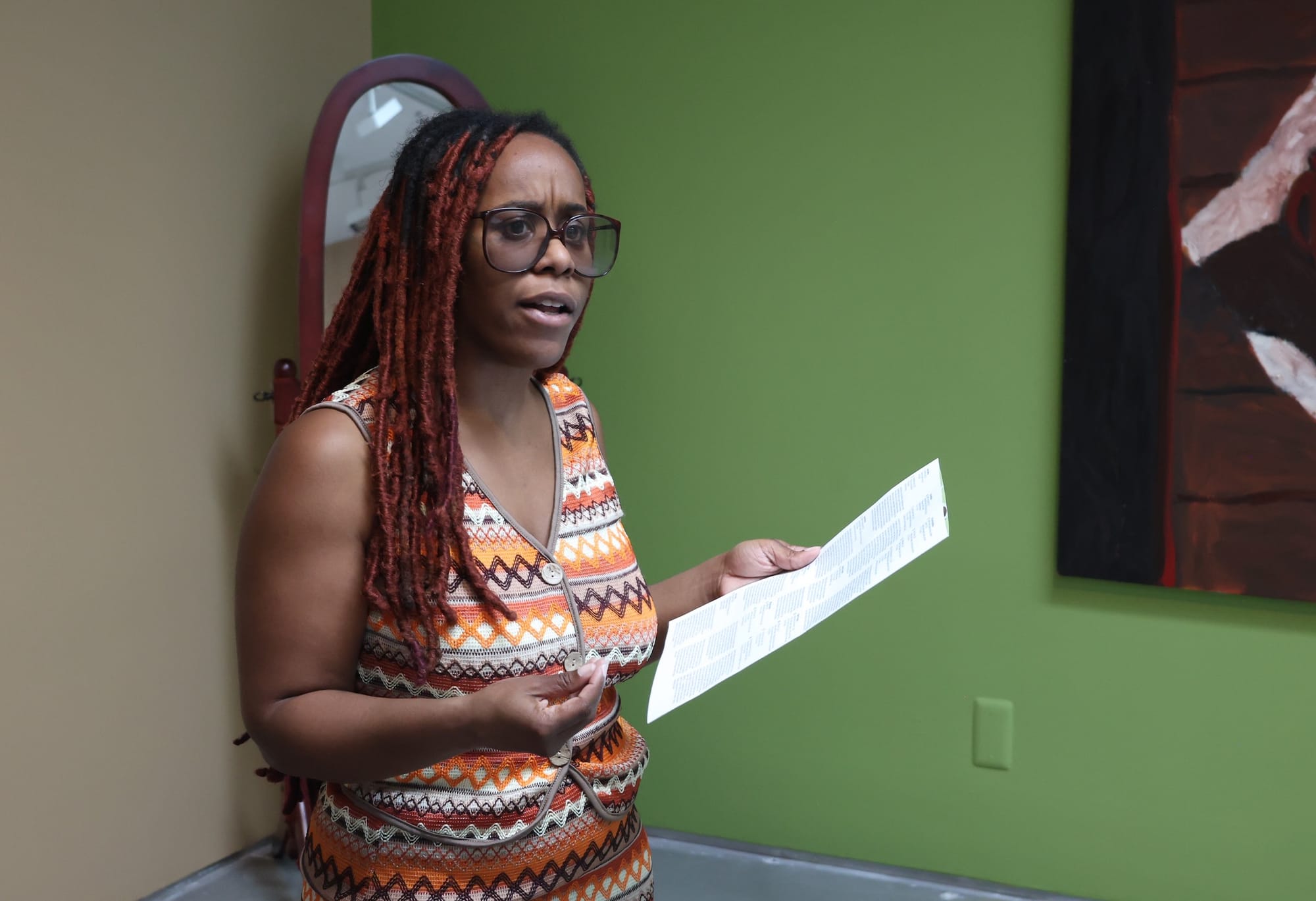
Glory, Sunday said, is about "exploring the Black American home, looking at it as a site of archive, as a site of history," a place that "reflects identity" as well as "activity." The spark of inspiration came from "In Our Glory: Photography and Black Life," a 1995 essay by bell hooks, in which the writer described how "walking into her grandmother's house was like walking into a museum or a gallery" — two places where hooks was unaccustomed to going as a child, Sunday said. Sunday decided to explore that idea by using the NXT HVN gallery to make a home.
To make that connection, Sunday said, she and co-curator Tara Fay Coleman hearkened back to the 1970s — not only because of that era's fabulous design and color sense, and not only for its ability to evoke nostalgia, but because the 1970s were also a time of ferment about Black liberation and Black identity across the globe, putting together a set of ideas in books, music, movies, and visual art that remains potent today. The result was a multimedia presentation featuring the work of Faustin Adeniran, Akea Brionne, Patrick Eugène, Chris Friday, Tyler Mitchell, Woody De Othello, William Rhodes, Bria Sterling-Wilson, Jomo Tariku, Shawn Theodore, and VantaBlack.
Sunday wasn't interested in dictating participants' experience of the show. To begin, she invited the participants to explore the show for themselves, which we did.
Now is a good time for your correspondent to reveal their own relation to the material. I am a white person who, thanks to being a working musician since they were a teenager and a lover of culture of all kinds since forever, has a steady diet of information, inspiration, hard lessons, and moments of connection with Black culture. The big sweep of ideas, I am familiar with, and enamored of. But Glory reminded me how sharp the limits of that familiarity and love can be, how a sense of recognition can stop at the threshold to another person's home, no matter how welcome the guest may be.
Glory threw into relief how different the specific signs of signifiers of domesticity and intimate family can be from culture to culture, even if it's two houses on the same block. And at the same time, the forms invited connection as well. Here, a family Bible; there, photographs of family members, some still here, some gone; over there, a couch you probably know better than to actually sit on. We were all made welcome, though some of us knew the rules better than others.
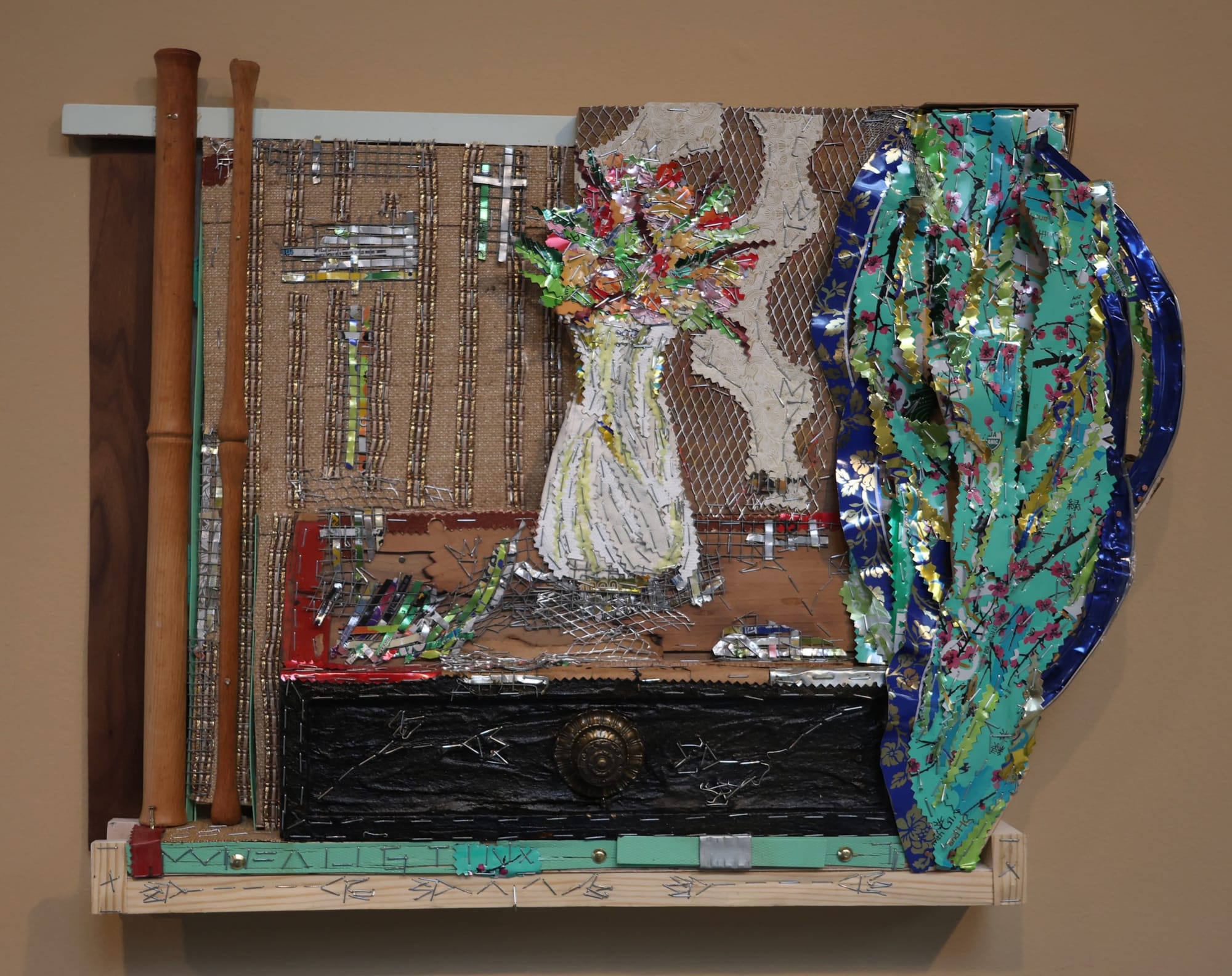
When Sunday rejoined the group, she provided the specificity that let all of us in. She began with a collage by Faustin Adeniran, who, an accompanying note explained, built his pieces from recycled materials for a specific reason. "After a smali house fire in 2025, Adeniran began rebuilding domestic scenes from salvaged fragments, transforming loss into creative renewal. The act of reassembling interior space of a home with discarded materials mirrors the ways Black American families, especially moderate to low income, have historically survived — thriving from limited resources, turning damage into design, and memory into structure. Adeniran's works embody the understanding of the interior as a living archive where care, beauty, and survival are actively constructed. He eloquently demonstrates how glory can emerge from restoration." The meaning behind it hadn't translated at first glance; knowing that meaning explained the power of Adeniran's pieces to hold the gaze.
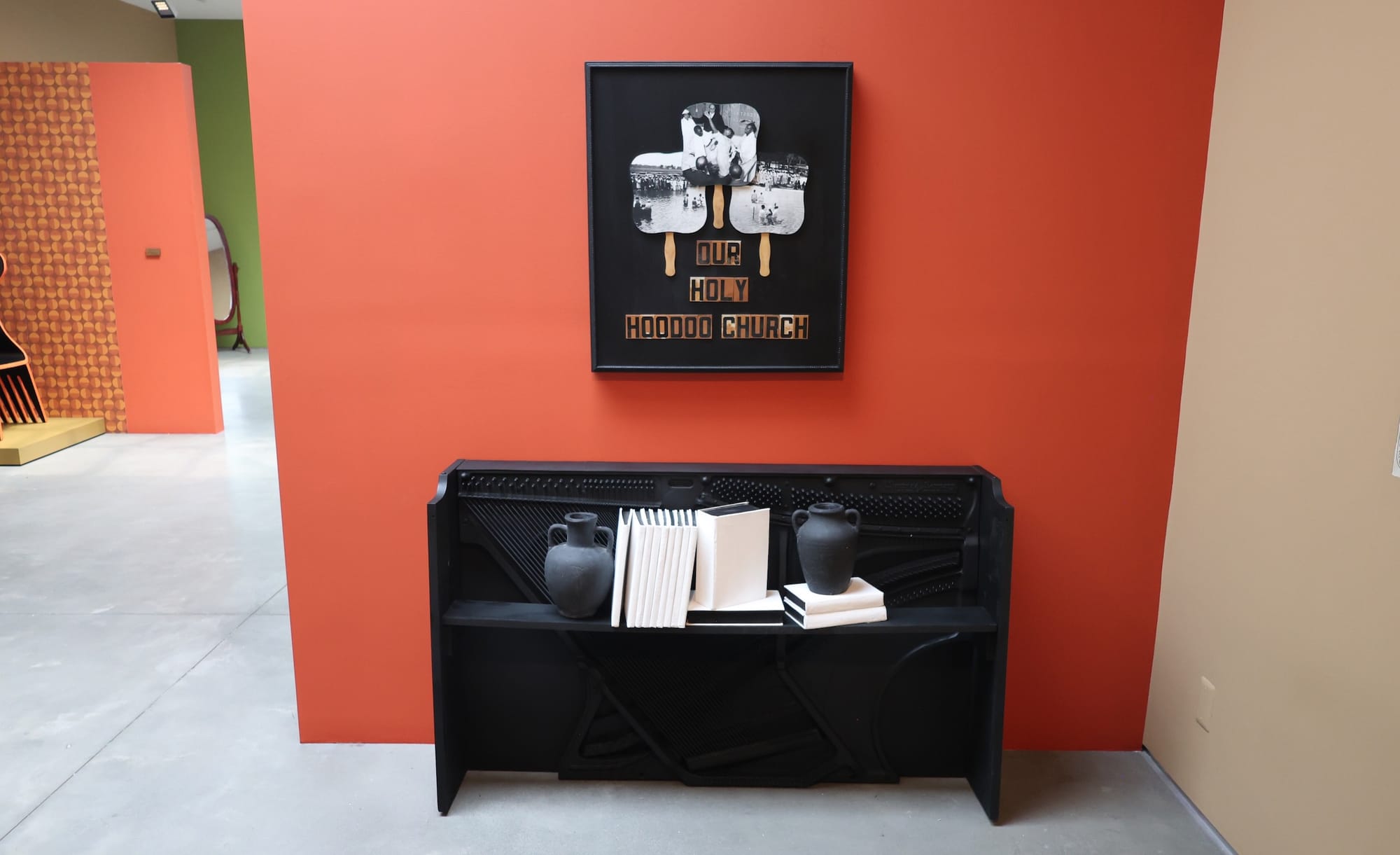
Sunday talked about how pieces by Shawn Theodore evoked a "duality of spirituality," that it doesn't "have to just take place in the church." The home can also be a "site of spirituality and sacredness. The way we arrange our objects in our home, we can create unintentional altars." Theodore's work blurred the line between church and home, and thus, the practices held in those two spaces. They differed, but were part of the same larger thing, a connection with ancestry, culture, the divine.
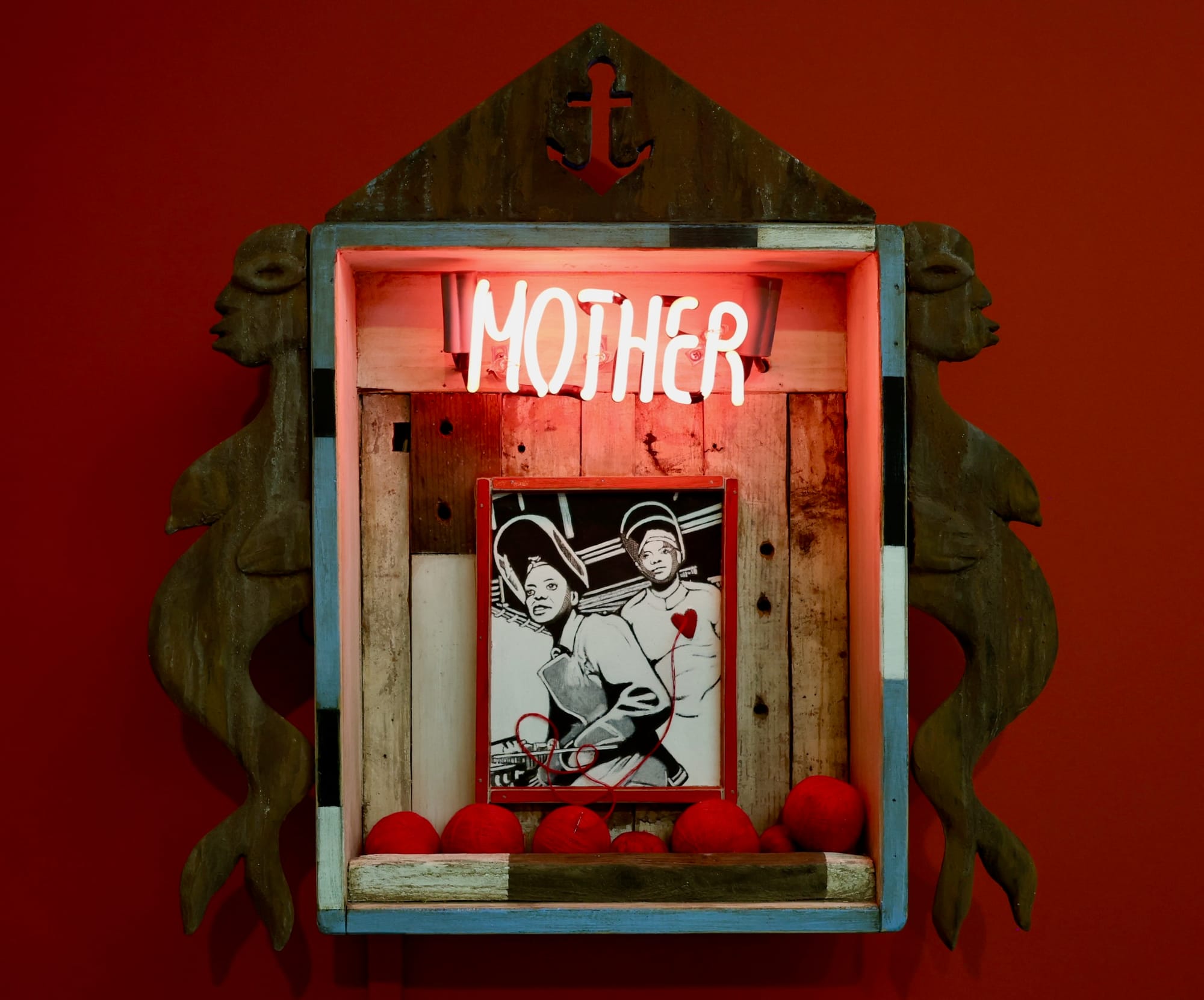
Sunday also gave a deep dive into the works of William Rhodes, who works with "hidden symbols in his pieces," she said. In one piece, Rhodes took on the double meaning inherent in the phrase "women's labor" by depicting two women as welders in a factory while also making reference to giving birth. Rhodes was "honoring that labor that women do." But there was also a personal angle in the piece, a "nod to his grandmother, who was a seamstress."
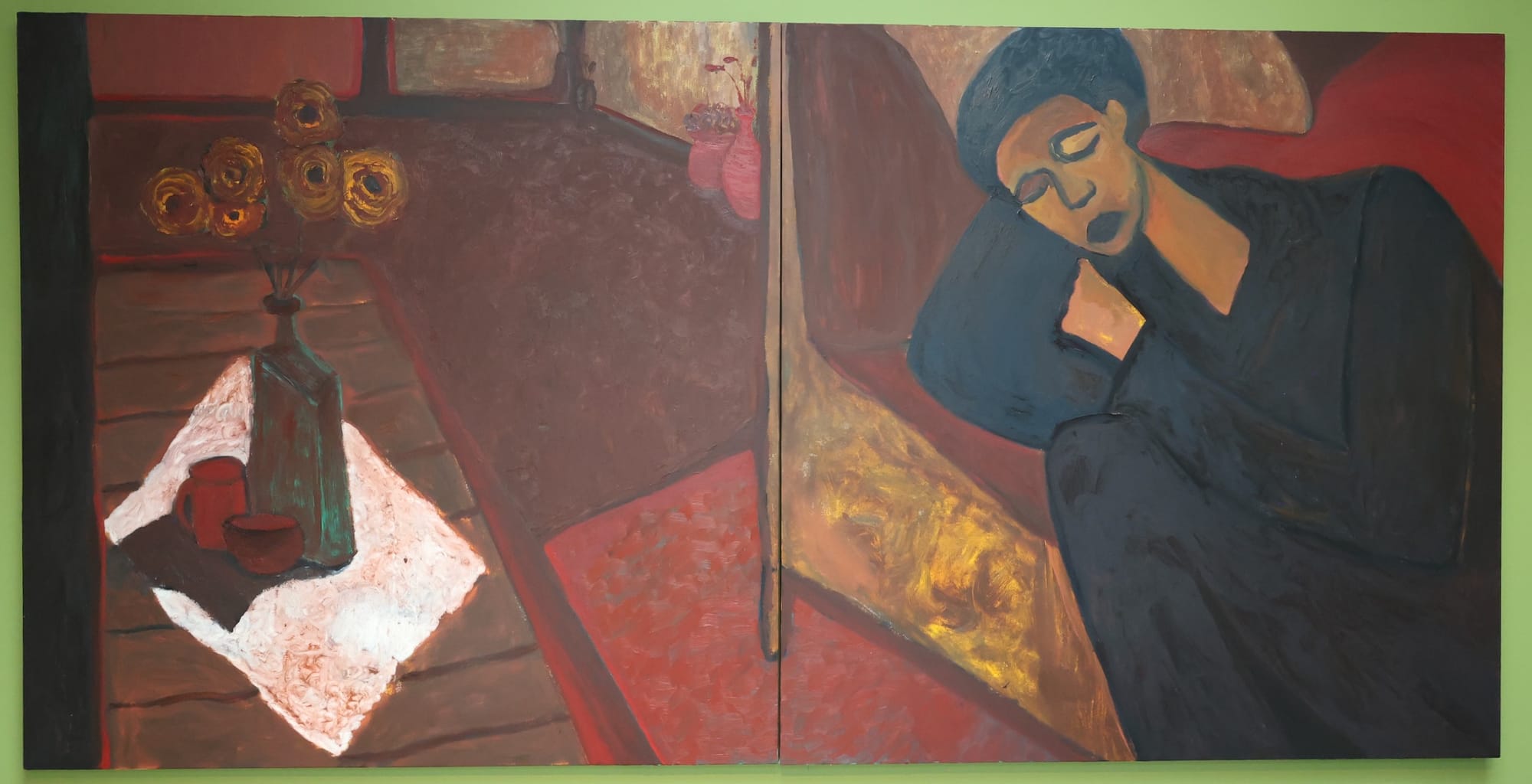
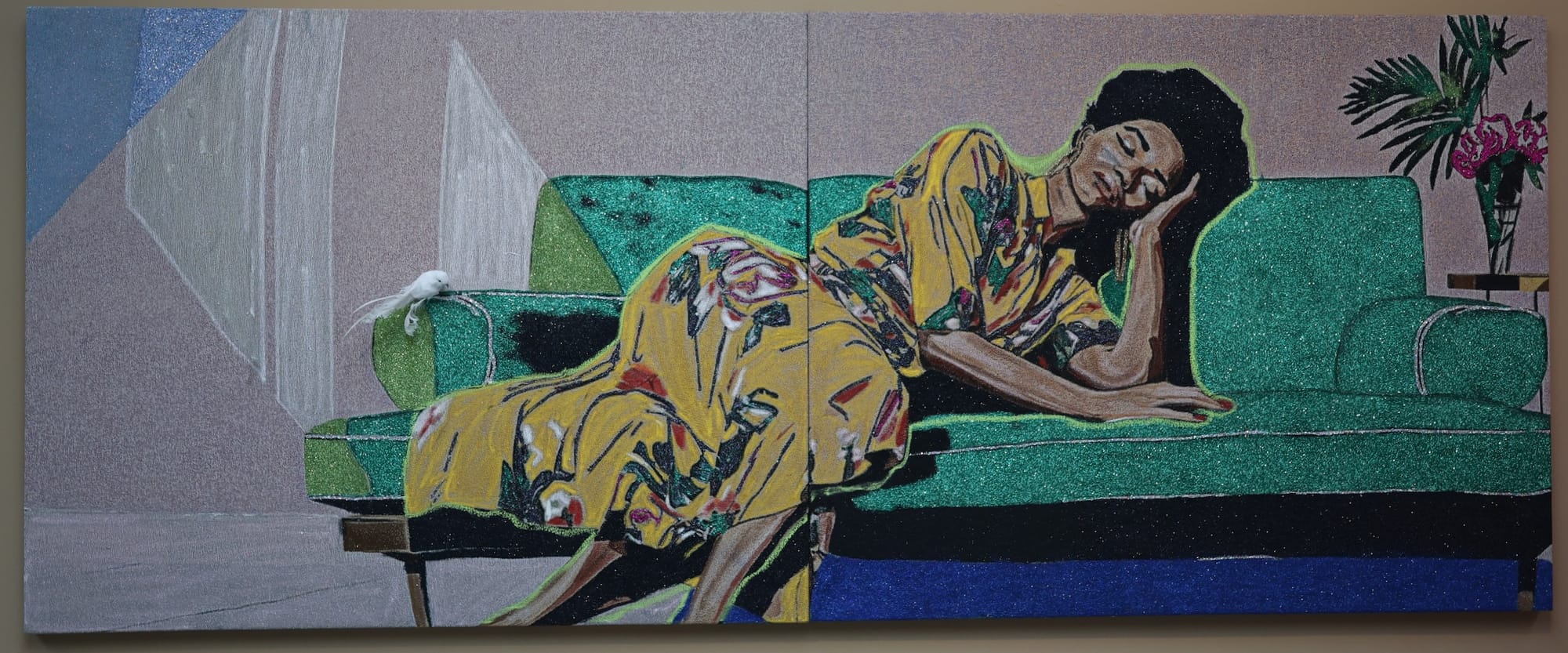
The tour participants noted the similarities between two pieces in the show, Akea Brionne's Where the Body Lands and Patrick Eugène's Alone with Dreams and Blooms. They differed stylistically, but both depicted a person resting on a couch, both giving off the sense of a state of exhaustion. Sunday shared that another inspiration for the show had been Elizabeth Alexander's The Black Interior. "She has this quote where she says, 'we are the unconscious of the entire Western world. And if this is true, then where do we go? Where are our dreams? Where is our pain and how do we heal?" Sunday's thoughts headed toward home again, as a place to recover, to rest — "where we go to be ourselves, and to dream."
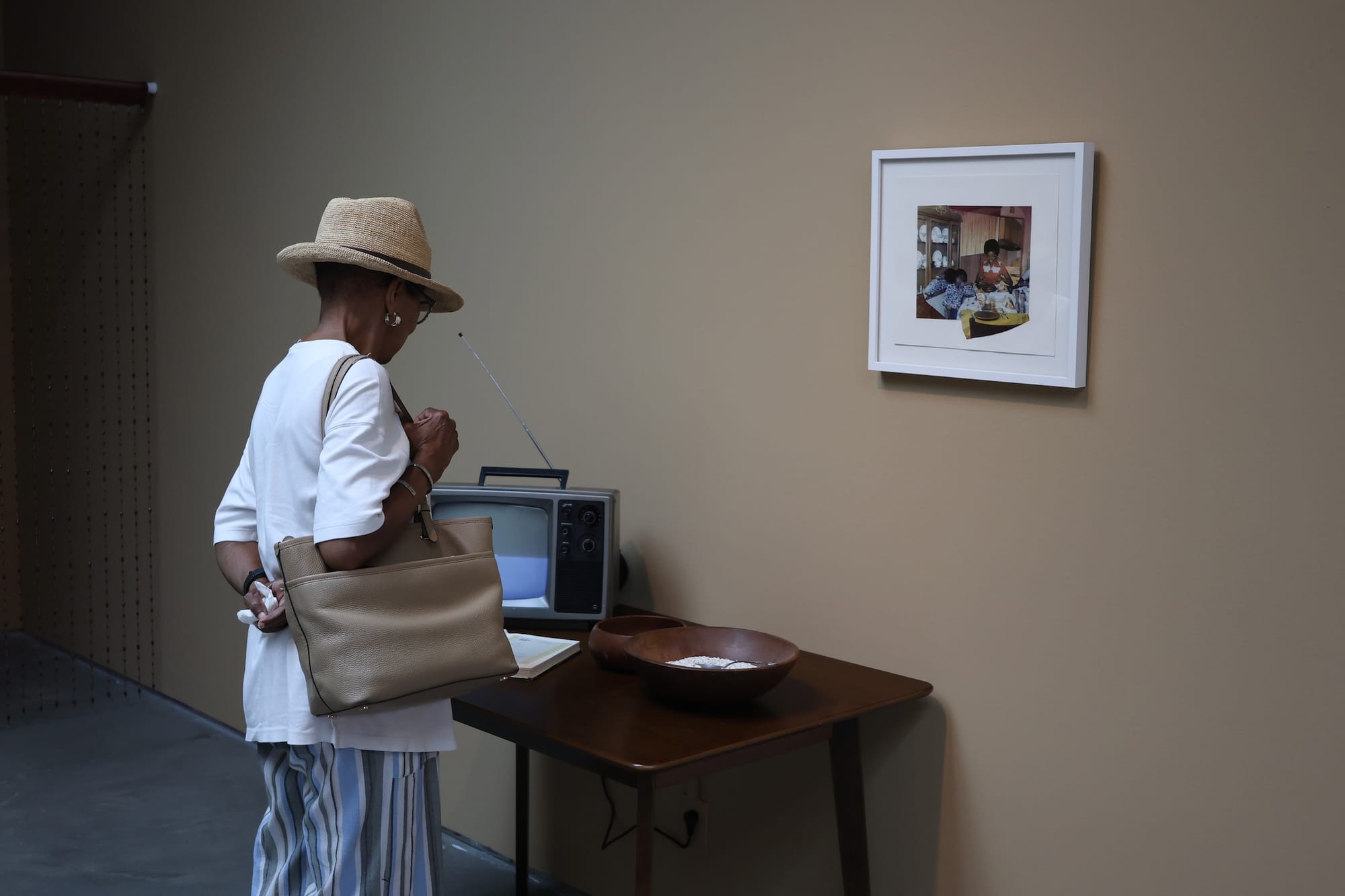
Home is also a place to go to make meals, as Chris Friday's Did you eat? took the topic on with gusto. As an accompanying note states, the piece "is an interactive installation and performance that explores personal and communal experiences of Black life specific to domestic ritual, nourishment, care, and labor. The work centers food in the home as not only an integral part of Black life but as a symbolic tradition of 'feeding the community.' In Black communities mothering often extends beyond the nuclear family with the walls of the home becoming shelter and safety for the whole neighborhood. Cooking in the Black tradition is a labor of love, particularly when Black families may not have had a lot to share. In this iteration, Friday offers hand-rolled ceramic rice as 'sustenance' to the guests by inviting them to participate in the 'meal' and take a spoonful until the rice has been shared in its entirety." Sunday related how Friday's generosity extended to how the installation was set up, leaving it to the curators' discretion. Friday's piece elicited perhaps the most discussion of the gallery tour. People differed in their experience of Black foodways, which underlay all the questions that they had about Did you eat? But we were all sharing the same meal.


