
Connecticut’s new troubadour has a message he’s taking on the road statewide: It’s time to pay musicians at least the minimum wage when they perform live.
The troubadour, Charlie Widmer, is calling on venue owners, elected officials, audiences, and the musicians themselves to work together on making that happen.
Widmer this month began a three-year term as the new official state troubadour. Widmer, 32, has made a career out of performing live and recording music ranging from bluegrassto Broadway to opera to hip-hop. Connecticut’s Office of the Arts describes the troubadour’s mission as “acting as an ambassador of music and song to promote the state’s cultural heritage.”
Widmer’s troubadour to-do list includes conducting workshops and visiting classrooms to inspire kids to write their own music and conduct workshops. As the son of a Puerto Rican father, he hopes to “serve as a visible advocate for the Puerto Rican community and people of color within the folk and bluegrass genres.”
And Widmer plans to “explore a minimum performance fee for musical acts to protect the livelihood of Connecticut’s creative workforce.”
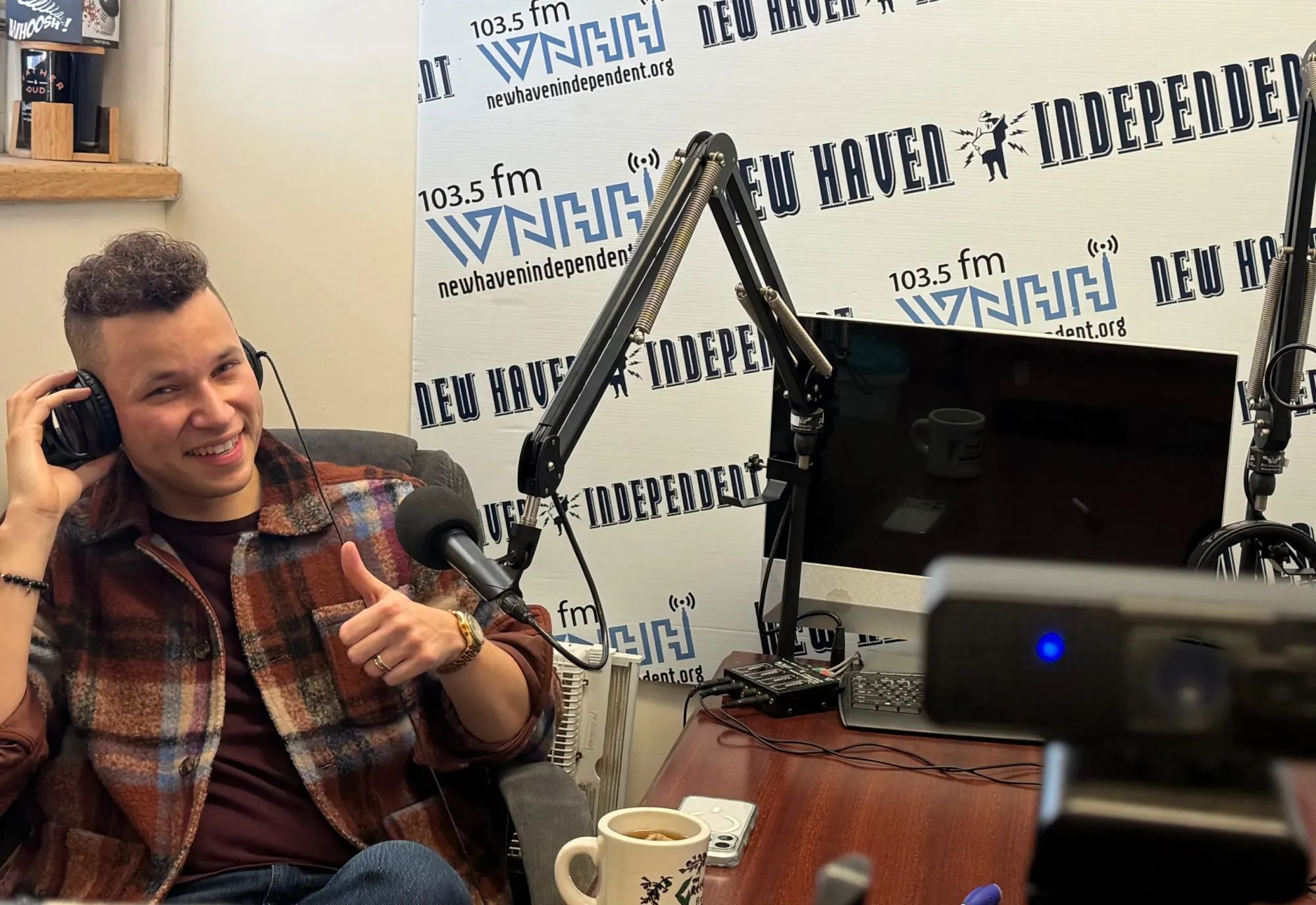
During a conversation Thursday on WNHH FM’s “Dateline New Haven,” Widmer said he’d like to see a law requiring that owners of venues with under 100-person capacity be required to pay musicians at least a minimum wage for up to three hours of work.
His interest in the subject dates back a decade to when he began performing with fellow Western Connecticut State University students in a soul/hip-hop group called Sub-Urban.
“We all have college degrees in music. We all have the best gear: We’re talking about the keyboard is $5,000, the drum kits $3,500, the the guitar itself is two grand, plus the amp is another two grand. You’re already massively in a hole. And then you go get that first gig and that venue says to you, ‘I can get you 50 bucks and free beers for the night. And you’re like, ‘Per person? OK, maybe we can make that work’. And they’re like, ‘No, for the whole band.'”
Widmer discovered that is the norm. So local musicians for the most part barely break even if at all when they play out.
He acknowledged that small-venue owners often operate on “razor-thin” profit margins. He said he’d like to bring musicians and venue owners together to work to build audiences so the owners can afford to pay better. For instance, many bands can do a better job of promoting shows they’re playing. They can work to build online followings that they can present to club owners as proof that they can help draw people.
“This needs to be a group effort, realistically,” Widmer said. The group includes lawmakers as well as live-music patrons who might need to be open to paying slightly higher admission fees to help support better wages.
“I think we begin the conversation now. But, you know, I kind of have a hope that we can find a way to create protections in the form of legislation,” Widmer said.
Café Nine owner Patrick Meyer, whose club pays bands more money than most, said he doesn’t see a state law as the solution. “I think incorporating the state into rock and roll music is corny and dumb. At its base rock and roll music is subculture, subversive,” Meyer said.
The bigger problem, Meyer said: “Nobody has money right now. Regular people are getting squeezed dry. Rents are going up; wages are stagnating. People don’t have money to go out. It’s not the club owners’ or the bands’ fault. People are still reeling from Covid. The whole world is on fire. Everybody’s broke. Drinking is down. Everybody would rather sit home and eat weed gummies than go out and drink.”
Widmer’s proposal “seems like a great idea” but it would be hard to implement, and “I don’t think it could ever be a law,” agreed Paul Mayer, who ran Café Nine for 19 years before Meyer took over. Mayer gave the example of a Wednesday night show that might bring 30 attendees who pay $10 at the door and another $20 on drinks. After paying staff (including a sound manager) and hidden costs like business insurance and rent, the club doesn’t have much cash left over.
Mayer suggested focusing on the federal rather than state government level: He argued that the U.S. should follow the lead of European countries such as Sweden and Denmark that subsidize the livelihoods of working artists.
Whatever form a proposal ends up taking, the conversation that Troubadour Widmer plans to start promises to generate more ideas like that one about ways to help hard-working musicians keep live performances going in Connecticut.
Click on the video at the top of the story to watch the full conversation on WNHH FM’s “Dateline New Haven” with State Troubador Charlie Widmer. Click on the video below that to listen to his new high-energy single, “Open Yourself.” Click here to subscribe or here to listen to other episodes of “Dateline New Haven.”


