
where is the human in this place?
Ely Center of Contemporary Art
New Haven, CT
Through July 5
why and why and why
should i call a white man brother?
who is the human in this place,
the thing that is dragged or the dragger?
—from Lucille Clifton, "jasper texas 1998"
For curator Maria Markham, this stanza of poetry — from Clifton's excoriating poem about the death of James Byrd, Jr., a Black man, at the hands of white killers on a country road in Texas in 1998 — was more than enough to motivate the show where is the human in this place? Featuring work by Amy Yoshitsu, Jacob Cullers, Jayden Ashley, and Ode, the exhibition, Markham hopes, "opens a discussion around the structures and systems that continue and reinforce racism and other inequities deeply wound within societies."
The choice to center the exhibition on Byrd's murder is understandable and also complex. Changes in reporting and public awareness have brought the horrific regularity of the killing of Black people in the United States closer to the forefront of the public consciousness. Yet even in that context, Byrd's story stands out. Three white men, two of whom were avowed white supremacists, beat Byrd, chained him by his ankles to the back of a a pickup truck, and dragged him to death over three miles. His killers were sentenced for capital offenses and hate crime laws were passed in response. At the same time, Byrd's grave needs to be protected by a high iron fence because it has been desecrated twice.
It's easy to see how art taking Byrd's death head on could be tough viewing at best, exploitative at worst. The artists instead give it a wide berth. As Markham writes, they "explore these infrastructures that perpetrate daily violences and inequities against people who differ from the dominant culture, including people of color, poor, and trans people." The viewer is left to connect for themselves how Byrd's modern lynching functions as the hub around which the art spins.
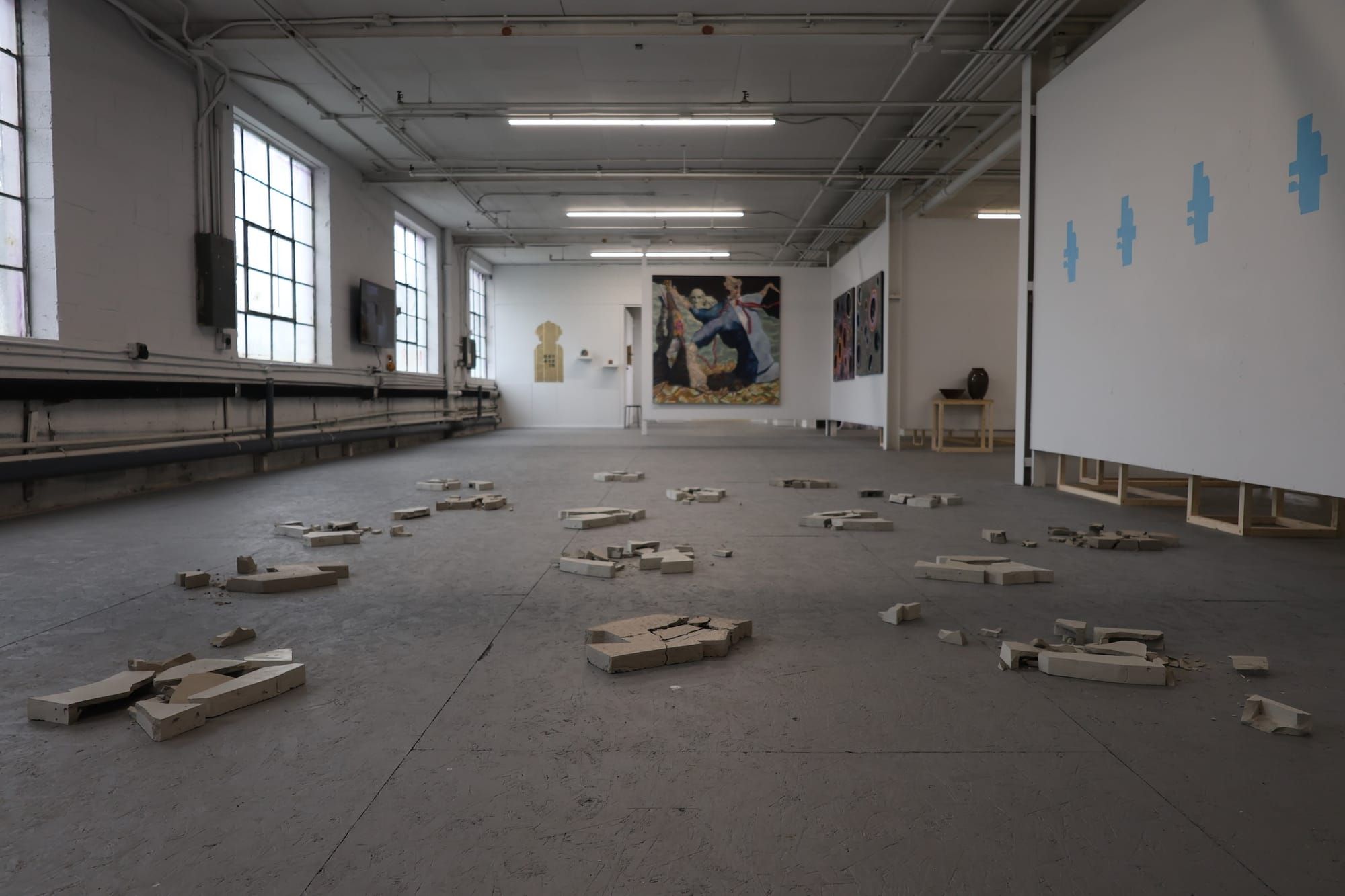
But such connections can be made. Markham states that, in his piece, Jayden Ashley "explores zoning laws relating to redlining to highlight how institutional policies and structures are a source of sustained and continued systemic violence against Black communities. For this exhibit, using legislative and cartographic sources, Ashley researched redlined geographies in New Haven creating sculptures from concrete that echo the erasures of Black people and their communities, channel absences as a result of these enactments, and questions borders." But Ashley's piece is more visceral than that, the broken pieces on the floor suggesting the aftermath of violence, a pointed reminder of the ways that systemic violence, however abstract it may sound, can fuel real violence, done to real people on New Haven's actual streets.
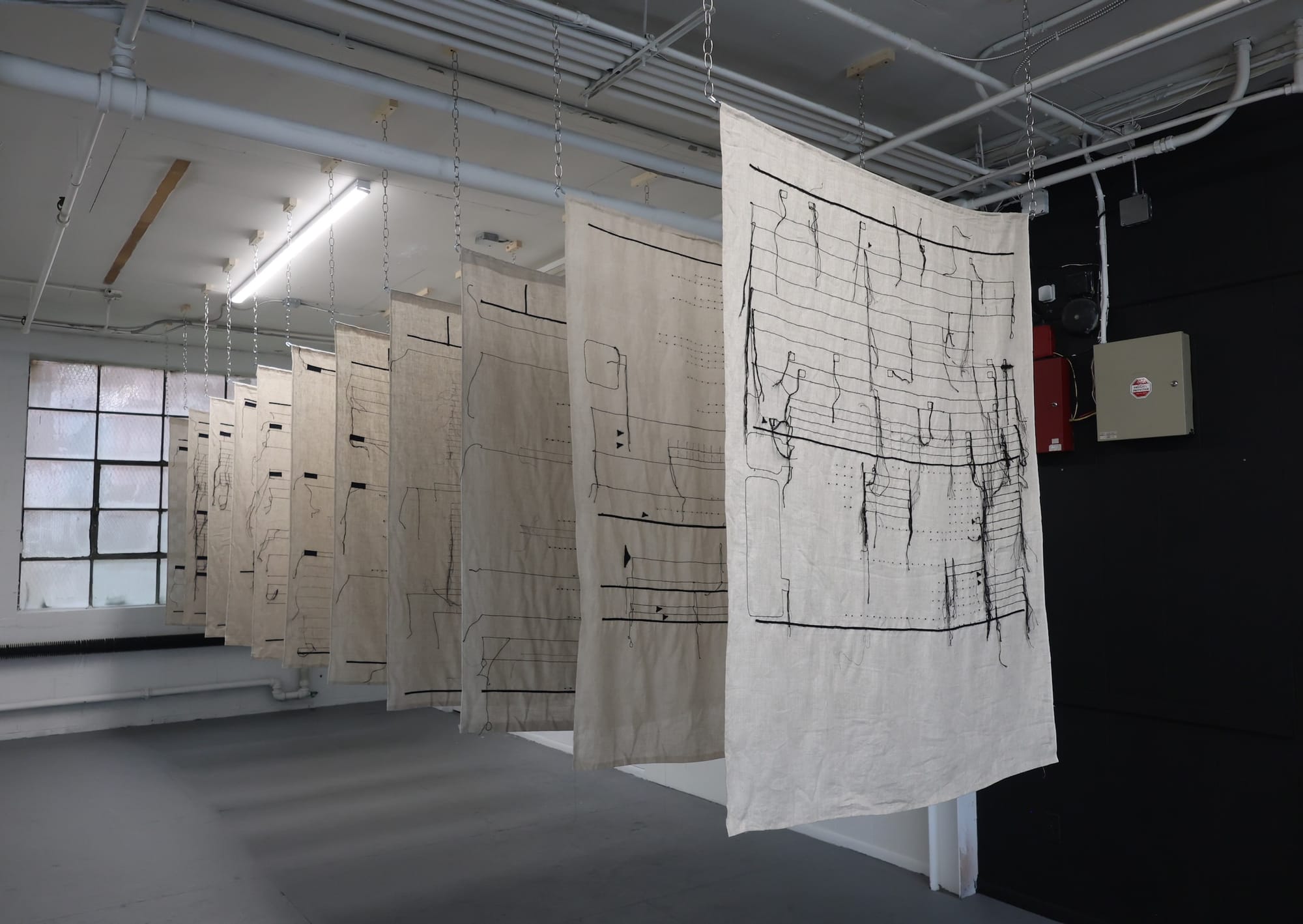
For some pieces, the weight of Byrd's death is a lot for them to bear. "Amy Yoshitsu," Markham writes, "focuses on deconstructing the interconnections between power, economics, labor, and race. Return and Schedule Self-Interest derives from Yoshitu’s own experience and examines how the tax system 'perpetuates the black and white "logic" and poles of our society.' Yoshitsu notes that the 1040 tax form that workers in America are required to file has built-in prejudices that reinforce long-standing hierarchies." While Return and Schedule Self-Interest works on its own, we are also a long way from that horrific night in 1998; the connection to the theme feels tenuous.
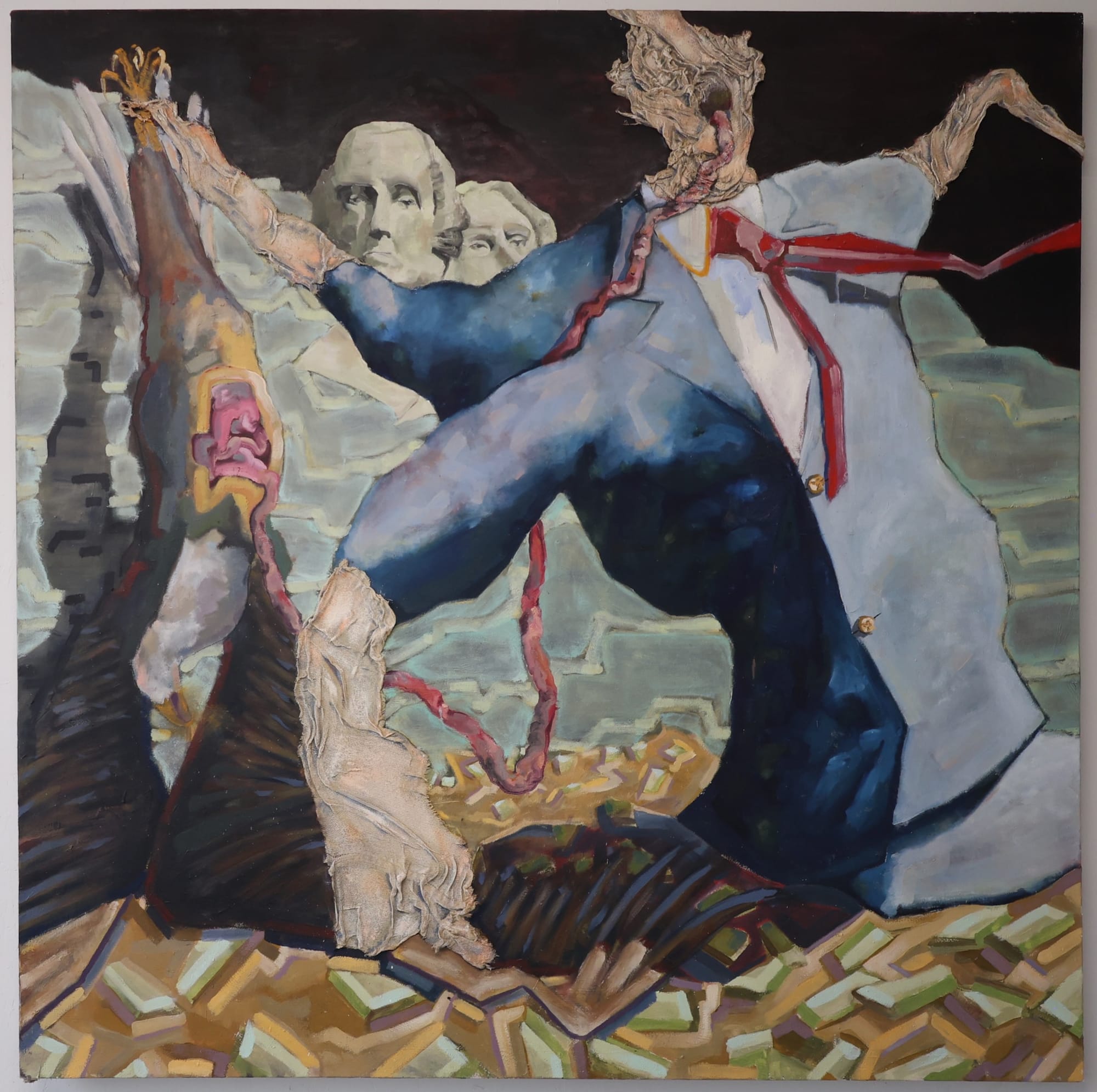
Jacob Cullers's The Man veers more closely and explicitly to the theme than anything also in the show. Markham writes that "Cullers unapologetically highlights the violence of the white male hierarchical power structures in the U.S. In this work, the 'Man' is a grotesque abstraction that disgorges intestines from its mouth. On the left, a mask resembling those worn by the Ku Klux Klan receives the intestine signaling the white male supremacy that is embedded within the system. In the background, the monumental faces of the Mount Rushmore Presidents George Washington and Thomas Jefferson locate the viewer squarely within the American political system." One doesn't need this explanation to respond to Cullers's work on an emotional level. Its depiction of violence is powerful, unsettling, hard to forget.
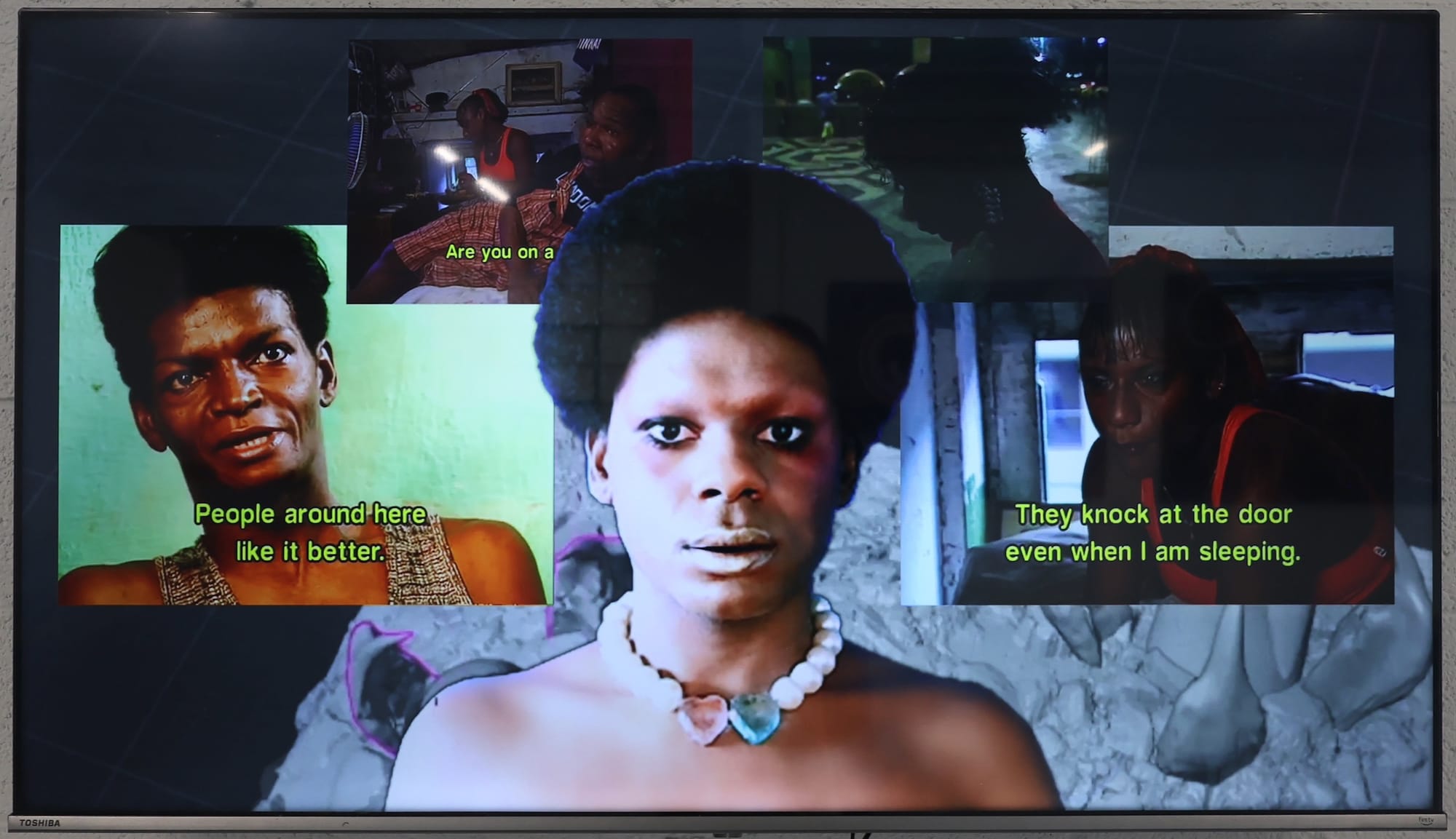
Ode's video installation reminds the viewer that racism, alas, is not unique to the United States. Travecacceleration, Markham writes, "examines how the logic of capitalism and cisgender capitalism impacts trans people, specifically travesti in Brazil. According to Ode, the video showcases how the 'cisheteropatriarcal … puts black people and, overall, travestis in a position that does not allow us to claim our own images, enunciations, and epistemologies.' Through video montage, she reinforces how black people and travesti are defined within the system and how they are specifically absent from rapid growth in capitalism and its underpinnings including technology."
Here the connection to Byrd brings a point that might otherwise remain subliminal to the surface. The systems of oppression that keep people down don't just mean harder lives, less money, less security, fewer jobs. Sometimes those forces can actually kill you.


