
Living on the Edge
Lunch and Learn Series
Connecticut Museum of Culture and History
Hartford
Dec 9, 2025
Tuesday, Dec. 9th. An ordinary day by any standard measure. But it turns out that Dec. 9th was an especially good day for those seeking to learn a little bit more about the world and its history, as there were no fewer than five separate virtual lectures offered on topics as diverse as the love life of King James at the Mark Twain house through to the modern era and the legacy of Julia Childs at the Simsbury library.
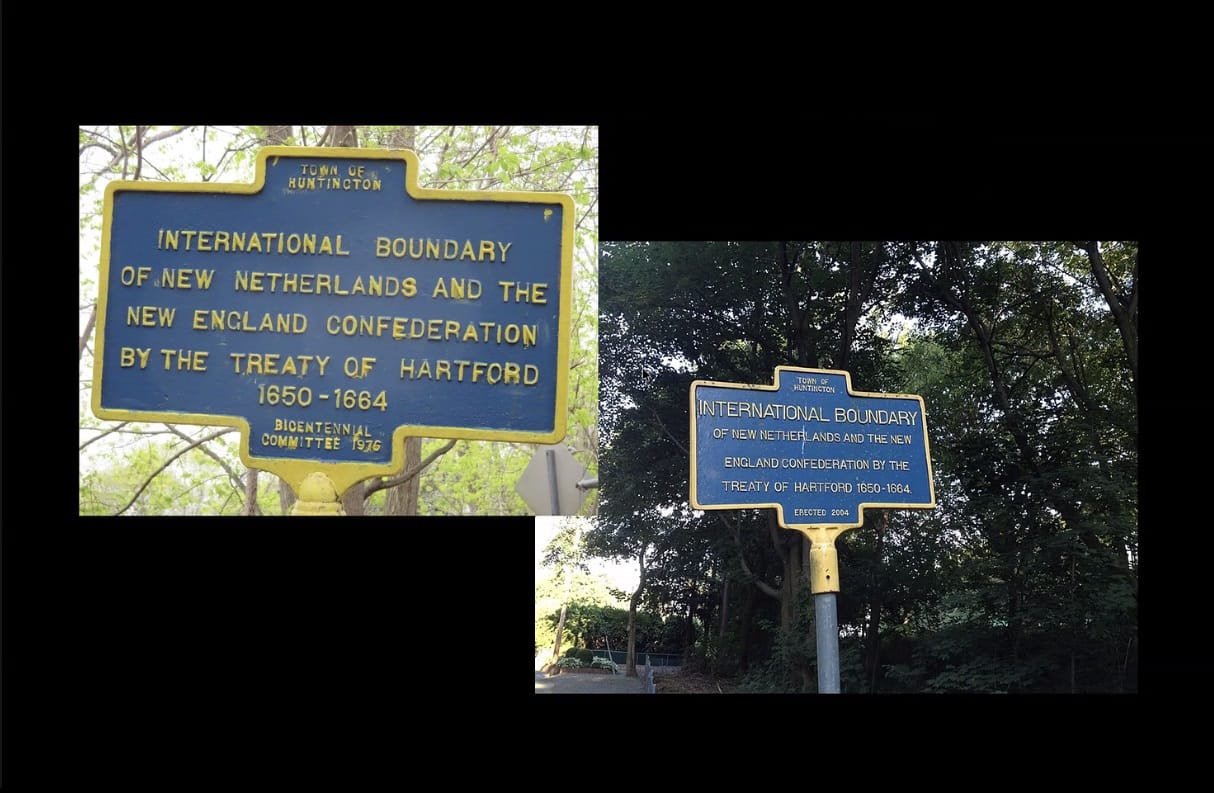
Who knows what made Dec. 9th a lecture nexus point? I had plenty of interesting topics to learn about. I started my day with a topic that is near and dear to me: the city of Hartford. Or more specifically, the Treaty of Hartford, which researcher Elizabeth Hines discussed in her lecture titled Living on the Edge.
Hines sheds new light on the colonial-era relationships between European powers, and how they interacted with each other in the New World when it came to establishing colonies and borders. Her thesis states that the final settlement of borders between English and Dutch colonies in the Treaty of Hartford was spurred on by competition between the Dutch and the Swedes, who also had colonies in eastern North America.
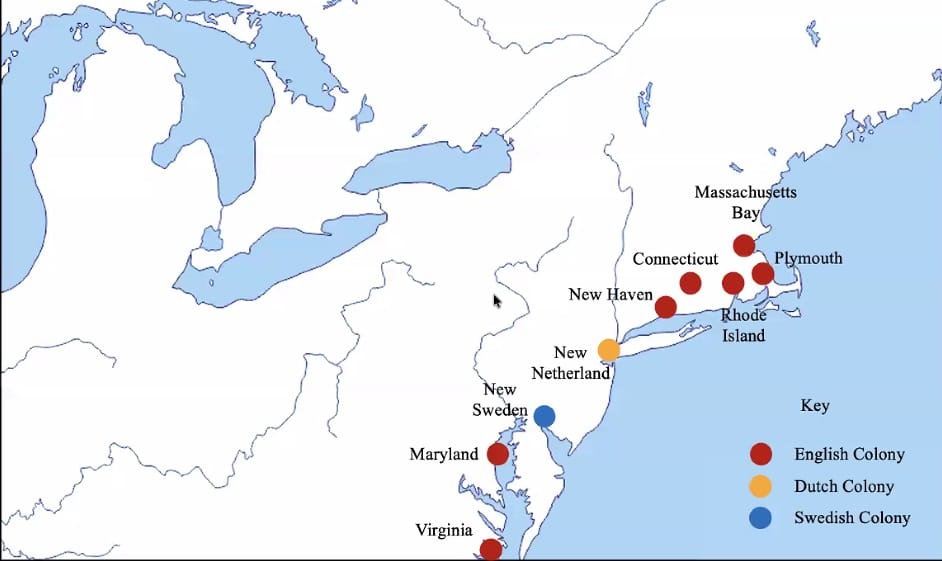
Colonial history, and the knowledge thereof, is typically a source of pride for us New Englanders. But I have to admit I had no idea that there were Swedish colonies as close as modern day Delaware. The presence of Dutch, Swedish and English colonies in such close proximity, as well as multiple indigenous tribes, led to constant conflict between the various factions. Eventually, the sides agreed that permanent borders needed to be established, culminating in the negotiating of the Treaty of Hartford between Dutch and English colonists in 1650. However, the treaty wasn’t ratified by the Netherlands until 1656.
Here is where Hines’ original research comes in, explaining why the Dutch took so long to ratify the treaty. Hines states that initially, Dutch authorities and the Dutch West India Company, which oversaw the colonies, weren’t that interested in the details of borders in the New World. However, events outside the colonies began to change opinions.
She argues that as the European empires competed on a global scale, the Dutch began to feel pressure in multiple places across their empire. They felt that they were losing opportunities to the Swedes in Africa, and had recently been driven out of Brazil by the Portuguese. Ratification of the treaty was a strategic move to allow New Netherland to secure its northern border with the English, as the Dutch were preparing to attack New Sweden in the south. Seizing Swedish land in North America could help make up for some of the losses the Dutch sustained elsewhere.

Another factor that contributed to an increased desire for border security was the Peach War, which occurred the same day that the Dutch attacked New Sweden and forced a surrender without a fight. The capital of New Netherlands was occupied by members of the Munsee subtribe, resulting in 40 Dutch deaths and more than 100 people being taken prisoner. Hines cites letters written that describe the advantage of stable borders with the English being “very useful.”
In addition to being supremely knowledgeable, Hines was also conversational and funny, weaving what could have been a dull story about lines on a map into a tale of ambition, war and a little skullduggery. It’s also quite fun to hear a professional academic describe their own original research. I did some preliminary research in preparation for the talk, and there’s no mention of New Sweden’s role in the ratification of the treaty anywhere. Hines’ presentation was a real example of knowledge creation, where the hard work of an individual adds a new dimension to history.
The history of the colonies rarely comes to life as vividly as Elizabeth Hines made it. The first lecture of the day had me primed for what else was in store.
NEXT
On to Part 2!


