Daphnis and Chloe and other Lovers: Lithographs by Marc Chagall
LSU Museum of Art
Baton Rouge
Through May 24
Oil and water repel. It’s a truth about the world most people learn in elementary school but don’t appreciate the full implications of until much later. Love is kind of that way too. You learn about it through glimpses and media but you don’t really understand until you live it yourself.
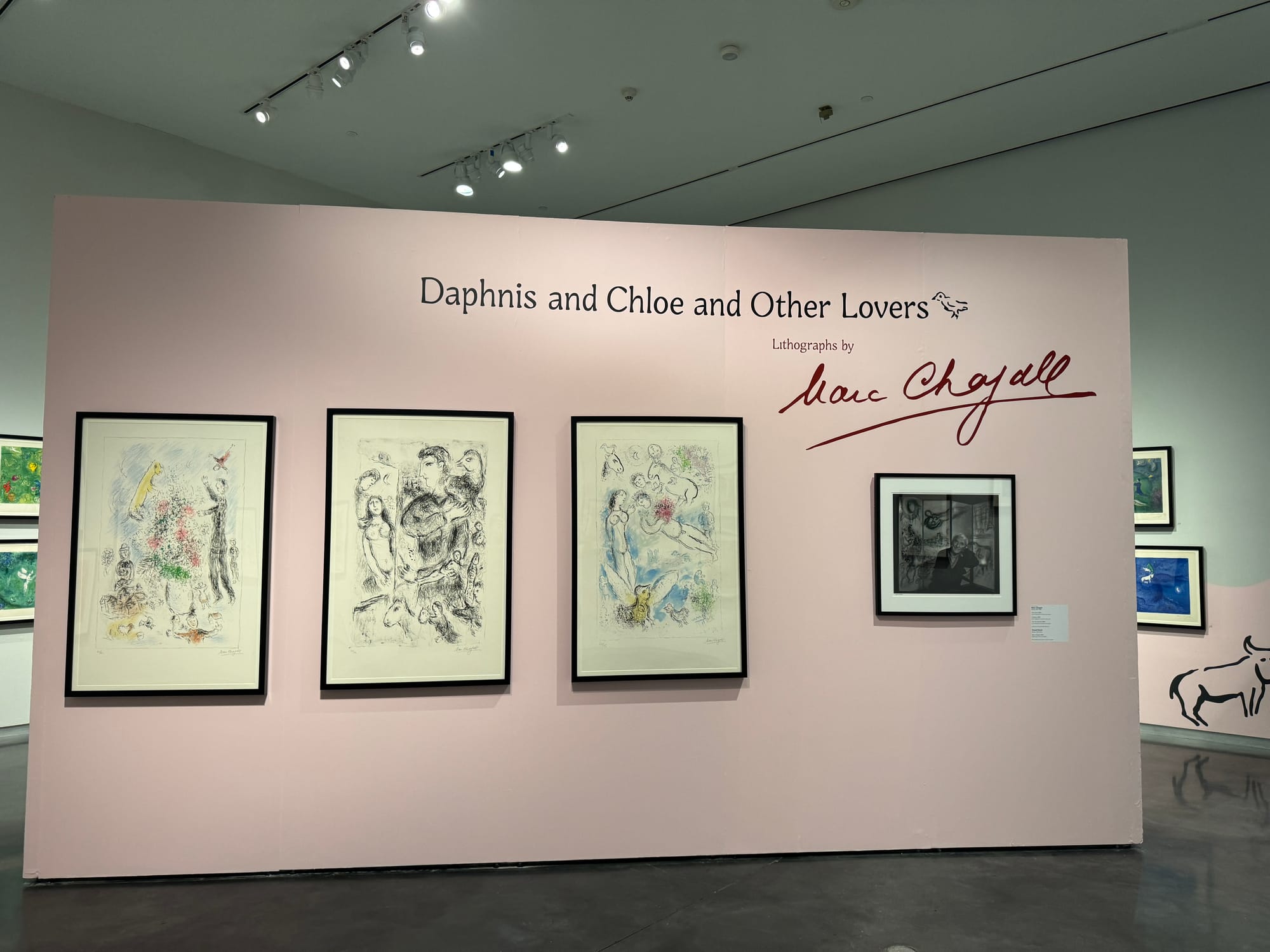
This is explored through "Daphnis and Chloe and other Lovers: Lithographs by Marc Chagall," a featured exhibit at the LSU Museum of Art. The exhibit, which opened shortly before Valentine’s Day features 50 lithographs depicting the story of Daphnis and Chloe, a goatherd and shepherdess who fall in love while also learning what love is. The Greek novel by Longus is one of the earliest surviving romantic prose works of antiquity, dating back to the 2nd century A.D.
Lithography as an art form relies on the fact that oil and water repel to create beautiful printed images. And while the pieces in the exhibit are about love, the act of creating them are the product of love themselves. The informational panels in the wall say that he’d initially refused the commission to illustrate this novel because a close friend and artist Pierre Bonnard had illustrated the same novel. (That’s a kind of love too.) BUt after his friend passed years later, he took the commission and used his marriage and the trip to Greece they took as newlyweds as major sources of inspiration. It took him over a decade to produce these lithographs.
Walking through the exhibit is a multi-sensory experience. French Composer Maurice Ravel’s 1912 musical adaptation of the same story. A laminated guide gives a description of each scene depicted by the lithographs – Daphnis and Chloe’s story is a wild ride that involves child abandonment, a jealous competing love interest and pirate abduction. The exhibit also has the story in book form placed on benches around the art for visitors to peruse.
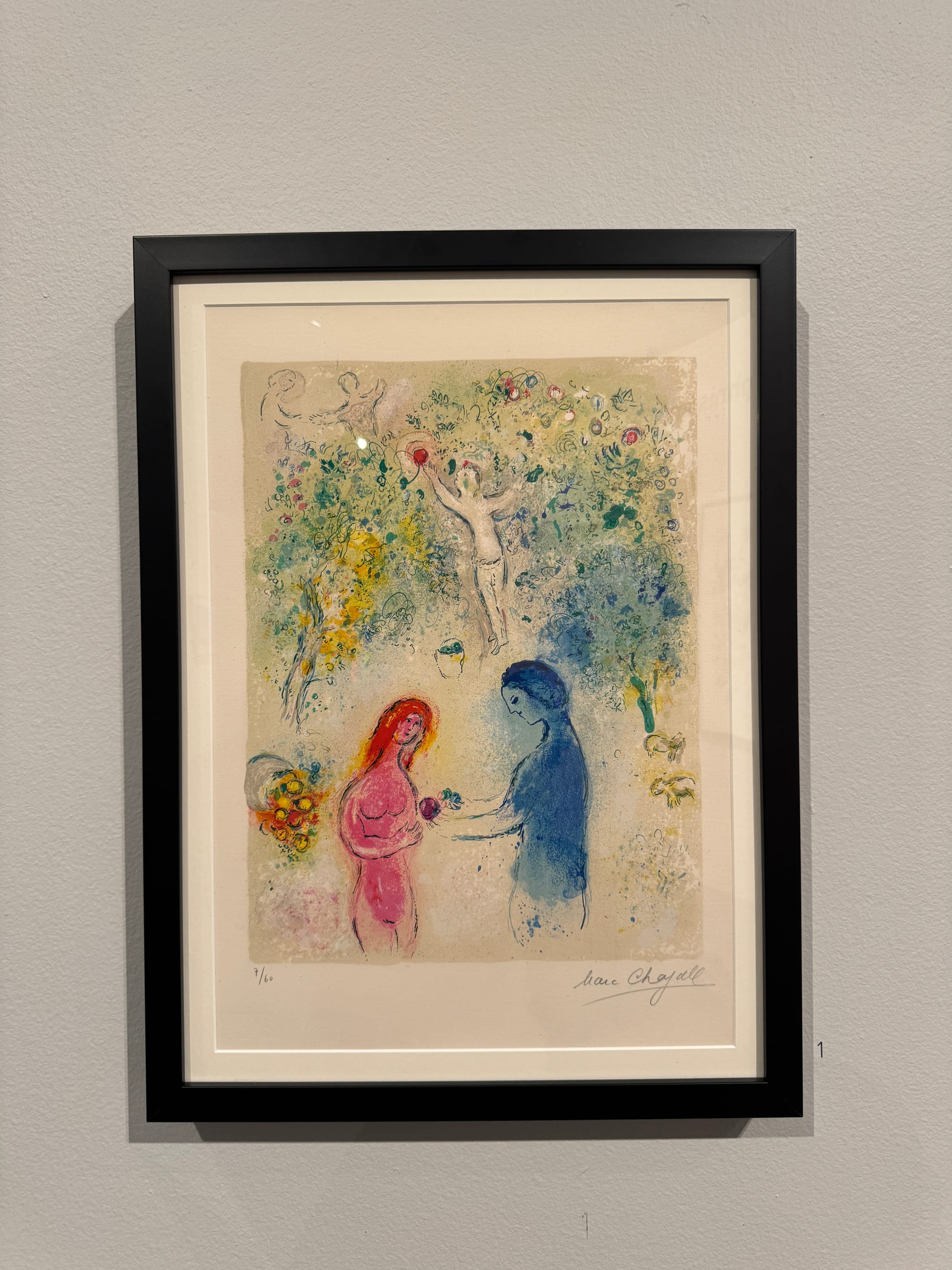
The most striking piece is right at the beginning of the exhibit: where Daphnis and Chloe are depicted as blue and pink figures, respectively. Daphnis had climbed up a tree to retrieve an apple for Chloe, a simple act of love which also references Adam and Eve while also flipping the symbolism around – an apple is a symbol of love and not the fall, and the man is giving it to the woman rather than the other way around. The image is vibrant and eye-catching, it’s an open invitation into the story through something that looks familiar.
Chagall chose to depict multiple times simultaneously: The audience sees Daphnis picking the apple in the background at the same time that he’s giving it to Chloe in the foreground. Love is a hard thing to convey through art. But there’s a tenderness to this scene that draws people in. The rest of the exhibit is a storybook taken apart and expertly arranged so that people can walk through, it’s easy to lose the thread on Daphnis and Chloe, there are lots of side quests and scenes that don’t contribute to a traditional three act structure. Regardless, it’s hard to deny the love between them and easy to get lost in it.