
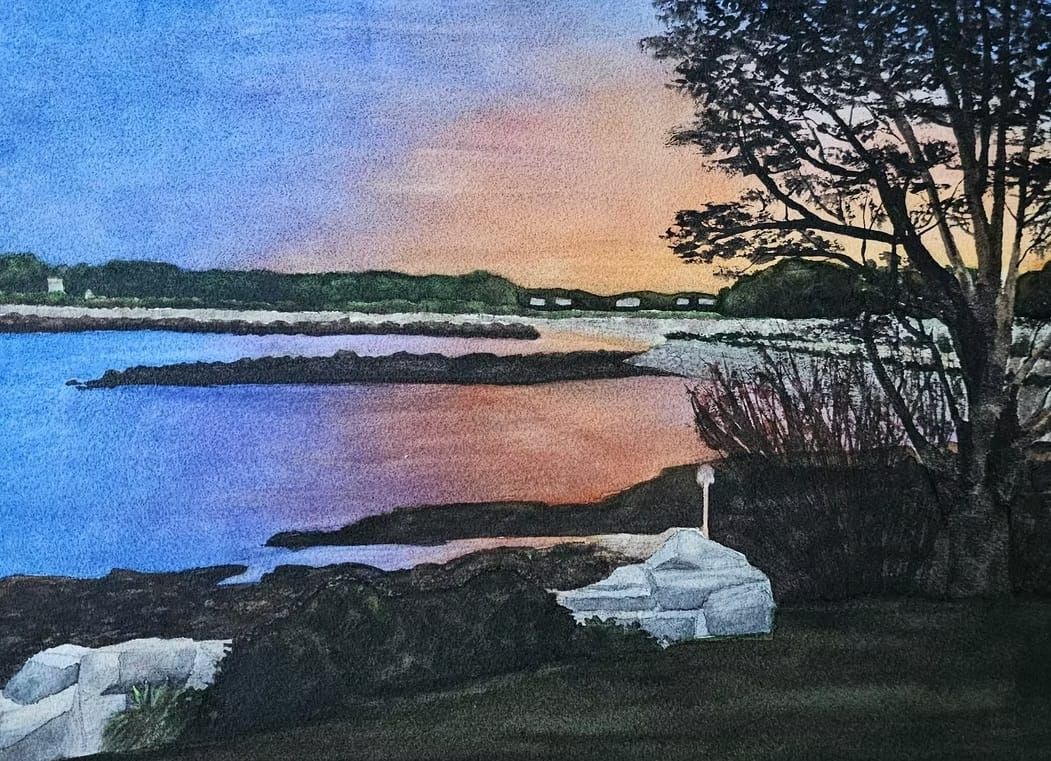
Watercolor 2026
Manchester Art Association
Manchester Town Hall
Manchester
Jan. 16, 2026
I visited the brand new exhibit of the Manchester Art Association at Manchester Town Hall, simply named “Watercolor 2026.” As the name implies, the exhibit features watercolor paintings of various subjects and styles, submitted by members of the Association.
Inspired by a recent visit with a docent at the Wadsworth Atheneum, I decided to dive into the back stories of some of the pieces.
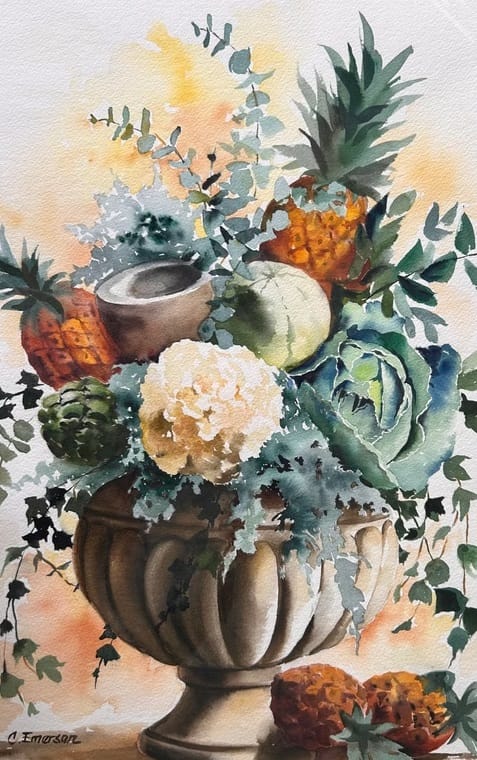
I’ll begin with Still Life with Pineapples by Carolyn Emerson. This piece carries on the tradition of still life painting that saw its rise in the Netherlands in the early 1600s. Still life paintings from that era often contained religious and moral messages, although Emerson’s work is more in line with the floral stills that became popular during the same time period.
The double white peony in the center draws the eye, and in contrast to past examples of stills which dealt with the fleeting nature of existence, Emerson’s work bursts with new life, from the cabbage to its right to the ripe pineapples overflowing from the ceramic vase which holds them. Emerson’s style gives the work a hazy, dreamlike quality reminiscent of works from Romantic-era artists such as J.M.W. Turner.
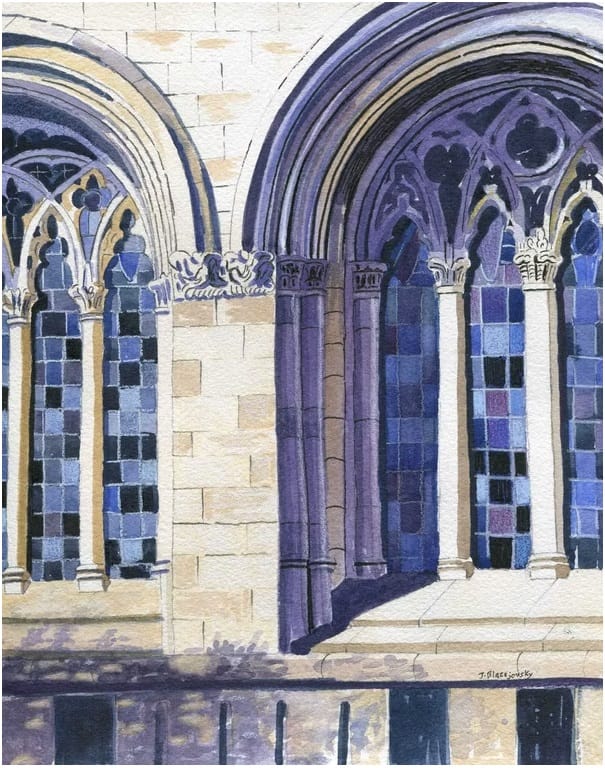
Conversely, artist Jeff Blazejovsky chose a manmade subject for his painting titled Gothic Windows Yale. Blazejovsky recreates the intricacies of the famous windows at Yale’s famous Sterling Memorial Library, pouring light onto one side of the painting and overexposing the brick facade, and contrasting that with the shadows that dance on the glass.
Yale was founded nearly 200 years after the height of the Gothic architecture movement that waned in Europe after the 16th century. The library came into existence 200 years after that, so it might strike some as odd that the school designed its library with such a style. The construction of the library coincided with what scholars refer to as the modern Collegiate Gothic movement, which saw several colleges and universities across the United States add new gothic architecture to their campuses. The goal behind these structures was to “[impress] upon students the seriousness of learning, the power of knowledge, and the privileges of a learned life.”
Folks, discussing art history is hard. The amount of research I conducted just to write about these two paintings easily doubled the amount of time I typically spend writing. Yet it also gave me a level of insight into the artwork that I typically don’t have, and added new layers of appreciation for both the artists and the traditions that they carried forward. This was a challenging way to write, and a worthwhile experience. I’ll leave the art history to the professionals, though.
NEXT
Jamil is taking the weekend off. See you next week!


